

Ectropion
Ectropion
In short
Ectropion is a common canine eyelid condition where the lower eyelid rolls outward, exposing delicate tissues to irritation and chronic tearing. While often congenital in large, heavy-skinned breeds, it can be successfully corrected with surgery to restore your dog's comfort and protect their vision.
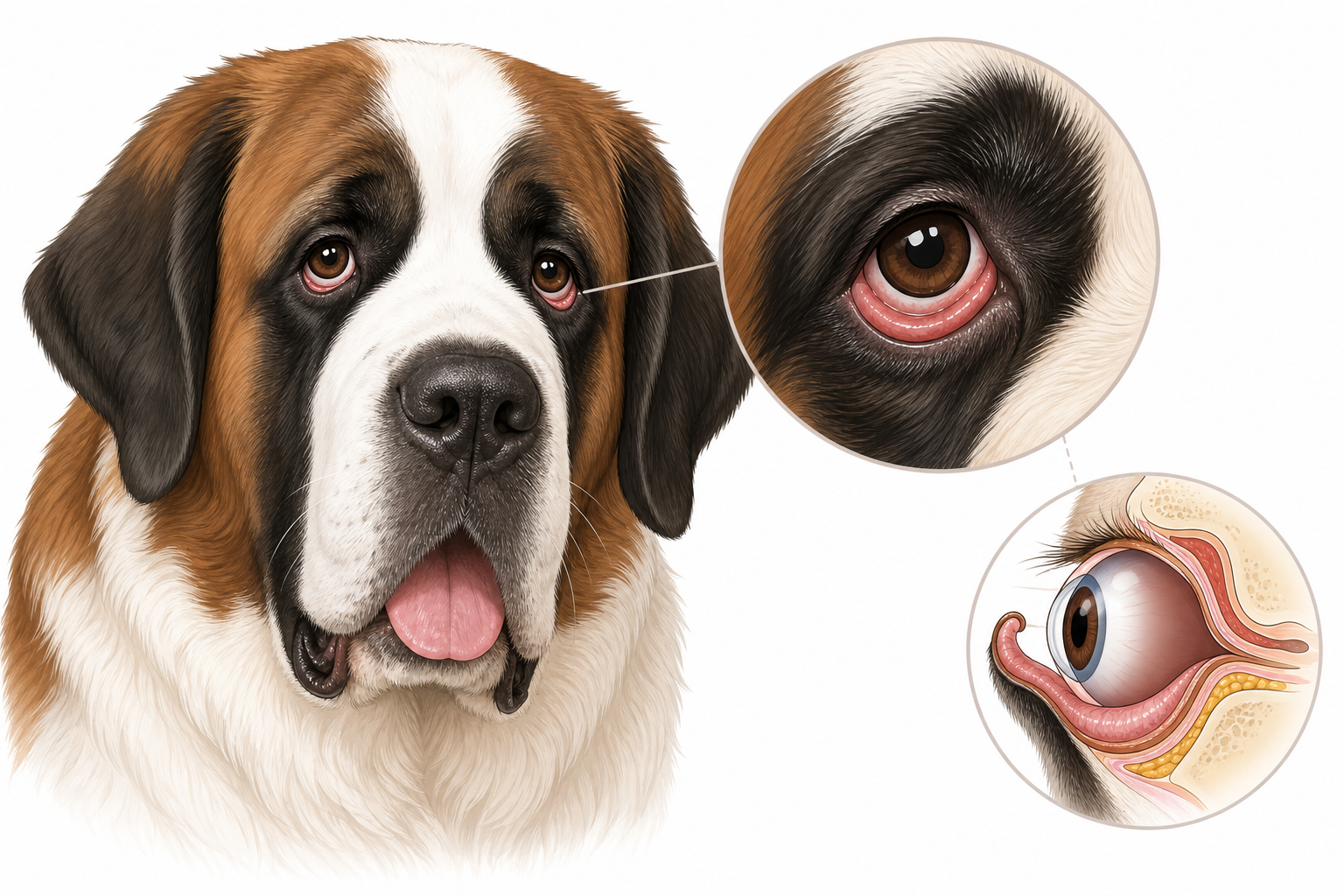
TL;DR. Ectropion is an outward rolling of a dog's lower eyelid that exposes sensitive eye tissues to irritation, dryness, and chronic tearing, but it can be highly successfully corrected with surgery.
Ectropion causes the lower eyelid to droop and roll outward, exposing the sensitive tissues beneath.
What is it?
Ectropion is a structural condition of the canine eye where the lower eyelid margin rolls outward, or "everts." Under normal circumstances, a dog's eyelids act like windshield wipers, fitting snugly against the eyeball to distribute tears evenly and sweep away dust and debris. When a dog has ectropion, this snug seal is broken. The lower eyelid droops away from the eye, leaving a gap that prevents proper tear distribution and exposes the delicate tissues underneath.
When the eyelid rolls outward, it exposes two key areas: the palpebral conjunctiva (the pink, moist lining on the inside of the eyelid) and the bulbar conjunctiva (the tissue covering the eyeball itself). The cornea, which is the clear, protective outer layer of the eye, also becomes excessively exposed to the air.
Without the constant protection and lubrication of the eyelid, these exposed tissues quickly become dry, inflamed, and vulnerable to environmental irritants like wind, dust, and pollen. This lack of protection can lead to chronic conjunctivitis (pink eye) and, in severe cases, painful damage to the cornea itself. Additionally, because the lower eyelid is no longer positioned to channel tears into the tear ducts, tears pool in the exposed lid and spill over onto the face, a condition known as epiphora.
Causes & risk factors
In the vast majority of dogs, ectropion is a congenital condition, meaning they are born with the genetic physical traits that cause it. It is directly linked to facial anatomy, skin elasticity, and head shape. The primary physical factors that trigger ectropion include:
- Excessively long palpebral fissures: The palpebral fissure is the physical opening between the upper and lower eyelids. If this opening is abnormally long (a condition known as macropalpebral fissure), the eyelids cannot maintain their proper tension and naturally droop.
- Lax tarsal plates: The tarsal plate is the thin layer of dense connective tissue that gives the eyelid its structural stiffness. If these plates are weak or loose (lax), the eyelid lacks the support needed to stay upright against the eye.
- Heavy facial skin: Breeds with abundant, loose skin on their heads and faces suffer from gravity pulling the heavy skin downward, which drags the lower eyelids down with it.
While congenital ectropion is most common, the condition can also be acquired later in life. Acquired ectropion can occur due to facial nerve paralysis (which causes the facial muscles to sag), severe scarring from trauma or chronic infections, or as an accidental over-correction during surgery for entropion (a condition where the eyelids roll inward).
Signs to watch for
If your dog has ectropion, the physical signs are usually easy to spot. The severity of the symptoms often correlates with how far the eyelid has rolled outward. Watch for the following signs:
- Eversion of the lower eyelid margin (Cardinal): The lower eyelid visibly droops, sags, or rolls outward, creating a distinct "pocket" and exposing the red or pink inner lining of the lid.
- Spillage of tears onto the face (epiphora) (Common): Tears overflow from the lower lid and run down the face, leaving wet tracks and rust-colored tear staining on the fur beneath the eyes.
- Excessive exposure of the palpebral and bulbar conjunctiva and cornea (Common): The exposed tissues look dry, irritated, and chronically bloodshot or pink.
- Mucoid or purulent discharge (Common): Because the eye cannot clear debris properly, mucus or pus-like discharge may accumulate in the corners of the eyes or along the lid margins.
- Squinting or blinking (Rare/Secondary): This typically indicates that a secondary complication, such as a corneal ulcer, has developed and is causing active pain.

Tear staining (epiphora) is a common sign of ectropion, caused by tears spilling over the droopy lid margin.
How vets diagnose it
Your vet will diagnose ectropion primarily through a comprehensive physical and visual examination of your dog’s face and eyes. They will observe your dog's facial structure in a relaxed state to assess the degree of eyelid droop and check how well the eyelids close during a normal blink.
While the structured veterinary record does not list specific diagnostic tests, standard veterinary ophthalmic care dictates that your vet will perform several diagnostic checks to rule out secondary complications and ensure the overall health of the eye:
- Fluorescein Stain Test: Your vet will place a tiny drop of a harmless, glowing green dye into your dog's eye and rinse it. If the protective surface of the cornea has been scratched or damaged due to chronic exposure (creating a corneal ulcer), the dye will stick to the damaged area and glow under a blue light. This is a critical test, as corneal ulcers are painful and require immediate treatment.
- Schirmer Tear Test: This test involves placing a small, specialized paper strip inside the lower eyelid for one minute to measure tear production. This helps your vet determine if your dog's eye redness is caused solely by ectropion or if an underlying dry eye condition (keratoconjunctivitis sicca) is also present.
- Intraocular Pressure (IOP) Measurement: Your vet may use a specialized tool to gently tap the surface of the eye to measure internal pressure, ruling out other painful conditions like glaucoma.
Treatment options
Treatment for ectropion depends entirely on the severity of the condition and whether it is causing your dog discomfort or eye damage.
Supportive Medical Management
For very mild cases of ectropion where the dog is not in pain and the cornea remains healthy, surgical correction may not be immediately necessary. Instead, your vet will recommend supportive medical care to keep the eye comfortable and protected:
- Topical Lubricants: Applying over-the-counter or prescription artificial tear ointments or drops multiple times a day helps keep the exposed cornea and conjunctiva moist, acting as a barrier against wind and dust.
- Topical Antibiotics or Anti-inflammatories: If your dog develops secondary conjunctivitis or a mild infection from trapped debris, your vet may prescribe a short course of medicated eye drops to resolve the inflammation.
Surgical Correction
For moderate to severe cases, or when chronic irritation compromises your dog's quality of life, surgery is the gold standard and only permanent solution. The goal of surgery is to shorten and tighten the lower eyelid so it sits naturally and snugly against the eyeball.
- Wedge Resection: This is a common and straightforward surgical procedure. The surgeon removes a small, V-shaped wedge of tissue from the lower eyelid margin, usually near the outer corner of the eye. The remaining edges are then meticulously sutured back together, effectively shortening the eyelid and pulling it flush against the eye.
- Blepharoplasty: For more complex cases, particularly in breeds with heavy facial folds or combined eyelid defects, a more advanced reconstructive surgery is required. This may involve repositioning the outer corner of the eye (the lateral canthus) or removing excess facial skin to relieve the downward pull on the eyelids.
Veterinary surgeons must execute these procedures with extreme precision to ensure a comfortable outcome. As noted in a leading veterinary surgery reference:
"If the eyelid stroma is excessively swollen, or the patient is a large dog, additional simple interrupted sutures to close the more external orbicularis oculi muscle are indicated. Skin closure must be meticulous at the eyelid margin so as to result in a smooth, anatomic eyelid margin." — Current Techniques in Small Animal Surgery
For complex reconstructions involving the ligaments supporting the eye, advanced techniques are utilized to secure the eyelid structure:
"Prior to closure of the skin, blunt dissection is performed to undermine the skin over the lateral orbital ligament. Either a 4-0 monofilament nonabsorbable (nylon or polypropylene) or polydioxanone suture is used to first take a bite in the lateral most tip of the tarsal plate followed by passage of the suture through the periosteum over the orbital ligament." — Current Techniques in Small Animal Surgery
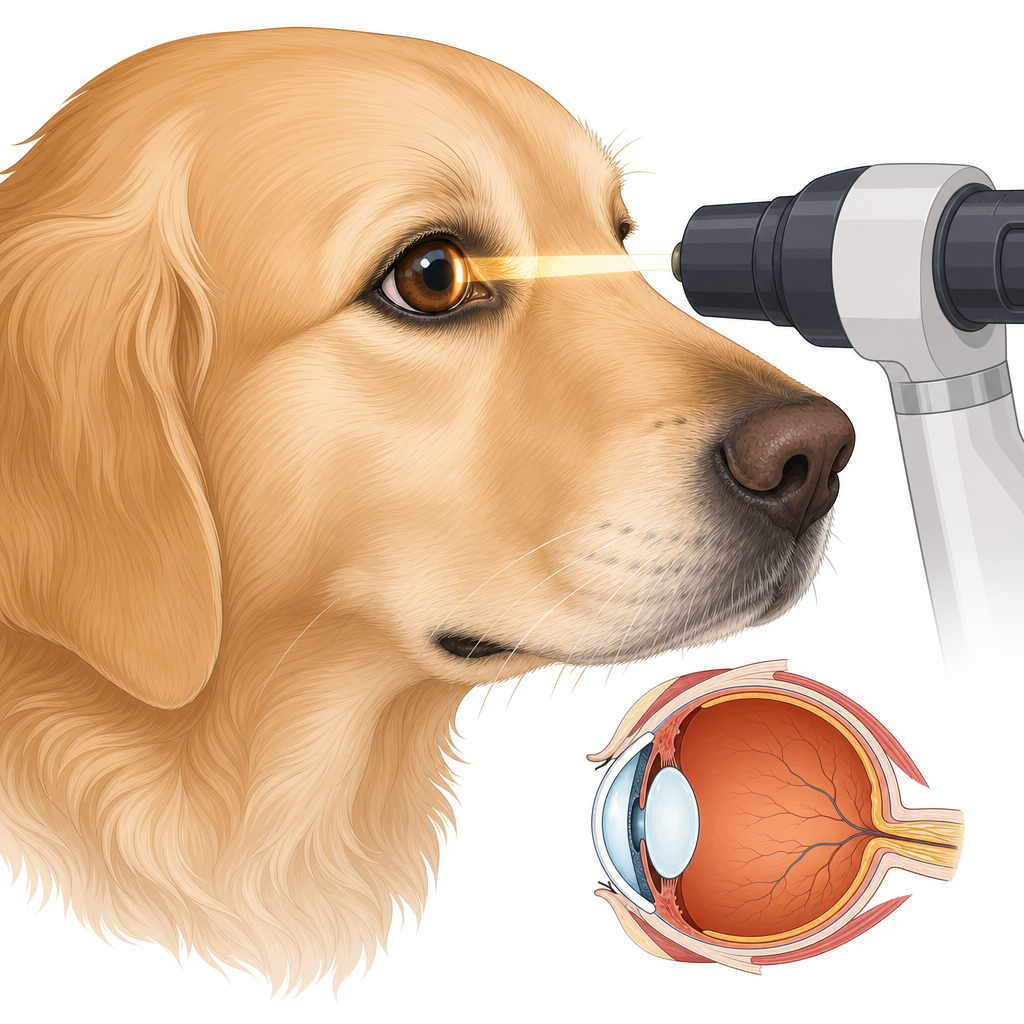
A detailed ophthalmic exam allows your vet to evaluate the eyelid structure and check for corneal irritation.
Prognosis
The long-term prognosis for dogs with ectropion is good to excellent with appropriate surgical correction.
Once the surgery is complete and the eyelids are healed, normal eyelid function is restored. This eliminates chronic tear spillage, protects the cornea from drying out, and significantly reduces the risk of future eye infections. Most dogs recover fully within 10 to 14 days post-surgery. During the recovery period, your dog will need to wear an Elizabethan collar (cone) to prevent them from scratching at their delicate sutures.
If surgery is not performed on a dog with moderate to severe ectropion, they will require lifelong daily management with topical lubricants and face-cleaning to prevent painful corneal ulcers, chronic conjunctivitis, and skin infections from constant tear wetness.
Prevention
Because congenital ectropion is an inherited genetic condition linked to physical breed characteristics, it cannot be prevented through lifestyle changes, diet, or environment.
Prevention relies entirely on responsible breeding practices. Breeders should evaluate their dogs for eyelid tightness and facial conformation before breeding. Dogs that exhibit severe ectropion or those that have required surgical correction to resolve the condition should not be bred, as they are highly likely to pass the genetic predisposition for loose facial skin and lax eyelids onto their puppies.
When to call your vet
If you notice that your dog's lower eyelids droop or roll outward, or if they have persistent wetness and tear staining on their face, schedule a non-emergency appointment with your vet to have their eyes evaluated.
However, eye conditions can deteriorate rapidly. Seek immediate veterinary care if your dog exhibits any of the following signs of eye pain or serious corneal injury:
- Squinting, blinking excessively, or holding one eye shut
- Pawing, rubbing, or scratching at their eye or face
- A sudden cloudiness, bluish haze, or white spot on the surface of the eye
- Thick, green, or yellow discharge draining from the eye
- Severe redness or swelling of the eye tissues
For specific breeds
Ectropion is highly associated with specific large and giant breeds that possess heavy facial skin, loose skin folds, and long eyelid openings. These breeds include:
In these specific breeds, ectropion often presents as part of a complex condition colloquially known as "diamond eye." In these dogs, the middle of the lower eyelid droops outward (ectropion), while the outer corners of the eyelids roll inward (lateral canthal entropion), creating a diamond-shaped opening. This complex combination is highlighted in veterinary literature:
"Bernard, mastiffs, Bernese mountain dogs, Newfoundlands, and others) with excessively long palpebral fissures (macropalpebral fissure) and lax tarsal plates, a combination of lateral canthal entropion and lower lid ectropion with an upward "notching" of the upper eyelid margin is seen." — Current Techniques in Small Animal Surgery
If you own one of these giant breeds, regular monitoring of their eyes from puppyhood is essential, as surgical planning must carefully address both the inward and outward rolling of the lids to achieve a comfortable, functional result.
Sources
- Current Techniques in Small Animal Surgery, 5th Edition, pages 163, 168, 171.
My highlights & notes
Signs & symptoms
Breeds at higher risk
Frequently asked questions
What is Ectropion?
Ectropion is a common canine eyelid condition where the lower eyelid rolls outward, exposing delicate tissues to irritation and chronic tearing. While often congenital in large, heavy-skinned breeds, it can be successfully corrected with surgery to restore your dog's comfort and protect their vision.
What are the symptoms of Ectropion?
Eversion of the lower eyelid margin、Excessive exposure of the palpebral and bulbar conjunctiva and cornea、Spillage of tears onto the face (epiphora)
Sources
- Current Techniques in Small Animal Surgery, 5th Edition (VetBooks.ir) · p. 168
- Current Techniques in Small Animal Surgery, 5th Edition (VetBooks.ir) · p. 163
- Current Techniques in Small Animal Surgery, 5th Edition (VetBooks.ir) · p. 168
- Current Techniques in Small Animal Surgery, 5th Edition (VetBooks.ir) · p. 171
This article is for general education and is not a substitute for professional veterinary advice. If your pet is unwell, please consult a veterinarian.
Worried about your pet?
Peqaboo’s AI helps you track symptoms, understand lab reports, and know when to see a vet.
Get the Peqaboo app