

Glaucoma
Also known as: Primary glaucoma, Secondary glaucoma
In short
Glaucoma is a painful, high-pressure eye condition in dogs and cats that requires immediate veterinary intervention to prevent permanent blindness.
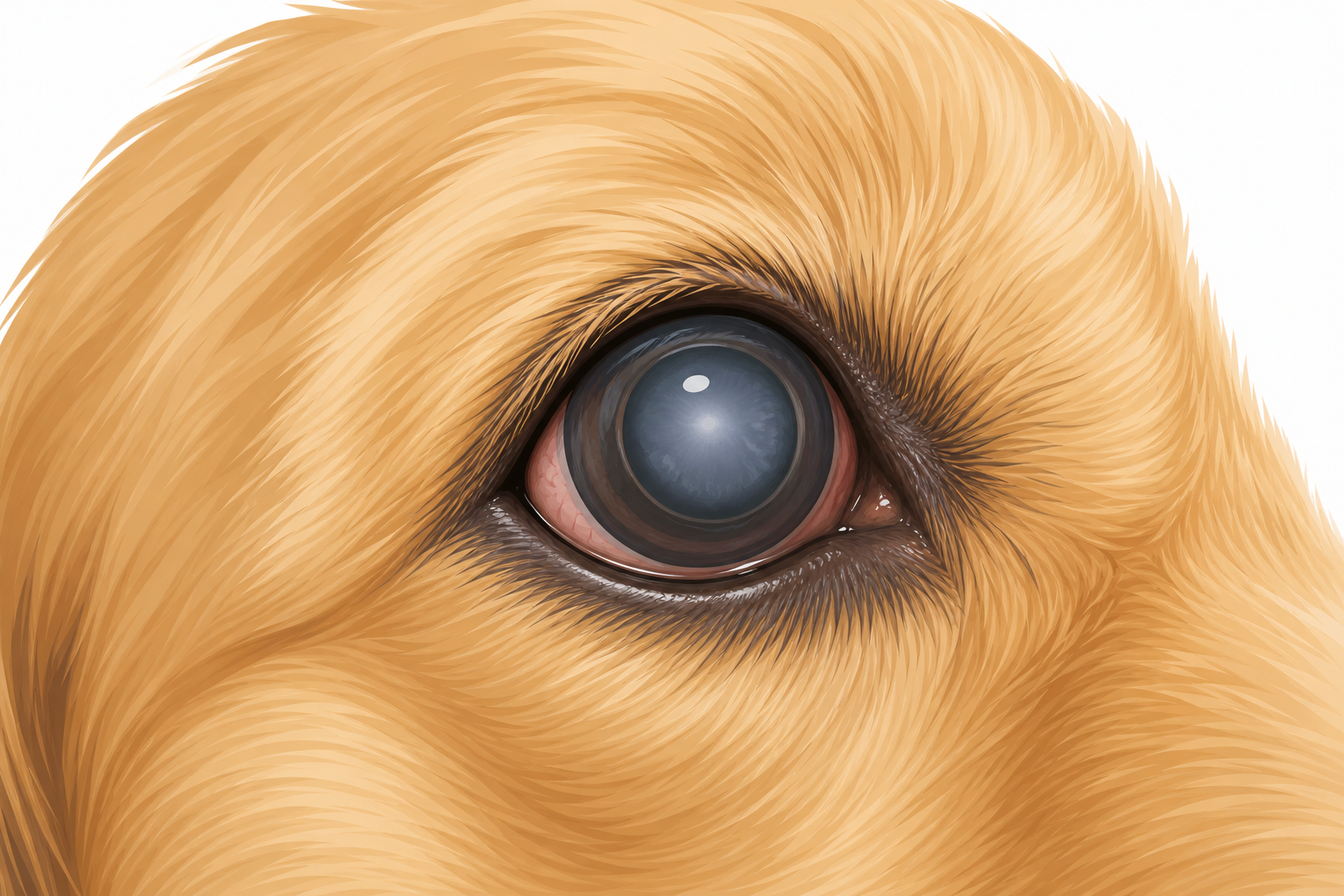
TL;DR. Glaucoma is a veterinary emergency where fluid buildup inside the eye causes painful high pressure, requiring rapid treatment to protect your pet's vision.
A cloudy cornea and a dilated pupil are classic physical signs of elevated intraocular pressure.
What is it?
Glaucoma is a serious, painful ophthalmic condition characterized by an abnormal elevation in intraocular pressure (IOP). To understand glaucoma, it helps to understand how a healthy eye maintains its shape and health. The eye continuously produces a clear fluid called aqueous humor, which delivers nutrients to the ocular structures and carries away waste. Under normal conditions, this fluid is produced and drained at a constant, balanced rate.
In a pet with glaucoma, this balance is disrupted. The fluid is produced normally, but the drainage pathways become occluded (blocked). Because the eye is a closed, rigid structure, the trapped fluid has nowhere to go. This causes the pressure inside the eye to rise rapidly.
This elevated pressure is highly destructive. It compresses the delicate blood vessels serving the back of the eye, leading to retinal atrophy (wasting of the light-sensitive tissue) and optic neuropathy (damage to the optic nerve). Without prompt treatment to lower the pressure, these changes cause severe pain and irreversible blindness. Owners must recognize that glaucoma is not just a vision-threatening disease; it is an incredibly painful condition that behaves like a constant, severe migraine for your pet.
To understand the mechanics of fluid production, we can look to a leading veterinary internal medicine reference:
"Aqueous humor production results from ciliary body secretion and ultrafiltration of plasma. Carbonic anhydrase is a vital enzyme in the production of aqueous humor. Outflow of aqueous humor flows from the posterior chamber into the anterior chamber and exits at the iridocorneal angle, or exits through the iris, ciliary body, choroids, and sclera. The balance of generation and outflow of aqueous hu..."
— Plumb's Veterinary Drug Handbook, p. 3704
Causes & risk factors
Glaucoma is broadly categorized into two forms: primary and secondary.
Primary Glaucoma
Primary glaucoma is an inherited, genetic condition. Pets born with this predisposition have abnormal drainage angles (goniodysgenesis) or microscopic defects in the outflow pathways. Although the pet is born with these structural abnormalities, the disease typically does not manifest until middle age. Primary glaucoma is almost always bilateral, meaning that even if only one eye is affected initially, the other eye is highly likely to develop the condition in the future.
Secondary Glaucoma
Secondary glaucoma occurs when another underlying eye disease physically blocks the drainage pathways. This is the most common form of glaucoma in cats and is also highly prevalent in dogs. Common triggers include:
- Uveitis: Severe internal eye inflammation that creates debris, clogging the drainage angle.
- Lens Luxation: The lens of the eye slips out of its normal position and physically blocks the flow of fluid.
- Advanced Cataracts: A leaking or hypermature cataract can cause severe inflammation and block drainage.
- Intraocular Tumors: Neoplasia can physically crowd the eye's drainage structures.
- Trauma: Severe head or eye injuries can cause bleeding inside the eye, leading to clots that block fluid outflow.
Signs to watch for
The signs of glaucoma can develop rapidly, sometimes over the course of just a few hours. Because pets cannot tell us they have a headache, owners must watch closely for subtle behavioral changes alongside physical signs.
- Increased intraocular pressure (Cardinal): While you cannot measure this at home, the eye may appear visibly enlarged, bulging, or firmer to the touch than the unaffected eye.
- Pain (Common): Your pet may squint, hold the eye partially closed, or rub their face against the carpet or furniture. Behavioral signs of pain include lethargy, hiding, decreased appetite, or sudden irritability.
- Blindness (Common): Your pet may suddenly bump into walls, miss steps, or seem hesitant to navigate dark rooms.
- Mydriasis (Common): The pupil of the affected eye may be dilated (wide) and will not shrink when a bright light is shined into it.
- Visual deficits (Common): You may notice your pet failing to track toys or reacting slowly to movement on the affected side.
- Cloudy or bluish cornea (Common): The clear front surface of the eye may take on a milky, hazy, or blue appearance due to fluid being forced into the corneal layers by the high pressure.
- Redness (Common): The white part of the eye (sclera) may appear bloodshot, with prominent, winding red blood vessels.

Squinting and redness in the white of the eye indicate severe ocular pain and inflammation.
How vets diagnose it
If your vet suspects glaucoma, they will perform a comprehensive ophthalmic examination. Because time is of the essence to save your pet's sight, these tests are performed immediately.
Tonometry (The Gold Standard)
Measuring intraocular pressure (IOP) is the definitive way to diagnose glaucoma. Your vet will use a specialized instrument called a tonometer. After applying a mild numbing eye drop, the vet will gently tap or press the tonometer against the surface of the cornea. A normal pressure reading for dogs and cats typically ranges between 10 and 25 mmHg. In pets with glaucoma, this pressure can spike to 40, 50, or even 80 mmHg.
Vision Assessment Tests
Your vet will also perform several simple tests to determine if the eye still has functional vision:
- Menace response: The vet will make a rapid hand gesture toward the eye (without creating a draft of air) to see if the pet blinks reflexively.
- Tracking a cotton ball: The vet will drop a silent cotton ball in front of your pet's face to see if their eyes naturally follow its descent.
- Maze test: Your pet may be guided through an obstacle course in both bright light and dim light to assess their functional navigation skills.
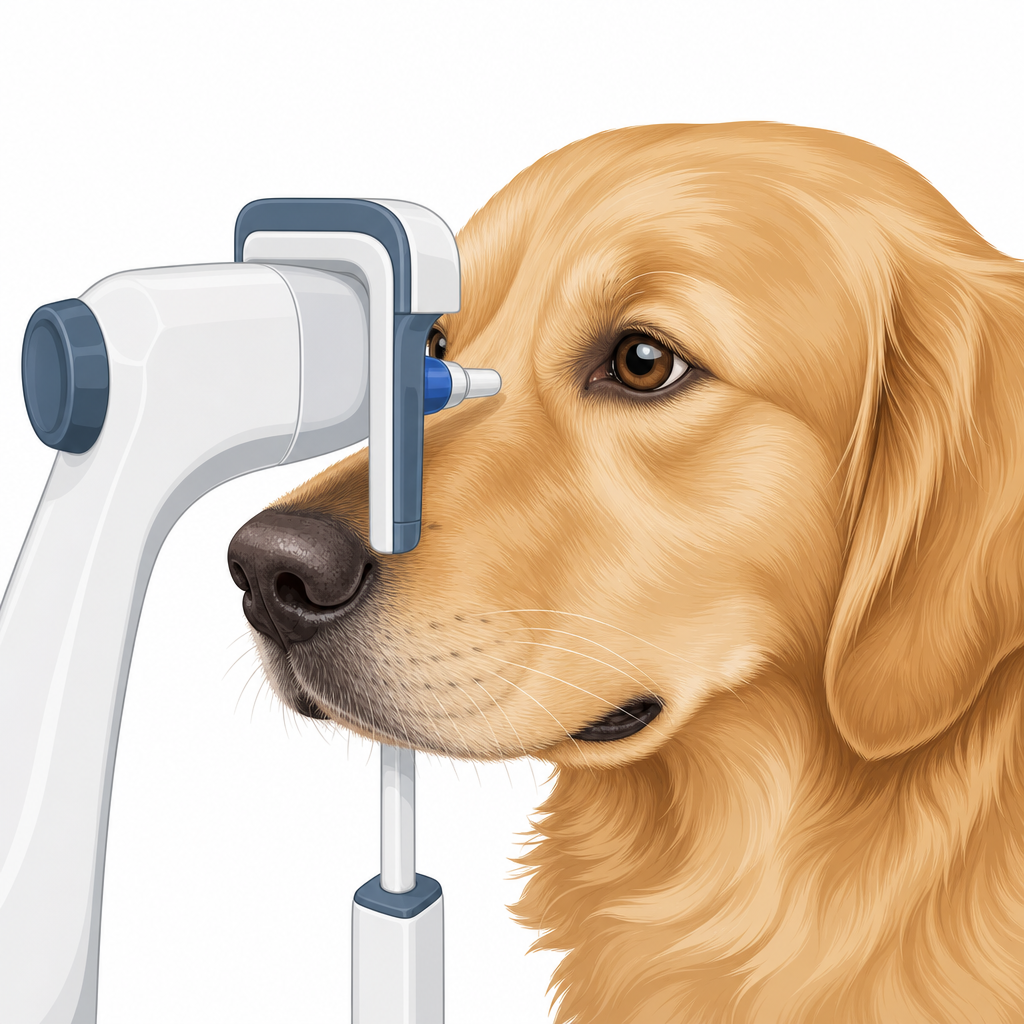
Tonometry is the gold-standard test used by veterinarians to measure pressure inside the eye.
Treatment options
Glaucoma therapy is aggressive and multi-pronged. The immediate goals are to rapidly lower the intraocular pressure to relieve pain and preserve vision, followed by long-term maintenance to keep the pressure stable.
First-Line Emergency and Maintenance Therapies
- Osmotic Diuretics (e.g., Mannitol): Administered intravenously in a clinic setting, these agents rapidly draw fluid out of the body's tissues, including the vitreous humor of the eye, providing a swift drop in intraocular pressure.
- Ophthalmic Prostaglandin Analogues (e.g., Latanoprost): These powerful eye drops work by dramatically increasing the outflow of fluid. They are highly effective in dogs but are used with caution if lens luxation is suspected.
- Carbonic Anhydrase Inhibitors (e.g., Dorzolamide, Brinzolamide, Methazolamide): These medications target the specific enzyme responsible for fluid production inside the eye. By blocking this enzyme, they reduce the amount of fluid the eye produces.
- Beta-blockers (e.g., Timolol, Betaxolol): These drops work by reducing the rate of aqueous humor production.
Second-Line and Adjunctive Therapies
- Alpha- & Beta-Adrenergic Agonists (e.g., Epinephrine): These may be used to help decrease fluid production and improve outflow pathways.
- Parasympathomimetics / Miotics (e.g., Pilocarpine): These drops physically constrict the pupil, which can help pull tissue away from the drainage angle, allowing fluid to escape more freely.
- Neuropathic Pain Analgesics (e.g., Carbamazepine): In chronic cases where pain persists despite pressure control, specialized pain medications may be introduced to improve the pet's comfort.
Prognosis
Long-term prognosis data for maintaining vision in affected eyes is generally guarded, and comprehensive statistical data across all species remains limited. Glaucoma is a progressive, chronic disease. Even with excellent medical compliance, many pets with primary glaucoma will eventually lose vision in the affected eye over months or years.
However, the prognosis for pain control and quality of life is excellent. If an eye becomes permanently blind and remains painful despite medical therapy, your vet will likely discuss surgical options. The most common and compassionate choice is enucleation (surgical removal of the eye). Pets adapt remarkably well to having only one eye (or even no eyes), and owners frequently report a dramatic return of their pet's playful, energetic personality once the source of chronic pain is removed.
Prevention
Primary glaucoma is a hereditary genetic condition and cannot be prevented. However, proactive management can save the vision in your pet's remaining eye. If your pet is diagnosed with primary glaucoma in one eye, your vet will immediately start preventative, pressure-lowering drops in the healthy eye. This proactive therapy can delay the onset of glaucoma in the second eye by months or even years.
For secondary glaucoma, prompt treatment of underlying eye conditions—such as uveitis, cataracts, or eye injuries—is the best way to prevent the drainage pathways from becoming blocked.
When to call your vet
Glaucoma is a level 5 veterinary emergency. If you notice any of the following signs, do not wait for a scheduled appointment. Contact your veterinarian or an emergency veterinary hospital immediately:
- A cloudy, hazy, or blue-tinted eye
- A dilated pupil that does not shrink in bright light
- Squinting, tearing, or holding the eye shut
- Sudden blindness or clumsiness
- Severe redness or bloodshot appearance in the white of the eye
Saving your pet's vision depends entirely on how quickly the intraocular pressure can be brought back down to a safe range.
For specific breeds
Certain breeds carry a much higher genetic risk for developing primary glaucoma.
Dogs
- Beagles: Beagles have a well-documented genetic predisposition to primary glaucoma. Research has shown that their natural fluid drainage pathways are structurally altered, making them highly susceptible to pressure spikes as they age.
As detailed in a leading veterinary anatomy text:
"This route has been shown to account for approximately 15% of total aqueous outflow in the normal dog and to be markedly diminished, accounting for only 3% of total outflow, in glaucomatous Beagles... because of morphological changes associated with the outflow pathways"
— Miller and Evans Anatomy of the Dog, p. 1727
Cats
- Siamese Cats and Persians: These breeds are highly suspected of carrying genetic predispositions to primary glaucoma.
- American Shorthairs: This breed also shows an increased risk, though the exact genetic markers remain under investigation.
If you own one of these predisposed breeds, ensure your veterinarian performs a thorough eye exam at every annual checkup, and consider consulting a veterinary ophthalmologist for early screening.
Sources
- Plumb's Veterinary Drug Handbook, page 3704
- Miller and Evans Anatomy of the Dog, 5th Edition, page 1727
My highlights & notes
Signs & symptoms
Breeds at higher risk
How it is diagnosed
- Measurement of intraocular pressureGold standard
- Maze test
- Menace response
- Tracking a cotton ball
Treatment approaches
Treatment must be prescribed by a licensed veterinarian based on your pet. Specific drug doses are intentionally not shown here.
Frequently asked questions
What is Glaucoma?
Glaucoma is a painful, high-pressure eye condition in dogs and cats that requires immediate veterinary intervention to prevent permanent blindness.
What are the symptoms of Glaucoma?
Increased intraocular pressure、Blindness (loss of vision)、Mydriasis、Pain、Visual deficits
How is Glaucoma diagnosed?
Measurement of intraocular pressure、Maze test、Menace response、Tracking a cotton ball
How is Glaucoma treated?
Treatment must be prescribed by a licensed veterinarian based on your pet. Specific drug doses are intentionally not shown here.
Sources
- Small Animal Critical Care Medicine, 2nd Edition (VetBooks.ir) · p. 894
- Plumb · p. 3704
- Miller and Evans Anatomy of the Dog, 5th Edition · p. 1727
This article is for general education and is not a substitute for professional veterinary advice. If your pet is unwell, please consult a veterinarian.
Worried about your pet?
Peqaboo’s AI helps you track symptoms, understand lab reports, and know when to see a vet.
Get the Peqaboo app