

Tetanus
Clostridium tetani infection
Còn gọi là: Lockjaw
Tóm tắt
Tetanus is a rare but life-threatening bacterial infection in dogs and cats. Caused by toxins from Clostridium tetani bacteria entering a wound, it leads to severe muscle stiffness, lockjaw, and spasms. Learn about the signs, diagnosis, and intensive care required for recovery.
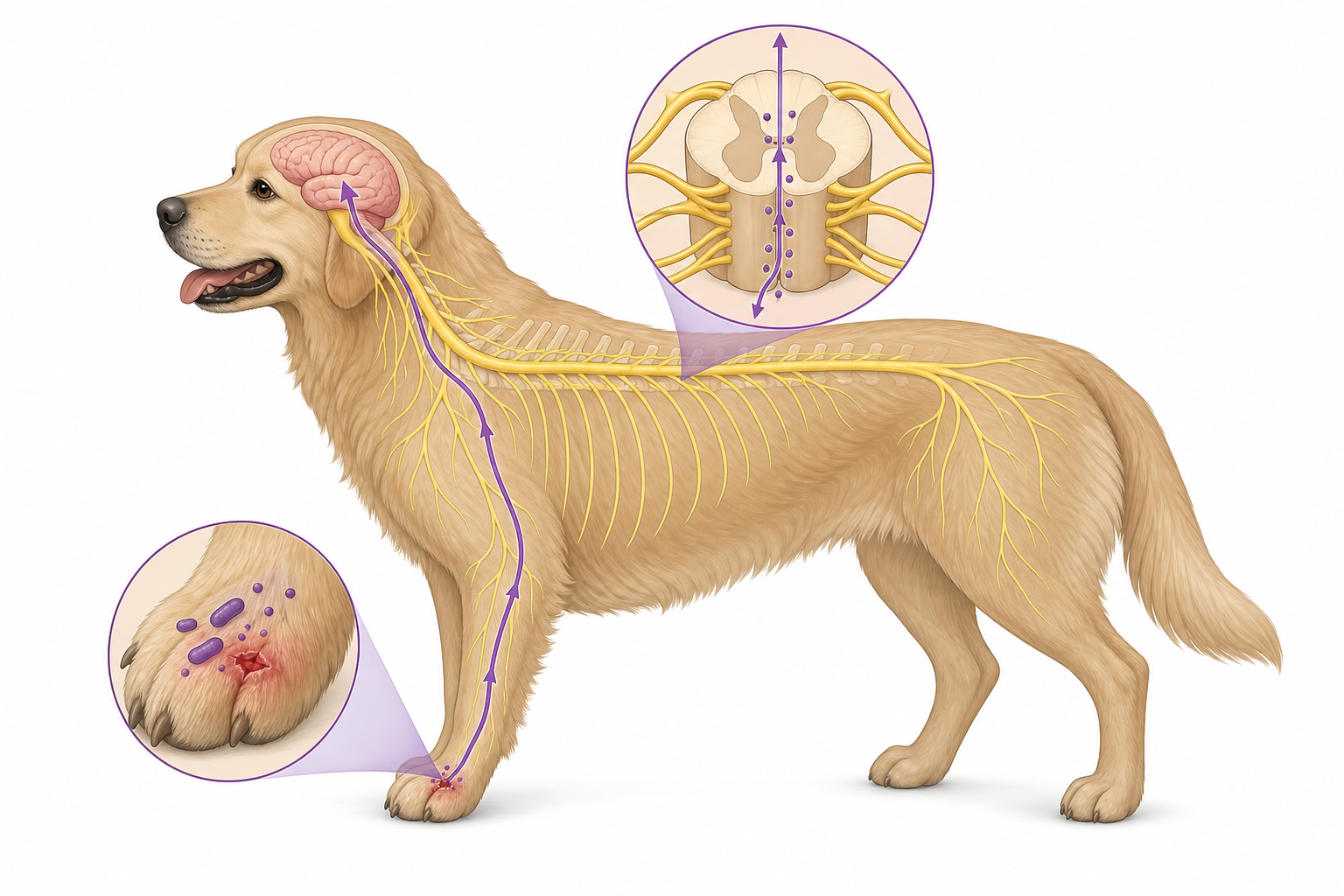
TL;DR. Uốn ván là cấp cứu thần kinh nặng do độc tố vi khuẩn trong vết thương: cứng cơ cực độ, há miệng khó và nguy cơ liệt hô hấp.
Độc tố uốn ván đi dọc dây thần kinh và chặn tín hiệu ức chế ở hệ thần kinh trung ương.
Đó là gì?
Uốn ván do tetanospasmin từ Clostridium tetani, vi khuẩn kỵ khí ở vết thương sâu. Độc tố gắn không hồi phục vào tận cùng thần kinh, đến hệ thần kinh trung ương và chặn chất dẫn truyền ức chế. Dây vận động phóng điện liên tục; cơ giữ co cứng đau. Chó mèo kháng hơn người và ngựa, nhưng ca lâm sàng là cấp cứu.
Nguyên nhân và yếu tố nguy cơ
Không lây. Bào tử trong đất, bụi và phân:
"The spores are resistant to boiling water and an autoclave temperature of 120°C for up to 20 minutes. However, the vegetative phase of this bacterium is susceptible to chemical and physical inactivation. Organisms can be isolated from the feces of dogs, cats, and humans, but presence of the organism does not indicate infection because not all strains possess the plasmid."
Cò súng: vết đâm sâu, cắn, vết mổ nhiễm bẩn, dị vật. Không ưu thế giống.
Dấu hiệu cần theo dõi
Chính: trismus; risus sardonicus (trán nhăn, tai cứng, môi kéo).
Thường gặp: dáng đi cứng/tư thế ngựa cưa, đuôi cứng, co thắt phản xạ với kích thích, nằm, khó nuốt, mi thứ ba, enophthalmos, opisthotonos.
Thỉnh thoảng: táo bón, bí tiểu, liệt hô hấp, rối loạn tự chủ.

Risus sardonicus là dấu hiệu chính của uốn ván.
"Involvement of the head can lead to spasms of the masticatory and pharyngeal muscles, causing trismus (lockjaw) and dysphagia. This can be exacerbated functionally by increased salivation, increased bronchial secretions, and increased respiratory rate resulting from involvement of the parasympathetic and somatic cranial nerve nuclei."
Cách bác sĩ thú y chẩn đoán
Chủ yếu lâm sàng (dấu hiệu + tiền sử vết thương). Hỗ trợ: kháng thể huyết thanh chống tetanospasmin (vàng, chậm), Gram/cấy kỵ khí, CK, EMG, X-quang nếu biến chứng.
Lựa chọn điều trị
- Kháng độc tố uốn ván: trung hòa độc tố lưu hành (không phải đã gắn); nguy cơ sốc phản vệ.
- Kháng sinh: metronidazole hoặc penicillin G; thay thế clindamycin, doxycycline, tetracycline.
- Giãn cơ/an thần: diazepam.
- Hỗ trợ: phòng tối, yên, lót đệm; ống nuôi, dịch i.v., sonde tiểu nếu cần.

Môi trường yên tối giảm co thắt do kích thích.
Tiên lượng
Chó: tử vong ~18–50 %; lớp I–II thường sống 100 %, III–IV ~58 %. Mèo: khu trú thường tốt; di chứng có thể kéo dài tháng.
"Neuronal binding of toxin is thought to be irreversible. Recovery requires the growth of new nerve terminals, which explains the long duration of tetanus."
Phòng ngừa
Không tiêm chủng định kỳ cho chó/mèo. Rửa vết thương ngay; vết sâu/bẩn: đánh giá thú y.
Khi nào gọi thú y
Cấp cứu nếu cứng, há miệng khó, nhăn mặt, mi thứ ba, co thắt với tiếng/chạm hoặc khó thở sau vết thương.
Nguồn
- Small Animal Critical Care Medicine, 2nd Edition, pages 498-500.
- Textbook of Veterinary Internal Medicine, 5th Edition, pages 1130-1131.
My highlights & notes
Dấu hiệu & triệu chứng
Cách chẩn đoán
- Measurement of serum antibodies to tetanospasminTiêu chuẩn vàng
- Anaerobic culture of wound
- Electromyography
- Gram stain of wound smear
- Presumptive diagnosis based on clinical signs and history of a recent wound
- Radiography
- Serum creatine kinase measurement
Hướng điều trị
Điều trị phải do bác sĩ thú y có giấy phép kê đơn. Liều cụ thể cố ý không hiển thị.
Câu hỏi thường gặp
What is Tetanus?
Tetanus is a rare but life-threatening bacterial infection in dogs and cats. Caused by toxins from Clostridium tetani bacteria entering a wound, it leads to severe muscle stiffness, lockjaw, and spasms. Learn about the signs, diagnosis, and intensive care required for recovery.
What are the symptoms of Tetanus?
risus sardonicus、trismus、Trouble swallowing (dysphagia)、Recumbency、Stiff gait、elevated tail、enophthalmos、erect ears
How is Tetanus diagnosed?
Measurement of serum antibodies to tetanospasmin、Anaerobic culture of wound、Electromyography、Gram stain of wound smear、Presumptive diagnosis based on clinical signs and history of a recent wound、Radiography
How is Tetanus treated?
Điều trị phải do bác sĩ thú y có giấy phép kê đơn. Liều cụ thể cố ý không hiển thị.
Nguồn
- Small Animal Critical Care Medicine, 2nd Edition (VetBooks.ir) · p. 499
- Small Animal Critical Care Medicine, 2nd Edition (VetBooks.ir) · p. 498
- Internal Medicine 5th · p. 1131
- Small Animal Critical Care Medicine, 2nd Edition (VetBooks.ir) · p. 498
- Small Animal Critical Care Medicine, 2nd Edition (VetBooks.ir) · p. 500
- Internal Medicine 5th · p. 1130
Bài viết mang tính giáo dục chung, không thay thế tư vấn thú y. Nếu thú cưng ốm, hãy gặp bác sĩ thú y.
Lo lắng cho thú cưng?
AI của Peqaboo giúp theo dõi triệu chứng, hiểu kết quả xét nghiệm và biết khi nào cần gặp bác sĩ thú y.
Tải app Peqaboo