

Tetanus
Clostridium tetani infection
Más néven: Lockjaw
Röviden
Tetanus is a rare but life-threatening bacterial infection in dogs and cats. Caused by toxins from Clostridium tetani bacteria entering a wound, it leads to severe muscle stiffness, lockjaw, and spasms. Learn about the signs, diagnosis, and intensive care required for recovery.
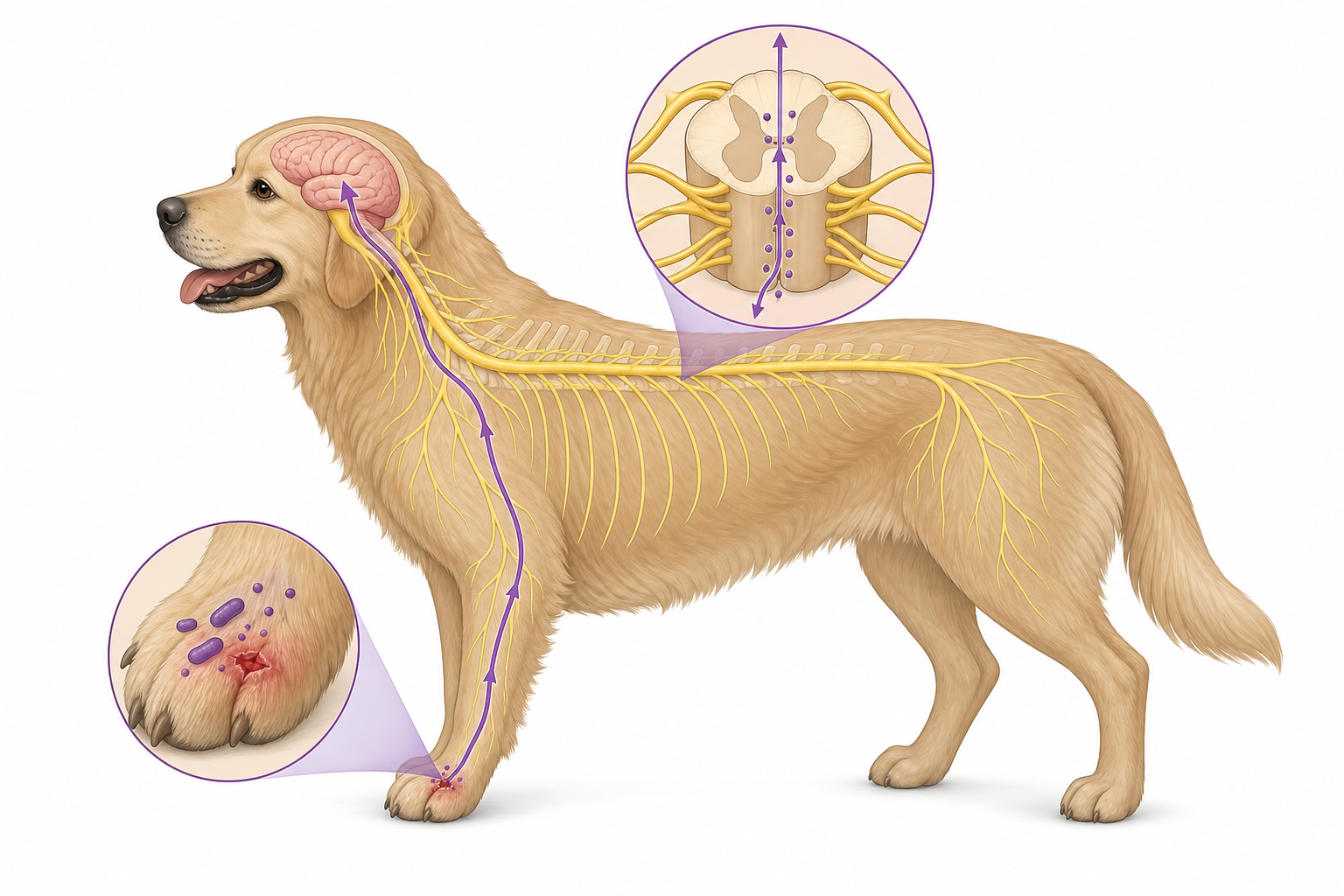
TL;DR. A tetanusz súlyos, életveszélyes neurológiai sürgősség, sebfertőzésből származó baktériumtoxinok miatt: extrém izommerevség, trismus és légzésbénulás kockázata.
A tetanuszttoxin az idegek mentén halad, és gátolja a központi idegrendszer gátló jeleit.
Mi ez?
A tetanuszt a Clostridium tetani tetanospasminja okozza, anaerob baktérium mély sebekben. A toxin visszafordíthatatlanul kötődik az idegvégződésekhez, eljut a központi idegrendszerbe, és blokkolja a gátló neurotranszmittereket. A motoros idegek gátlás nélkül tüzelnek; az izmok fájdalmas kontrakcióban maradnak. A kutya és macska ellenállóbb, mint az ember vagy a ló, de a klinikai esetek sürgősek.
Okok és kockázati tényezők
Nem fertőző. Spórák talajban, porban és trágyában:
"The spores are resistant to boiling water and an autoclave temperature of 120°C for up to 20 minutes. However, the vegetative phase of this bacterium is susceptible to chemical and physical inactivation. Organisms can be isolated from the feces of dogs, cats, and humans, but presence of the organism does not indicate infection because not all strains possess the plasmid."
Kiváltók: mély szúrt sebek, harapások, szennyezett műtéti sebek, idegentestek. Nincs fajtadispozíció.
Figyelendő jelek
Kardinális: trismus; risus sardonicus (ráncos homlok, merev fülek, visszahúzott ajkak).
Gyakori: merev járás/fűrészpados tartás, merev farok, reflexgörcsök ingerekre, fekvés, nyelési zavar, harmadik szemhéj, enophthalmus, opistotonus.
Esetenkénti: székrekedés, vizeletretenció, légzésbénulás, autonóm zavar.

A risus sardonicus a tetanusz kardinális jele.
"Involvement of the head can lead to spasms of the masticatory and pharyngeal muscles, causing trismus (lockjaw) and dysphagia. This can be exacerbated functionally by increased salivation, increased bronchial secretions, and increased respiratory rate resulting from involvement of the parasympathetic and somatic cranial nerve nuclei."
Hogyan diagnosztizálnak az állatorvosok
Főleg klinikailag (jelek + sebtörténet). Támogatás: szérum antitestek tetanospasmin ellen (arany, lassú), Gram/anaerob tenyésztés, CK, EMG, röntgen szövődményeknél.
Kezelési lehetőségek
- Tetanusz-antitoxin: a keringő toxint semlegesíti (a már kötöttet nem); anafilaxia kockázata.
- Antibiotikumok: metronidazol vagy penicillin G; alternatívák klindamicin, doxiciklin, tetraciklin.
- Izomlazítók/szedatívumok: diazepam.
- Támogatás: sötét, csendes, párnázott szoba; tápszonda, i.v. folyadék, szükség szerint hólyagkatéter.

A csendes, sötét környezet csökkenti az ingerek által kiváltott görcsöket.
Prognózis
Kutya: mortalitás ~18–50 %; I–II. osztály gyakran 100 % túlélés, III–IV ~58 %. Macska: helyi gyakran jó; hiányok hónapokig tarthatnak.
"Neuronal binding of toxin is thought to be irreversible. Recovery requires the growth of new nerve terminals, which explains the long duration of tetanus."
Megelőzés
Nincs rutinvakcina kutyánál/macskánál. Sebeket azonnal tisztítani; mély/piszkos sebek: állatorvosi értékelés.
Mikor hívjunk állatorvost
Sürgős merevség, trismus, grimasz, harmadik szemhéj, hangra/érintésre görcsök vagy sebet követő légzési zavar esetén.
Források
- Small Animal Critical Care Medicine, 2nd Edition, pages 498-500.
- Textbook of Veterinary Internal Medicine, 5th Edition, pages 1130-1131.
My highlights & notes
Jelek és tünetek
Hogyan diagnosztizálják
- Measurement of serum antibodies to tetanospasminArany standard
- Anaerobic culture of wound
- Electromyography
- Gram stain of wound smear
- Presumptive diagnosis based on clinical signs and history of a recent wound
- Radiography
- Serum creatine kinase measurement
Kezelési megközelítések
A kezelést engedéllyel rendelkező állatorvosnak kell felírnia. A konkrét adagokat szándékosan nem mutatjuk.
Gyakori kérdések
What is Tetanus?
Tetanus is a rare but life-threatening bacterial infection in dogs and cats. Caused by toxins from Clostridium tetani bacteria entering a wound, it leads to severe muscle stiffness, lockjaw, and spasms. Learn about the signs, diagnosis, and intensive care required for recovery.
What are the symptoms of Tetanus?
risus sardonicus、trismus、Trouble swallowing (dysphagia)、Recumbency、Stiff gait、elevated tail、enophthalmos、erect ears
How is Tetanus diagnosed?
Measurement of serum antibodies to tetanospasmin、Anaerobic culture of wound、Electromyography、Gram stain of wound smear、Presumptive diagnosis based on clinical signs and history of a recent wound、Radiography
How is Tetanus treated?
A kezelést engedéllyel rendelkező állatorvosnak kell felírnia. A konkrét adagokat szándékosan nem mutatjuk.
Források
- Small Animal Critical Care Medicine, 2nd Edition (VetBooks.ir) · p. 499
- Small Animal Critical Care Medicine, 2nd Edition (VetBooks.ir) · p. 498
- Internal Medicine 5th · p. 1131
- Small Animal Critical Care Medicine, 2nd Edition (VetBooks.ir) · p. 498
- Small Animal Critical Care Medicine, 2nd Edition (VetBooks.ir) · p. 500
- Internal Medicine 5th · p. 1130
Ez a cikk általános tájékoztatás, nem helyettesíti az állatorvosi tanácsot. Ha a kedvenc beteg, forduljon állatorvoshoz.
Aggódik a kedvence miatt?
A Peqaboo AI segít a tünetek követésében, a laboreredmények megértésében és abban, mikor kell állatorvoshoz menni.
Peqaboo app letöltése