

Hypercalcemia
Hypercalcemia
Also known as: Elevated blood calcium, High calcium
In short
Hypercalcemia is an abnormally high level of calcium in a dog or cat's blood. This metabolic condition can cause severe damage to the kidneys, heart, and nervous system. Learn about the symptoms, underlying causes, diagnostic tests, and treatment options.

TL;DR. Hypercalcemia is a serious medical condition where blood calcium levels rise too high, potentially damaging your pet's kidneys, heart, and nervous system if left untreated.
Hypercalcemia can affect both dogs and cats, requiring prompt veterinary diagnosis.
What is it?
Calcium is a vital mineral that plays a crucial role in almost every major function in your pet's body. It is responsible for transmitting nerve impulses, contracting muscles (including the heart), clotting blood, and maintaining strong bones. Because calcium is so important, the body tightly regulates its levels using a complex network of hormones, primarily involving the parathyroid glands, the kidneys, the intestines, and the bones.
When this regulatory system fails and calcium levels in the bloodstream rise abnormally high, the condition is known as hypercalcemia. Rather than being a primary disease on its own, hypercalcemia is typically a warning sign of a serious underlying medical issue. When calcium levels remain elevated, the mineral acts as a toxin to various organ systems, leading to widespread dysfunction.
One of the most significant concerns with hypercalcemia is its impact on the kidneys and the central nervous system. As noted in a prominent small animal critical care manual:
"The consequences of hypercalcemia can be severe and affect multiple body systems including the central nervous syst" — Small Animal Critical Care Medicine
When calcium levels are excessively high, the kidneys lose their ability to conserve water, leading to dehydration and potential kidney failure. If both calcium and phosphorus levels are elevated, they can bind together and form hard mineral deposits within the kidney tissues, a process called nephrocalcinosis. This can cause irreversible damage to the kidneys, making prompt veterinary intervention essential.
Causes & risk factors
Hypercalcemia can be triggered by a wide variety of underlying conditions. In dogs and cats, the most common causes include:
- Malignancy (Cancer): Certain types of tumors, such as lymphoma or anal gland sac adenocarcinoma, release a protein called parathyroid hormone-related protein (PTHrP). This protein mimics the body's natural hormones and causes calcium levels to spike.
- Primary Hyperparathyroidism: This occurs when a benign tumor on one of the parathyroid glands causes it to overproduce parathyroid hormone (PTH), which constantly signals the body to release calcium into the blood.
- Kidney Disease: Both acute and chronic kidney failure can disrupt the delicate balance of calcium and phosphorus in the body.
- Vitamin D Toxicity: Ingesting rodenticides containing cholecalciferol, certain human skin creams, or excessive dietary supplements can cause a massive surge in calcium absorption.
- Hypoadrenocorticism (Addison's Disease): A hormonal deficiency that can occasionally lead to elevated blood calcium levels.
- Idiopathic Hypercalcemia: This is a relatively common form of the condition in cats where, despite extensive testing, no underlying cause can be identified.
Certain breeds carry genetic risks for developing diseases that cause hypercalcemia. For instance, the Keeshond has a well-documented genetic predisposition to primary hyperparathyroidism, while Siamese cats also show an increased risk for developing elevated blood calcium levels.
Signs to watch for
The clinical signs of hypercalcemia can vary widely depending on how high the calcium levels are and how quickly they rose. Because calcium affects multiple body systems, the symptoms can appear diverse and non-specific.
Common Signs
- Polydipsia (increased thirst) and Polyuria (increased urination): High calcium interferes with the kidneys' ability to concentrate urine, forcing your pet to urinate frequently and drink large amounts of water to compensate.
- Dehydration: Despite drinking more water, pets often cannot keep up with the fluid loss and become dehydrated.
- Anorexia (loss of appetite) and Weight Loss: Pets often lose interest in food and may lose weight over time.
- Lethargy and Muscle Weakness: High calcium stabilizes cell membranes, making it harder for nerves and muscles to fire properly, leading to profound weakness and sluggishness.
- Vomiting: Gastrointestinal upset is common due to the direct effects of calcium on the stomach and intestines.
Occasional Signs
- Constipation: Decreased muscle tone in the digestive tract can slow down bowel movements.
- Shivering: Neuromuscular irritability can manifest as mild tremors or shivering.
- Cardiac Arrhythmias: High calcium levels alter the electrical activity of the heart, leading to irregular heartbeats.
Rare Signs
- Seizures: In extreme cases, the effects on the central nervous system can trigger seizures.

Increased thirst and urination are classic early warning signs of elevated blood calcium.
If your pet is showing signs of severe lethargy, persistent vomiting, or irregular breathing, these are red-flag emergencies that require immediate veterinary care. High calcium levels can also cause dangerous changes to the heart's rhythm, as detailed in a leading critical care reference:
"Bradycardia may be detected on physical examination, and electrocardiographic (ECG) monitoring may reveal a prolonged PR interval, widened QRS complex, shortened QT interval, shortened or absent ST segment, and a widened T wave. Bradyarrhythmias may progress to complete heart block, asystole, and cardiac arrest in severely affected animals." — Small Animal Critical Care Medicine
How vets diagnose it
Diagnosing hypercalcemia begins with a thorough physical examination and routine blood work. A standard chemistry panel measures "total serum calcium," which includes calcium bound to proteins in the blood. However, this does not always reflect the amount of active calcium available to the tissues.
To get an accurate diagnosis, your vet will perform the gold-standard test:
- Ionized Calcium Measurement [GOLD STANDARD]: This test measures the free, biologically active form of calcium in the blood, providing the most accurate assessment of your pet's true calcium status.
Once hypercalcemia is confirmed, the vet must determine the underlying cause. This typically involves several specialized tests:
- Serum PTH Concentration: Measures the level of parathyroid hormone to see if the parathyroid glands are overactive.
- Serum PTHrP Concentration: Tests for the presence of the protein associated with cancer-related hypercalcemia.
- Urinalysis and Kidney Panels: To assess kidney function and check for mineral crystals.
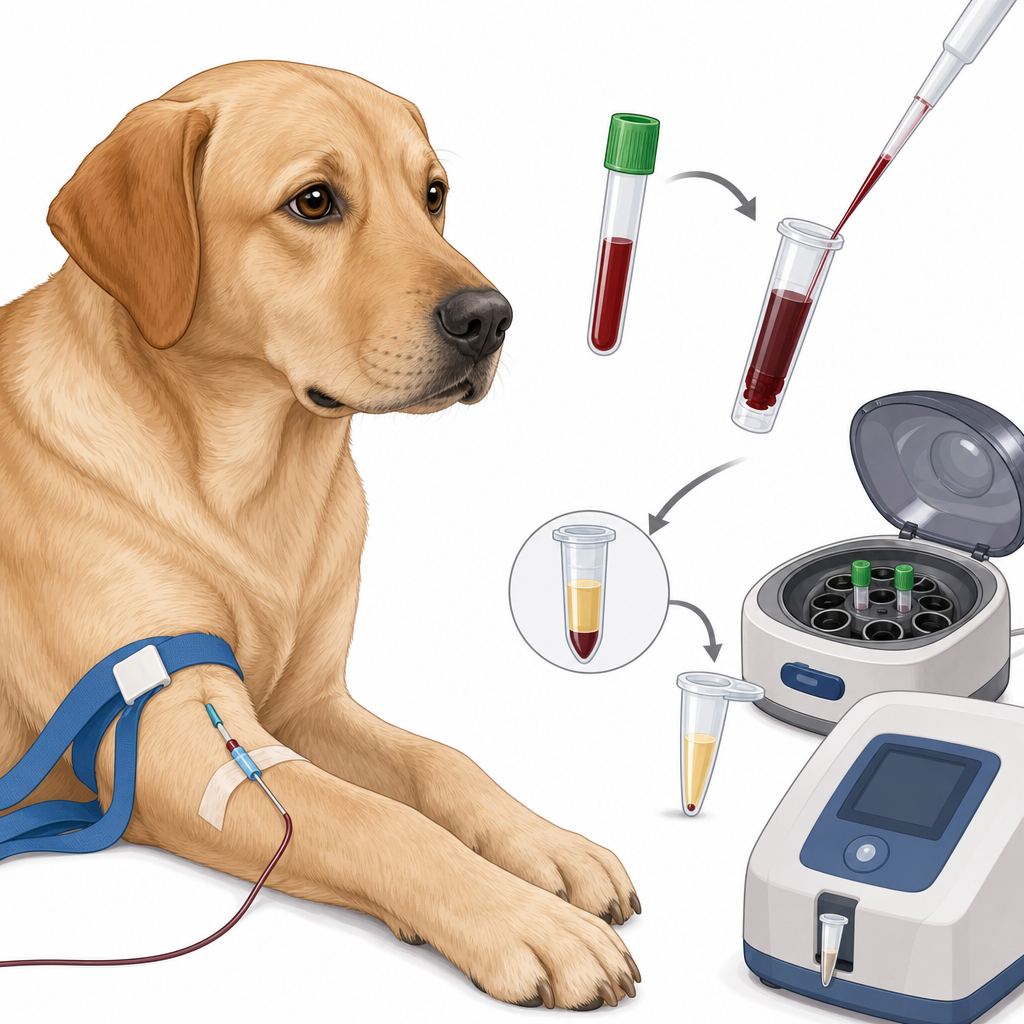
Ionized calcium testing is the gold standard for diagnosing hypercalcemia.
Determining whether kidney damage is the cause or the result of high calcium is one of the greatest diagnostic challenges in veterinary medicine. As noted in a leading veterinary internal medicine reference:
"Prolonged hypercalcemia, especially in conjunction with concurrent high-normal to increased serum phosphorus concentration, can also cause nephrocalcinosis and exacerbate renal insufficiency and azotemia. Determining whether the renal failure is primary or secondary in a dog with hypercalcemia, hyperphosphatemia, and azotemia poses an interesting diagnostic challenge..." — Internal Medicine
Your vet will carefully evaluate all of these parameters to map out the correct treatment plan.
Treatment options
Treatment for hypercalcemia is two-fold: it must address the immediate danger of high calcium levels (supportive therapy) while simultaneously targeting the underlying cause. According to a leading internal medicine textbook:
"Medical therapy should be directed at eradicating the underlying cause of the hypercalcemia. Supportive therapy to decrease the serum calcium concentration to less toxic levels is indicated if clinical signs are severe, if serum calcium concentration is greater than 17 mg/dL (dog) or 16 mg/dL (cat), if serum ionized calcium is greater than 1. 8 mmol/L (dog) or 1. 7 mmol/L (cat)..." — Internal Medicine
First-Line Therapies
- Sodium Chloride (Fluid Therapy): Intravenous saline fluids are the most critical first step. Saline rehydrates your pet and encourages the kidneys to flush excess calcium out of the body through urine.
- Furosemide (Loop Diuretic): Once your pet is fully hydrated, this diuretic is administered to help the kidneys excrete even more calcium. It must never be given to a dehydrated pet, as it can worsen kidney damage.
- Glucocorticoids (Corticosteroids): These medications reduce the amount of calcium absorbed by the intestines and promote its excretion through the kidneys. Vets often delay using steroids until a definitive diagnosis is reached, as they can destroy cancer cells and make it difficult to find the primary tumor.
Second-Line Therapies
- Calcitonin Salmon (Osteoclast Inhibiting Hormone): This hormone therapy stops bones from releasing calcium into the bloodstream. It is typically reserved for severe, life-threatening cases where first-line treatments have not sufficiently lowered calcium levels.
Prognosis
Because hypercalcemia is a metabolic state rather than a primary disease, long-term prognosis data for the condition itself is limited. The overall outlook for your pet depends almost entirely on the underlying cause.
If the high calcium is caused by a benign parathyroid tumor (common in Keeshonds), surgical removal of the affected gland carries an excellent prognosis, and most pets return to a normal life. If the cause is an aggressive cancer, the prognosis is much more guarded. If the hypercalcemia was prolonged and caused severe kidney damage (nephrocalcinosis), your pet may require lifelong management for chronic kidney disease.
Prevention
Most cases of hypercalcemia cannot be prevented because they are caused by internal diseases like cancer or autoimmune conditions. However, you can prevent toxicity-induced hypercalcemia by keeping potential toxins out of your pet's reach. This includes rodenticides containing cholecalciferol, human psoriasis creams, and vitamin D supplements.
For breeds at risk, regular senior wellness blood screens—including ionized calcium measurements—can help catch elevated calcium levels early, before they cause irreversible damage to the kidneys or heart.
When to call your vet
If you notice your pet is drinking and urinating significantly more than usual, schedule an appointment with your vet.
You must seek emergency veterinary care immediately if your pet exhibits any of the following red flags:
- Seizures or severe muscle tremors
- Extreme weakness or inability to stand
- Persistent, uncontrollable vomiting
- A very slow or irregular heartbeat
- Collapse or loss of consciousness
For specific breeds
If you own a Keeshond, be aware that this breed has an autosomal dominant genetic predisposition to primary hyperparathyroidism. This means if a parent carries the gene, there is a high likelihood their offspring will develop the condition. Genetic testing and routine blood screening are highly recommended for this breed.
If you own a Siamese cat, your pet has an increased risk of developing hypercalcemia. While the exact genetic mechanism is still unknown, regular wellness blood work is an important tool to monitor their calcium levels as they age.
Sources
- Small Animal Critical Care Medicine, 2nd Edition, pages 313, 314.
- Internal Medicine, 5th Edition, pages 920, 922.
My highlights & notes
Signs & symptoms
Breeds at higher risk
How it is diagnosed
- Ionized calcium measurementGold standard
- Serum PTH concentration
- Serum PTHrP concentration
- Total serum calcium measurement
Treatment approaches
Treatment must be prescribed by a licensed veterinarian based on your pet. Specific drug doses are intentionally not shown here.
Frequently asked questions
What is Hypercalcemia?
Hypercalcemia is an abnormally high level of calcium in a dog or cat's blood. This metabolic condition can cause severe damage to the kidneys, heart, and nervous system. Learn about the symptoms, underlying causes, diagnostic tests, and treatment options.
What are the symptoms of Hypercalcemia?
Loss of appetite、Dehydration、Lethargy、Muscle weakness、Polydipsia、Excessive urination、Vomiting (throwing up)、Constipation
How is Hypercalcemia diagnosed?
Ionized calcium measurement、Serum PTH concentration、Serum PTHrP concentration、Total serum calcium measurement
How is Hypercalcemia treated?
Treatment must be prescribed by a licensed veterinarian based on your pet. Specific drug doses are intentionally not shown here.
Sources
- Small Animal Critical Care Medicine, 2nd Edition (VetBooks.ir) · p. 313
- Small Animal Critical Care Medicine, 2nd Edition (VetBooks.ir) · p. 314
- Internal Medicine 5th · p. 922
- Internal Medicine 5th · p. 920
This article is for general education and is not a substitute for professional veterinary advice. If your pet is unwell, please consult a veterinarian.
Worried about your pet?
Peqaboo’s AI helps you track symptoms, understand lab reports, and know when to see a vet.
Get the Peqaboo app