

Hypercalcemia
Hypercalcemia
Også kendt som: Elevated blood calcium, High calcium
Kort sagt
Hypercalcemia is an abnormally high level of calcium in a dog or cat's blood. This metabolic condition can cause severe damage to the kidneys, heart, and nervous system. Learn about the symptoms, underlying causes, diagnostic tests, and treatment options.

TL;DR. Hyperkalcæmi er farligt forhøjet blodkalcium, der uden behandling kan skade nyrer, hjerte og nervesystem.
Hyperkalcæmi rammer hund og kat og kræver tidlig diagnose.
Hvad er det?
Kalcium styrer nerver, muskel (inkl. hjerte), koagulation og knogle. Overskud kaldes hyperkalcæmi og er ofte tegn på underliggende sygdom. Nyre- og nerveskade mulig.
"The consequences of hypercalcemia can be severe and affect multiple body systems including the central nervous syst"
Årsager og risikofaktorer
Tumorer (lymfom, analsækadenokarcinom), primær hyperparatyreoidisme, nyresygdom, vitamin D-toksicitet, Addison, idiopatisk hos kat. Risiko: Keeshond, Siamese cats.
Tegn
Polydipsi/polyuri, dehydrering, anoreksi, letargi, opkast; af og til obstipation, rysten, arytmier; sjældent kramper.

Øget tørst og urin er klassiske tidlige tegn.
"Bradycardia may be detected on physical examination, and electrocardiographic (ECG) monitoring may reveal a prolonged PR interval, widened QRS complex, shortened QT interval, shortened or absent ST segment, and a widened T wave. Bradyarrhythmias may progress to complete heart block, asystole, and cardiac arrest in severely affected animals."
Diagnose
Ioniseret kalcium [GULD], totalkalcium, PTH/PTHrP, urin og nyrefunktion.
"Prolonged hypercalcemia, especially in conjunction with concurrent high-normal to increased serum phosphorus concentration, can also cause nephrocalcinosis and exacerbate renal insufficiency and azotemia. Determining whether the renal failure is primary or secondary in a dog with hypercalcemia, hyperphosphatemia, and azotemia poses an interesting diagnostic challenge..."
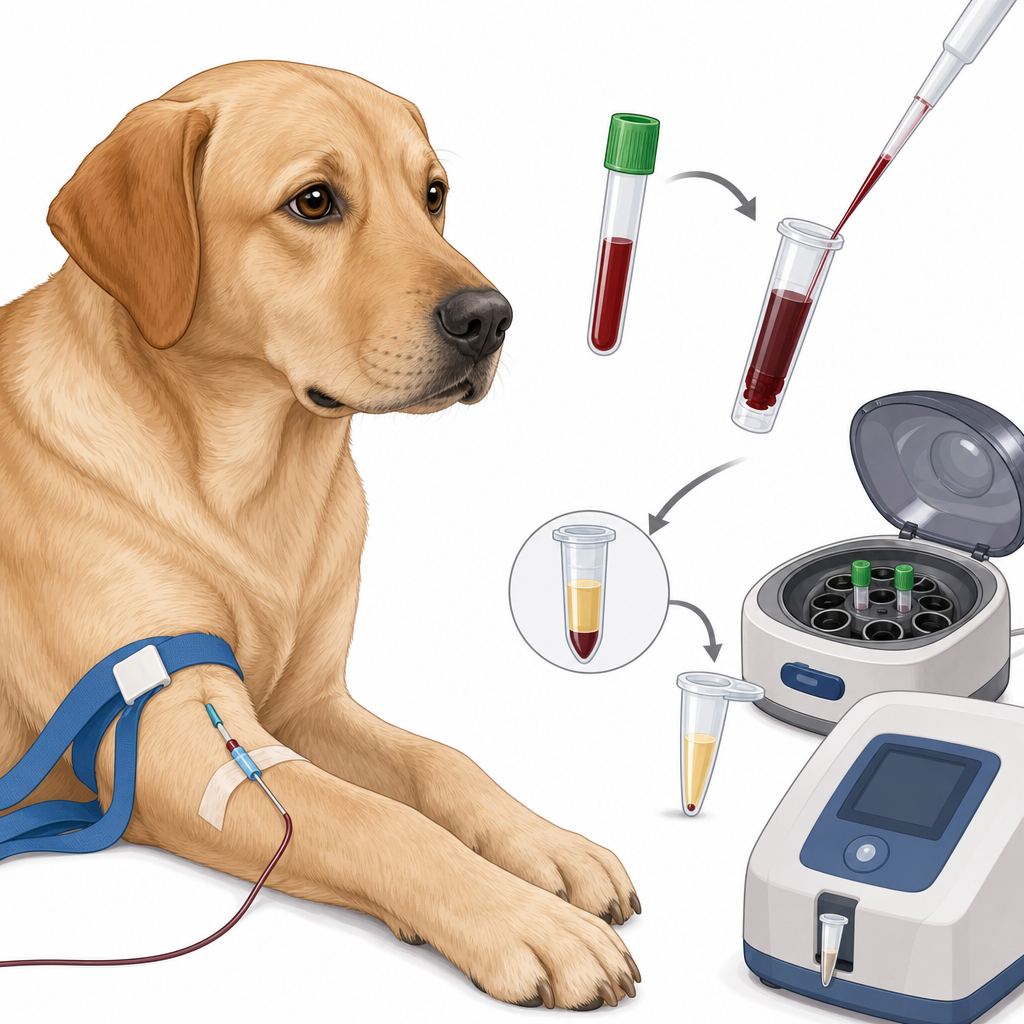
Ioniseret kalcium er guldstandarden.
Behandling
Årsag plus støtte ved alvorlige tegn eller meget høje værdier.
"Medical therapy should be directed at eradicating the underlying cause of the hypercalcemia. Supportive therapy to decrease the serum calcium concentration to less toxic levels is indicated if clinical signs are severe, if serum calcium concentration is greater than 17 mg/dL (dog) or 16 mg/dL (cat), if serum ionized calcium is greater than 1. 8 mmol/L (dog) or 1. 7 mmol/L (cat)..."
Sodium Chloride IV; Furosemide efter hydrering; Glucocorticoids; alvorlige: Calcitonin Salmon.
Prognose
Afhænger af årsagen. Godartet biskjoldbruskkirtel opereret: ofte fremragende. Aggressiv kræft: reserveret.
Forebyggelse
Undgå vitamin D-toksiner; prøver i risikoracer.
Hvornår ringe dyrlæge
Mere tørst/urin: konsultation. Akut: kramper, ekstrem svaghed, ukontrollable opkast, bradykardi, kollaps.
For specifikke racer
Keeshond: arvelig primær hyperparatyreoidisme. Siameser: højere risiko for hyperkalcæmi.
Kilder
- Small Animal Critical Care Medicine, 2nd Edition, pages 313, 314.
- Internal Medicine, 5th Edition, pages 920, 922.
My highlights & notes
Tegn og symptomer
Racer med højere risiko
Hvordan det diagnosticeres
- Ionized calcium measurementGuldstandard
- Serum PTH concentration
- Serum PTHrP concentration
- Total serum calcium measurement
Behandlingsmetoder
Behandling skal ordineres af en autoriseret dyrlæge. Specifikke doser vises bevidst ikke.
Ofte stillede spørgsmål
What is Hypercalcemia?
Hypercalcemia is an abnormally high level of calcium in a dog or cat's blood. This metabolic condition can cause severe damage to the kidneys, heart, and nervous system. Learn about the symptoms, underlying causes, diagnostic tests, and treatment options.
What are the symptoms of Hypercalcemia?
Loss of appetite、Dehydration、Lethargy、Muscle weakness、Polydipsia、Excessive urination、Vomiting (throwing up)、Constipation
How is Hypercalcemia diagnosed?
Ionized calcium measurement、Serum PTH concentration、Serum PTHrP concentration、Total serum calcium measurement
How is Hypercalcemia treated?
Behandling skal ordineres af en autoriseret dyrlæge. Specifikke doser vises bevidst ikke.
Kilder
- Small Animal Critical Care Medicine, 2nd Edition (VetBooks.ir) · p. 313
- Small Animal Critical Care Medicine, 2nd Edition (VetBooks.ir) · p. 314
- Internal Medicine 5th · p. 922
- Internal Medicine 5th · p. 920
Artiklen er generel oplysning og erstatter ikke dyrlægeråd. Hvis dyret er sygt, kontakt en dyrlæge.
Bekymret for dit dyr?
Peqaboos AI hjælper dig med at følge symptomer, forstå labsvar og vide, hvornår du skal se dyrlægen.
Hent Peqaboo-appen