

Hypercalcemia
Hypercalcemia
Aussi appelé: Elevated blood calcium, High calcium
En bref
Hypercalcemia is an abnormally high level of calcium in a dog or cat's blood. This metabolic condition can cause severe damage to the kidneys, heart, and nervous system. Learn about the symptoms, underlying causes, diagnostic tests, and treatment options.

TL;DR. L'hypercalcémie est une élévation dangereuse du calcium sanguin qui peut endommager reins, cœur et système nerveux sans traitement.
L'hypercalcémie touche chiens et chats et nécessite un diagnostic précoce.
Qu'est-ce que c'est ?
Le calcium régule nerfs, muscle (dont le cœur), coagulation et os. Un excès définit l'hypercalcémie, souvent signe d'une maladie sous-jacente. Risque rénal et neurologique.
"The consequences of hypercalcemia can be severe and affect multiple body systems including the central nervous syst"
Causes et facteurs de risque
Cancers (lymphome, adénocarcinome des sacs anaux), hyperparathyroïdie primaire, maladie rénale, toxicité vitamine D, Addison, idiopathique chez le chat. Risque : Keeshond, Siamese cats.
Signes à surveiller
Polydipsie/polyurie, déshydratation, anorexie, léthargie, vomissements ; parfois constipation, tremblements, arythmies ; rarement convulsions.

Soif et urines accrues sont des signes précoces classiques.
"Bradycardia may be detected on physical examination, and electrocardiographic (ECG) monitoring may reveal a prolonged PR interval, widened QRS complex, shortened QT interval, shortened or absent ST segment, and a widened T wave. Bradyarrhythmias may progress to complete heart block, asystole, and cardiac arrest in severely affected animals."
Diagnostic
Calcium ionisé [OR], calcium total, PTH/PTHrP, urine et fonction rénale.
"Prolonged hypercalcemia, especially in conjunction with concurrent high-normal to increased serum phosphorus concentration, can also cause nephrocalcinosis and exacerbate renal insufficiency and azotemia. Determining whether the renal failure is primary or secondary in a dog with hypercalcemia, hyperphosphatemia, and azotemia poses an interesting diagnostic challenge..."
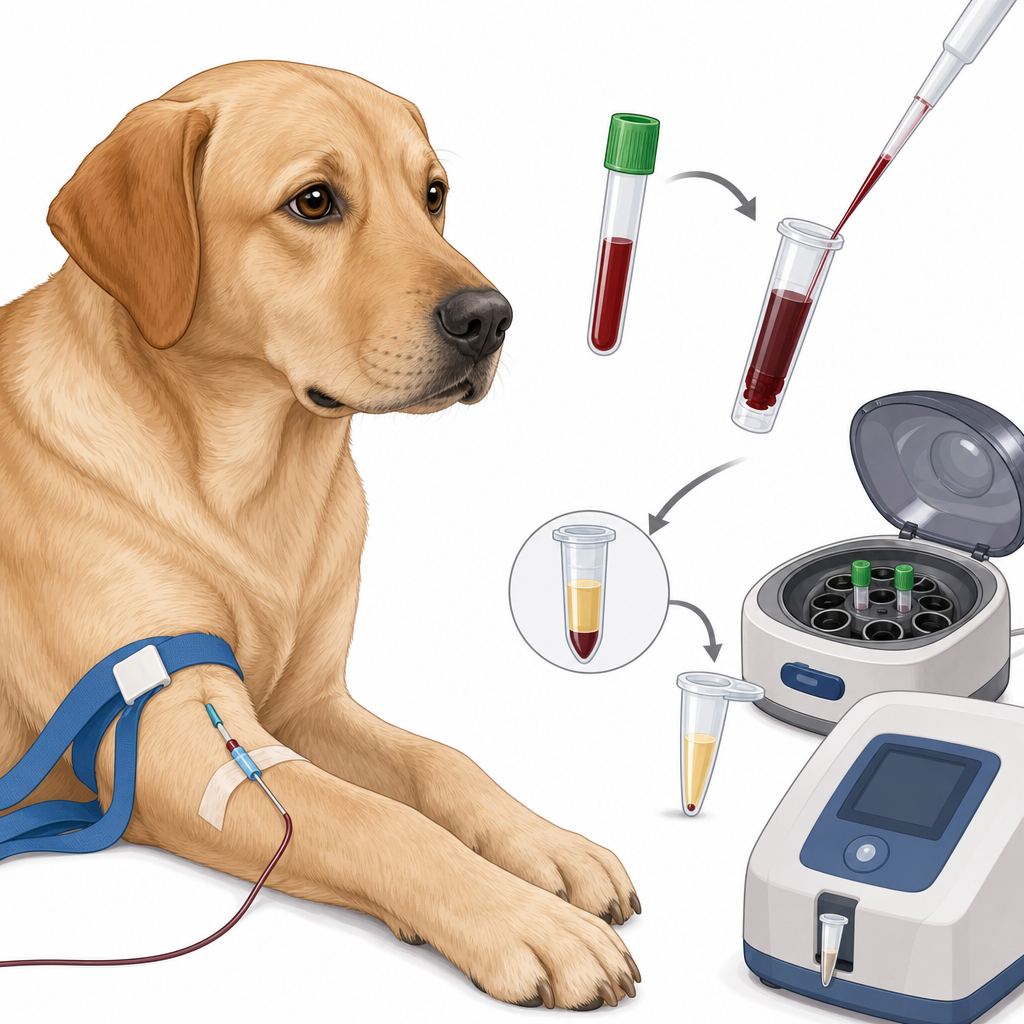
Le calcium ionisé est le test de référence.
Traitement
Cause + soutien si signes graves ou valeurs très élevées.
"Medical therapy should be directed at eradicating the underlying cause of the hypercalcemia. Supportive therapy to decrease the serum calcium concentration to less toxic levels is indicated if clinical signs are severe, if serum calcium concentration is greater than 17 mg/dL (dog) or 16 mg/dL (cat), if serum ionized calcium is greater than 1. 8 mmol/L (dog) or 1. 7 mmol/L (cat)..."
Sodium Chloride IV ; Furosemide après réhydratation ; Glucocorticoids ; graves : Calcitonin Salmon.
Pronostic
Selon la cause. Tumeur parathyroïdienne bénigne opérée : souvent excellent. Cancer agressif : réservé.
Prévention
Éviter toxiques à vitamine D ; bilans dans races à risque.
Quand appeler le vétérinaire
Soif/urines accrues : consultation. Urgence : convulsions, faiblesse extrême, vomissements incoercibles, bradycardie, collapsus.
Pour certaines races
Keeshond : hyperparathyroïdie primaire héréditaire. Siamois : risque accru d'hypercalcémie.
Sources
- Small Animal Critical Care Medicine, 2nd Edition, pages 313, 314.
- Internal Medicine, 5th Edition, pages 920, 922.
My highlights & notes
Signes et symptômes
Races à risque plus élevé
Comment c’est diagnostiqué
- Ionized calcium measurementRéférence
- Serum PTH concentration
- Serum PTHrP concentration
- Total serum calcium measurement
Approches de traitement
Le traitement doit être prescrit par un vétérinaire agréé selon votre animal. Les doses précises ne sont volontairement pas affichées.
Questions fréquentes
What is Hypercalcemia?
Hypercalcemia is an abnormally high level of calcium in a dog or cat's blood. This metabolic condition can cause severe damage to the kidneys, heart, and nervous system. Learn about the symptoms, underlying causes, diagnostic tests, and treatment options.
What are the symptoms of Hypercalcemia?
Loss of appetite、Dehydration、Lethargy、Muscle weakness、Polydipsia、Excessive urination、Vomiting (throwing up)、Constipation
How is Hypercalcemia diagnosed?
Ionized calcium measurement、Serum PTH concentration、Serum PTHrP concentration、Total serum calcium measurement
How is Hypercalcemia treated?
Le traitement doit être prescrit par un vétérinaire agréé selon votre animal. Les doses précises ne sont volontairement pas affichées.
Sources
- Small Animal Critical Care Medicine, 2nd Edition (VetBooks.ir) · p. 313
- Small Animal Critical Care Medicine, 2nd Edition (VetBooks.ir) · p. 314
- Internal Medicine 5th · p. 922
- Internal Medicine 5th · p. 920
Cet article est informatif et ne remplace pas un avis vétérinaire. Si votre animal est malade, consultez un vétérinaire.
Inquiet pour votre animal ?
L’IA Peqaboo aide à suivre les symptômes, comprendre les analyses et savoir quand consulter.
Télécharger l’app Peqaboo