

Hypercalcemia
Hypercalcemia
Auch bekannt als: Elevated blood calcium, High calcium
Kurz gesagt
Hypercalcemia is an abnormally high level of calcium in a dog or cat's blood. This metabolic condition can cause severe damage to the kidneys, heart, and nervous system. Learn about the symptoms, underlying causes, diagnostic tests, and treatment options.

TL;DR. Hyperkalzämie ist ein gefährlich erhöhter Blutkalziumspiegel, der ohne Behandlung Nieren, Herz und Nervensystem schädigen kann.
Hyperkalzämie betrifft Hunde und Katzen und braucht frühe Diagnose.
Was ist das?
Kalzium steuert Nerven, Muskel (inkl. Herz), Gerinnung und Knochen. Ein Überschuss heißt Hyperkalzämie und ist oft Zeichen einer Grunderkrankung. Nieren- und Nervenschäden möglich.
"The consequences of hypercalcemia can be severe and affect multiple body systems including the central nervous syst"
Ursachen und Risikofaktoren
Tumoren (Lymphom, Analsackadenokarzinom), primärer Hyperparathyreoidismus, Nierenerkrankung, Vitamin-D-Toxizität, Addison, idiopathisch bei Katzen. Risiko: Keeshond, Siamese cats.
Anzeichen
Polydipsie/Polyurie, Dehydratation, Anorexie, Lethargie, Erbrechen; manchmal Obstipation, Zittern, Arrhythmien; selten Krampfanfälle.

Mehr Durst und Urin sind klassische Frühzeichen.
"Bradycardia may be detected on physical examination, and electrocardiographic (ECG) monitoring may reveal a prolonged PR interval, widened QRS complex, shortened QT interval, shortened or absent ST segment, and a widened T wave. Bradyarrhythmias may progress to complete heart block, asystole, and cardiac arrest in severely affected animals."
Diagnose
Ionisiertes Kalzium [GOLD], Gesamtkalzium, PTH/PTHrP, Urin und Nierenwerte.
"Prolonged hypercalcemia, especially in conjunction with concurrent high-normal to increased serum phosphorus concentration, can also cause nephrocalcinosis and exacerbate renal insufficiency and azotemia. Determining whether the renal failure is primary or secondary in a dog with hypercalcemia, hyperphosphatemia, and azotemia poses an interesting diagnostic challenge..."
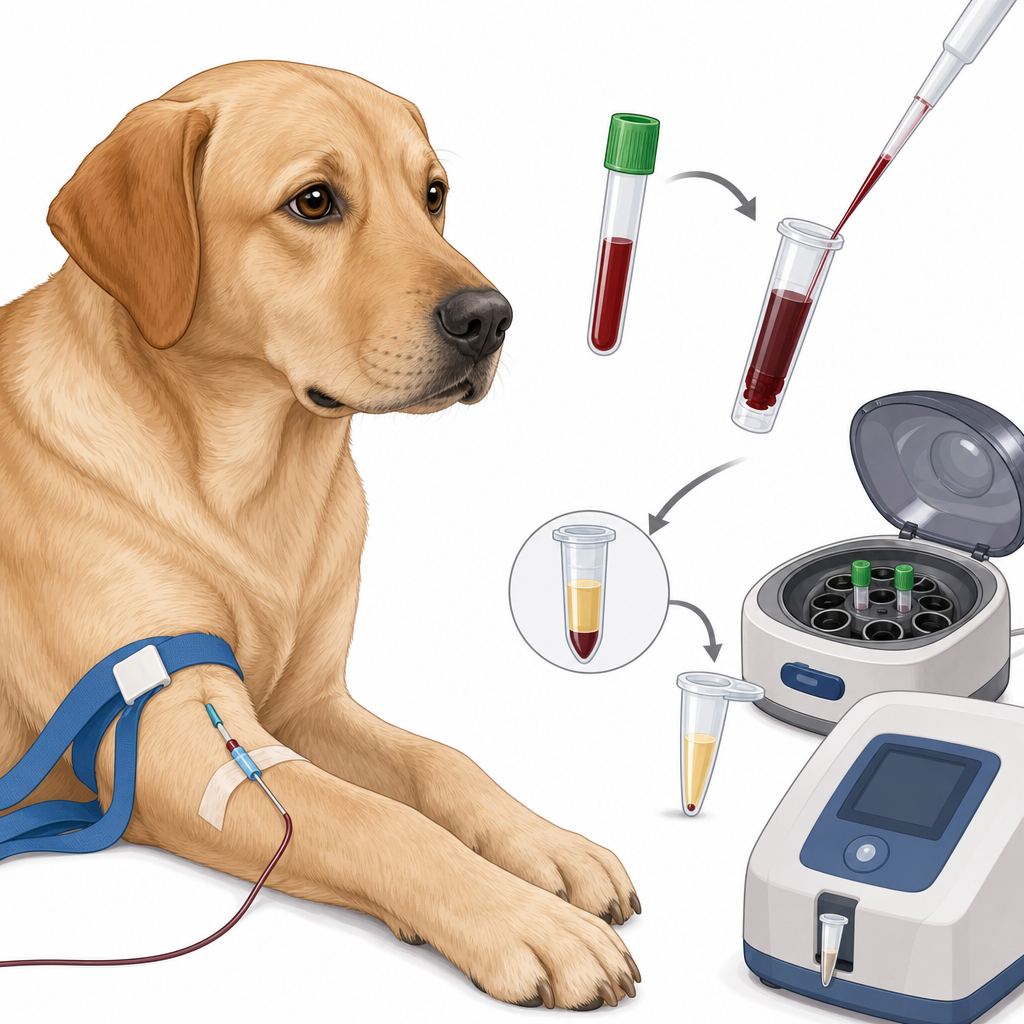
Ionisiertes Kalzium ist der Goldstandard.
Behandlung
Ursache plus Support bei schweren Zeichen oder sehr hohen Werten.
"Medical therapy should be directed at eradicating the underlying cause of the hypercalcemia. Supportive therapy to decrease the serum calcium concentration to less toxic levels is indicated if clinical signs are severe, if serum calcium concentration is greater than 17 mg/dL (dog) or 16 mg/dL (cat), if serum ionized calcium is greater than 1. 8 mmol/L (dog) or 1. 7 mmol/L (cat)..."
Sodium Chloride IV; Furosemide nach Hydrierung; Glucocorticoids; schwer: Calcitonin Salmon.
Prognose
Abhängig von der Ursache. Gutartige Parathyreoidea-OP oft exzellent. Aggressiver Krebs: vorsichtig.
Vorbeugung
Vitamin-D-Toxine meiden; Laborkontrollen bei Risikorassen.
Wann den Tierarzt rufen
Mehr Durst/Urin: Termin. Notfall: Krämpfe, extreme Schwäche, unstillbares Erbrechen, Bradykardie, Kollaps.
Bei bestimmten Rassen
Keeshond: erblicher primärer Hyperparathyreoidismus. Siam: erhöhtes Hyperkalzämie-Risiko.
Quellen
- Small Animal Critical Care Medicine, 2nd Edition, pages 313, 314.
- Internal Medicine, 5th Edition, pages 920, 922.
My highlights & notes
Anzeichen & Symptome
Rassen mit höherem Risiko
Diagnose
- Ionized calcium measurementGoldstandard
- Serum PTH concentration
- Serum PTHrP concentration
- Total serum calcium measurement
Behandlungsansätze
Behandlungen müssen von einem approbierten Tierarzt verordnet werden. Konkrete Dosierungen werden absichtlich nicht angezeigt.
Häufige Fragen
What is Hypercalcemia?
Hypercalcemia is an abnormally high level of calcium in a dog or cat's blood. This metabolic condition can cause severe damage to the kidneys, heart, and nervous system. Learn about the symptoms, underlying causes, diagnostic tests, and treatment options.
What are the symptoms of Hypercalcemia?
Loss of appetite、Dehydration、Lethargy、Muscle weakness、Polydipsia、Excessive urination、Vomiting (throwing up)、Constipation
How is Hypercalcemia diagnosed?
Ionized calcium measurement、Serum PTH concentration、Serum PTHrP concentration、Total serum calcium measurement
How is Hypercalcemia treated?
Behandlungen müssen von einem approbierten Tierarzt verordnet werden. Konkrete Dosierungen werden absichtlich nicht angezeigt.
Quellen
- Small Animal Critical Care Medicine, 2nd Edition (VetBooks.ir) · p. 313
- Small Animal Critical Care Medicine, 2nd Edition (VetBooks.ir) · p. 314
- Internal Medicine 5th · p. 922
- Internal Medicine 5th · p. 920
Dieser Artikel dient der allgemeinen Information und ersetzt keinen tierärztlichen Rat. Bei Krankheit bitte einen Tierarzt aufsuchen.
Sorgen um Ihr Tier?
Peqaboos KI hilft Symptome zu tracken, Laborberichte zu verstehen und zu wissen, wann der Tierarzt nötig ist.
Peqaboo-App laden