

Hyperadrenocorticism
Hyperadrenocorticism
Also known as: Cushing Disease, Cushing's Syndrome, Pituitary-dependent hyperadrenocorticism, PDH, Adrenal tumor hyperadrenocorticism, ATH
In short
Hyperadrenocorticism, or Cushing's disease, is a common hormonal disorder in dogs and cats caused by an overproduction of cortisol. Learn about the symptoms, diagnostic tests, and treatment options.
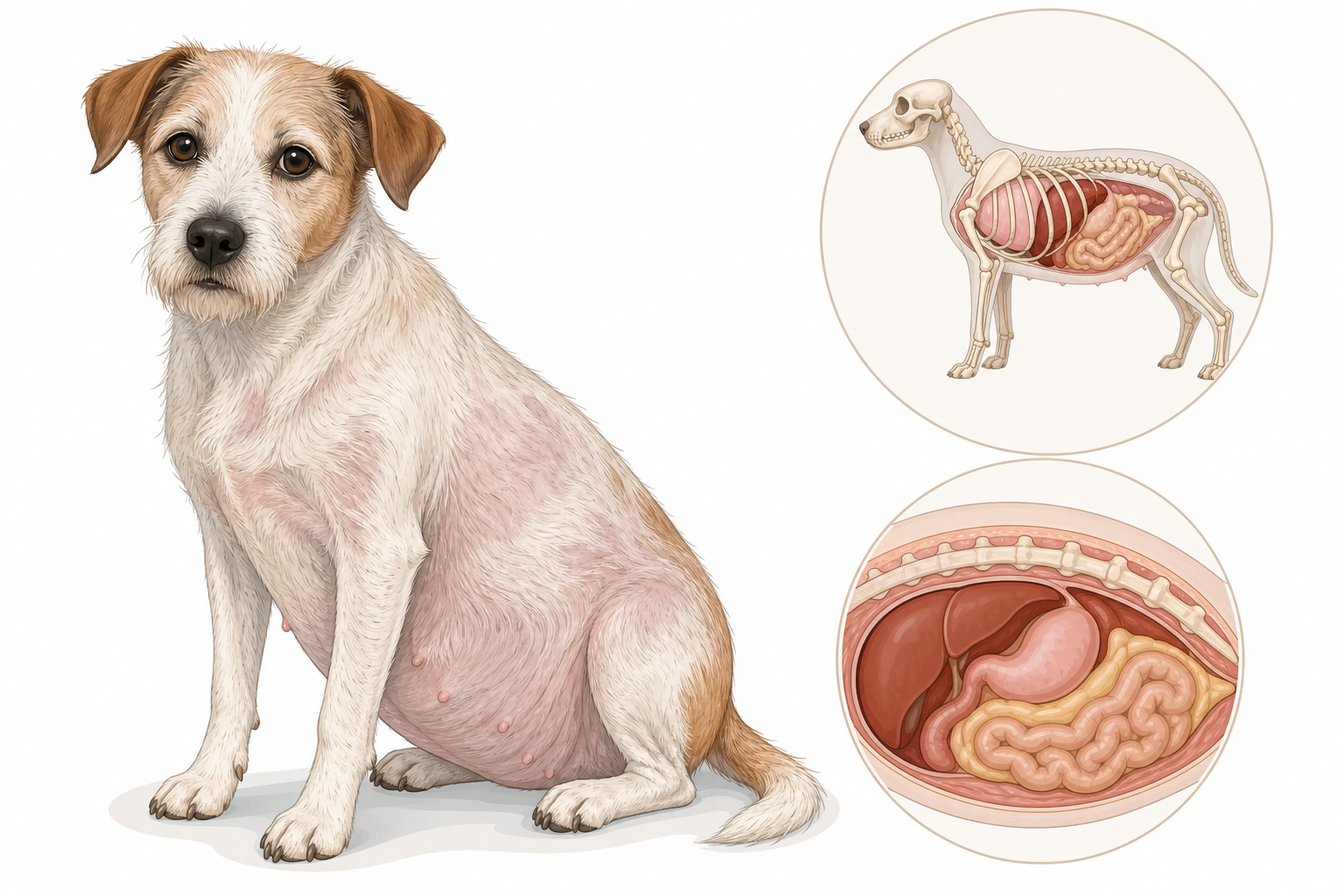
TL;DR. Hyperadrenocorticism, commonly known as Cushing's disease, is a hormonal disorder in dogs and cats caused by the chronic overproduction of cortisol, leading to symptoms like excessive thirst, hair loss, and muscle weakness that require lifelong veterinary management.
Cushing's disease often causes subtle physical changes, such as hair loss and a pot-bellied appearance, which can be mistaken for normal aging.
What is it?
Cortisol is an essential hormone produced by the adrenal glands, which are two small organs located near the kidneys. Often called the "stress hormone," cortisol plays a vital role in regulating blood sugar, managing metabolism, reducing inflammation, and helping the body respond to stress. However, when the body produces too much cortisol over a long period, it leads to a complex clinical condition known as hyperadrenocorticism, or Cushing's disease.
In a healthy pet, the pituitary gland (a tiny gland at the base of the brain) acts as the control center. It releases adrenocorticotropic hormone (ACTH), which signals the adrenal glands to produce and release cortisol. Once cortisol levels in the blood reach a certain point, a feedback loop tells the brain to stop releasing ACTH. In pets with Cushing's disease, this delicate feedback loop is broken, resulting in a continuous, damaging flood of cortisol throughout the body.
Cushing's disease is a common endocrine disorder in dogs, but it is relatively rare in cats. Because cortisol affects almost every tissue and organ system, the symptoms of hyperadrenocorticism are diverse and can mimic the natural aging process. Understanding how this disease works is the first step in helping your pet regain their quality of life.
Causes & risk factors
There are three primary forms of hyperadrenocorticism, classified by where the underlying problem originates:
- Pituitary-Dependent Hyperadrenocorticism (PDH): This is the most common form of the disease. It occurs when a tumor (usually a benign adenoma) develops on the pituitary gland, causing it to secrete excessive amounts of ACTH. This constant stimulation forces both adrenal glands to enlarge and overproduce cortisol. As noted in a leading veterinary internal medicine reference:
"Pituitary-dependent hyperadrenocorticism (PDH) is the most common cause of spontaneous hyperadrenocorticism, accounting for approximately 80% to 85% of cases. A functional adrenocorticotropic hormone (ACTH)–secreting pituitary tumor is found at necropsy in approximately 85% of dogs with PDH."
- Adrenal-Dependent Hyperadrenocorticism (ATH): This form is caused by a tumor directly on one of the adrenal glands. These tumors can be benign (adenomas) or malignant (carcinomas) and produce cortisol independently of the brain's signals. The high level of cortisol produced by the tumor shuts down the brain's ACTH production, which has a specific effect on the other, healthy adrenal gland:
"The cortisol produced by these tumors suppresses circulating plasma ACTH concentrations, causing cortical atrophy of the uninvolved adrenal and atrophy of all normal cells in the involved adrenal... This atrophy creates asymmetry in the size of the adrenal glands, which can be identified on abdominal ultrasonography."
- Iatrogenic Hyperadrenocorticism: This form is not caused by a tumor, but rather by the external administration of steroid medications (glucocorticoids) used to treat other conditions, such as allergies, arthritis, or immune-mediated diseases. This can occur with oral medications, injections, or even topical drops:
"Iatrogenic hyperadrenocorticism typically results from excessive administration of glucocorticoids to control allergic or immune-mediated disorders. It can also develop as a result of the administration of eye, ear, or skin medications containing glucocorticoids, especially in small dogs (weight < 10 kg) receiving them long term."
Signs to watch for
The clinical signs of Cushing's disease develop gradually, often making them easy to mistake for normal aging. However, as the disease progresses, the physical changes become more pronounced.
Common Signs:
- Polydipsia (Increased Thirst) and Polyuria (Increased Urination): Your pet may drink constantly, empty their water bowl multiple times a day, and need to go outside frequently, sometimes having accidents in the house.
- Polyphagia (Increased Appetite): Pets often develop an insatiable hunger, begging for food, stealing scraps, or raiding the garbage.
- Abdominal Enlargement: Often described as a "pot-bellied" appearance. This occurs because cortisol causes muscle weakness in the abdominal wall while simultaneously redistributing fat to the abdomen.
- Endocrine Alopecia: Symmetrical hair loss that typically affects the trunk, flanks, and tail, while sparing the head and limbs.
- Thin Skin and Hyperpigmentation: The skin becomes fragile, loses its elasticity, and may develop dark, hyperpigmented patches.
- Panting: Excessive panting, even when the pet is resting or in a cool environment.
- Feline Fragile Skin Syndrome: In cats, the skin can become so thin and fragile that it tears easily during routine handling or grooming.
- Secondary Pyoderma: Recurrent bacterial skin infections due to cortisol's immune-suppressing effects.
- Muscle Weakness: Lethargy, reluctance to exercise, or difficulty climbing stairs or jumping.
Occasional Signs:
- Easy Bruising: Minor bumps can cause noticeable bruising due to blood vessel fragility.
- Poor Wound Healing: Cuts, scrapes, or surgical incisions take an unusually long time to heal.
- Calcinosis Cutis: The development of hard, gritty, chalky calcium deposits within the skin, which can become inflamed and itchy.
- Neurologic Signs: If a pituitary tumor grows large (known as a pituitary macrotumor), it can press on surrounding brain tissue, causing behavior changes, dullness, head pressing, or seizures.

Symmetrical hair loss along the flanks and a distended abdomen are classic clinical signs of hyperadrenocorticism in dogs.
How vets diagnose it
Diagnosing hyperadrenocorticism is a multi-step process. Because many of the symptoms of Cushing's overlap with other diseases (such as diabetes or thyroid disorders), your vet will need to perform several tests to confirm the diagnosis and determine the underlying cause.
The diagnostic process typically begins with routine blood work and a urinalysis. If these initial tests suggest Cushing's, your vet will recommend specific endocrine screening tests:
- Urine Cortisol/Creatinine Ratio (UCCR): This is a simple screening test performed on a urine sample collected at home (to avoid stress-induced cortisol spikes). A normal result highly suggests your pet does not have Cushing's, but an elevated result is not definitive, as stress or other illnesses can also raise urine cortisol.
- Low-Dose Dexamethasone Suppression (LDDS) Test: This is considered the gold standard screening test. Your vet will draw a baseline blood sample, inject a tiny dose of a synthetic steroid (dexamethasone), and then draw blood samples 4 and 8 hours later. In a healthy pet, the body recognizes the steroid and suppresses its own cortisol production. In a pet with Cushing's, this suppression does not occur.
- ACTH Stimulation Test: This test measures how the adrenal glands respond to a synthetic version of the hormone ACTH. It is highly useful for identifying iatrogenic Cushing's and is also the primary test used to monitor your pet's response to medical treatment.
Once Cushing's is confirmed, your vet must determine whether it is pituitary-dependent (PDH) or adrenal-dependent (ATH) to choose the best treatment:
- Endogenous ACTH Concentration: Measuring the actual amount of ACTH in the blood can help differentiate the two forms. As noted in a leading veterinary textbook:
"Plasma ACTH concentrations below the reference range, especially undetectable results, are consistent with ATH, and plasma ACTH concentrations in the upper half of the reference range or increased are consistent with PDH in cats."
- Abdominal Ultrasonography: This imaging technique allows your vet to visualize the size and shape of the adrenal glands. If both glands are symmetrically enlarged, it points to PDH. If one gland is enlarged (often with an irregular shape) and the other is shrunken (atrophied), it indicates an adrenal tumor (ATH).
- High-Dose Dexamethasone Suppression (HDDS) Test: Similar to the low-dose test, but uses a higher dose of dexamethasone to help differentiate PDH from ATH.
- CT or MRI of the Brain: Advanced imaging may be recommended to evaluate the pituitary gland for the presence of a large tumor (macrotumor), especially if your pet is showing neurologic signs.

Abdominal ultrasound is a vital tool for evaluating the size and shape of the adrenal glands, helping to differentiate pituitary-dependent from adrenal-dependent disease.
Treatment options
Treatment for hyperadrenocorticism depends on the underlying cause (PDH vs. ATH) and the severity of the clinical signs.
First-Line Therapy: Adrenal Steroid Synthesis Inhibitors
Trilostane is the most commonly prescribed medication for dogs with Cushing's disease. It works by blocking an enzyme (3-beta-hydroxysteroid dehydrogenase) required for the production of cortisol. Trilostane is highly effective at controlling clinical signs, but it requires careful, lifelong monitoring. Your vet will perform regular blood tests (such as the ACTH stimulation test or pre-pill cortisol tests) to ensure the dose is safe and effective.
Second-Line Therapy: Adrenal Cytotoxic Agents
Mitotane is an antineoplastic drug that selectively destroys the cortisol-producing cells of the adrenal cortex. While highly effective, mitotane requires a strict "induction" phase where the drug is given daily, followed by a "maintenance" phase. Because it physically breaks down adrenal tissue, there is a higher risk of causing permanent adrenal insufficiency (Addison's disease), making close veterinary supervision and frequent blood monitoring essential.
Third-Line Therapies
If first- and second-line medications are not tolerated or are unavailable, other options may be considered:
- Ketoconazole: An azole antifungal medication that has a secondary effect of inhibiting steroid synthesis enzymes. It is generally less effective than trilostane or mitotane but can be used as an alternative.
- Metyrapone: An adrenal steroid inhibitor occasionally used in cats or dogs when other treatments are not viable.
Surgical Options
For adrenal-dependent Cushing's (ATH), surgical removal of the affected adrenal gland (adrenalectomy) is the treatment of choice if the tumor has not spread to other organs. If successful, surgery can be curative. For pituitary-dependent Cushing's (PDH), surgical removal of the pituitary gland (hypophysectomy) is performed at a small number of specialized veterinary referral hospitals.
Managing Iatrogenic Cushing's
If your pet has iatrogenic Cushing's, the treatment is to slowly and carefully taper off the offending steroid medication under strict veterinary guidance. Stopping steroids abruptly can be life-threatening, as the pet's own adrenal glands have shrunken and cannot immediately produce the cortisol necessary for life.
Prognosis
The prognosis for pets with hyperadrenocorticism is highly variable and depends on the specific type of disease, the presence of concurrent conditions, and how quickly treatment is initiated.
For dogs with pituitary-dependent Cushing's (PDH) who receive consistent medical therapy and monitoring, the prognosis is generally good. Many dogs live comfortably for 2 to 4 years or longer with an excellent quality of life.
For adrenal-dependent Cushing's (ATH), the prognosis depends on whether the tumor is benign or malignant, and whether it can be surgically removed. Successful surgery can offer a normal lifespan, but malignant tumors that have spread carry a much more guarded prognosis.
Complications can significantly impact the prognosis. Pets with Cushing's are at an increased risk for developing high blood pressure, urinary tract infections, diabetes mellitus, and pulmonary thromboembolism (a life-threatening blood clot in the lungs). In cats, the prognosis is generally more guarded than in dogs, as feline Cushing's is often associated with severe, insulin-resistant diabetes and extreme skin fragility.
Prevention
Spontaneous hyperadrenocorticism (PDH and ATH) cannot be prevented, as it is caused by naturally occurring tumors.
However, iatrogenic Cushing's is highly preventable. You can help protect your pet by working closely with your vet to use steroid medications responsibly. Always use the lowest effective dose for the shortest possible duration, and explore alternative, non-steroidal treatments for chronic conditions like allergies or arthritis whenever possible. Never alter your pet's steroid dosage without consulting your veterinarian.
When to call your vet
If your pet is diagnosed with Cushing's or is undergoing treatment, you should monitor them closely.
Contact your vet during regular hours if you notice:
- A gradual return of symptoms like increased drinking, urination, or panting.
- Poor appetite or mild lethargy.
- New skin infections or slow-healing wounds.
Seek immediate emergency veterinary care if your pet exhibits:
- Sudden, severe difficulty breathing or rapid, labored panting (which can indicate a life-threatening pulmonary thromboembolism).
- Extreme weakness, collapse, or inability to stand.
- Persistent vomiting, diarrhea, or refusal to eat (which can indicate an acute Addisonian crisis from medication overdose).
- Neurologic changes, such as seizures, head pressing, or sudden blindness.
For specific breeds
While hyperadrenocorticism can affect any dog, certain breeds have a higher genetic predisposition to developing the disease. These breeds include:
- Boxer
- Boston Terrier
- Dachshund
- Poodle (all sizes)
- Scottish Terrier
- German Shepherd Dog
- Beagle
- Labrador Retriever
If you own one of these breeds, it is especially important to remain vigilant for early signs of the disease, such as subtle increases in water consumption, unexplained panting, or changes in their coat quality. Early detection and treatment are key to managing Cushing's successfully.
Sources
- Textbook of Veterinary Internal Medicine, 5th Edition, pp. 858, 859, 882.
- Small Animal Dermatology: A Color Atlas and Therapeutic Guide, p. 301.
My highlights & notes
Signs & symptoms
Breeds at higher risk
How it is diagnosed
- ACTH Stimulation Test
- Abdominal Ultrasonography
- CT or MRI of the brain
- Endogenous ACTH concentration
- High-Dose Dexamethasone Suppression (HDDS) Test
- Low-Dose Dexamethasone Suppression (LDDS) Test
- Urine Cortisol/Creatinine Ratio (UCCR)
Treatment approaches
Treatment must be prescribed by a licensed veterinarian based on your pet. Specific drug doses are intentionally not shown here.
Frequently asked questions
What is Hyperadrenocorticism?
Hyperadrenocorticism, or Cushing's disease, is a common hormonal disorder in dogs and cats caused by an overproduction of cortisol. Learn about the symptoms, diagnostic tests, and treatment options.
What are the symptoms of Hyperadrenocorticism?
Abdominal enlargement、Endocrine alopecia、Darkening of the skin、Muscle weakness、Panting、Polydipsia、Increased appetite、Excessive urination
How is Hyperadrenocorticism diagnosed?
ACTH Stimulation Test、Abdominal Ultrasonography、CT or MRI of the brain、Endogenous ACTH concentration、High-Dose Dexamethasone Suppression (HDDS) Test、Low-Dose Dexamethasone Suppression (LDDS) Test
How is Hyperadrenocorticism treated?
Treatment must be prescribed by a licensed veterinarian based on your pet. Specific drug doses are intentionally not shown here.
Sources
- Internal Medicine 5th · p. 858
- Internal Medicine 5th · p. 858
- 皮膚病 教科書點子書 Small-Animal-Dermatology-A-Color-Atlas-and-Therapeutic-Guide · p. 301
- Internal Medicine 5th · p. 859
- Internal Medicine 5th · p. 882
This article is for general education and is not a substitute for professional veterinary advice. If your pet is unwell, please consult a veterinarian.
Worried about your pet?
Peqaboo’s AI helps you track symptoms, understand lab reports, and know when to see a vet.
Get the Peqaboo app