

Prostatic Hyperplasia
Benign prostatic hyperplasia
Còn gọi là: Benign Prostatic Hyperplasia, BPH, Cystic Benign Prostatic Hyperplasia, CBPH
Tóm tắt
Benign prostatic hyperplasia (BPH) is a common, non-cancerous enlargement of the prostate gland that affects intact male dogs as they age. Driven by normal hormonal changes, BPH can cause straining to defecate, bloody urine, or discharge. Fortunately, it is highly treatable and completely curable through surgical castration, while medical options exist for breeding dogs.
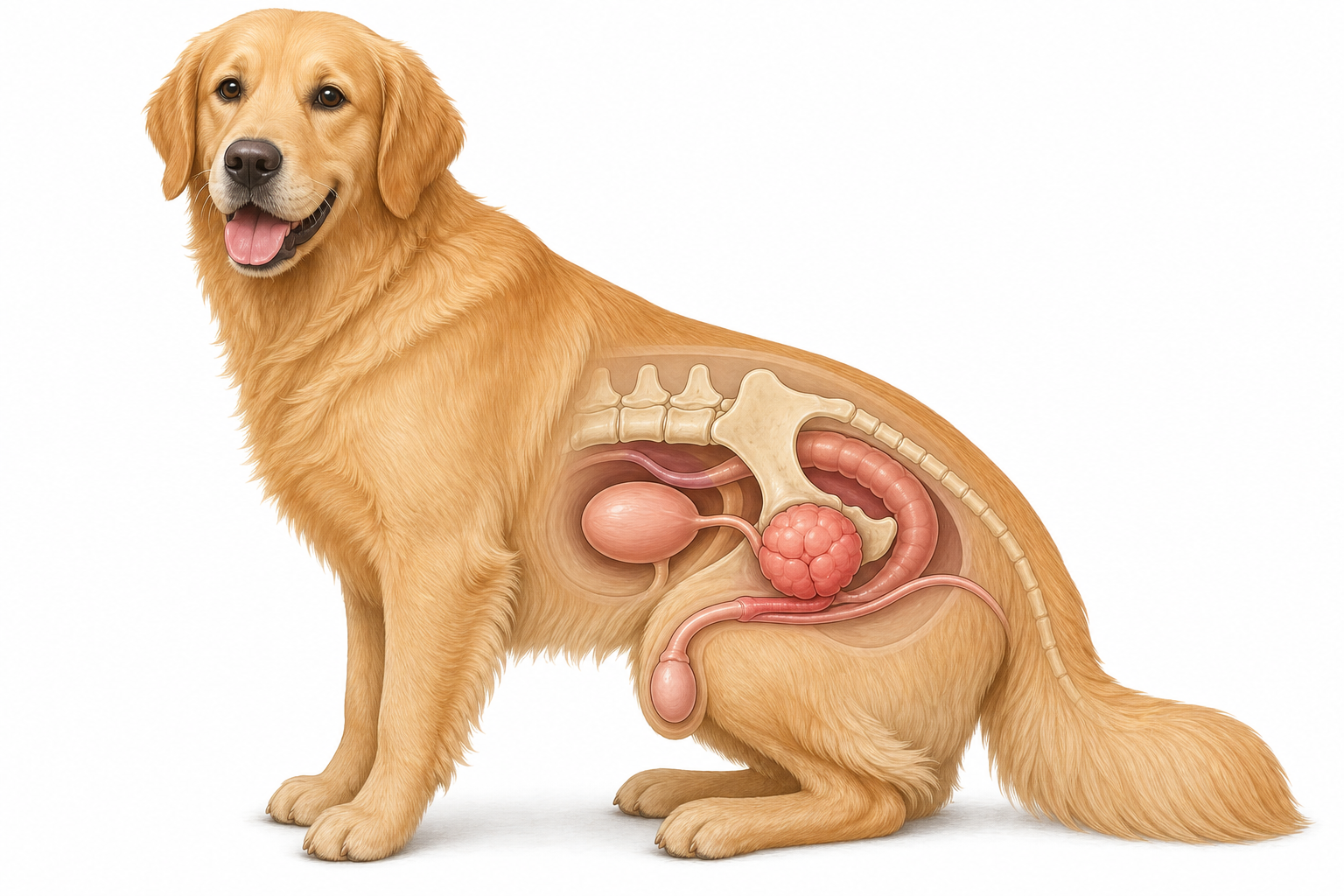
TL;DR. Phì đại không ung thư ở đực còn tinh hoàn; rặn, máu hoặc tiết dịch; điều trị tốt bằng thiến hoặc thuốc.
Liên quan tuyến-bàng quang-trực tràng.
Là gì?
Phì đại tự phát không ác tính. DHT: tăng sản/phì đại; có thể có nang. Chèn ép niệu đạo/trực tràng.
Nguyên nhân và yếu tố nguy cơ
Lão hóa hormone từ ~2 tuổi. Không khuynh hướng giống ghi nhận.
Dấu hiệu cần theo dõi
- Rặn
- Tiểu máu
- Tiểu khó/nhiều lần
- Tiết dịch bao quy đầu
- Phân dẹt (thỉnh thoảng)
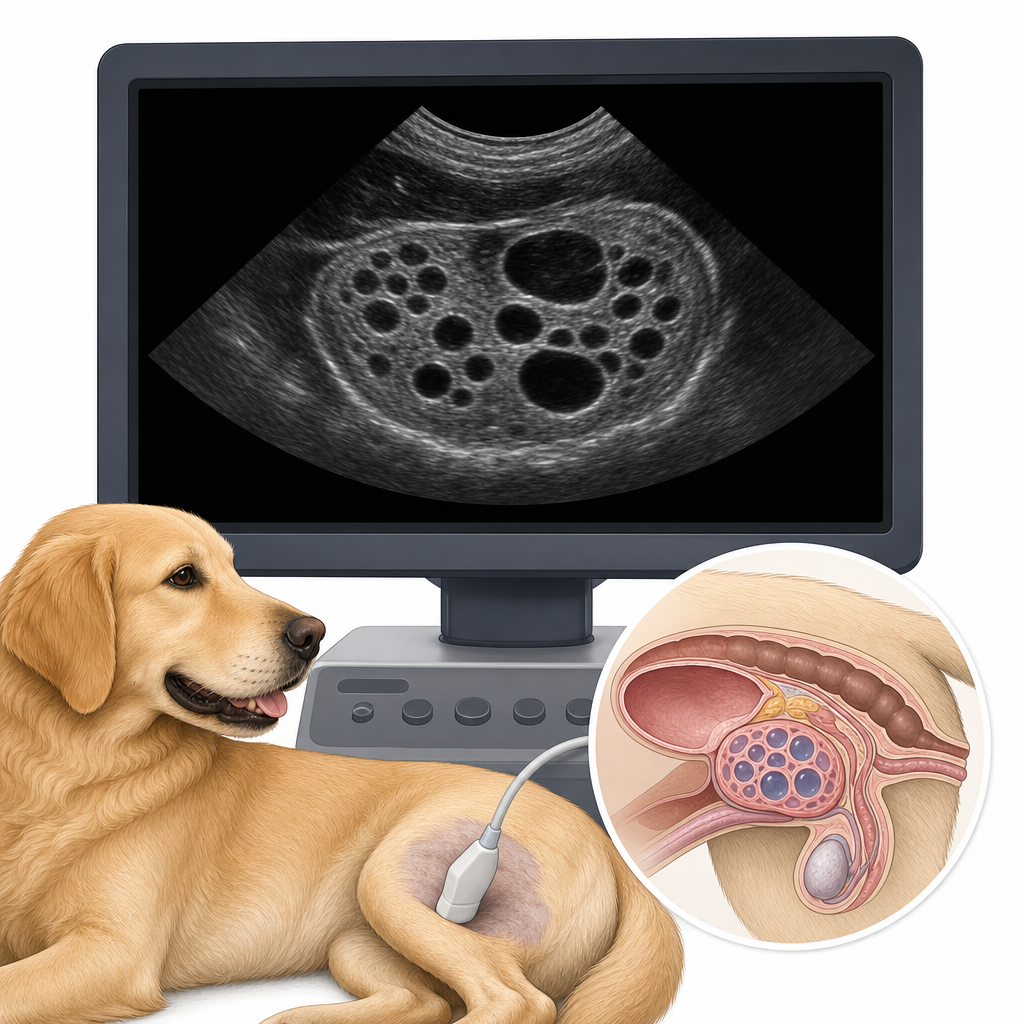
Siêu âm: cấu trúc và nang.
Bác sĩ thú y chẩn đoán thế nào
Khám trực tràng, hình ảnh, CPSE; sinh thiết nếu nghi ngờ.
Lựa chọn điều trị
Thiến chữa khỏi. Finasteride hàng đầu nội khoa.
Tiên lượng
Rất tốt khi điều trị.
Phòng ngừa
Thiến phòng ngừa; khám trực tràng định kỳ nếu còn tinh hoàn.
Khi nào gọi thú y
Cấp cứu: không tiểu được, đau dữ, sốt, yếu hai chân sau.
Nguồn
- Cowell and Tyler's Diagnostic Cytology and Hematology of the Dog and Cat, 5th Edition, pages 424, 426.
- Textbook of Veterinary Internal Medicine, 5th Edition, page 992.
My highlights & notes
Dấu hiệu & triệu chứng
Cách chẩn đoán
- Histological examination of a prostatic biopsy specimenTiêu chuẩn vàng
- Canine prostate-specific arginine esterase (CPSE) blood measurement
- Digital rectal examination
- Fine-needle aspiration of the prostate
- Radiography
- Ultrasonography
Hướng điều trị
Điều trị phải do bác sĩ thú y có giấy phép kê đơn. Liều cụ thể cố ý không hiển thị.
Câu hỏi thường gặp
What is Prostatic Hyperplasia?
Benign prostatic hyperplasia (BPH) is a common, non-cancerous enlargement of the prostate gland that affects intact male dogs as they age. Driven by normal hormonal changes, BPH can cause straining to defecate, bloody urine, or discharge. Fortunately, it is highly treatable and completely curable through surgical castration, while medical options exist for breeding dogs.
What are the symptoms of Prostatic Hyperplasia?
Blood in urine、Straining to poop、Painful or difficult urination、Pollakiuria、preputial discharge、urethral discharge、decreased fertility、loss of libido
How is Prostatic Hyperplasia diagnosed?
Histological examination of a prostatic biopsy specimen、Canine prostate-specific arginine esterase (CPSE) blood measurement、Digital rectal examination、Fine-needle aspiration of the prostate、Radiography、Ultrasonography
How is Prostatic Hyperplasia treated?
Điều trị phải do bác sĩ thú y có giấy phép kê đơn. Liều cụ thể cố ý không hiển thị.
Nguồn
- Cowell and Tyler s Diagnostic Cytology and Hematology of the Dog and Cat, 5th Edition (VetBooks.ir) · p. 424
- Internal Medicine 5th · p. 992
- Cowell and Tyler s Diagnostic Cytology and Hematology of the Dog and Cat, 5th Edition (VetBooks.ir) · p. 426
Bài viết mang tính giáo dục chung, không thay thế tư vấn thú y. Nếu thú cưng ốm, hãy gặp bác sĩ thú y.
Lo lắng cho thú cưng?
AI của Peqaboo giúp theo dõi triệu chứng, hiểu kết quả xét nghiệm và biết khi nào cần gặp bác sĩ thú y.
Tải app Peqaboo