

Prostatic Hyperplasia
Benign prostatic hyperplasia
Ook bekend als: Benign Prostatic Hyperplasia, BPH, Cystic Benign Prostatic Hyperplasia, CBPH
Kort samengevat
Benign prostatic hyperplasia (BPH) is a common, non-cancerous enlargement of the prostate gland that affects intact male dogs as they age. Driven by normal hormonal changes, BPH can cause straining to defecate, bloody urine, or discharge. Fortunately, it is highly treatable and completely curable through surgical castration, while medical options exist for breeding dogs.
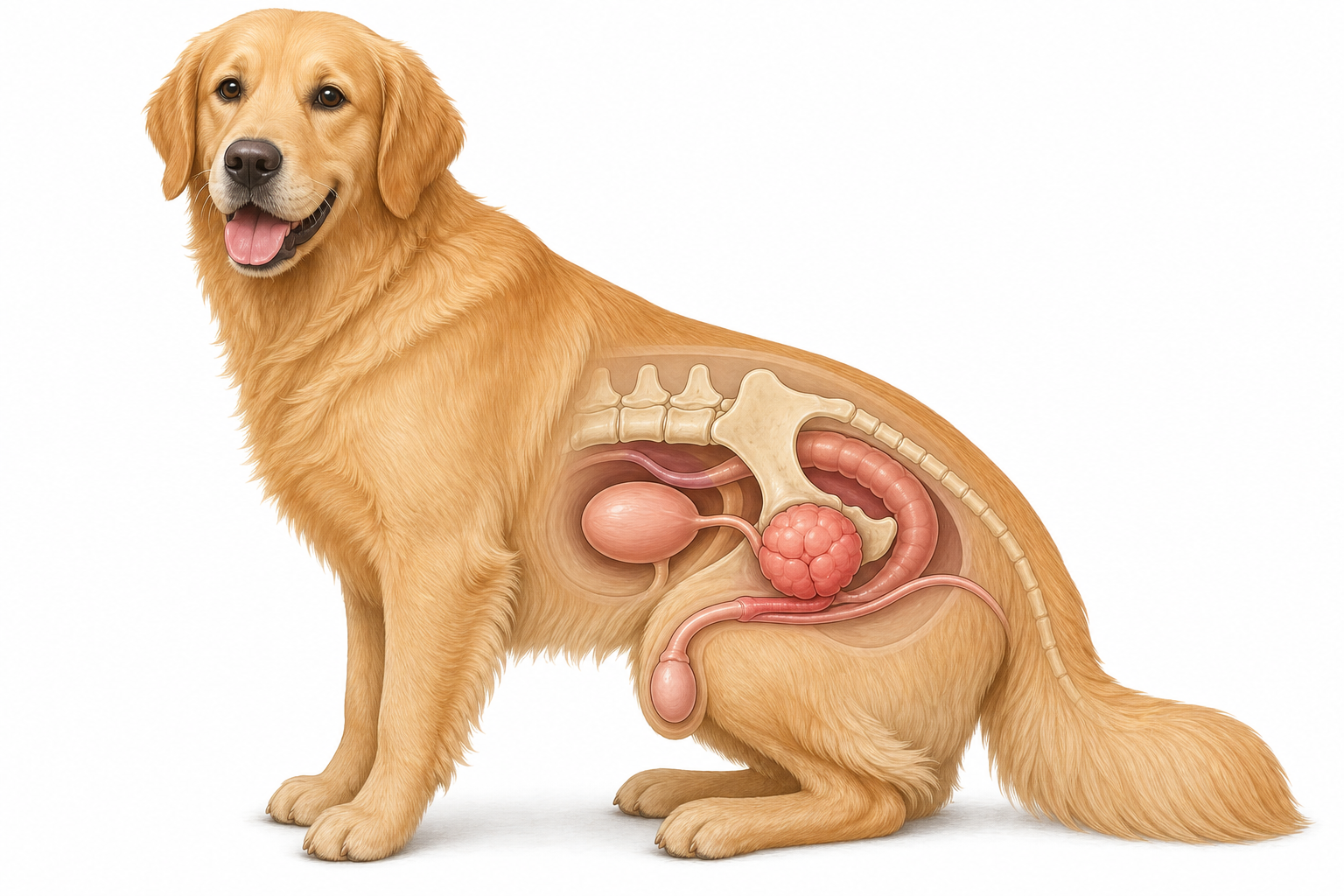
TL;DR. Niet-kwaadaardige prostaatvergroting bij intacte reuen; persen, bloed of afscheiding; goed te behandelen met castratie of medicatie.
Relatie prostaat-blaas-rectum.
Wat is het?
Spontane niet-maligne vergroting bij niet-gecastreerde reuen. DHT: hyperplasie/hypertrofie; cysten mogelijk. Compressie urethra/rectum.
Oorzaken en risicofactoren
Hormonale veroudering vanaf ~2 jaar. Geen gedocumenteerde raspredispositie. Gecastreerde reuen ontwikkelen geen BPH.
Signalen om op te letten
- Tenesmus
- Hematurie
- Dysurie/pollakisurie
- Preputiale afscheiding
- Lintontlasting (soms)
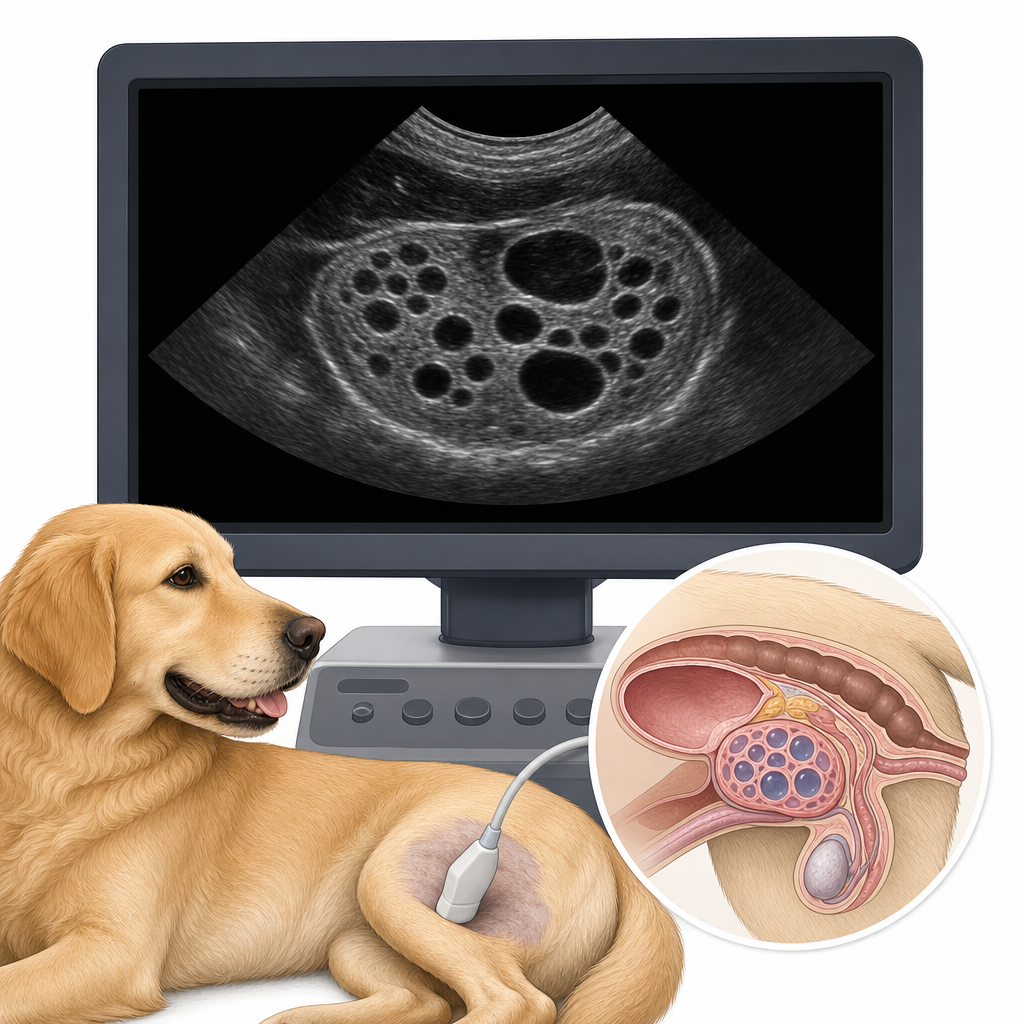
Echo: structuur en cysten.
Hoe dierenartsen diagnosticeren
Rectaal onderzoek, beeldvorming, CPSE; biopsie bij twijfel.
Behandelopties
Castratie curatief. Finasteride medicamenteuze eerstelijn.
Prognose
Uitstekend onder therapie.
Preventie
Castratie preventief; rectale controles bij intact.
Wanneer de dierenarts bellen
Spoed: anurie, hevige pijn, koorts, achterhandzwakte.
Bronnen
- Cowell and Tyler's Diagnostic Cytology and Hematology of the Dog and Cat, 5th Edition, pages 424, 426.
- Textbook of Veterinary Internal Medicine, 5th Edition, page 992.
My highlights & notes
Tekenen & symptomen
Hoe het wordt gediagnosticeerd
- Histological examination of a prostatic biopsy specimenGouden standaard
- Canine prostate-specific arginine esterase (CPSE) blood measurement
- Digital rectal examination
- Fine-needle aspiration of the prostate
- Radiography
- Ultrasonography
Behandelbenaderingen
Behandeling moet worden voorgeschreven door een bevoegde dierenarts. Specifieke doses worden expres niet getoond.
Veelgestelde vragen
What is Prostatic Hyperplasia?
Benign prostatic hyperplasia (BPH) is a common, non-cancerous enlargement of the prostate gland that affects intact male dogs as they age. Driven by normal hormonal changes, BPH can cause straining to defecate, bloody urine, or discharge. Fortunately, it is highly treatable and completely curable through surgical castration, while medical options exist for breeding dogs.
What are the symptoms of Prostatic Hyperplasia?
Blood in urine、Straining to poop、Painful or difficult urination、Pollakiuria、preputial discharge、urethral discharge、decreased fertility、loss of libido
How is Prostatic Hyperplasia diagnosed?
Histological examination of a prostatic biopsy specimen、Canine prostate-specific arginine esterase (CPSE) blood measurement、Digital rectal examination、Fine-needle aspiration of the prostate、Radiography、Ultrasonography
How is Prostatic Hyperplasia treated?
Behandeling moet worden voorgeschreven door een bevoegde dierenarts. Specifieke doses worden expres niet getoond.
Bronnen
- Cowell and Tyler s Diagnostic Cytology and Hematology of the Dog and Cat, 5th Edition (VetBooks.ir) · p. 424
- Internal Medicine 5th · p. 992
- Cowell and Tyler s Diagnostic Cytology and Hematology of the Dog and Cat, 5th Edition (VetBooks.ir) · p. 426
Dit artikel is algemene educatie en geen vervanging voor professioneel veterinair advies. Bij ziekte: raadpleeg een dierenarts.
Zorgen over je huisdier?
Peqaboo’s AI helpt symptomen te volgen, labuitslagen te begrijpen en te weten wanneer je naar de dierenarts moet.
Download de Peqaboo-app