

Prostatic Hyperplasia
Benign prostatic hyperplasia
Aussi appelé: Benign Prostatic Hyperplasia, BPH, Cystic Benign Prostatic Hyperplasia, CBPH
En bref
Benign prostatic hyperplasia (BPH) is a common, non-cancerous enlargement of the prostate gland that affects intact male dogs as they age. Driven by normal hormonal changes, BPH can cause straining to defecate, bloody urine, or discharge. Fortunately, it is highly treatable and completely curable through surgical castration, while medical options exist for breeding dogs.
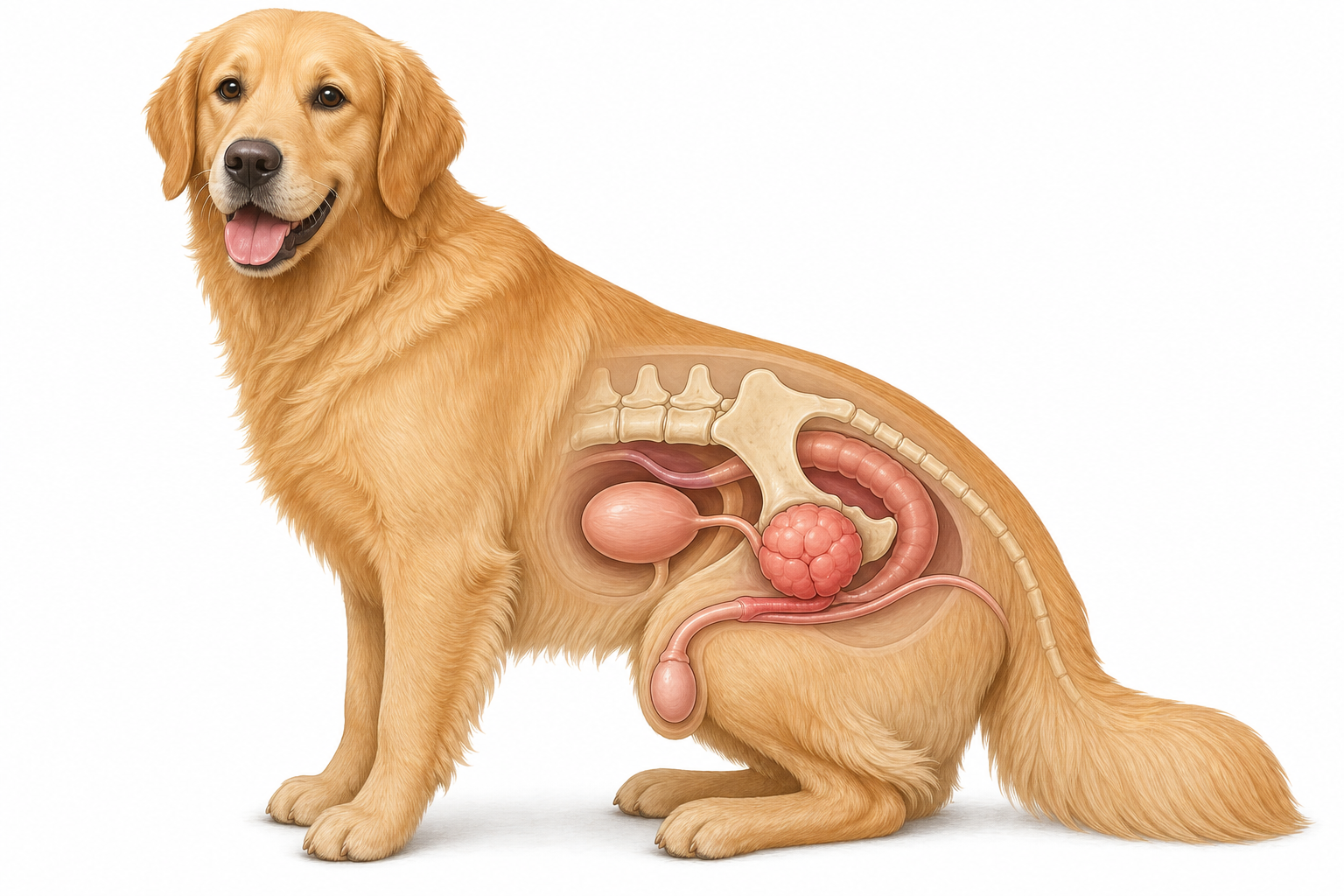
TL;DR. L'HBP est une hypertrophie non cancéreuse de la prostate chez le mâle intact ; efforts de défécation, sang dans les urines ou écoulement ; très bien traitée par castration ou médicament.
Rapport anatomique de la prostate canine à la vessie et au rectum.
Qu'est-ce que c'est ?
L'hyperplasie bénigne de la prostate (HBP) est un agrandissement spontané non cancéreux chez le mâle non castré. La prostate produit le liquide séminal et entoure l'urètre sous le rectum. La dihydrotestostérone (DHT) provoque hyperplasie et hypertrophie ; des kystes (HBP kystique) sont possibles. La compression urétrale et rectale explique les signes et favorise infections ou kystes douloureux.
Causes et facteurs de risque
Processus hormonal du vieillissement du mâle intact. Dès 2 ans : excès de DHT et modification du ratio œstrogène/testostérone. Aucune prédisposition raciale documentée. Les castrés ne développent pas d'HBP.
Signes à surveiller
- Ténesme (fréquent)
- Hématurie
- Dysurie et pollakiurie
- Écoulement préputial/urétral
- Selles en ruban (occasionnel) ; fertilité ou libido diminuées ; démarche raide (rare)
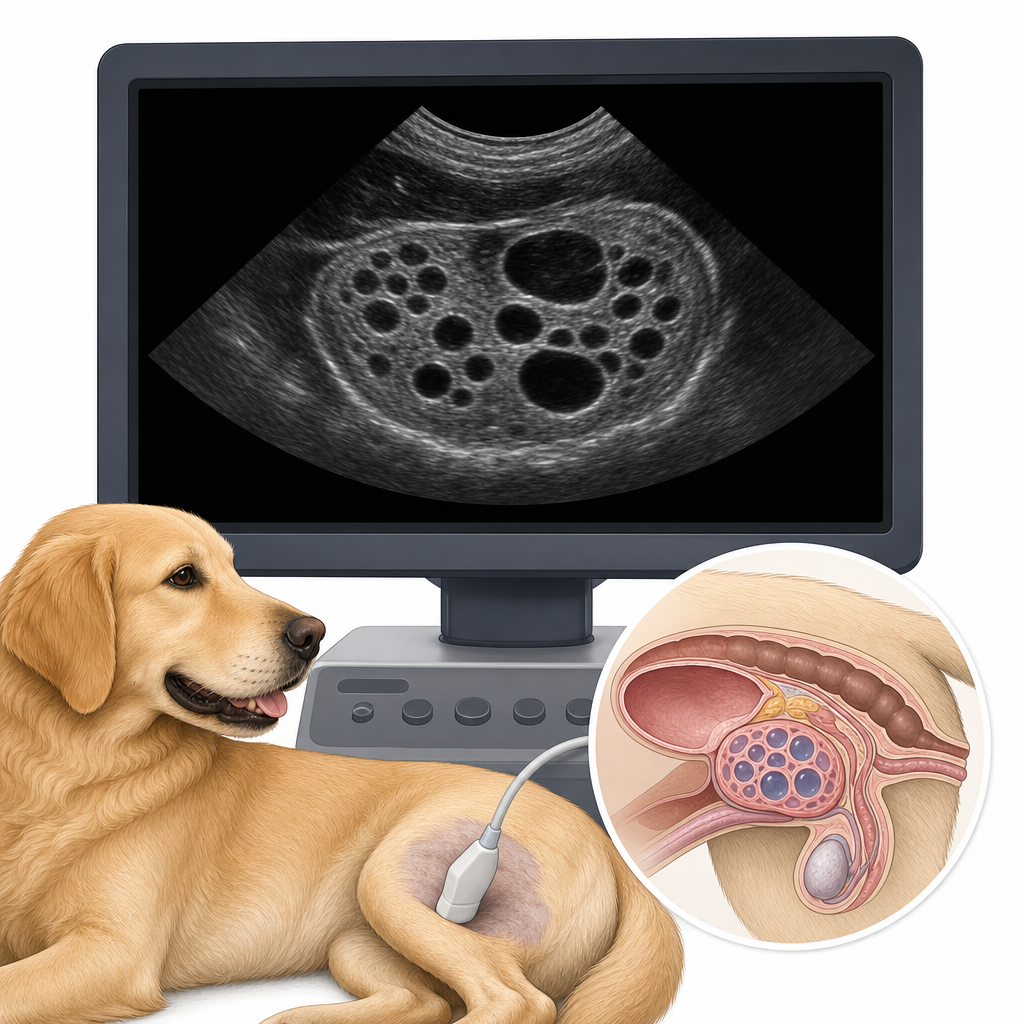
L'échographie visualise structure et kystes prostatiques.
Comment les vétérinaires diagnostiquent
Toucher rectal, radiographies et échographie. Dosage CPSE. Cytoponction ou biopsie si infection ou tumeur suspectée (biopsie = référence).
Options de traitement
Castration : curative.
Finastéride : première ligne médicale pour étalons ou contre-indication chirurgicale ; traitement prolongé.
Pronostic
Excellent avec castration ou finastéride. Sans traitement : risque de prostatite, kystes ou abcès.
Prévention
Castration préventive. Chez l'intact : toucher rectal régulier vers 2 ans et plus.
Quand appeler le vétérinaire
Consultation si sang, écoulement ou efforts légers.
Urgence : anurie ; douleur intense ; fièvre, abattement ; parésie postérieure brutale.
Sources
- Cowell and Tyler's Diagnostic Cytology and Hematology of the Dog and Cat, 5th Edition, pages 424, 426.
- Textbook of Veterinary Internal Medicine, 5th Edition, page 992.
My highlights & notes
Signes et symptômes
Comment c’est diagnostiqué
- Histological examination of a prostatic biopsy specimenRéférence
- Canine prostate-specific arginine esterase (CPSE) blood measurement
- Digital rectal examination
- Fine-needle aspiration of the prostate
- Radiography
- Ultrasonography
Approches de traitement
Le traitement doit être prescrit par un vétérinaire agréé selon votre animal. Les doses précises ne sont volontairement pas affichées.
Questions fréquentes
What is Prostatic Hyperplasia?
Benign prostatic hyperplasia (BPH) is a common, non-cancerous enlargement of the prostate gland that affects intact male dogs as they age. Driven by normal hormonal changes, BPH can cause straining to defecate, bloody urine, or discharge. Fortunately, it is highly treatable and completely curable through surgical castration, while medical options exist for breeding dogs.
What are the symptoms of Prostatic Hyperplasia?
Blood in urine、Straining to poop、Painful or difficult urination、Pollakiuria、preputial discharge、urethral discharge、decreased fertility、loss of libido
How is Prostatic Hyperplasia diagnosed?
Histological examination of a prostatic biopsy specimen、Canine prostate-specific arginine esterase (CPSE) blood measurement、Digital rectal examination、Fine-needle aspiration of the prostate、Radiography、Ultrasonography
How is Prostatic Hyperplasia treated?
Le traitement doit être prescrit par un vétérinaire agréé selon votre animal. Les doses précises ne sont volontairement pas affichées.
Sources
- Cowell and Tyler s Diagnostic Cytology and Hematology of the Dog and Cat, 5th Edition (VetBooks.ir) · p. 424
- Internal Medicine 5th · p. 992
- Cowell and Tyler s Diagnostic Cytology and Hematology of the Dog and Cat, 5th Edition (VetBooks.ir) · p. 426
Cet article est informatif et ne remplace pas un avis vétérinaire. Si votre animal est malade, consultez un vétérinaire.
Inquiet pour votre animal ?
L’IA Peqaboo aide à suivre les symptômes, comprendre les analyses et savoir quand consulter.
Télécharger l’app Peqaboo