

Prostatic Hyperplasia
Benign prostatic hyperplasia
Más néven: Benign Prostatic Hyperplasia, BPH, Cystic Benign Prostatic Hyperplasia, CBPH
Röviden
Benign prostatic hyperplasia (BPH) is a common, non-cancerous enlargement of the prostate gland that affects intact male dogs as they age. Driven by normal hormonal changes, BPH can cause straining to defecate, bloody urine, or discharge. Fortunately, it is highly treatable and completely curable through surgical castration, while medical options exist for breeding dogs.
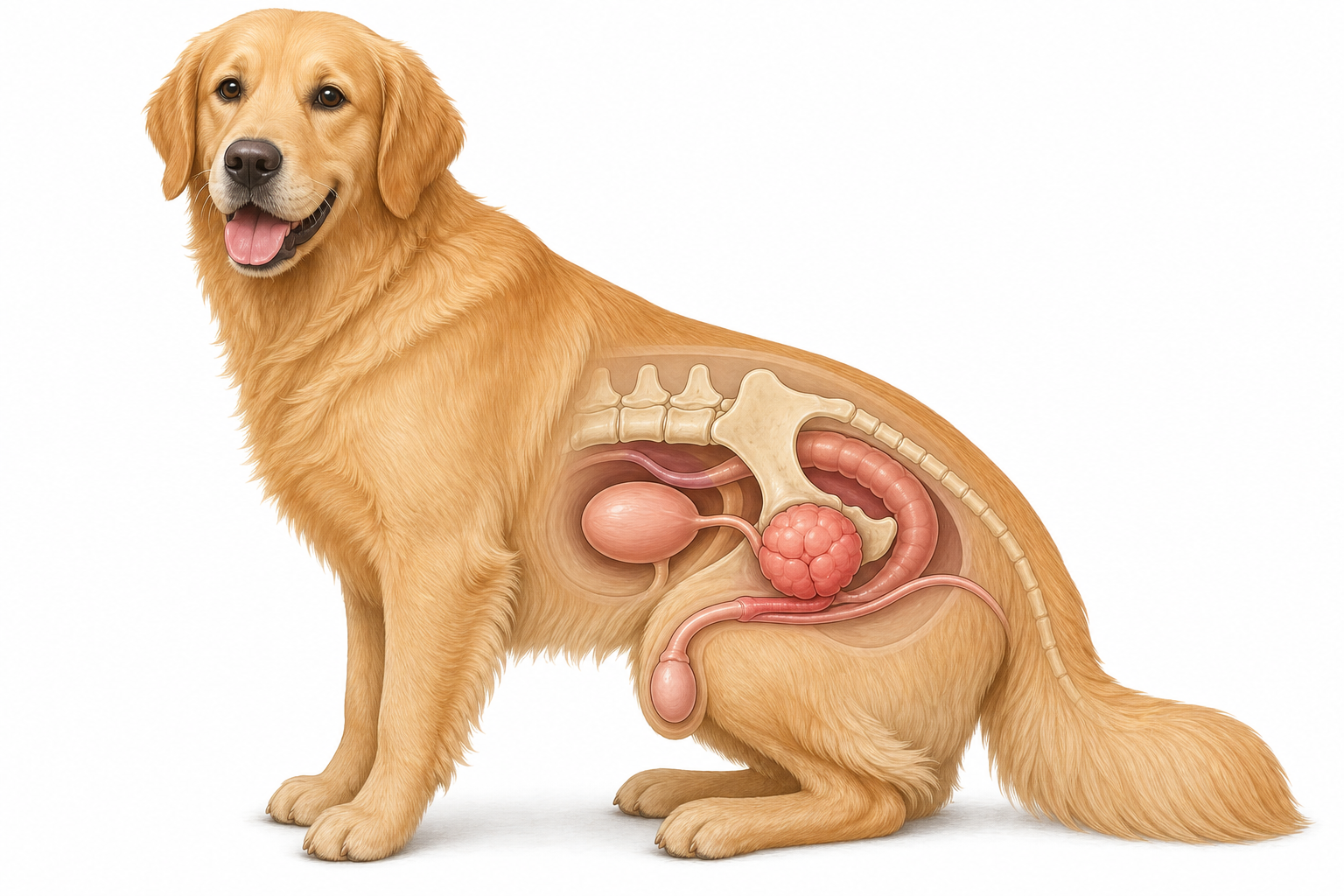
TL;DR. Nem rákos prosztatamegnagyobbodás intakt kanokban; erőlködés, vér vagy váladék; jól kezelhető kasztrációval vagy gyógyszerrel.
Prosztata-hólyag-végbél viszony.
Mi ez?
Spontán nem rosszindulatú megnagyobbodás. DHT: hiperplázia/hipertrófia; ciszták lehetségesek. Húgycső/végbél kompresszió.
Okok és kockázati tényezők
Hormonalis öregedés ~2 éves kortól. Nincs dokumentált fajtahajlam.
Figyelendő jelek
- Tenesmus
- Hematuria
- Dysuria/pollakisuria
- Prepuciális váladék
- Szalagszerű széklet (esetenként)
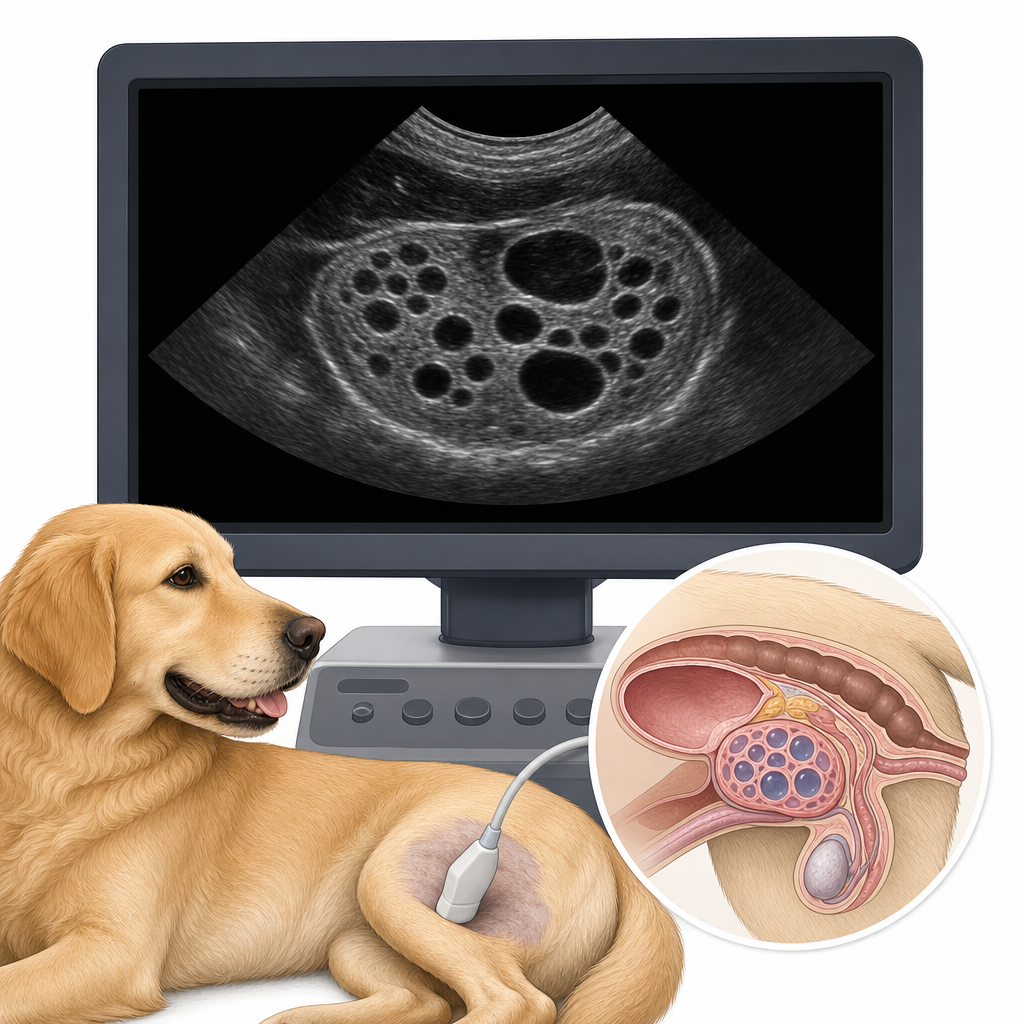
UH: szerkezet és ciszták.
Hogyan diagnosztizálnak az állatorvosok
Végbélvizsgálat, képalkotás, CPSE; biopszia kétségnél.
Kezelési lehetőségek
Kasztráció gyógyító. Finasterid orvosi első vonal.
Prognózis
Kiváló kezelés mellett.
Megelőzés
Kasztráció megelőz; periodikus végbélvizsgálat ha intakt.
Mikor hívjon állatorvost
Sürgős: vizeletretenció, erős fájdalom, láz, hátsó gyengeség.
Források
- Cowell and Tyler's Diagnostic Cytology and Hematology of the Dog and Cat, 5th Edition, pages 424, 426.
- Textbook of Veterinary Internal Medicine, 5th Edition, page 992.
My highlights & notes
Jelek és tünetek
Hogyan diagnosztizálják
- Histological examination of a prostatic biopsy specimenArany standard
- Canine prostate-specific arginine esterase (CPSE) blood measurement
- Digital rectal examination
- Fine-needle aspiration of the prostate
- Radiography
- Ultrasonography
Kezelési megközelítések
A kezelést engedéllyel rendelkező állatorvosnak kell felírnia. A konkrét adagokat szándékosan nem mutatjuk.
Gyakori kérdések
What is Prostatic Hyperplasia?
Benign prostatic hyperplasia (BPH) is a common, non-cancerous enlargement of the prostate gland that affects intact male dogs as they age. Driven by normal hormonal changes, BPH can cause straining to defecate, bloody urine, or discharge. Fortunately, it is highly treatable and completely curable through surgical castration, while medical options exist for breeding dogs.
What are the symptoms of Prostatic Hyperplasia?
Blood in urine、Straining to poop、Painful or difficult urination、Pollakiuria、preputial discharge、urethral discharge、decreased fertility、loss of libido
How is Prostatic Hyperplasia diagnosed?
Histological examination of a prostatic biopsy specimen、Canine prostate-specific arginine esterase (CPSE) blood measurement、Digital rectal examination、Fine-needle aspiration of the prostate、Radiography、Ultrasonography
How is Prostatic Hyperplasia treated?
A kezelést engedéllyel rendelkező állatorvosnak kell felírnia. A konkrét adagokat szándékosan nem mutatjuk.
Források
- Cowell and Tyler s Diagnostic Cytology and Hematology of the Dog and Cat, 5th Edition (VetBooks.ir) · p. 424
- Internal Medicine 5th · p. 992
- Cowell and Tyler s Diagnostic Cytology and Hematology of the Dog and Cat, 5th Edition (VetBooks.ir) · p. 426
Ez a cikk általános tájékoztatás, nem helyettesíti az állatorvosi tanácsot. Ha a kedvenc beteg, forduljon állatorvoshoz.
Aggódik a kedvence miatt?
A Peqaboo AI segít a tünetek követésében, a laboreredmények megértésében és abban, mikor kell állatorvoshoz menni.
Peqaboo app letöltése