

Prostatic Hyperplasia
Benign prostatic hyperplasia
Také známé jako: Benign Prostatic Hyperplasia, BPH, Cystic Benign Prostatic Hyperplasia, CBPH
Stručně
Benign prostatic hyperplasia (BPH) is a common, non-cancerous enlargement of the prostate gland that affects intact male dogs as they age. Driven by normal hormonal changes, BPH can cause straining to defecate, bloody urine, or discharge. Fortunately, it is highly treatable and completely curable through surgical castration, while medical options exist for breeding dogs.
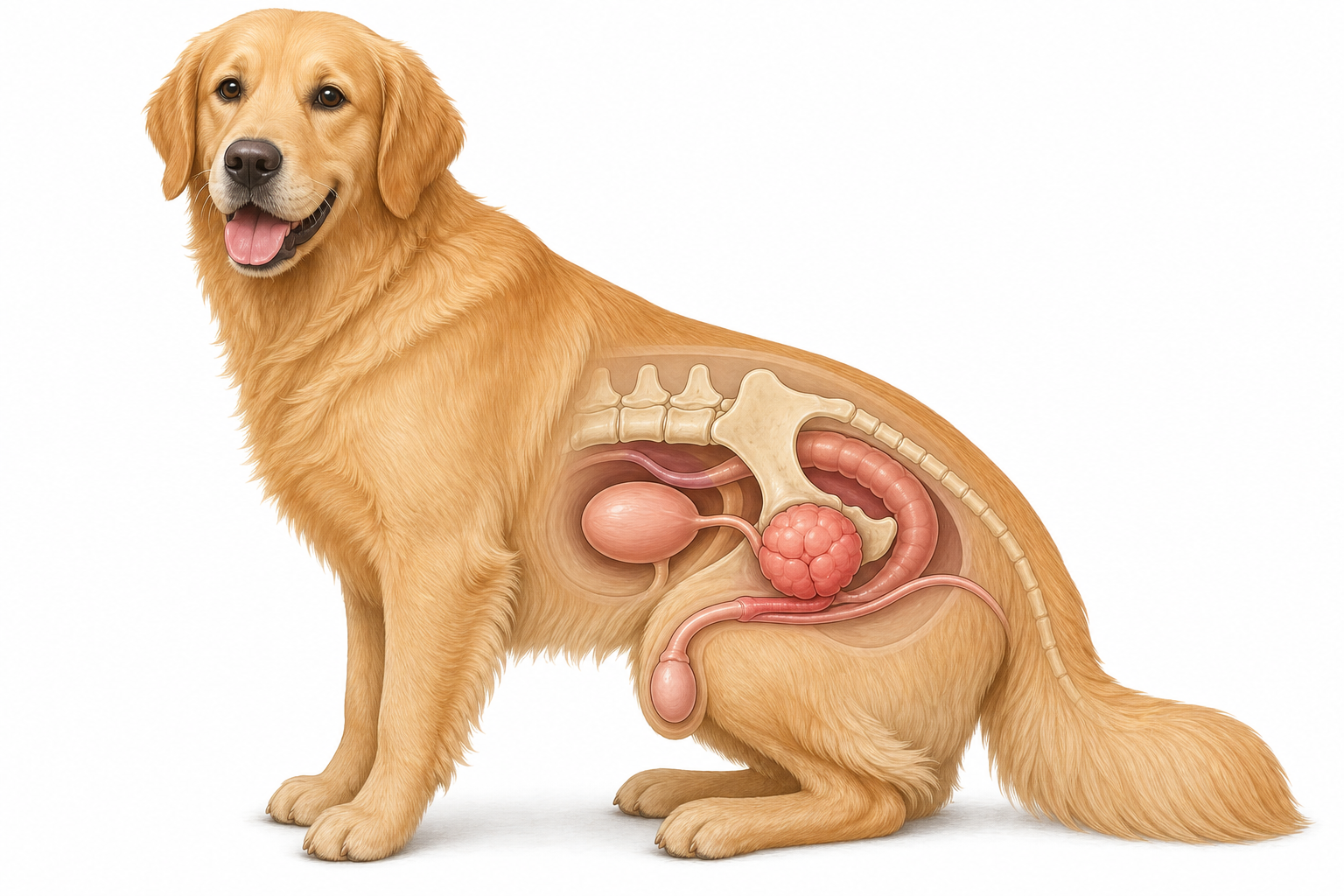
TL;DR. Nenádorové zvětšení prostaty u intaktních samců; tlačení, krev nebo výtok; dobře se léčí kastrací nebo léky.
Vztah prostaty k měchýři a konečníku.
Co to je?
Spontánní nemaligní zvětšení. DHT: hyperplazie/hypertrofie; možné cysty. Útlak uretry/rekta.
Příčiny a rizikové faktory
Hormonální stárnutí od ~2 let. Žádná dokumentovaná rasová predispozice.
Příznaky, na které dávat pozor
- Tenezmy
- Hematurie
- Dysurie/polakisurie
- Prepuciální výtok
- Páskovitá stolice (občas)
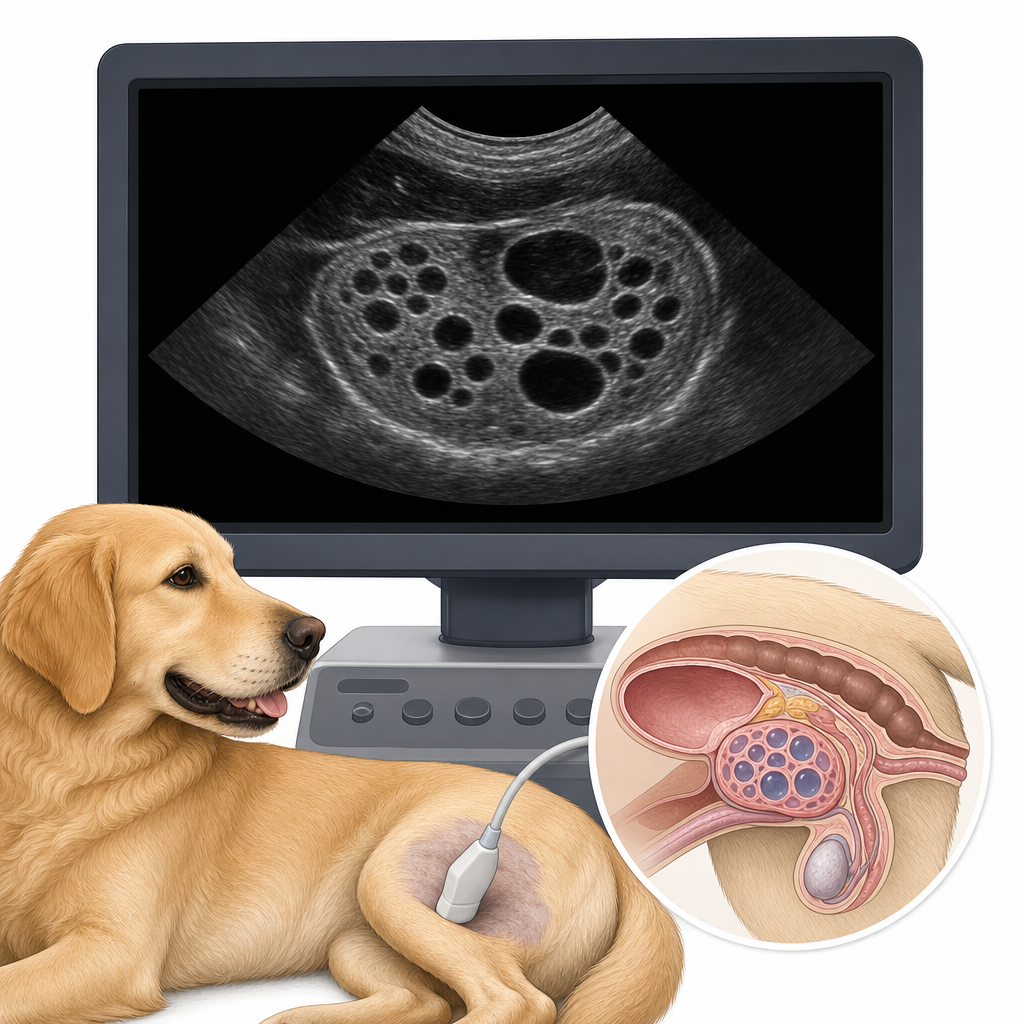
Ultrazvuk: struktura a cysty.
Jak diagnostikují veterináři
Rektální vyšetření, zobrazení, CPSE; biopsie při nejistotě.
Možnosti léčby
Kastrace kurativní. Finasterid medicínská první linie.
Prognóza
Výborné v terapii.
Prevence
Kastrace brání; pravidelné rektální vyšetření u intaktních.
Kdy volat veterináře
Naléhavé: anurie, silná bolest, horečka, slabost pánevních končetin.
Zdroje
- Cowell and Tyler's Diagnostic Cytology and Hematology of the Dog and Cat, 5th Edition, pages 424, 426.
- Textbook of Veterinary Internal Medicine, 5th Edition, page 992.
My highlights & notes
Příznaky a projevy
Jak se diagnostikuje
- Histological examination of a prostatic biopsy specimenZlatý standard
- Canine prostate-specific arginine esterase (CPSE) blood measurement
- Digital rectal examination
- Fine-needle aspiration of the prostate
- Radiography
- Ultrasonography
Přístupy k léčbě
Léčbu musí předepsat licencovaný veterinář. Konkrétní dávky záměrně neuvažujeme.
Časté otázky
What is Prostatic Hyperplasia?
Benign prostatic hyperplasia (BPH) is a common, non-cancerous enlargement of the prostate gland that affects intact male dogs as they age. Driven by normal hormonal changes, BPH can cause straining to defecate, bloody urine, or discharge. Fortunately, it is highly treatable and completely curable through surgical castration, while medical options exist for breeding dogs.
What are the symptoms of Prostatic Hyperplasia?
Blood in urine、Straining to poop、Painful or difficult urination、Pollakiuria、preputial discharge、urethral discharge、decreased fertility、loss of libido
How is Prostatic Hyperplasia diagnosed?
Histological examination of a prostatic biopsy specimen、Canine prostate-specific arginine esterase (CPSE) blood measurement、Digital rectal examination、Fine-needle aspiration of the prostate、Radiography、Ultrasonography
How is Prostatic Hyperplasia treated?
Léčbu musí předepsat licencovaný veterinář. Konkrétní dávky záměrně neuvažujeme.
Zdroje
- Cowell and Tyler s Diagnostic Cytology and Hematology of the Dog and Cat, 5th Edition (VetBooks.ir) · p. 424
- Internal Medicine 5th · p. 992
- Cowell and Tyler s Diagnostic Cytology and Hematology of the Dog and Cat, 5th Edition (VetBooks.ir) · p. 426
Článek je obecná edukace a nenahrazuje veterinární radu. Pokud je zvíře nemocné, kontaktujte veterináře.
Máte obavy o zvíře?
AI Peqaboo pomáhá sledovat příznaky, pochopit výsledky laboratoře a vědět, kdy jít k veterináři.
Stáhnout aplikaci Peqaboo