

Ventricular Septal Defect
Ventricular septal defect
Također poznato kao: VSD
Ukratko
A ventricular septal defect (VSD) is an uncommon congenital heart condition where an abnormal hole exists in the wall separating the heart's lower chambers, which can range from a harmless, self-closing minor defect to a serious risk for heart failure.
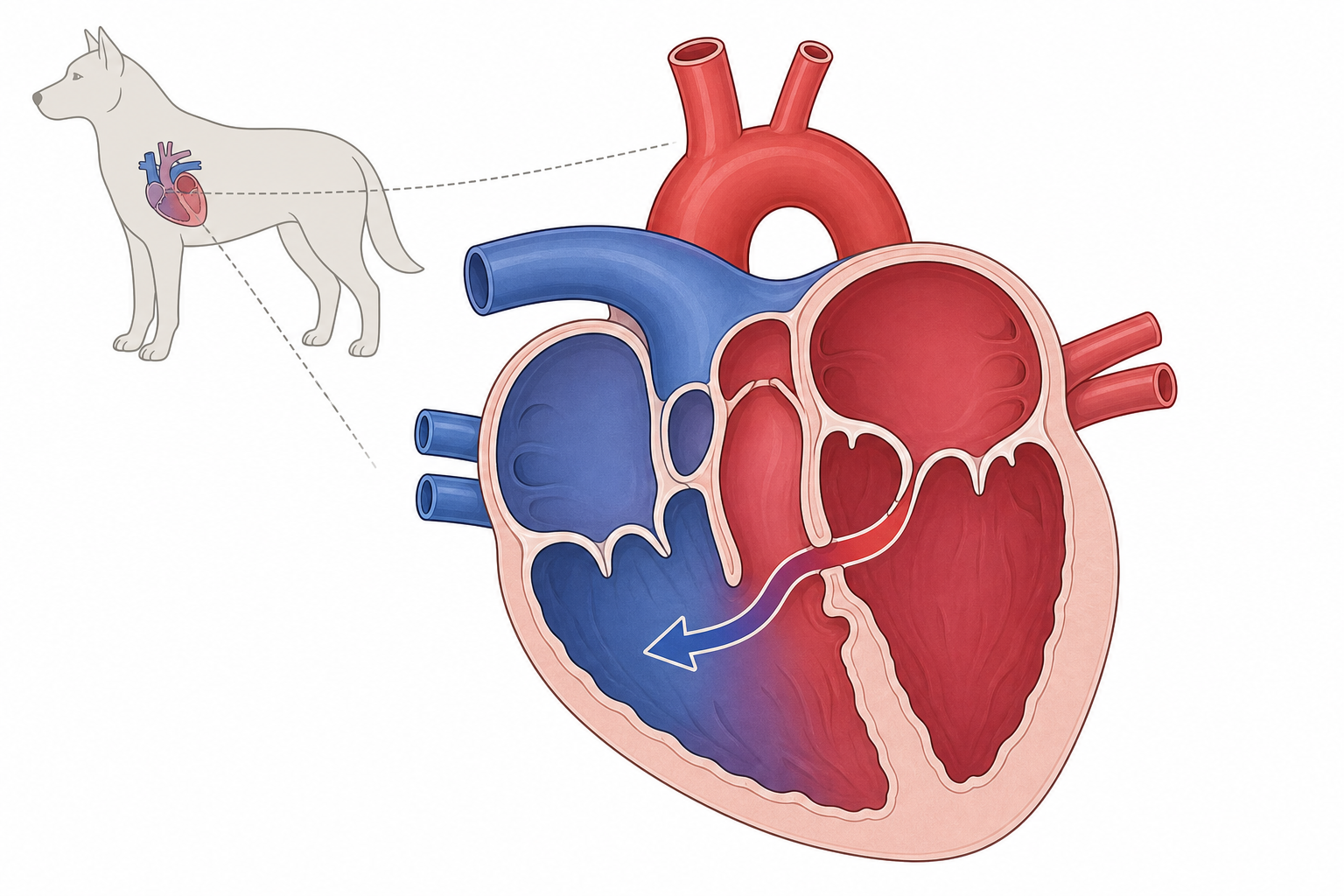
TL;DR. Defekt ventrikularnog septuma urođeni je otvor u zidu između klijetki; može biti blag ili ozbiljan rizik zatajenja srca.
VSD omogućuje shunt iz lijeve klijetke visokog tlaka u desnu.
Što je to?
Urođena srčana malformacija: rupa u ventrikularnom septumu. Krv teče slijeva nadesno. Desna strana i pluća primaju prevelik volumen; moguće lijevo preopterećenje i kongestivno zatajenje.
Uzroci i čimbenici rizika
Pogreška fetalnog razvoja s genetskom komponentom. Neuobičajeno. Psi rizika: English Bulldog, English Springer Spaniel, Keeshond, West Highland White Terrier, Lakeland Terrier. I kod mačaka.
Znakovi
- Holosistolički šum [kardinal]
- Netolerancija napora [često]
- Asimptomatski [često] ako mal/umjeren
- Sistolički ejekcijski šum [povremeno]
- Lijevo zatajenje [povremeno]: kašalj, dispneja, letargija
- Dijastolički decrescendo šum [rijetko]

Netolerancija napora česta je kod velikih VSD.
Dijagnoza
Auskultacija. Potvrda: ehokardiografija [ZLATO], Doppler, RTG prsnog koša, EKG, kateterizacija po potrebi.
Liječenje
Nijedan lijek ne zatvara otvor. Mali asimptomatski: praćenje. Pri CHF/plućnoj hipertenziji: diuretici, vazodilatatori, podrška srcu. Spontano zatvaranje u 2 godine moguće.
"In some cases, the defect closes spontaneously within the first 2 years of life. Closure can result from myocardial hypertrophy around the VSD or a seal formed by the septal tricuspid leaflet or a prolapsed aortic leaflet."
Prognoza
Mal/umjeren: često normalan život pod kontrolom. Velik: oprezna.
"A very large VSD causes the ventricles to function as a common chamber and induces RV dilation and hypertrophy. Pulmonary hypertension secondary to overcirculation is more likely to develop with large shunts."
Prevencija
Nema prevencije načinom života. Ne razmnožavati pogođene; srčani screening roditelja u rizičnim pasminama.
Kada zvati veterinara
Hitno: dispneja, disanje otvorenih usta (posebno mačka), uporan kašalj, kolaps, plave/blijede sluznice, ekstremna letargija. Frekvencija disanja u mirovanju često <30/min.
Za određene pasmine
English Bulldog, English Springer Spaniel, Keeshond, Westie, Lakeland: pažljiva auskultacija na prvom pregledu šteneta.
Izvori
- Internal Medicine, 5th Edition, pages 140, 141
- Clinical Echocardiography of the Dog and Cat, page 292
My highlights & notes
Znakovi i simptomi
Pasmine s višim rizikom
Kako se dijagnosticira
- EchocardiographyZlatni standard
- Cardiac catheterization, oximetry, and angiocardiography
- Doppler echocardiography
- Electrocardiography
- Thoracic radiography
Česta pitanja
What is Ventricular Septal Defect?
A ventricular septal defect (VSD) is an uncommon congenital heart condition where an abnormal hole exists in the wall separating the heart's lower chambers, which can range from a harmless, self-closing minor defect to a serious risk for heart failure.
What are the symptoms of Ventricular Septal Defect?
Holosystolic murmur、No visible symptoms、Tiring easily during activity、Systolic ejection murmur、left-sided congestive heart failure、diastolic decrescendo murmur
How is Ventricular Septal Defect diagnosed?
Echocardiography、Cardiac catheterization, oximetry, and angiocardiography、Doppler echocardiography、Electrocardiography、Thoracic radiography
Izvori
- Clinical Echocardiography of the Dog and Cat · p. 292
- Internal Medicine 5th · p. 141
- Internal Medicine 5th · p. 140
- Internal Medicine 5th · p. 140
Ovaj članak je opća edukacija i ne zamjenjuje veterinarski savjet. Ako je ljubimac bolestan, obratite se veterinaru.
Zabrinuti za ljubimca?
Peqaboo AI pomaže pratiti simptome, razumjeti laboratorijske nalaze i znati kada posjetiti veterinara.
Preuzmite Peqaboo app