

Pyothorax
In short
Pyothorax is a life-threatening accumulation of pus in the chest cavity of dogs and cats. Learn to recognize the signs of this respiratory emergency, how vets diagnose it, and the aggressive treatments needed to save your pet's life.
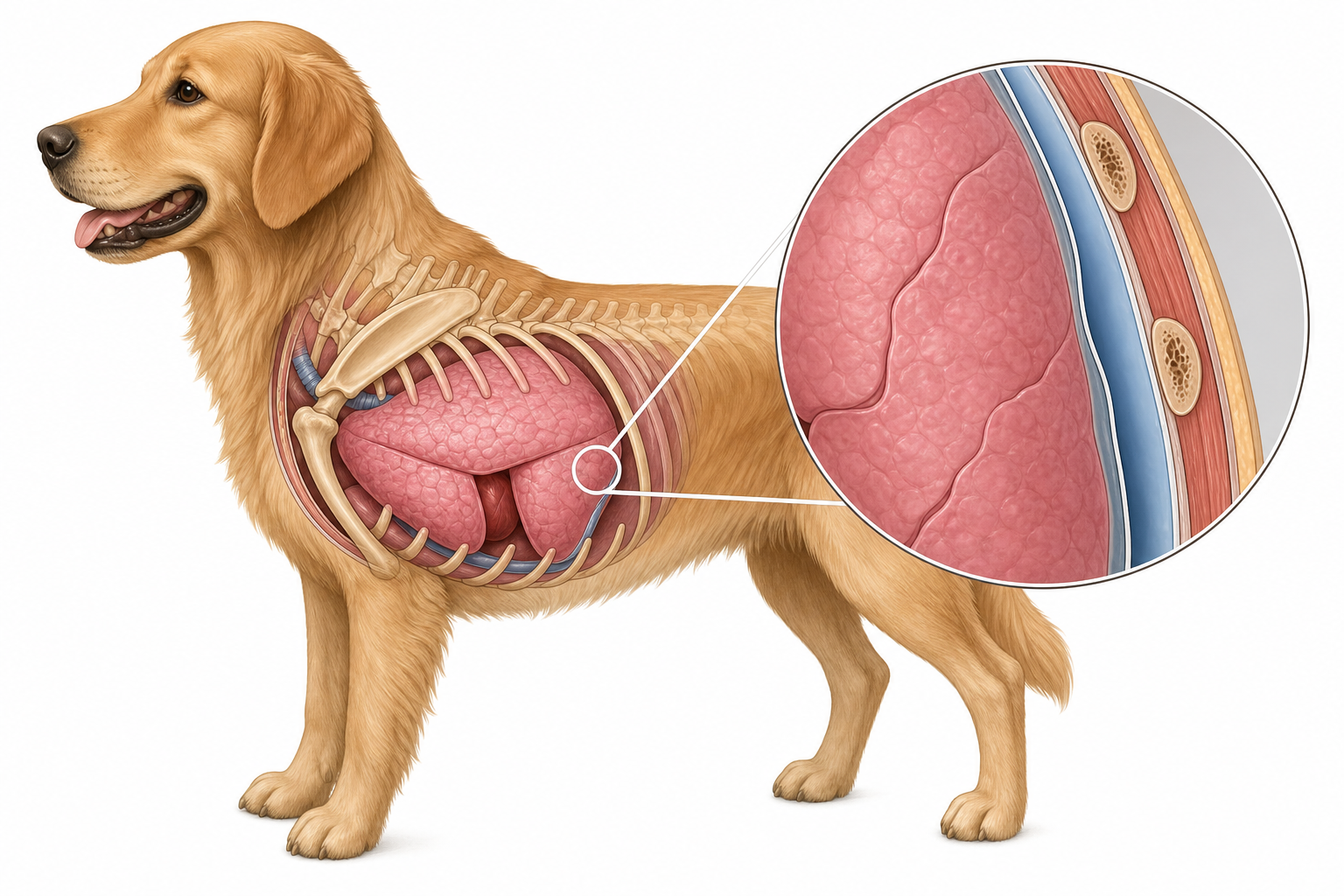
TL;DR. Pyothorax is a severe, life-threatening infection causing pus to build up around the lungs in dogs and cats, requiring urgent veterinary intervention and aggressive treatment.
The pleural space is a narrow cavity surrounding the lungs where pus accumulates in pyothorax.
What is it?
Pyothorax is a serious and potentially life-threatening medical emergency characterized by the accumulation of pus (purulent or septic exudate) within the pleural cavity. The pleural cavity is the narrow, fluid-filled space between the outer surface of the lungs and the inner chest wall. In healthy dogs and cats, this cavity contains only a microscopic amount of lubricating fluid, which allows the lungs to expand and contract smoothly against the ribs during breathing. When bacteria invade this delicate space, the body responds with an intense inflammatory reaction, flooding the cavity with white blood cells, proteins, and fluid. This mixture quickly turns into thick, infected pus.
As the pus accumulates, it occupies valuable space within the rigid rib cage. Because the chest wall cannot expand outward infinitely, the growing volume of fluid puts immense pressure on the lungs. This pressure prevents the lungs from fully inflating, leading to severe respiratory distress. Essentially, the animal is forced to breathe with only a fraction of their normal lung capacity. Without prompt medical intervention, the infection can easily overwhelm the body's defenses, leading to systemic inflammation, organ failure, and death.
Understanding pyothorax is critical for pet owners because its early signs can be subtle, yet the disease progresses rapidly. It is classified as an infectious respiratory condition with the highest level of veterinary urgency. If you suspect your pet is struggling to breathe or showing signs of a chest infection, every hour counts.
Causes & risk factors
The underlying causes of pyothorax differ significantly between dogs and cats, though the end result—a severe bacterial infection in the chest—is the same.
In cats, pyothorax is most frequently classified as "idiopathic," meaning the exact initiating cause cannot be definitively identified. However, veterinary researchers have proposed that the infection often originates from the cat's own mouth and throat (the oropharynx). Cats may inhale these bacteria, or the bacteria may migrate from the upper respiratory tract into the pleural space. This theory is supported by the types of bacteria commonly isolated from feline chest fluid, which match those normally found in the feline mouth.
"Septic exudate in the pleural cavity is referred to as pyothorax. It is most often idiopathic in origin, particularly in cats. Barrs et al (2009a) propose that the source of organisms in these cases is the oropharynx." — A leading veterinary internal medicine reference, page 382.
In dogs, pyothorax is more commonly associated with physical trauma or foreign bodies. A frequent culprit is the inhalation of migrating plant foreign bodies, such as grass awns (commonly known as foxtails or cheatgrass). These sharp, barbed seeds can penetrate the lung tissue and travel directly into the pleural cavity, carrying bacteria along with them. Other causes in dogs include penetrating chest wounds (such as bite wounds from fights or accidental impalement) and severe bacterial pneumonia that ruptures through the lung wall.
There are no documented breed predispositions for pyothorax in either dogs or cats. Any breed, age, or gender can develop this condition if exposed to the right risk factors, such as outdoor roaming, exposure to tall grasses, or respiratory infections.
Signs to watch for
The clinical signs of pyothorax can develop gradually or appear suddenly. Because pets are naturally inclined to hide their pain and weakness, owners must look closely for subtle changes in behavior and breathing patterns.
Common Signs
- Tachypnea (rapid breathing): Your pet may breathe much faster than normal, even while resting or sleeping.
- Increased abdominal excursions: You may notice your pet using their belly muscles to help push air in and out. This looks like heavy, labored breathing where the abdomen moves dramatically with every breath.
- Decreased lung sounds: When a veterinarian listens to your pet's chest with a stethoscope, the normal sounds of air moving through the lungs will be muffled or completely absent, especially in the lower half of the chest where the fluid pools.
- Fever: An elevated body temperature is a classic response to a severe, active bacterial infection.
- Lethargy: Your pet may seem unusually tired, weak, or reluctant to stand, walk, or play.
- Anorexia: A complete loss of appetite is common as the pet channels all their energy into breathing.
- Weight loss: If the infection has been developing slowly over several weeks, you may notice gradual weight loss and muscle wasting.
- Dehydration: Due to feeling unwell and refusing to drink, affected pets quickly become dehydrated.
Occasional & Severe Signs
- Systemic Inflammatory Response Syndrome (SIRS): This is a severe, body-wide inflammatory reaction to the infection. It can cause rapid heart rate, abnormal body temperature (either very high or dangerously low), and rapid breathing.
- Septic shock: If bacteria or their toxins enter the bloodstream, it can trigger a life-threatening drop in blood pressure, leading to cold extremities, pale gums, and collapse.

Labored breathing, including an extended neck and open-mouth breathing, is a critical emergency sign.
How vets diagnose it
Diagnosing pyothorax requires a systematic approach to confirm the presence of fluid in the chest, identify the infectious organism, and rule out other underlying chest diseases.
Your vet will begin with a thorough physical exam, paying close attention to your pet's breathing effort and listening to their chest. If they suspect fluid accumulation, they will recommend several key diagnostic tests:
- Thoracic radiography (X-rays): X-rays of the chest are crucial for visualizing fluid. On a normal X-ray, the lungs appear dark (filled with air). In a pet with pyothorax, the chest cavity will appear white or cloudy, obscuring the heart and lungs. However, because a large volume of fluid can hide other problems, X-rays must often be repeated.
"The finding of a localized accumulation of fluid indicates the possible presence of pleural fibrosis, mass lesions, or lung lobe torsion. Thoracic radiographs are taken again after removal of the fluid to evaluate the pulmonary parenchyma for evidence of underlying disease (e. g. , bacterial pneumonia, foreign body) that may have caused the pyothorax. Ultrasonography is also useful..." — A leading veterinary internal medicine reference, page 383.
- Cytologic evaluation of pleural fluid [GOLD STANDARD]: To perform this test, your vet will carefully insert a small needle into the chest cavity (a procedure called thoracocentesis) to withdraw a sample of the fluid. Under a microscope, a pathologist or veterinarian will look for degenerate white blood cells (neutrophils) and bacteria. Finding these elements confirms a diagnosis of pyothorax.
- Gram staining: This rapid laboratory test stains the bacteria in the fluid sample, categorizing them as Gram-positive or Gram-negative. This helps your vet choose the most effective initial antibiotics while waiting for deeper test results.
- Aerobic and anaerobic bacterial cultures: A sample of the fluid is sent to a laboratory to grow and identify the specific bacteria causing the infection. Because the chest cavity is a low-oxygen environment, anaerobic bacteria (which thrive without oxygen) are very common, alongside aerobic bacteria. The lab will also perform sensitivity testing to determine exactly which antibiotics will kill the specific strain of bacteria.
- Ultrasonography: Ultrasound is highly useful for identifying localized pockets of fluid, guiding the safe placement of needles or chest tubes, and checking for masses or foreign bodies within the chest.
- Computed tomography (CT) of the chest: A CT scan provides detailed 3D images of the chest cavity. It is highly recommended if your vet suspects a migrating foreign body (like a grass awn) or a lung lobe abscess that may require surgical removal.
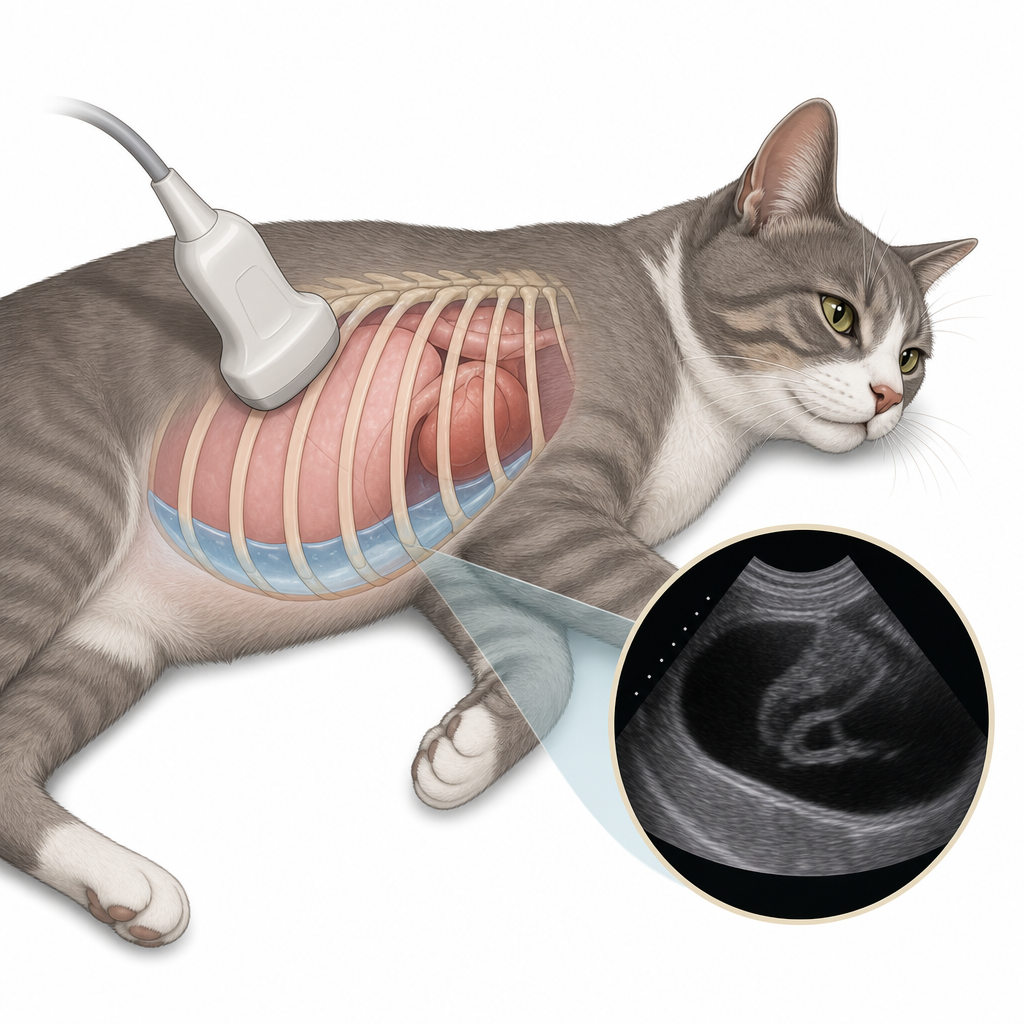
Ultrasonography is highly useful for identifying localized pockets of fluid in the chest.
Treatment options
Treating pyothorax is intensive and requires immediate hospitalization. The primary goals of treatment are to drain the infected fluid, eliminate the bacteria with targeted antibiotics, and provide supportive care to keep the pet stable.
Pleural Drainage (Chest Tubes)
The most critical step in treating pyothorax is removing the pus from the chest cavity. This is typically achieved by placing one or two thoracostomy (chest) tubes while the pet is under sedation or general anesthesia. These tubes allow the veterinary team to gently suction out the pus multiple times a day, or continuously, which immediately helps the pet breathe easier. In many cases, the chest cavity is also flushed (lavaged) with sterile warm saline to help break up and wash out thick debris.
First-Line Antibiotic Therapy
Because pyothorax is a life-threatening emergency, your vet cannot wait for culture results to begin antibiotic treatment. They will start broad-spectrum, intravenous antibiotics immediately. These are chosen to cover a wide variety of potential bacteria, including both aerobic and anaerobic species. Common first-line options include:
- Ampicillin and Sulbactam: A potentiated aminopenicillin combination that is highly effective against many common bacteria.
- Amikacin: An aminoglycoside antibiotic used to target tough Gram-negative infections, though it requires careful monitoring of kidney function.
- Cefuroxime: A second-generation cephalosporin antibiotic.
- Metronidazole: A nitroimidazole antibiotic specifically chosen for its excellent ability to kill anaerobic bacteria.
- Clindamycin: A lincosamide antibiotic that also targets anaerobic bacteria.
- Enrofloxacin: A fluoroquinolone antibiotic that provides strong coverage against Gram-negative bacteria.
- Ticarcillin / Clavulanate: A parenteral extended-spectrum penicillin combined with a beta-lactamase inhibitor, used for severe, resistant infections.
"Medical therapy for pyothorax includes antibiotics, drainage of the pleural cavity, and appropriate supportive care (e. g. , fluid therapy). At first, empirically selected antibiotics are administered intravenously. Results of Gram staining and culture and sensitivity testing are helpful in selecting antibiotics. Generally, anaerobes and Pasteurella (a common isolate from cats with pyoth..." — A leading veterinary internal medicine reference, page 383.
Second-Line & Long-Term Antibiotics
Once the pet is stable, eating, and breathing comfortably without a chest tube, they can transition to oral antibiotics at home.
- Amoxicillin/Clavulanate Potassium: This potentiated aminopenicillin is a common choice for long-term oral therapy. Antibiotic treatment for pyothorax is lengthy, often requiring 4 to 6 weeks of continuous medication to ensure the infection is completely eradicated and does not return.
Supportive Care & Anticoagulants
- Intravenous fluid therapy: Essential to maintain hydration, support blood pressure, and help the body flush out toxins.
- Unfractionated Heparin: Severe infections can trigger abnormal blood clotting. Heparin may be used as an anticoagulant to prevent dangerous clots from forming.
Monitoring and Potential for Surgical Intervention
Pets with pyothorax must be monitored closely. If a pet fails to improve, surgery may be necessary.
"Failure to respond is suggested by the continued need for a chest tube for longer than 1 week after the start of appropriate antibiotic treatment and drainage, although reported cases that have undergone complete recovery after medical management have required drainage by chest tubes for longer periods. Furthermore, persistence of large pockets of fluid in spite of appropriate chest tube placement..." — A leading veterinary internal medicine reference, page 385.
If medical management fails, or if a foreign body or lung abscess is identified, a surgical procedure called a thoracotomy or thoracoscopy may be required to manually clean the chest cavity and remove damaged tissue.
Prognosis
The prognosis for pyothorax is fair to good, provided the condition is recognized early and treated aggressively. Because this is a severe disease, survival rates can vary.
In general small animal medicine, survival rates for pyothorax range from approximately 63% to 77.6%. However, cats treated aggressively with thoracostomy (chest) tubes have a remarkably high success rate, with up to 95% survival reported in some veterinary studies.
The key to a successful outcome is the speed of diagnosis and the aggressiveness of the initial treatment. Pets that survive the initial critical phase (the first few days of hospitalization and chest drainage) and complete their full course of antibiotics typically go on to live normal, healthy lives without long-term respiratory issues. If a migrating foreign body was the cause, successful removal of the object is necessary to prevent recurrence.
Prevention
While not all cases of pyothorax can be prevented—especially idiopathic cases in cats—there are several steps owners can take to minimize the risks:
- Avoid tall grasses: If you live in an area with foxtails or other sharp, barbed grasses, avoid letting your dog run through these fields, especially during the dry summer and autumn months. Inspect your dog's coat, ears, and paws thoroughly after outdoor walks.
- Prevent cat fights: Keep cats indoors or in secure outdoor enclosures to prevent bite wounds, which can introduce bacteria deep into tissues and lead to infection.
- Prompt veterinary care: If your pet sustains any chest trauma, bite wounds, or develops a deep, lingering cough, seek veterinary care immediately. Treating localized infections early can prevent them from spreading into the pleural cavity.
- Dental hygiene: Since oral bacteria are suspected to play a role in feline pyothorax, maintaining your cat's dental health through regular veterinary cleanings can help reduce the bacterial load in their mouth.
When to call your vet
Pyothorax is a medical emergency. You should contact your veterinarian or go to the nearest emergency veterinary hospital immediately if you notice any of the following red flags:
- Any difficulty breathing, including open-mouth breathing or flared nostrils.
- Rapid, shallow breathing while your pet is resting.
- Gums that appear pale, blue, or purple instead of a healthy pink.
- Extreme lethargy, weakness, or sudden collapse.
- A sudden, high fever accompanied by a refusal to eat.
Do not wait to see if your pet's breathing improves on its own. Prompt action can save your pet's life.
Sources
- Disorders of the Pleural Cavity: Pyothorax, in Internal Medicine, 5th Edition, pages 382, 383, 385.
- Small Animal Critical Care Medicine, 2nd Edition, page 180.
My highlights & notes
Signs & symptoms
How it is diagnosed
- Cytologic evaluation of pleural fluidGold standard
- Aerobic and anaerobic bacterial cultures
- Computed tomography of the chest
- Gram staining
- Thoracic radiography
- Ultrasonography
Treatment approaches
Treatment must be prescribed by a licensed veterinarian based on your pet. Specific drug doses are intentionally not shown here.
Frequently asked questions
What is Pyothorax?
Pyothorax is a life-threatening accumulation of pus in the chest cavity of dogs and cats. Learn to recognize the signs of this respiratory emergency, how vets diagnose it, and the aggressive treatments needed to save your pet's life.
What are the symptoms of Pyothorax?
Loss of appetite、Decreased lung sounds、Dehydration、Fever、Increased abdominal excursions、Lethargy、Fast breathing、Weight loss (getting thinner)
How is Pyothorax diagnosed?
Cytologic evaluation of pleural fluid、Aerobic and anaerobic bacterial cultures、Computed tomography of the chest、Gram staining、Thoracic radiography、Ultrasonography
How is Pyothorax treated?
Treatment must be prescribed by a licensed veterinarian based on your pet. Specific drug doses are intentionally not shown here.
Sources
- Internal Medicine 5th · p. 383
- Internal Medicine 5th · p. 383
- Internal Medicine 5th · p. 385
- Internal Medicine 5th · p. 382
- Small Animal Critical Care Medicine, 2nd Edition (VetBooks.ir) · p. 180
This article is for general education and is not a substitute for professional veterinary advice. If your pet is unwell, please consult a veterinarian.
Worried about your pet?
Peqaboo’s AI helps you track symptoms, understand lab reports, and know when to see a vet.
Get the Peqaboo app