

Insulinoma
Pancreatic β-cell tumor
Also known as: β-cell tumor, beta-cell tumor, functional islet cell adenocarcinoma, pancreatic neuroendocrine tumor, NETP
In short
An insulinoma is a functional tumor of the pancreatic beta cells that secretes excess insulin, causing severe low blood sugar (hypoglycemia). Learn about the symptoms, diagnostic tests, and treatment options to help manage this complex endocrine disease.
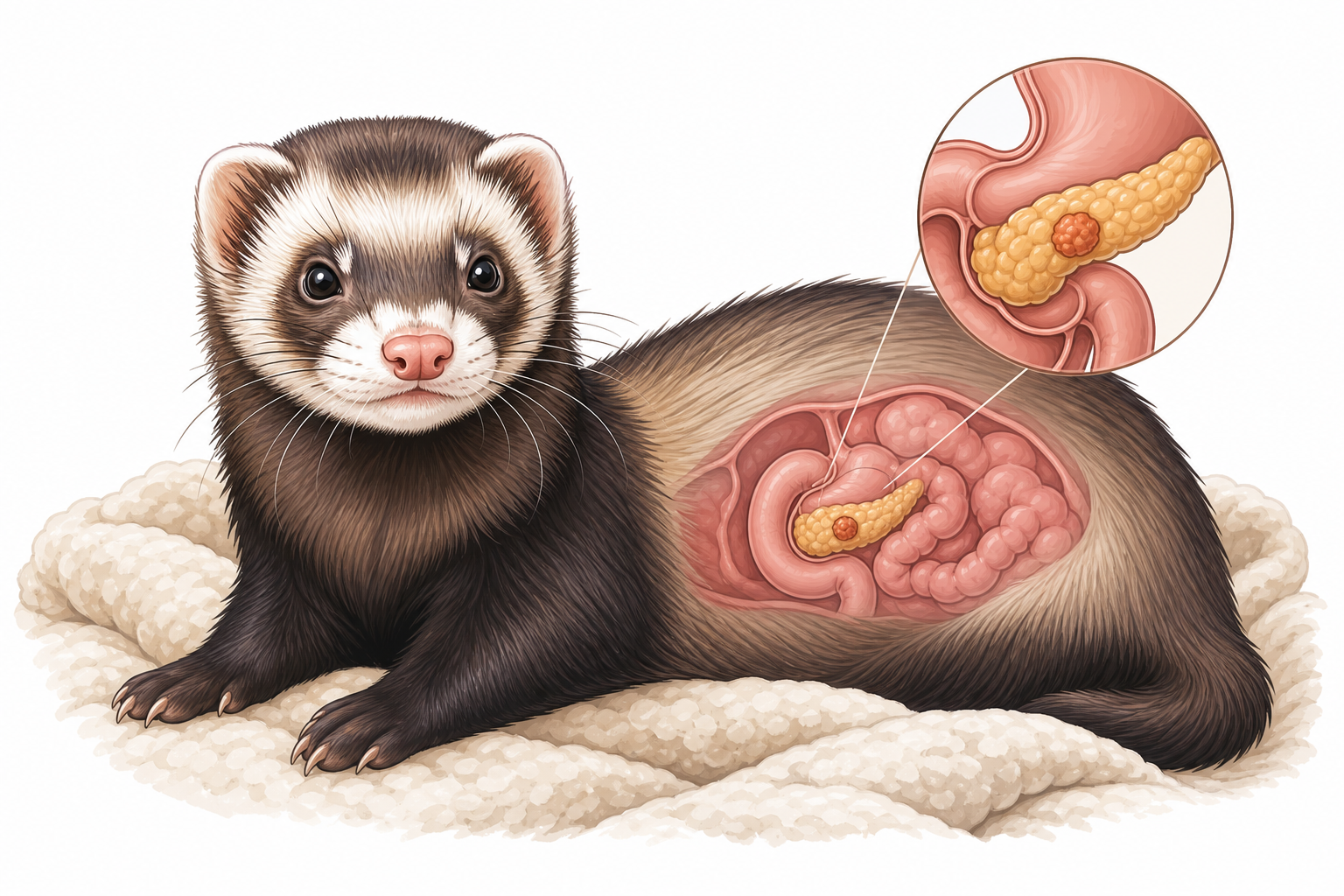
TL;DR. An insulinoma is a pancreatic tumor that constantly releases insulin, causing dangerously low blood sugar levels that lead to weakness, collapse, and seizures.
Ferrets are among the most common species diagnosed with insulinomas.
What is it?
An insulinoma, scientifically known as a pancreatic ̢-cell (beta-cell) tumor, is a functional neuroendocrine tumor of the pancreas. In a healthy pet, the pancreas plays a vital role in regulating blood sugar. It contains specialized cells called beta cells that produce insulin. Insulin acts as a key, allowing glucose (sugar) from the bloodstream to enter the body's cells to be used as energy. Under normal conditions, when blood sugar levels drop, the pancreas stops releasing insulin to prevent glucose levels from falling too low.
In a pet with an insulinoma, this feedback loop is broken. The tumor cells autonomously and continuously secrete excess insulin, completely ignoring the body's signals to stop. This constant flood of insulin forces glucose out of the blood and into the cells, resulting in profound hypoglycemia (dangerously low blood sugar). Because the brain relies almost exclusively on a steady supply of glucose to function, this sudden drop in blood sugar triggers severe neurological and systemic signs.
While insulinomas are most commonly diagnosed in middle-aged to older dogs and ferrets, they can occasionally occur in cats. In ferrets, this is one of the most frequently diagnosed cancers. Because the disease behaves similarly across these species, veterinary specialists often adapt canine treatment protocols for feline and exotic patients, though long-term data for cats remains limited due to the rarity of the condition in that species.
Causes & risk factors
The exact underlying cause of insulinomas is not fully understood. These tumors are neoplastic, meaning they arise from abnormal, uncontrolled cell division. Most insulinomas in dogs are malignant adenocarcinomas, which have a high rate of spread (metastasis) to other parts of the body, particularly the liver, local lymph nodes, and mesentery.
There are clear breed predispositions that suggest a genetic component to the disease. The breeds most commonly affected include:
- German Shepherd Dog
- Labrador Retriever
- Golden Retriever
- Boxer
- Irish Terrier
- English Cocker Spaniel
- Siamese Cat
- Siamese Dog
In ferrets, husbandry factors such as high-carbohydrate diets have been proposed as potential risk factors, though genetic predisposition is also highly suspected.
Signs to watch for
The clinical signs of an insulinoma are directly related to low blood sugar (hypoglycemia) and the body's compensatory release of stress hormones like adrenaline. Because these tumors release insulin in unpredictable bursts, symptoms often come and go. Many owners report that their pets are symptomatic for one to six months before a diagnosis is made, as early signs can be subtle.
Cardinal Signs (Most Common)
- Weakness: Often presenting as hind-leg weakness or generalized wobbliness.
- Seizures: Generalized convulsions caused by the brain being starved of glucose.
Common Signs
- Collapse: Sudden loss of strength where the pet falls and cannot get up.
- Ataxia: A wobbly, uncoordinated, "drunken" gait.
- Lethargy: Marked depression, sleeping more than usual, or reluctance to play.
Occasional Signs
- Bizarre behavior: Staring into space, pacing, or temporary mental confusion.
- Nervousness or anxiety: Restlessness or trembling.
- Muscle fasciculations: Fine muscle twitching or trembling, especially in the limbs.
- Polyphagia: A sudden, dramatic increase in appetite as the body tries to raise its blood sugar.
- Weight gain: Paradoxical weight gain caused by increased food intake combined with the fat-storing effects of high insulin levels.
- Tetraparesis or paraparesis: Weakness affecting all four limbs or just the hind limbs.
- Hyporeflexia: Decreased or sluggish reflexes.
- Facial paresis: Drooping of the facial muscles.
Some of these occasional neurological signs, such as weakness and decreased reflexes, are caused by a secondary condition called peripheral neuropathy. A leading veterinary internal medicine reference explains the potential causes behind this nerve damage:
"Proposed theories include metabolic derangements of the nerves induced by chronic and severe hypoglycemia or some other tumor-induced metabolic deficiency, an immune-mediated paraneoplastic syndrome resulting from shared antigens between tumor and nerves, or toxic factors produced by the tumor that deleteriously affect the nerves."

Weakness and lethargy are common early warning signs of low blood sugar.
How vets diagnose it
Diagnosing an insulinoma requires a systematic approach because low blood sugar can be caused by several other conditions, including severe infections, liver disease, or other types of cancer.
The Gold Standard Test
The definitive diagnosis of an insulinoma is made by measuring the serum insulin concentration during an episode of hypoglycemia. Your vet will perform a blood draw when your pet's blood glucose is documented to be low (typically below 60 mg/dL). In a normal animal, insulin levels should be virtually undetectable when blood sugar is this low. If the insulin level is normal or elevated in the face of hypoglycemia, it confirms the presence of an insulinoma.
If the initial results are unclear, your vet may recommend an Amended Insulin-to-Glucose Ratio (AIGR) or a supervised fast. During a supervised fast, your pet is hospitalized, and their blood glucose is evaluated hourly. Once hypoglycemia is reached, a blood sample is immediately taken to measure insulin. As noted in a prominent small animal critical care text:
"Some animals will have intermittent episodes of hypoglycemia and hyperinsulinemia that may require a supervised fast or multiple samples to identify. Also, results may vary significantly between laboratories and this fact may prompt retesting those patients suspected of having insulinoma that do not have confirmatory endocrine testing."
Additional Diagnostic Tests
- Low Fructosamine Values: Fructosamine reflects the average blood sugar levels over the preceding two to three weeks. A low value supports a history of chronic hypoglycemia.
- Computed Tomography (CT): This is highly recommended prior to surgery. Because these tumors are highly vascular, a contrast-enhanced CT scan (specifically evaluating the arterial phase) is the most sensitive way to locate the primary tumor in the pancreas and identify any metastatic spread.
- Abdominal Ultrasonography: While useful for evaluating the abdomen, ultrasound can easily miss small pancreatic tumors.
- Thoracic Radiographs (Chest X-rays): These are performed to screen for metastasis, though they have limitations. A leading internal medicine textbook notes that "thoracic radiographs are of minimal value in documenting metastatic disease, primarily because identifiable metastatic nodules in the lung occur late in the disease."
- Laparotomy (Surgical Exploration): Often, the final confirmation and staging occur during surgery, where the veterinarian can visually inspect and feel the pancreas and surrounding lymph nodes.
- Cytology and Histopathology: A needle biopsy (cytology) of the pancreas is rarely diagnostic on its own. A leading veterinary cytology reference notes:
"In addition, cytology is often not helpful in differentiating between benign NETPs (islet cell adenomas) and their malignant counterparts (islet cell carcinomas) unless profound criteria of malignancy are met. The absence of anaplastic features does not rule out malignancy. Histological evidence of invasion by the tumor cells through the capsule and into adjacent pancreatic parenchyma or lymphatics is required to confirm malignancy."

Advanced imaging like ultrasound and CT scans help veterinarians locate pancreatic tumors.
Treatment options
Managing an insulinoma requires a multi-tiered approach combining emergency stabilization, surgical intervention, and long-term medical therapy.
Emergency & First-Line Therapy
If your pet is presented in a hypoglycemic crisis (actively seizing or collapsed), the immediate goal is to raise their blood sugar safely:
- Glucose / Dextrose Infusions: Administered intravenously to rapidly raise blood sugar levels.
- Glucocorticoids (Corticosteroids): Medications such as prednisone are initiated early. These hormones counteract insulin by stimulating the liver to produce glucose and decreasing the body's sensitivity to insulin.
Surgical Therapy
Surgical removal of the primary tumor (and any visible metastatic lesions) is the treatment of choice for dogs and ferrets. Surgery provides the fastest relief from hypoglycemia and significantly extends survival times. However, owners must understand that surgery is rarely a permanent cure. A leading critical care reference explains:
"A combination of surgical excision and medical management has resulted in the longest survival times for patients with insulinoma and surgical excision of the primary tumor and any obvious metastases is considered the treatment of choice. Surgery is still considered palliative because approximately 50% of patients have metastatic disease evident at surgery and the majority of the others have occult metastases."
Second-Line Medical Therapy
When surgery is not an option, or when hypoglycemia recurs after surgery due to tumor regrowth or metastasis, several second-line medications can be utilized:
- Diazoxide: A drug that directly inhibits insulin secretion from the beta cells and helps maintain normal blood glucose.
- Octreotide: A synthetic somatostatin analogue that can inhibit the release of insulin in some patients.
- Streptozocin: An alkylating chemotherapy agent that specifically targets and destroys pancreatic beta cells.
- Glucagon: A hormone administered as a continuous infusion in hospital settings to combat severe, life-threatening hypoglycemia that does not respond to dextrose.
- Allopurinol: Used in some protocols as an adjunctive therapy.
- Cefazolin: A first-generation cephalosporin antibiotic used perioperatively to prevent infection during and immediately after pancreatic surgery.
Prognosis
The long-term prognosis for pets with insulinoma is guarded to poor for a complete cure, but the prognosis for extended, high-quality survival is quite good with aggressive treatment.
For dogs, combining surgical removal of the tumor with subsequent medical management (such as prednisone and dietary modifications) yields the best outcomes, with median survival times reaching up to 1,316 days (nearly 3.5 years). If medical management is used alone without surgery, survival times are significantly shorter, typically ranging from a few months to a year.
In ferrets, insulinomas are highly manageable, though recurrence is very common, and many ferrets require lifelong, adjusted medical therapy. Because feline insulinoma is exceptionally rare, long-term prognosis data in this species is limited, and outcomes are highly variable.
Prevention
There is no known way to prevent the development of an insulinoma. Because the disease is neoplastic, lifestyle changes or dietary adjustments will not prevent the tumor from forming.
The best approach is early detection. If you own a breed predisposed to insulinomas, or if you own a middle-aged to older ferret, ask your veterinarian to include routine blood glucose checks in their annual or bi-annual wellness exams. Catching hypoglycemia early, before severe signs like seizures develop, allows for safer surgical intervention and a better overall outcome.
When to call your vet
Hypoglycemia is a medical emergency. You should contact your veterinarian or an emergency clinic immediately if your pet exhibits any of the following red flags:
- Active seizures or severe muscle twitching
- Sudden collapse or inability to stand
- Extreme weakness or a wobbly, "drunken" walk
- Glazed eyes, unresponsive staring, or profound confusion
If your pet is conscious and able to swallow safely, you can rub a small amount of corn syrup, maple syrup, or honey directly onto their gums on the way to the clinic. Do not force liquids or food into an unconscious pet's mouth, as this can lead to choking or aspiration pneumonia.
For specific breeds
If you own a German Shepherd, Labrador Retriever, Golden Retriever, Boxer, Irish Terrier, English Cocker Spaniel, or a Siamese cat, you should be highly vigilant for subtle signs of weakness or lethargy. It is easy to mistake early weakness or a slower pace for "just getting older." However, if your middle-aged or senior pet seems unusually tired after mild exercise, wobbles in their hind legs, or shows an intense, sudden craving for food, do not wait. Request a simple fasting blood glucose test from your veterinarian to rule out early hypoglycemia.
Sources
- Nelson, RW, Couto, CG. Small Animal Internal Medicine, 5th Edition. pp. 850-851.
- Silverstein, DC, Hopper, K. Small Animal Critical Care Medicine, 2nd Edition. pp. 394-395.
- Valenciano, AC, Cowell, RL. Cowell and Tyler's Diagnostic Cytology and Hematology of the Dog and Cat, 5th Edition. p. 340.
My highlights & notes
Signs & symptoms
Breeds at higher risk
How it is diagnosed
- Serum insulin concentration during hypoglycemiaGold standard
- Abdominal Ultrasonography
- Amended insulin-to-glucose ratio (AIGR)
- Computed Tomography (CT)
- Fasting with hourly blood glucose evaluations
- Laparotomy / Surgical exploration
- Low fructosamine values
- Thoracic radiographs
Treatment approaches
Treatment must be prescribed by a licensed veterinarian based on your pet. Specific drug doses are intentionally not shown here.
Frequently asked questions
What is Insulinoma?
An insulinoma is a functional tumor of the pancreatic beta cells that secretes excess insulin, causing severe low blood sugar (hypoglycemia). Learn about the symptoms, diagnostic tests, and treatment options to help manage this complex endocrine disease.
What are the symptoms of Insulinoma?
Seizures、Weakness (low energy, no strength)、Ataxia (wobbly, unsteady walking)、Lethargy、Collapse (suddenly going down)、Bizarre behavior、Facial paresis、Muscle atrophy
How is Insulinoma diagnosed?
Serum insulin concentration during hypoglycemia、Abdominal Ultrasonography、Amended insulin-to-glucose ratio (AIGR)、Computed Tomography (CT)、Fasting with hourly blood glucose evaluations、Laparotomy / Surgical exploration
How is Insulinoma treated?
Treatment must be prescribed by a licensed veterinarian based on your pet. Specific drug doses are intentionally not shown here.
Sources
- Internal Medicine 5th · p. 850
- Internal Medicine 5th · p. 850
- Small Animal Critical Care Medicine, 2nd Edition (VetBooks.ir) · p. 394
- Internal Medicine 5th · p. 851
- Cowell and Tyler s Diagnostic Cytology and Hematology of the Dog and Cat, 5th Edition (VetBooks.ir) · p. 340
- Small Animal Critical Care Medicine, 2nd Edition (VetBooks.ir) · p. 395
This article is for general education and is not a substitute for professional veterinary advice. If your pet is unwell, please consult a veterinarian.
Worried about your pet?
Peqaboo’s AI helps you track symptoms, understand lab reports, and know when to see a vet.
Get the Peqaboo app