

Strangles
In short
Strangles is a highly contagious upper respiratory infection in horses caused by the bacterium Streptococcus equi. Characterized by fever, swollen lymph nodes, and nasal discharge, it requires strict biosecurity and targeted veterinary care to prevent spread and manage complications like guttural pouch infections.
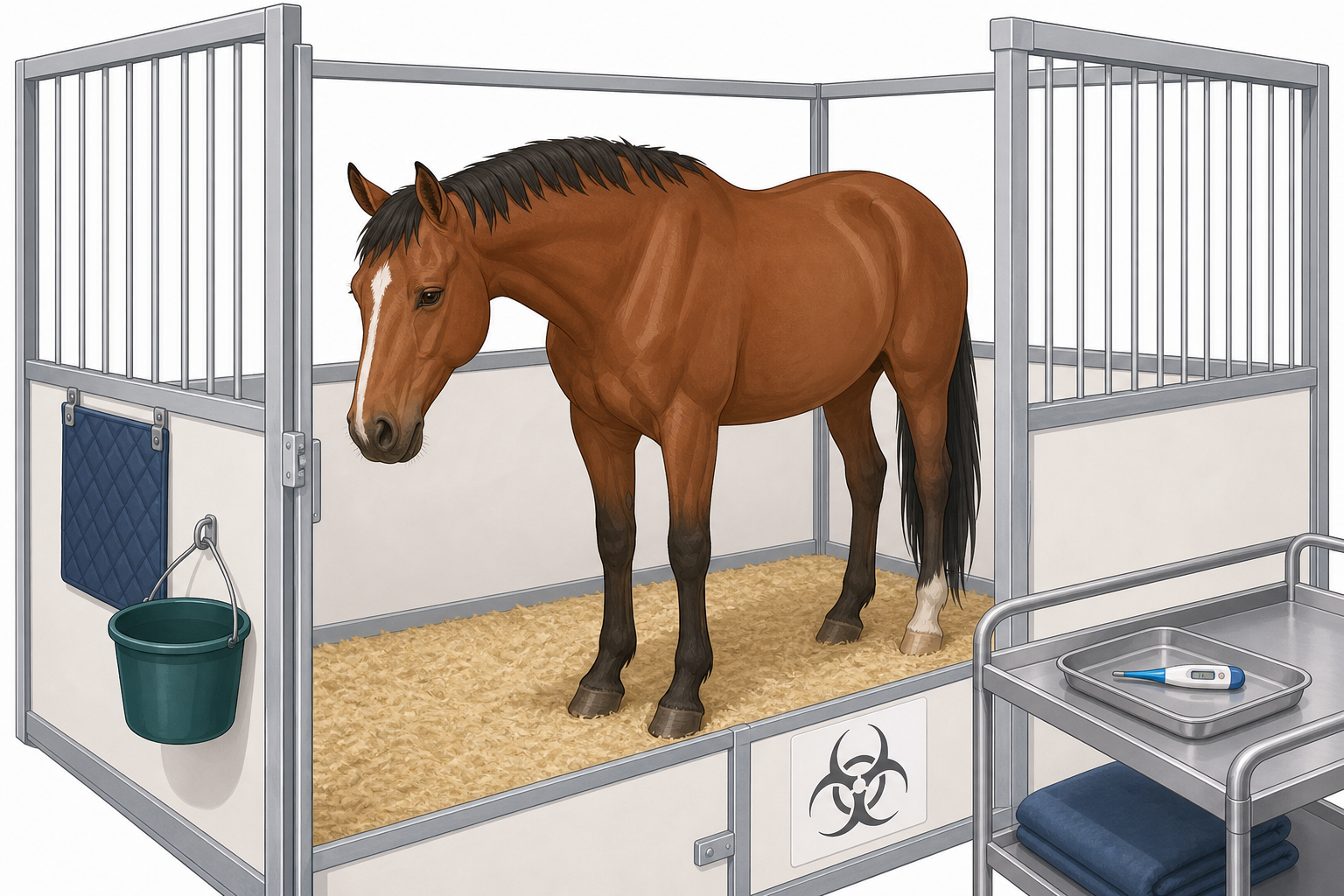
TL;DR. Strangles is a highly contagious bacterial respiratory infection of horses that causes fever, swollen lymph nodes under the jaw, and nasal discharge, requiring strict isolation and careful veterinary management.
Early identification and isolation of affected horses are critical first steps in managing a strangles outbreak.
What is it?
Strangles is an infectious upper respiratory tract disease of horses caused by the bacterium Streptococcus equi (specifically Streptococcus equi subspecies equi). It is one of the most common and feared respiratory diseases in the equine world due to its highly contagious nature and its ability to rapidly spread through a stable or herd. The disease gets its common name, "strangles," from the severe swelling of the lymph nodes in the throat latch area, which can occasionally compress the horse's airway and cause difficulty breathing.
When a horse inhales or ingests the Streptococcus equi bacteria, the organisms quickly attach to the cells of the tonsils and move into the local lymph nodes of the head and neck. The body responds with a massive inflammatory reaction, sending white blood cells to fight the infection. This leads to the formation of painful abscesses within the lymph nodes. As these lymph nodes swell, they can press on the pharynx and larynx, making swallowing painful and breathing difficult.
For horse owners, strangles is a significant concern not only because of the physical suffering it causes individual horses, but also because of the immense economic and logistical burden of managing an outbreak. A single confirmed case can shut down a boarding facility, training stable, or racetrack for weeks or months, requiring strict quarantine protocols and extensive testing to ensure the disease has been fully eradicated.
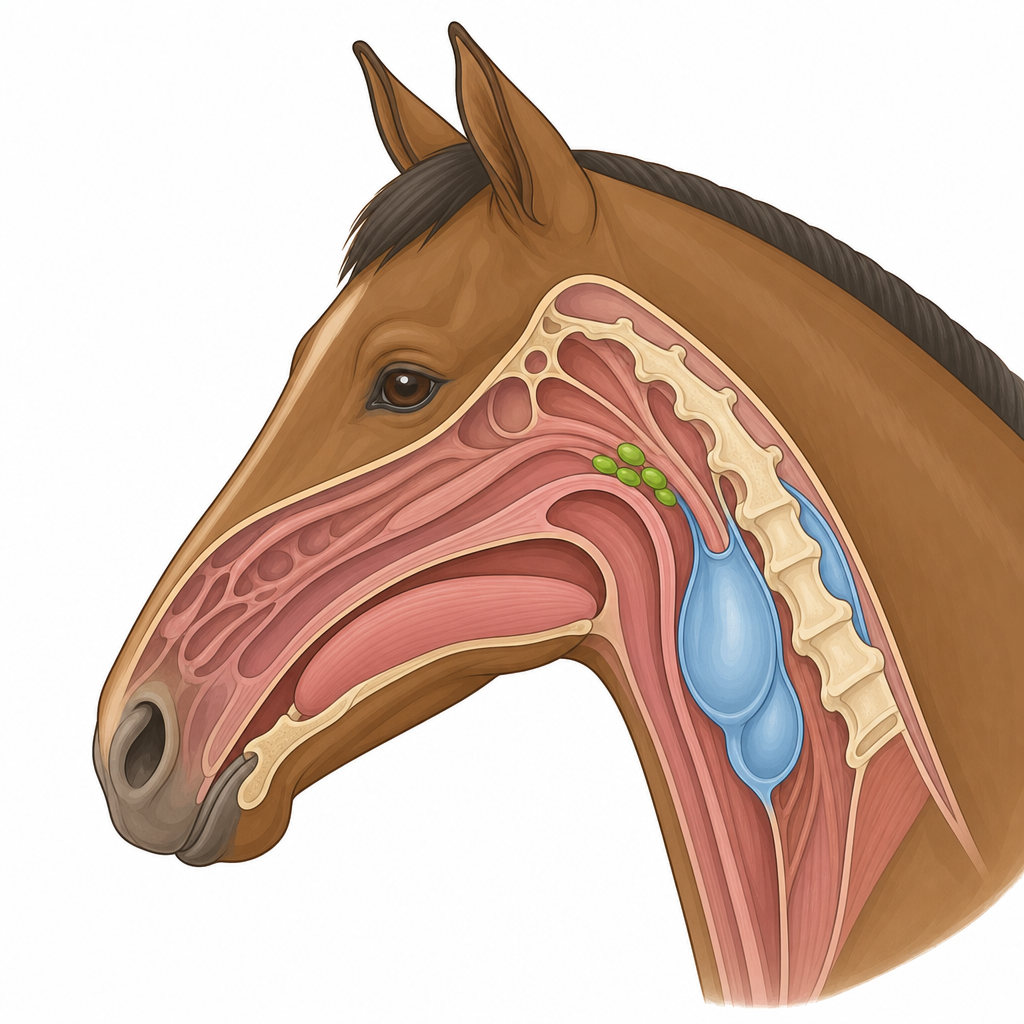
The proximity of the retropharyngeal lymph nodes to the guttural pouches allows pus to easily drain into these air-filled sacs.
Causes & risk factors
The sole cause of strangles is the bacterium Streptococcus equi. This bacterium is highly adapted to horses and does not typically infect other livestock or humans, though it is highly infectious among equids, including donkeys and mules.
Transmission occurs through direct horse-to-horse contact or indirect contact with contaminated objects, known as fomites. Direct transmission happens when an infected horse coughs, snorts, or touches noses with another horse, transferring nasal discharge or pus from ruptured abscesses. Indirect transmission is incredibly common and occurs when horses share water troughs, feed buckets, halters, grooming tools, or stalls. Humans can also easily spread the bacteria on their hands, clothing, or boots after handling an infected horse.
While the structured veterinary record notes that there are no specific breed predispositions for strangles, certain risk factors make some horses more vulnerable:
- Age: Young horses, particularly weanlings, yearlings, and young adults, are highly susceptible because their immune systems have not had prior exposure to the bacteria.
- High-traffic environments: Stables with frequent horse movement, such as boarding barns, training facilities, showgrounds, and sales yards, are at a much higher risk for introducing and spreading the disease.
- Stress: Transport, heavy training, poor nutrition, or concurrent illnesses can suppress a horse's immune system, making them more vulnerable to infection if exposed.
Signs to watch for
The clinical signs of strangles typically appear within 3 to 14 days after exposure to the bacteria. Recognizing these signs early is critical to isolating the horse and preventing a farm-wide outbreak.
Common Signs
- Fever: This is usually the very first sign of infection, often reaching 103°F to 106°F (39.4°C to 41.1°C). The fever typically precedes nasal discharge and lymph node swelling by 24 to 48 hours.
- Depression and Lethargy: The horse will appear dull, stand with its head lowered, and show little interest in its surroundings.
- Anorexia: Due to a high fever and the pain associated with swallowing, affected horses will often refuse feed and water.
- Lymphadenopathy (Swollen Lymph Nodes): The lymph nodes under the jaw (submandibular) and around the throat latch (retropharyngeal) become hot, swollen, and painful to the touch. These swellings often progress to abscesses that eventually rupture and drain thick, creamy, yellow-green pus.
Occasional or Complicated Signs
- Dyspnea (Difficulty Breathing): If the retropharyngeal lymph nodes swell significantly, they can compress the pharynx or trachea, causing noisy, labored breathing. This is a veterinary emergency.
- Guttural Pouch Infection: The guttural pouches are unique, air-filled sacs located in the horse's throat. Pus from ruptured retropharyngeal lymph nodes can drain directly into these pouches, leading to a condition called guttural pouch empyema. If left untreated, this pus can dry into hard, pebble-like stones called chondroids, which harbor the bacteria long-term.

Severe swelling of the submandibular lymph nodes is a classic clinical sign of strangles.
How vets diagnose it
While the structured clinical record does not list specific diagnostic tests, standard-of-care veterinary medicine relies on a combination of clinical signs, physical examination, and laboratory testing to confirm a diagnosis of strangles and differentiate it from other respiratory infections like equine influenza or equine herpesvirus.
To confirm the presence of Streptococcus equi, your vet will typically perform one or more of the following diagnostic procedures:
- Nasal Swabs or Nasopharyngeal Washes: Your vet will insert a long, sterile swab into the horse's nasal passage or flush a small amount of sterile saline into the back of the throat to collect bacterial samples. These samples are then sent to a laboratory for testing.
- Polymerase Chain Reaction (PCR) Testing: This highly sensitive test detects the DNA of Streptococcus equi. It is the fastest and most sensitive way to identify the bacteria, often detecting it even in the early stages of infection or in asymptomatic carrier horses.
- Bacterial Culture: The laboratory will attempt to grow the bacteria from the swab or wash sample. While culture takes longer than PCR (typically 2 to 5 days), it remains a gold standard because it confirms the presence of live, viable bacteria.
- Endoscopy of the Guttural Pouches: For horses with suspected chronic infections or those undergoing clearance testing, your vet may pass a flexible fiberoptic camera (endoscope) up the nasal passage and into the guttural pouches. This allows direct visualization of any inflammation, pus, or chondroids.
Treatment options
Treatment of strangles depends heavily on the stage of the disease and the severity of the clinical signs. Your vet will tailor the treatment plan to your horse's specific condition.
Supportive Care
For most uncomplicated cases of strangles, supportive care is the primary line of treatment. This includes:
- Rest and Shelter: Keeping the horse in a warm, dry, dust-free, and well-ventilated environment.
- Soft, Palatable Feed: Offering wet, sloppy feeds, soaked hay, or fresh grass that is easy to swallow.
- Warm Compresses: Applying warm compresses to swollen lymph nodes to encourage them to abscess, rupture, and drain, which provides rapid pain relief.
- Flushing Ruptured Abscesses: Once an abscess ruptures, your vet may recommend flushing the cavity daily with a dilute antiseptic solution to promote healing from the inside out.
Antibiotic Therapy
The use of antibiotics in treating strangles is controversial and must be decided by your veterinarian. If given too early (before abscesses form), antibiotics can delay the natural progression of the disease and prevent the horse from developing strong immunity. However, antibiotics are critical for horses with severe complications, such as difficulty breathing, high persistent fevers, or spread of the infection to other parts of the body (a condition known as "bastard strangles").
According to leading veterinary formularies, natural penicillins are the antibiotics of choice for Streptococcus equi infections:
- Penicillin G: Typically administered via intramuscular injection for systemic treatment of severe infections.
- Penicillin V Potassium: An oral penicillin that may be used in specific clinical scenarios under close veterinary supervision.
Guttural Pouch Treatment
If the infection spreads to the guttural pouches, local treatment is required to clear the bacteria and prevent the horse from becoming a chronic, asymptomatic carrier. This often involves flushing the pouches and instilling a specialized penicillin gel directly into the pouch.
As detailed in a leading veterinary internal medicine reference:
"Instillation is easiest through a catheter inserted up the nose and endoscopically guided into the pouch opening with the last inch bent at an angle to aid entry under the pouch flap. Elevate horse's head for 20 minutes after infusion."
This localized therapy is highly effective at eliminating the infection and resolving inflammation in the guttural pouches, preventing the formation of infectious chondroids.
Prognosis
While the structured record does not contain specific prognosis data, standard veterinary clinical outcomes for strangles are generally favorable. The vast majority of horses (approximately 90% to 95%) recover fully with appropriate supportive care, rest, and isolation. Once recovered, most horses develop a strong, long-lasting immunity to the disease that persists for several years.
However, a small percentage of horses can develop serious, potentially life-threatening complications. These include:
- Asymptomatic Carrier Status: Some horses recover physically but harbor the bacteria in their guttural pouches for months or even years. These "silent carriers" shed the bacteria intermittently, serving as a constant source of infection for other horses.
- Purpura Hemorrhagica: This is a rare, life-threatening immune-mediated complication that causes severe inflammation of the blood vessels, resulting in swelling of the limbs and head, pinpoint hemorrhages on the gums, and fluid accumulation.
- Metastatic Strangles ("Bastard Strangles"): In rare cases, the bacteria travel through the bloodstream or lymphatic system to form abscesses in internal organs, such as the lungs, abdomen, or brain. This condition carries a much guarded prognosis and requires aggressive, long-term therapy.
Prevention
Preventing strangles requires a combination of strict biosecurity practices and, in some cases, vaccination. Because the bacteria are easily spread by direct and indirect contact, implementing daily preventative measures is the best defense for your herd.
Biosecurity Protocols
- Quarantine New Arrivals: Isolate all new horses entering the property for a minimum of 21 days. Monitor their temperatures daily. Any horse that develops a fever should be tested immediately.
- Isolate Sick Horses: At the first sign of fever, nasal discharge, or swollen lymph nodes, isolate the affected horse in a designated quarantine area away from all other horses.
- Use Dedicated Equipment: Do not share halters, lead ropes, buckets, brushes, or pitchforks between isolated horses and the rest of the herd.
- Practice Strict Hygiene: Handle healthy horses first, and care for isolated horses last. Wash hands thoroughly, change clothes, and disinfect boots after handling any horse in quarantine.
- Disinfect Shared Areas: Regularly clean and disinfect shared water troughs, trailer interiors, and wash bays.
Vaccination
Vaccines are available to help protect horses against strangles. While they may not completely prevent infection in all cases, they can significantly reduce the severity of clinical signs and the spread of the disease during an outbreak. Talk to your veterinarian to determine if the strangles vaccine is appropriate for your horse based on their lifestyle, travel schedule, and risk of exposure.
When to call your vet
Strangles can progress rapidly, and early intervention is key to managing both the individual horse's health and the biosecurity of your facility.
Contact your veterinarian immediately if you observe any of the following emergency red flags:
- Your horse is having difficulty breathing, making loud whistling or snoring noises, or breathing rapidly.
- Your horse is completely unable to swallow, drooling excessively, or coughing up food and water through its nose.
- Your horse has a high fever (above 103°F) accompanied by extreme lethargy and refusal to eat or drink.
- You notice sudden, severe swelling of your horse's legs, muzzle, or eyelids, or pinpoint red spots on their gums (signs of purpura hemorrhagica).
- You suspect your horse has been exposed to a confirmed or suspected case of strangles.
Sources
- Newton, et al. (2000). Elimination of guttural pouch infection and inflammation in asymptomatic carriers of Streptococcus equi. Equine Vet J 32 (6): 527–532.
- Whittem, T. (1999). Appendix: Formulary of Common Equine Drugs. The Veterinary Clinics of North America: Equine Practice 15:3 (December): 747–768.
- Plumb's Veterinary Drug Handbook, pages 2778, 2784.
My highlights & notes
Signs & symptoms
Treatment approaches
Treatment must be prescribed by a licensed veterinarian based on your pet. Specific drug doses are intentionally not shown here.
Frequently asked questions
What is Strangles?
Strangles is a highly contagious upper respiratory infection in horses caused by the bacterium Streptococcus equi. Characterized by fever, swollen lymph nodes, and nasal discharge, it requires strict biosecurity and targeted veterinary care to prevent spread and manage complications like guttural pouch infections.
What are the symptoms of Strangles?
Loss of appetite、Low mood and dullness、Fever、Swollen lymph nodes、Difficulty breathing (dyspnea)、guttural pouch infection
How is Strangles treated?
Treatment must be prescribed by a licensed veterinarian based on your pet. Specific drug doses are intentionally not shown here.
Sources
- Plumb · p. 2784
- Plumb · p. 2778
This article is for general education and is not a substitute for professional veterinary advice. If your pet is unwell, please consult a veterinarian.
Worried about your pet?
Peqaboo’s AI helps you track symptoms, understand lab reports, and know when to see a vet.
Get the Peqaboo app