

Pituitary Pars Intermedia Dysfunction
Pituitary pars intermedia dysfunction
Also known as: Equine Cushing's Disease, Equine Cushing Disease, PPID
In short
Pituitary Pars Intermedia Dysfunction (PPID), historically known as Equine Cushing's Disease, is a common degenerative endocrine disorder in older horses. Learn about the symptoms, such as abnormal hair coat changes and hyperglycemia, how veterinarians diagnose the condition using the ACTH Stimulation Test, and the primary treatment options like Pergolide and Cyproheptadine.
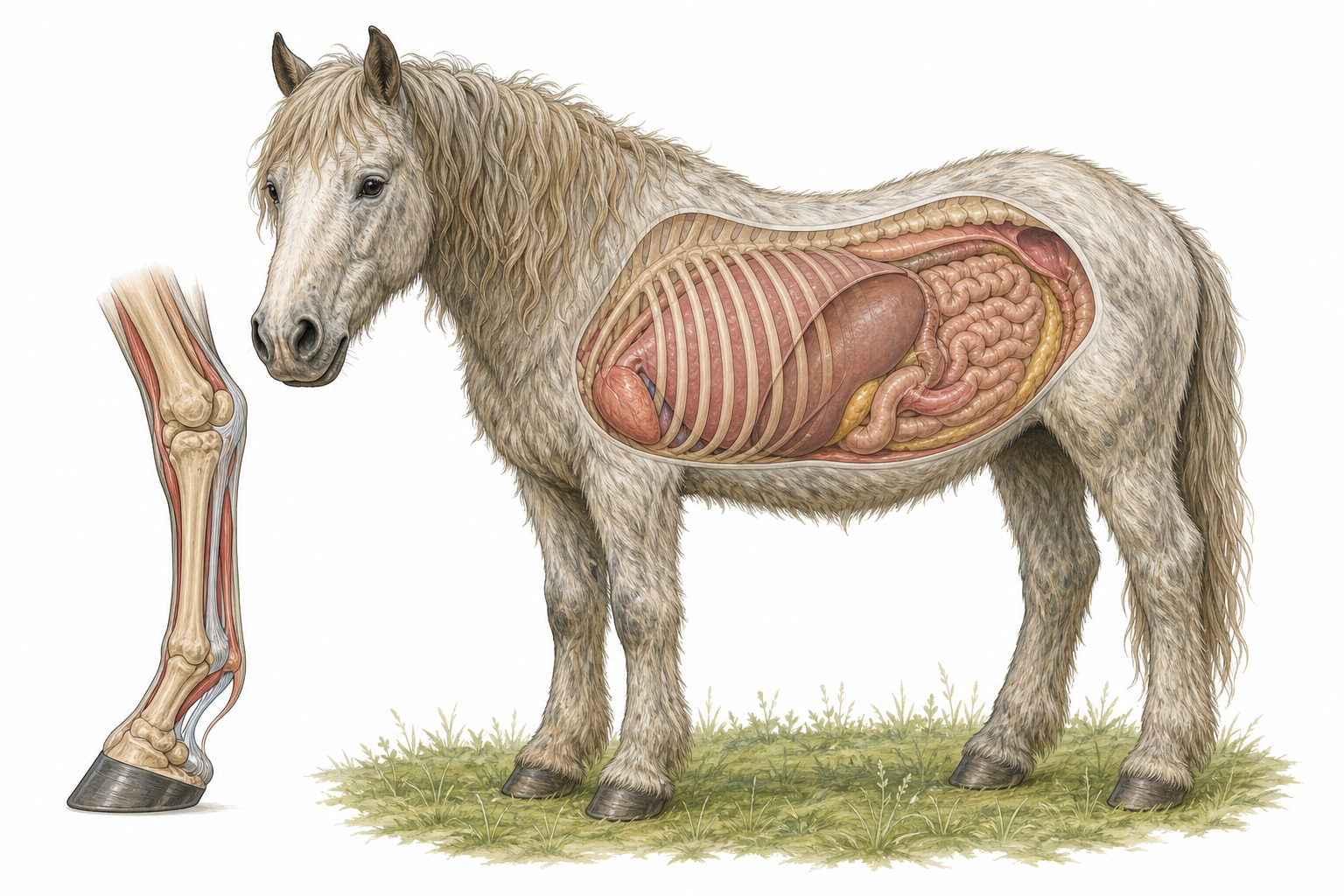
TL;DR. Pituitary Pars Intermedia Dysfunction (PPID), formerly known as Equine Cushing's Disease, is a common, degenerative hormonal disorder in older horses that causes abnormal hair coat changes and requires lifelong medical management.
A long, curly hair coat that fails to shed normally is a classic sign of PPID in horses.
What is it?
Pituitary Pars Intermedia Dysfunction (PPID)—historically referred to as Equine Cushing's Disease—is a degenerative endocrine (hormonal) disease that primarily affects older horses. The condition originates in a specific region at the base of the brain called the pituitary pars intermedia.
Under normal conditions, the brain uses a chemical messenger called dopamine to regulate hormone production in this part of the pituitary gland. In horses with PPID, the nerve cells that produce dopamine degenerate over time. Without this natural "braking" mechanism, the pituitary pars intermedia becomes overactive and enlarges. This overactivity leads to the abnormal and excessive expression of proopiomelanocortin (POMC) peptides, which are precursor proteins that break down into various hormones.
This hormonal imbalance affects multiple systems throughout the horse's body. Because it is a progressive, degenerative condition, recognizing the early signs and working closely with your veterinarian is essential to maintaining your horse's comfort and quality of life.
Causes & risk factors
The primary cause of PPID is the age-related degeneration of dopamine-producing neurons in the hypothalamus. As these neurons decline, the pituitary gland loses its regulatory signals, leading to cellular overgrowth (hyperplasia) and hormone overproduction.
While PPID is highly associated with aging, there are no documented breed predispositions in our clinical records. Any horse, pony, donkey, or mule can develop PPID as they grow older. Most cases are diagnosed in horses over the age of 15, though it can occasionally develop in younger animals.
Signs to watch for
The clinical signs of PPID can be subtle in the early stages but become more pronounced as the disease progresses.
- Hair coat changes (Common): The most classic sign of PPID is a failure to shed the winter coat normally, a condition known as hirsutism or hypertrichosis. The hair may become abnormally long, thick, curly, or matted, particularly along the neck, legs, and flanks.
- Hyperglycemia (Occasional): Some horses develop high blood sugar (hyperglycemia) due to insulin dysregulation associated with the hormonal imbalance.
While PPID itself is a slowly progressive disease (classified as an urgency level 2 out of 5), complications such as severe laminitis (painful hoof inflammation) or secondary infections can quickly escalate into veterinary emergencies.

Abnormal hair coat changes, or hirsutism, are the most common clinical sign of PPID.
How vets diagnose it
Your veterinarian will begin with a thorough physical examination, paying close attention to your horse's body condition and hair coat. Because early signs can mimic normal aging, diagnostic testing is crucial to confirm a diagnosis.
The primary diagnostic tool used to confirm PPID is the ACTH Stimulation Test (or baseline ACTH testing). This test measures how the horse's endocrine system responds to a stimulating hormone. As noted in a standard veterinary reference:
"HORSES: ACTH Stimulation Test: a) Draw baseline blood sample for cortisol determination an"
By evaluating these hormone levels, your veterinarian can determine if the pituitary gland is functioning abnormally. Testing is often performed at specific times of the year, as normal seasonal hormonal fluctuations in horses must be factored into the interpretation of the results.
Treatment options
While PPID cannot be cured, it can be highly managed with daily medication and supportive care. Treatment aims to restore hormonal balance and alleviate clinical signs.
First-Line Therapy: Dopamine Agonists
The primary medical treatment for PPID is Pergolide, a dopamine agonist. This medication acts like dopamine in the brain, binding to receptors in the pituitary gland to turn down the overproduction of hormones.
Response to treatment is gradual. Your veterinarian will monitor your horse's clinical signs and hormone levels to adjust the dose. According to a leading veterinary pharmacology reference:
"If no improvement is noted within 8-12 weeks (depending on season as hair coat changes will vary with the time of year that treatment is initiated), the daily dose can be increased by 0. 002 mg/kg monthly up to a total dose of 0. 006 mg/kg (3 mg/day for a 500 kg horse)."
Second-Line Therapy: Serotonin Antagonists
If a horse does not respond adequately to first-line therapy alone, veterinarians may introduce a second-line treatment such as Cyproheptadine. Cyproheptadine is an antihistamine and serotonin antagonist that can help further regulate pituitary activity when used in combination with pergolide.
Prognosis
Specific long-term prognosis and survival data for horses with PPID are limited in current veterinary literature, as individual outcomes depend heavily on the age of the horse at diagnosis, the presence of concurrent metabolic issues, and the quality of daily management. However, PPID is a slowly progressive, degenerative disease that cannot be reversed.
Despite the lack of formal statistical prognosis data, the practical outlook for many horses is highly positive. When diagnosed early and managed with daily medication, many horses remain comfortable, active, and clinically stable for several years. Successful management requires a partnership between the owner and the veterinarian, combining daily drug administration with diligent husbandry, including regular hoof care, body clipping to prevent overheating, and tailored nutritional support.
Prevention
Because PPID is a degenerative condition driven by age-related changes in the brain, there are no known preventive measures or lifestyle changes that can prevent the disease from developing. It is not caused by poor management, dietary choices, or lack of exercise.
The most effective strategy is proactive monitoring. For horses over the age of 15, owners should pay close attention to shedding patterns and overall body condition. Early detection allows for earlier medical intervention, which can prevent the development of severe clinical signs and secondary complications.
When to call your vet
You should schedule a veterinary consultation if you notice your older horse is slow to shed their winter coat, has patches of long, curly hair, or seems unusually lethargic.
Contact your veterinarian immediately if your horse shows signs of laminitis (such as shifting weight, a rocking-back stance, or hot hooves), exhibits extreme weakness, or develops a sudden, unexplained fever or infection.
Sources
- Plumb's Veterinary Drug Handbook, pp. 909, 2819, 2823, 2824.
My highlights & notes
Signs & symptoms
How it is diagnosed
- ACTH Stimulation Test
Treatment approaches
Treatment must be prescribed by a licensed veterinarian based on your pet. Specific drug doses are intentionally not shown here.
Frequently asked questions
What is Pituitary Pars Intermedia Dysfunction?
Pituitary Pars Intermedia Dysfunction (PPID), historically known as Equine Cushing's Disease, is a common degenerative endocrine disorder in older horses. Learn about the symptoms, such as abnormal hair coat changes and hyperglycemia, how veterinarians diagnose the condition using the ACTH Stimulation Test, and the primary treatment options like Pergolide and Cyproheptadine.
What are the symptoms of Pituitary Pars Intermedia Dysfunction?
hair coat changes、hyperglycemia
How is Pituitary Pars Intermedia Dysfunction diagnosed?
ACTH Stimulation Test
How is Pituitary Pars Intermedia Dysfunction treated?
Treatment must be prescribed by a licensed veterinarian based on your pet. Specific drug doses are intentionally not shown here.
Sources
- Plumb · p. 2819
- Plumb · p. 2823
- Plumb · p. 2824
- Plumb · p. 909
This article is for general education and is not a substitute for professional veterinary advice. If your pet is unwell, please consult a veterinarian.
Worried about your pet?
Peqaboo’s AI helps you track symptoms, understand lab reports, and know when to see a vet.
Get the Peqaboo app