

Hypercalciuria
Also known as: High fractional urinary excretion of calcium, Urinary calcium excretion
In short
Hypercalciuria is a common metabolic condition in rabbits where excess dietary calcium is excreted through the kidneys, leading to thick bladder sludge or painful urinary stones.
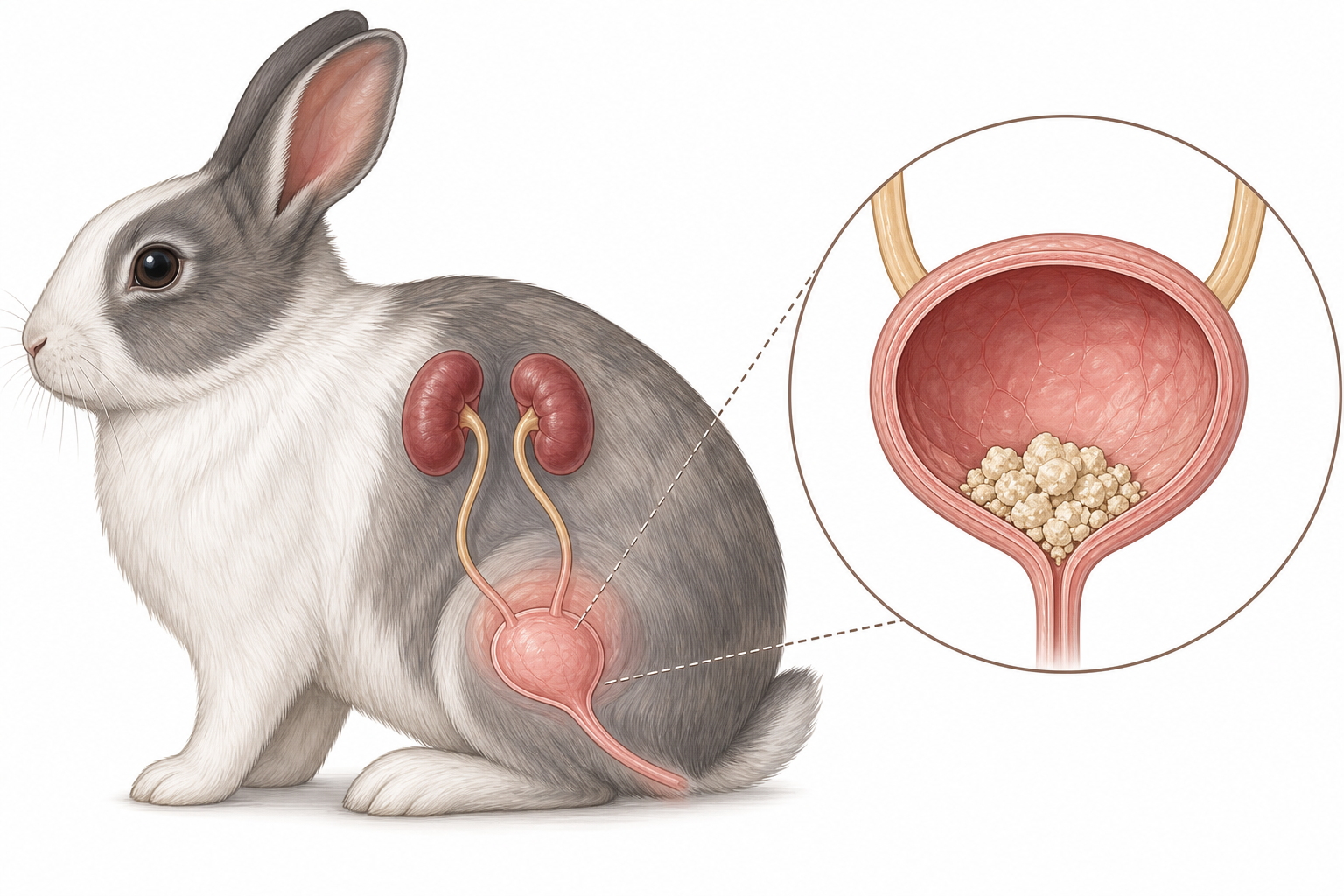
TL;DR. Hypercalciuria is a common metabolic condition in rabbits where excess dietary calcium is excreted through the kidneys, leading to thick bladder sludge or painful urinary stones.
Rabbits possess a unique calcium metabolism that filters excess dietary calcium directly into their urine.
What is it?
Rabbits possess a highly unusual and unique calcium metabolism compared to other companion animals like dogs and cats. In most mammals, the absorption of dietary calcium is strictly regulated by the intestines based on the body's immediate needs, with vitamin D playing a major role. Rabbits, however, absorb calcium indiscriminately and passively from their diet, regardless of how much calcium their body actually requires.
Because their bodies absorb almost all the calcium they ingest, rabbits must rely on their kidneys to filter out and excrete the massive excess. This physiological process results in a high fractional urinary excretion of calcium. Consequently, a healthy rabbit's urine naturally contains a high concentration of calcium carbonate crystals, which gives their urine a characteristic cloudy or turbid appearance.
When dietary calcium levels become excessively high, or when other factors prevent the normal flushing of the bladder, this high concentration of calcium in the urine can precipitate out of solution. This precipitation leads to a spectrum of urinary tract issues, starting with microurolithiasis (commonly referred to as bladder sludge), and potentially progressing to solid stone formation in the bladder (urolithiasis) or the kidneys (renolithiasis). Understanding this unique metabolic pathway is essential for every rabbit owner, as dietary choices directly impact your rabbit's urinary health.
Causes & risk factors
The primary driver of hypercalciuria and subsequent bladder sludge or stones is dietary. Diets that are excessively high in calcium—most notably those centered around alfalfa hay or alfalfa-based pelleted foods—are major risk factors. Alfalfa is a legume that is naturally rich in calcium, making it suitable for growing young rabbits but highly problematic for healthy adult rabbits.
Other significant risk factors include:
- Low water intake: Rabbits that do not drink enough water produce highly concentrated urine, which makes it much easier for calcium crystals to precipitate and form sludge.
- Inactivity and obesity: Sedentary rabbits tend to urinate less frequently. When a rabbit remains still for long periods, gravity causes the heavy calcium crystals to settle to the bottom of the bladder, where they compact into a thick paste rather than being flushed out during urination.
- Lack of dietary fiber: While not a direct chemical cause of hypercalciuria, a low-fiber diet can compound the problem. It reduces normal gastrointestinal motility and can lead to systemic illness, making the rabbit less active and more prone to urinary stasis.
There are currently no documented breed predispositions for hypercalciuria in rabbits; this metabolic pathway is common to all domestic rabbit breeds.
Signs to watch for
Because rabbits are prey animals, they are biologically programmed to hide signs of pain and illness. Owners must pay close attention to subtle changes in behavior and litter box habits.
Common signs
- Pain: Your rabbit may show subtle signs of discomfort, such as squinting their eyes, grinding their teeth, or refusing to move.
- Hematuria (blood in the urine): This can range from microscopic blood detected on a test to visible red discoloration of the urine.
- Turbid urine: While normal rabbit urine is somewhat cloudy, hypercalciuria can cause the urine to become exceptionally thick, chalky, or pasty.
- Bladder sludge: You may notice a thick, toothpaste-like residue left behind in the litter box as the urine dries.
Occasional signs
- Stranguria: Straining to urinate, which may look like your rabbit spending a long time in the litter box with little to no urine output.
- Hunched posture: A classic sign of abdominal or urinary pain.
- Anorexia: A sudden loss of appetite or refusal to eat.
- Perineal irritation: Urine scald, redness, or hair loss around the rear end and hind legs due to contact with thick, acidic, or leaking urine.
- Abdominal distension: A visibly swollen or firm belly.
- Lethargy: A noticeable drop in energy levels or reluctance to interact.
- Polyuria: An increased volume of urine or more frequent urination.

A hunched posture and lethargy are common signs of urinary discomfort or pain in rabbits.
How vets diagnose it
If your rabbit is showing signs of urinary discomfort, your vet will perform a comprehensive physical examination, focusing on palpating the abdomen. A normal rabbit bladder is soft and easily compressible, but a bladder filled with sludge or stones may feel firm, enlarged, or painful to the touch.
To confirm a diagnosis of hypercalciuria and assess the severity of the condition, your vet will utilize several key diagnostic tests:
- Urinalysis: A complete analysis of the urine sample is performed to evaluate the urine concentration, pH, and the presence of calcium crystals, white blood cells, or bacteria.
- Urine dipstick: This quick test helps identify the presence of blood (hematuria) or protein, which can indicate inflammation or damage to the bladder wall.
- Radiography (X-rays): Because calcium is highly radiopaque (meaning it blocks X-rays and appears bright white on the film), radiography is the gold standard for diagnosing bladder sludge and stones. An X-ray will clearly outline the density of the sludge in the bladder or reveal distinct stones (uroliths) in the bladder, ureters, or kidneys.
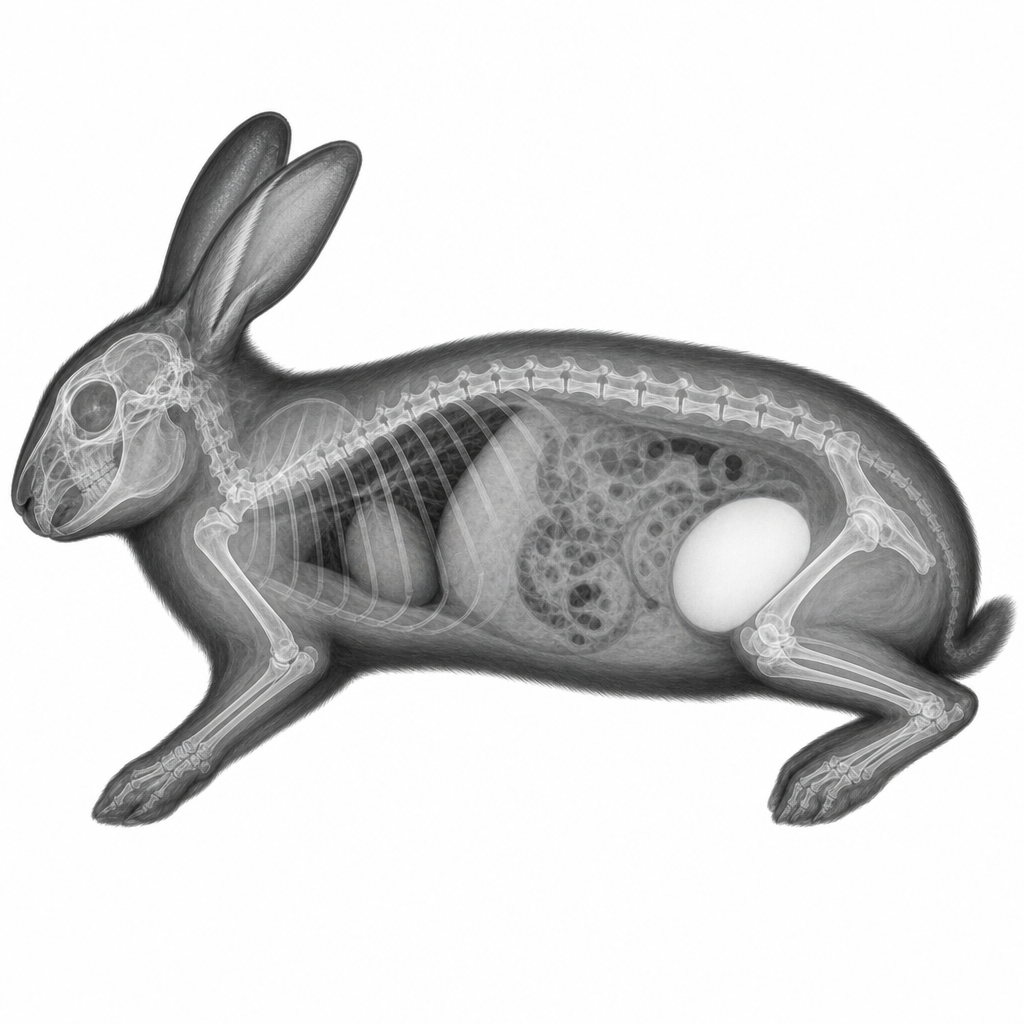
Radiography is the gold standard for diagnosing hypercalciuria, as calcium deposits appear bright white on X-rays.
Treatment options
Treatment for hypercalciuria is tailored to the severity of the clinical signs and whether solid stones have formed.
Fluid Therapy and Bladder Flushing
For rabbits with mild to moderate bladder sludge, the primary goal is to dilute the urine and physically flush the accumulated calcium out of the bladder. Your vet will administer fluids (either intravenously or subcutaneously) to increase urine production. Under sedation or gentle anesthesia, the vet may also perform a technique to gently agitate the bladder and encourage the rabbit to void the thick sludge.
Surgical Intervention
If solid stones (uroliths) have formed in the bladder or urethra, they cannot be dissolved medically or flushed out safely. In these cases, surgery is required. As noted in a leading veterinary surgery reference:
"Urinary calculi (urolithiasis) are commonly encountered in clinical practice in pet rabbits, particularly in rabbits on an alfalfa-based pelleted diet. A healthy adult rabbit produces an average of 130 mL/kg of urine each day; this urine is usually turbid and varies in color from white to yellow to brown to orange to bright red."
A cystotomy—a surgical procedure to open the bladder and physically remove the stones—is the standard treatment.
Supportive Care and Pain Management
Managing pain is critical for rabbits, as untreated pain can quickly lead to life-threatening gastrointestinal complications. A leading veterinary guide on rabbit care emphasizes the connection between pain, diet, and gut health:
"While not solely caused by a lack of dietary fibre, diets that do not contain enough fibre can compound acquired dental disease by reducing that animal's ability to grind its teeth down normally. Gastrointestinal stasis syndrome, a common clinical sign in rabbits that are in pain or unwell, can also be affected by dietary fibre levels. To maintain good gut motility, a rabbit is dependent on a diet"
Your vet will prescribe appropriate pain medications (such as non-steroidal anti-inflammatory drugs) and may recommend gut motility agents or critical care feeding if your rabbit's appetite has decreased.
Prognosis
Long-term prognosis data in this species is limited, but the immediate prognosis for rabbits with hypercalciuria is generally favorable if the condition is caught before permanent kidney damage or complete urinary obstruction occurs.
For rabbits requiring surgery (cystotomy), there are inherent risks associated with anesthesia in exotic species, but most stable rabbits recover well. However, because hypercalciuria is a metabolic process driven by diet and lifestyle, the condition is highly likely to recur if permanent dietary changes are not implemented immediately following treatment.
Prevention
Hypercalciuria is highly preventable through proper dietary management and lifestyle adjustments:
- Eliminate Alfalfa: Adult rabbits (over one year of age) should not be fed alfalfa hay or alfalfa-based pellets. Instead, transition them to grass hays such as Timothy, orchard grass, or meadow hay.
- Limit Pellets: High-quality, Timothy-based pellets should be fed in strictly limited quantities (typically no more than 1/4 cup per 6 lbs of body weight daily).
- Encourage Hydration: Always provide fresh water in a heavy ceramic bowl, as many rabbits drink more from a bowl than from a hanging bottle. Offering fresh, wet leafy greens (like romaine lettuce, cilantro, and parsley) also increases water intake.
- Promote Exercise: Regular daily exercise outside of the cage encourages your rabbit to move, jump, and run, which physically helps keep the calcium crystals suspended in the urine so they can be flushed out naturally during urination.
When to call your vet
Urinary issues in rabbits can escalate into life-threatening emergencies very quickly. You should contact your veterinarian immediately if you notice any of the following red flags:
- Your rabbit stops eating (anorexia) or has a significantly reduced appetite for more than 12 hours.
- Your rabbit is sitting in a hunched posture, grinding their teeth loudly, or showing other clear signs of severe pain.
- Your rabbit is straining to urinate, spending excessive time in the litter box, or producing no urine at all (this can indicate a life-threatening urinary blockage).
- You see visible, bright red blood in the urine or thick, gritty paste discharging from the urinary tract.
Sources
- Current Techniques in Small Animal Surgery, 5th Edition, page 728.
- FEDIAF Scientific Advisory Board Nutritional Guidelines for Pet Rabbits (2024), page 10.
My highlights & notes
Signs & symptoms
How it is diagnosed
- Radiography
- Urinalysis
- urine dipstick
Frequently asked questions
What is Hypercalciuria?
Hypercalciuria is a common metabolic condition in rabbits where excess dietary calcium is excreted through the kidneys, leading to thick bladder sludge or painful urinary stones.
What are the symptoms of Hypercalciuria?
Blood in urine、Pain、bladder sludge、turbid urine、Swollen belly、Loss of appetite、Hunched posture、Lethargy
How is Hypercalciuria diagnosed?
Radiography、Urinalysis、urine dipstick
Sources
- fediaf-rabbit-2024 · p. 10
- Current Techniques in Small Animal Surgery, 5th Edition (VetBooks.ir) · p. 728
This article is for general education and is not a substitute for professional veterinary advice. If your pet is unwell, please consult a veterinarian.
Worried about your pet?
Peqaboo’s AI helps you track symptoms, understand lab reports, and know when to see a vet.
Get the Peqaboo app