

Uveitis
Uveitis
Also known as: Anterior uveitis, Posterior uveitis, Pan-uveitis
In short
Uveitis is a common and painful inflammatory condition affecting the inner structures of a dog or cat's eye. Left untreated, it can lead to permanent blindness or glaucoma, but early veterinary intervention with targeted anti-inflammatory therapies can protect your pet's vision.
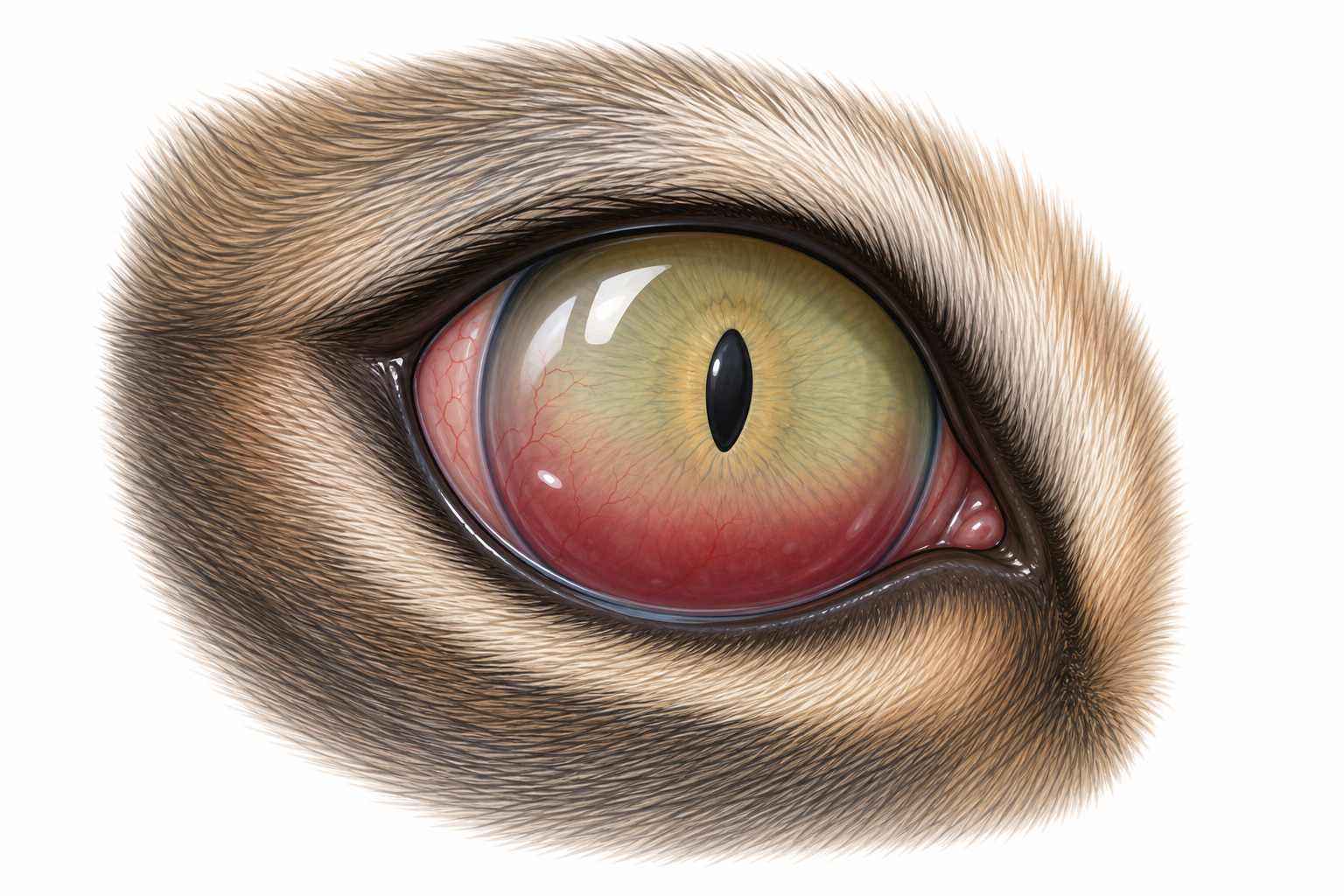
TL;DR. Uveitis is a painful inflammation of the eye's inner vascular layer that requires prompt veterinary care to prevent permanent blindness.
Uveitis causes painful inflammation inside the eye, often resulting in a constricted pupil and cloudy fluid.
What is it?
To understand uveitis, we must first look at the anatomy of the eye. The uvea, or uveal tract, is the middle, highly vascular layer of the eye. It is divided into three main parts: the iris (the colored part of the eye that controls the pupil size), the ciliary body (which produces the fluid inside the eye, called aqueous humor, and helps focus the lens), and the choroid (the vascular layer beneath the retina that provides oxygen and nutrients). When any part of this tract becomes inflamed, the condition is called uveitis.
Depending on which parts of the uveal tract are affected, your vet may classify the condition as anterior uveitis (affecting the iris and ciliary body), posterior uveitis (affecting the choroid), or pan-uveitis (affecting the entire uveal tract). Anterior uveitis is the most common form diagnosed in dogs and cats.
Under normal circumstances, the eye maintains a strict barrier between the bloodstream and the delicate internal fluids of the eye. This is known as the blood-aqueous barrier. It prevents large proteins, red blood cells, and white blood cells from entering the clear fluid (aqueous humor) in the front chamber of the eye. When uveitis strikes, this barrier breaks down. As a leading veterinary critical care reference explains:
"The aqueous is essentially modified blood with protein and cells removed in the ciliary body. Under conditions of anterior uveitis, these elements gain entry into the aqueous humor, producing the signs of aqueous flare (protein), keratic precipitates (fibrin and white blood cell aggregates on the posterior cornea), hyphema (red blood cells), and hypopyon (white blood cells)..." — Small Animal Critical Care Medicine, 2nd Edition, p.893
This influx of cells and proteins turns the normally crystal-clear fluid cloudy, causing pain, reducing vision, and triggering a cascade of potentially blinding complications if left untreated.
Causes & risk factors
Uveitis is not a single disease but rather a common pathway of inflammation that can be triggered by a wide variety of underlying issues. In veterinary medicine, uveitis is frequently categorized as immune-mediated, meaning the animal's own immune system mistakenly attacks the tissues of the eye.
However, because the uveal tract is so rich in blood vessels, it is highly sensitive to systemic diseases. Infectious diseases are a major cause of uveitis in both dogs and cats. In cats, infectious agents like Feline Infectious Peritonitis (FIP), Feline Leukemia Virus (FeLV), Feline Immunodeficiency Virus (FIV), and Toxoplasmosis are classic culprits. In dogs, tick-borne diseases (such as Ehrlichiosis or Rocky Mountain spotted fever), fungal infections (like Blastomycosis or Histoplasmosis), and bacterial infections (such as Leptospirosis) frequently manifest as uveitis.
Other causes include physical trauma to the eye, corneal ulcers that cause reflex inflammation inside the eye, lens-induced uveitis (where proteins leak from a cataractous lens, triggering an intense immune reaction), and cancers (such as lymphoma or ocular melanoma). In many cases, despite an exhaustive search, no specific cause can be found; these cases are classified as idiopathic.
Certain breeds of dogs are also statistically more likely to develop uveitis, suggesting a genetic predisposition or susceptibility to underlying conditions that trigger ocular inflammation.
Signs to watch for
Recognizing the signs of uveitis early is critical to saving your pet's vision. Because the eye is highly sensitive, uveitis is a painful condition. The symptoms can be categorized by how frequently they are observed:
Cardinal Signs (Highly characteristic of uveitis):
- Miosis (constricted pupil): The pupil of the affected eye will appear significantly smaller than normal and may not dilate properly in dim light. This occurs because the inflamed iris sphincter muscle spasms. As noted in a prominent veterinary critical care textbook:
"Therefore miosis is the result of stimulation of the iris sphincter, loss of sympathetic tone of the iris dilator, or both. Although miosis may be produced with topical medications, such as pilocarpine and latanoprost, there are two clinical conditions that cause miosis: anterior uveitis and Horner's syndrome." — Small Animal Critical Care Medicine, 2nd Edition, p.894
- Aqueous flare: This is a cloudiness or "foggy" appearance in the front chamber of the eye, caused by proteins suspended in the aqueous humor. It is often compared to a beam of light shining through a dusty room.
Common Signs:
- Blepharospasm (squinting): A direct sign of ocular pain. Your pet may hold the eye partially or completely closed.
- Epiphora (excessive tearing): Watery eyes are a common response to the discomfort of intraocular inflammation.
- Corneal edema (cloudy cornea): The clear outer surface of the eye (the cornea) may take on a bluish, hazy appearance as fluid leaks into its layers.
- Episcleral injection (redness): The blood vessels in the white of the eye (sclera) become engorged and highly visible, giving the eye a bloodshot appearance.
- 360-degree corneal vascularization: New blood vessels may begin to grow across the cornea from all edges to help heal the inflammation.
- Hyphema (blood in the eye): Red blood cells settle in the bottom of the front chamber of the eye, visible as a pool of blood.
- Hypopyon (pus in the eye): White blood cells and inflammatory debris settle at the bottom of the front chamber, appearing as a white or yellowish pool.
- Keratic precipitates: Tiny specks or clumps of inflammatory cells that stick to the inside surface of the cornea.
- Ocular pain: Your pet may rub their face against the carpet, paw at their eye, or become withdrawn and sensitive to touch around the head.
Occasional Signs:
- Photophobia (sensitivity to light): Your pet may squint or turn away when exposed to bright light.
- Serous ocular discharge: A clear or slightly watery discharge from the eye.
- Chorioretinitis: Inflammation of the choroid and retina, which can only be seen by a vet during an internal eye exam.
- Retinal detachment: The retina at the back of the eye may peel away due to fluid accumulation, leading to sudden blindness.
- Blindness: This can occur occasionally during the acute phase due to severe cloudiness, or permanently if complications develop.

Common signs of uveitis in dogs include severe redness of the sclera, squinting, and a cloudy cornea.
How vets diagnose it
Diagnosing uveitis requires a systematic approach. Because uveitis is often a local sign of a larger, systemic body-wide disease, your vet will not just look at the eye; they will evaluate your pet's entire health status.
The diagnostic process typically begins with a comprehensive ophthalmic examination. Your vet will use a specialized light source called a slit lamp biomicroscope to examine the front chamber of the eye. This allows them to visualize "aqueous flare"—the scattering of light caused by suspended proteins—and look for keratic precipitates on the back of the cornea.
A critical step in the eye exam is measuring the intraocular pressure (IOP) using a tool called a tonometer. In uncomplicated uveitis, the pressure inside the eye is typically low because the inflamed ciliary body produces less aqueous humor than normal. Measuring pressure is also vital to rule out glaucoma (high pressure), which can share similar signs but requires very different treatment.
If the internal structures of the eye are obscured by severe cloudiness, blood, or pus, your vet may perform ultrasonography of the eye. Ocular ultrasound allows the vet to visualize the back of the eye, checking for tumors, foreign bodies, or retinal detachment. In advanced specialty clinics, ultrabiomicroscopy (UBM) may be used to obtain high-resolution images of the ciliary body and iris.
To find the underlying cause, your vet may recommend:
- Serological testing: Blood tests to look for infectious diseases (such as fungal, bacterial, or viral infections).
- Systemic staging and evaluation: This includes complete blood counts, biochemistry profiles, urinalysis, and chest X-rays or abdominal ultrasounds to check for systemic infections or hidden cancers.
- Aqueous humor aspiration and cytology: In severe or unresponsive cases, a tiny needle may be used to collect a sample of the fluid from inside the eye to look for specific infectious organisms or cancer cells under a microscope.
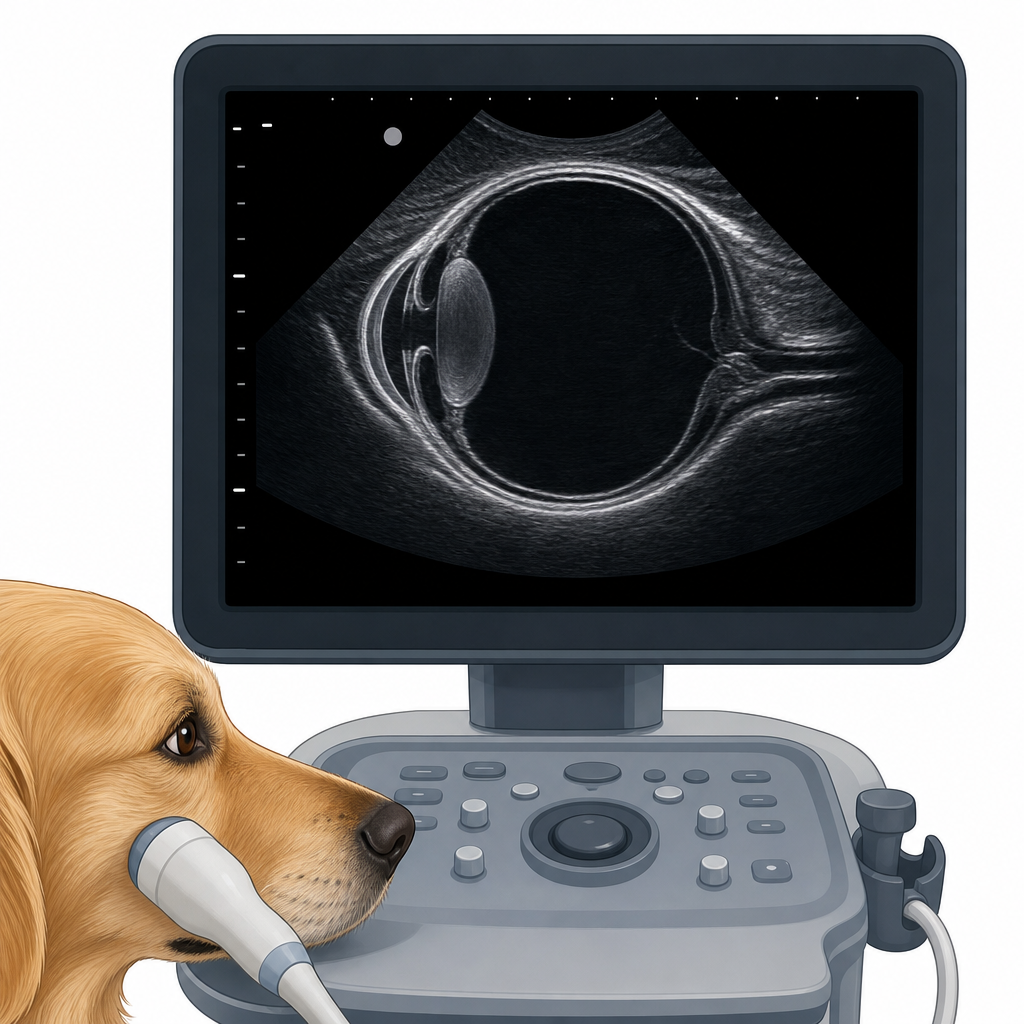
Ocular ultrasound allows veterinarians to evaluate the back of the eye when cloudiness blocks direct visualization.
Treatment options
The treatment of uveitis has three primary goals: reducing inflammation inside the eye, relieving pain, and preventing permanent structural damage that could lead to blindness. Treatment is typically divided into topical therapies (drops applied directly to the eye) and systemic therapies (pills or injections).
First-Line Therapies
- Topical Corticosteroids: These are the cornerstone of uveitis therapy. Prednisolone (specifically prednisolone acetate 1%) and dexamethasone are highly potent anti-inflammatories that penetrate well into the front chamber of the eye. As a leading veterinary pharmacology reference notes:
"Severe anterior uveitis can be treated with subconjunctival corticosteroids given in combination with hourly topical corticosteroids with reevaluation performed again 24 hours after beginning treatment. Moderate to mild uveitis and that found following surgery of the anterior segment is often treated initially at the QID level with tapering based on clinical response." — Plumb's Veterinary Drug Handbook
- Topical Non-Steroidal Anti-Inflammatory Drugs (NSAIDs): Medications such as flurbiprofen and diclofenac sodium are excellent alternatives or adjuncts to steroids. They are particularly useful if there is a concern about corneal ulcers, where steroids are strictly contraindicated because they delay healing. A veterinary critical care manual highlights:
"These are good alternatives to topical steroid preparations if corneal ulceration is present or systemic conditions prevent the use of steroids." — Small Animal Critical Care Medicine, 2nd Edition, p.894
- Topical Atropine: This medication is an anticholinergic that dilates the pupil and relaxes the painful spasms of the ciliary body. By keeping the pupil dilated, it also helps prevent the inflamed iris from sticking to the lens behind it (a complication known as synechia).
Second-Line and Adjunct Therapies
- Systemic Glucocorticoids: If the inflammation is severe or involves the back of the eye (posterior uveitis), topical drops cannot penetrate deeply enough. In these cases, oral corticosteroids are required. As noted in a leading veterinary drug reference:
"Inflammatory conditions of the posterior segment require systemic treatment because of poor penetration of topically applied agents." — Plumb's Veterinary Drug Handbook
- Phenylephrine: This alpha-adrenergic agonist may be used in combination with other drugs to help dilate the pupil when atropine alone is insufficient.
Prognosis
The prognosis for pets with uveitis ranges from guarded to good, depending heavily on the underlying cause and how quickly treatment is started. If the uveitis is caused by a mild, treatable issue (like a minor trauma or a localized infection) and is managed promptly, many pets recover fully with no lasting damage.
However, chronic, severe, or untreated uveitis carries a guarded prognosis. The constant presence of inflammatory proteins and cells can cause permanent structural changes in the eye:
- Posterior synechia: The inflamed iris sticks to the lens, preventing the normal flow of fluid.
- Iris bombe: A condition where the iris bulges forward because fluid is trapped behind it.
- Secondary glaucoma: The drainage angles of the eye become clogged with inflammatory debris, causing a rapid, painful rise in eye pressure that can destroy the optic nerve.
- Retinal detachment and permanent blindness: Chronic inflammation can cause the retina to detach or damage the delicate internal structures beyond repair.
Prevention
Because uveitis is typically a secondary reaction to an underlying systemic disease or an immune-mediated flare-up, it is not always preventable. However, you can minimize the risk by:
- Keeping your pet's vaccinations up to date to prevent infectious diseases (like FeLV in cats).
- Using year-round tick prevention to protect against tick-borne pathogens that cause uveitis.
- Seeking immediate veterinary care for any eye injury, squinting, or redness, as minor corneal scratches can quickly trigger reflex uveitis if left untreated.
- Scheduling regular senior wellness exams to catch systemic conditions like high blood pressure or early-stage cancers before they manifest in the eyes.
When to call your vet
Any change in your pet's eyes should be treated with urgency. You should contact your veterinarian immediately if you notice your pet squinting, if the eye appears cloudy or red, or if there is a sudden change in pupil size.
True emergencies that require immediate, same-day veterinary or ophthalmic evaluation include:
- Sudden, complete loss of vision (your pet bumping into walls or furniture).
- A visible pool of blood (hyphema) or yellow pus (hypopyon) inside the eye.
- Severe, unrelenting pain (your pet holding the eye tightly shut and crying or pawing at the face).
For specific breeds
Several breeds of dogs have a suspected genetic predisposition to uveitis or to conditions that cause it:
- Golden Retrievers: Predisposed to a specific, severe form of uveitis called Golden Retriever Pigmentary Uveitis, which often leads to secondary glaucoma.
- American Bulldogs, Great Danes, Boston Terriers, Labrador Retrievers, and Akita Inus: These breeds have a higher incidence of suspected immune-mediated uveitis.
- Shetland Sheepdogs, Siberian Huskies, St. Bernards, Wire Fox Terriers, Chow Chows, Dachshunds, Irish Setters, Old English Sheepdogs, and Samoyeds: These breeds are also noted for an increased risk of developing uveitis. If you own one of these breeds, pay extra attention to any signs of eye redness or squinting.
Sources
- Small Animal Critical Care Medicine, 2nd Edition, pages 893-894.
- Plumb's Veterinary Drug Handbook, page 3745.
My highlights & notes
Signs & symptoms
Breeds at higher risk
How it is diagnosed
- Aqueous humor aspiration and cytology
- Ophthalmic examination
- Serological testing
- Systemic staging and evaluation
- Ultrabiomicroscopy (UBM)
- Ultrasonography
Treatment approaches
Treatment must be prescribed by a licensed veterinarian based on your pet. Specific drug doses are intentionally not shown here.
Frequently asked questions
What is Uveitis?
Uveitis is a common and painful inflammatory condition affecting the inner structures of a dog or cat's eye. Left untreated, it can lead to permanent blindness or glaucoma, but early veterinary intervention with targeted anti-inflammatory therapies can protect your pet's vision.
What are the symptoms of Uveitis?
aqueous flare、miosis、360-degree corneal vascularization、Epiphora、Squinting (blepharospasm)、corneal edema、episcleral injection、hyphema
How is Uveitis diagnosed?
Aqueous humor aspiration and cytology、Ophthalmic examination、Serological testing、Systemic staging and evaluation、Ultrabiomicroscopy (UBM)、Ultrasonography
How is Uveitis treated?
Treatment must be prescribed by a licensed veterinarian based on your pet. Specific drug doses are intentionally not shown here.
Sources
- Small Animal Critical Care Medicine, 2nd Edition (VetBooks.ir) · p. 894
- Small Animal Critical Care Medicine, 2nd Edition (VetBooks.ir) · p. 893
- Plumb · p. 3745
- Plumb · p. 3745
- Small Animal Critical Care Medicine, 2nd Edition (VetBooks.ir) · p. 894
This article is for general education and is not a substitute for professional veterinary advice. If your pet is unwell, please consult a veterinarian.
Worried about your pet?
Peqaboo’s AI helps you track symptoms, understand lab reports, and know when to see a vet.
Get the Peqaboo app