

Uveitis
Uveitis
Auch bekannt als: Anterior uveitis, Posterior uveitis, Pan-uveitis
Kurz gesagt
Uveitis is a common and painful inflammatory condition affecting the inner structures of a dog or cat's eye. Left untreated, it can lead to permanent blindness or glaucoma, but early veterinary intervention with targeted anti-inflammatory therapies can protect your pet's vision.
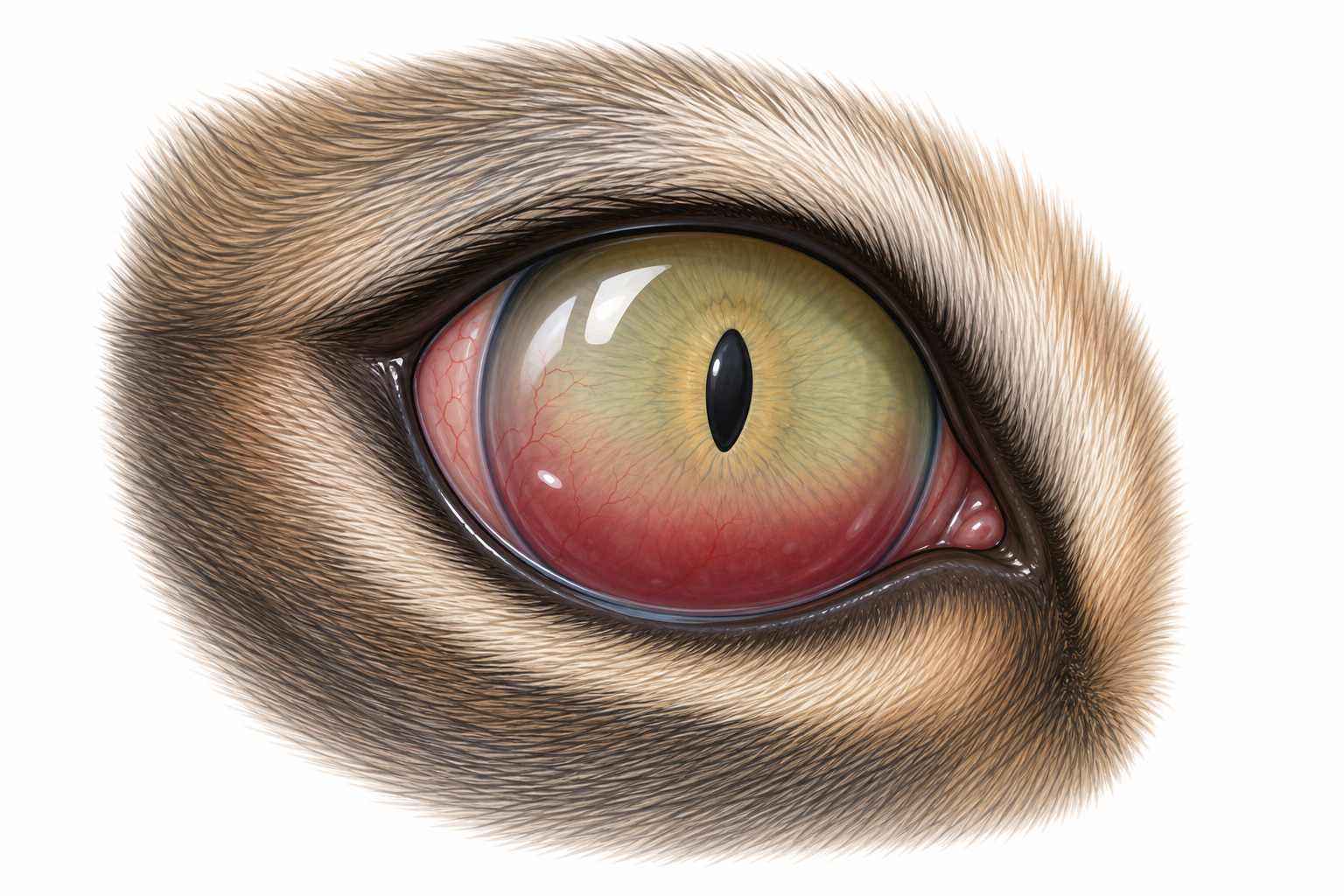
TL;DR. Schmerzhafte Entzündung der inneren Gefäßschicht des Auges; rasche tierärztliche Hilfe schützt vor bleibender Erblindung.
Enger Pupille und trübes Kammerwasser sind häufige Zeichen.
Was ist das?
Uvea = Iris, Ziliarkörper, Aderhaut. Blut-Kammerwasser-Schranke bricht: Proteine und Zellen im Kammerwasser (Flare, Präzipitate, Hyphema, Hypopyon).
"The aqueous is essentially modified blood with protein and cells removed in the ciliary body. Under conditions of anterior uveitis, these elements gain entry into the aqueous humor, producing the signs of aqueous flare (protein), keratic precipitates (fibrin and white blood cell aggregates on the posterior cornea), hyphema (red blood cells), and hypopyon (white blood cells)..."
Anterior (häufigste), posterior oder Panuveitis.
Ursachen und Risikofaktoren
Immunvermittelt; infektiös (Katze: FIP, FeLV, FIV, Toxoplasma; Hund: Rickettsien, Pilze, Leptospira); Trauma; Hornhautulkus; Linsenproteine bei Katarakt; Neoplasie; oft idiopathisch. Rasseprädispositionen.
Anzeichen
- Miosis (kardinal)
- Aqueous flare (kardinal)
- Blepharospasmus, Tränenfluss (häufig)
- Hornhautödem, gerötete Sklera (häufig)
- Hyphema/Hypopyon, Schmerz (häufig)
- Photophobie, Netzhautablösung, Blindheit (gelegentlich)

Rötung, Blinzeln und trübe Hornhaut sind häufig beim Hund.
Diagnose
"Therefore miosis is the result of stimulation of the iris sphincter, loss of sympathetic tone of the iris dilator, or both."
Ophthalmologische Untersuchung (Spaltlampe), Tonometrie (IOP oft niedrig), Ultraschall bei Trübung, Serologien und systemische Abklärung.
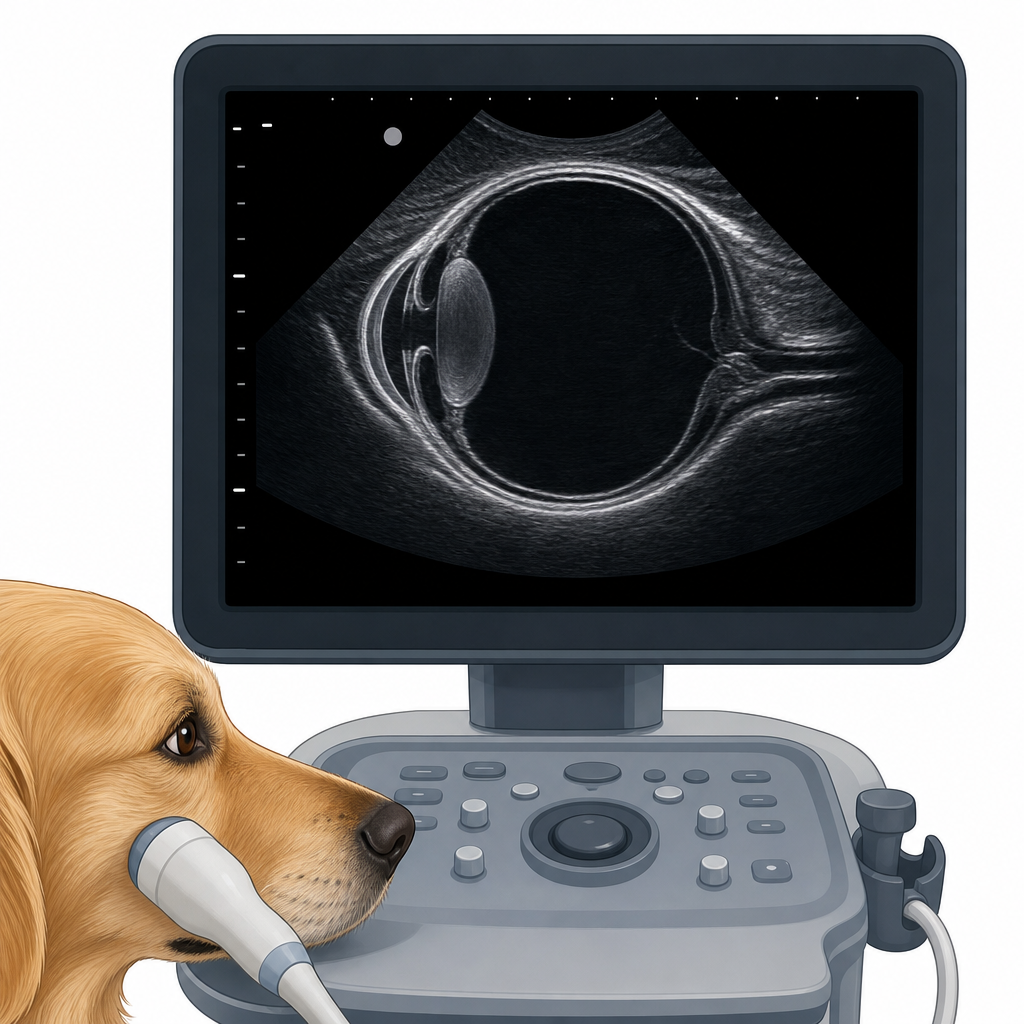
Ultraschall beurteilt den Fundus bei Opazität.
Behandlung
Topische Kortikoide (z. B. Prednisolone, Dexamethasone) ohne Ulkus. Topische NSAIDs (Flurbiprofen, Diclofenac sodium). Atropine zur Dilatation und gegen Spasmus. Systemische Kortikoide bei posterior/schwer.
Prognose
Vorsichtig bis gut je nach Ursache und Tempo. Risiko Synechien, Sekundärglaukom, Blindheit bei Verzug.
Vorbeugung
Impfungen, Zeckenschutz, frühe Versorgung roter/blinzender Augen, Senior-Checks.
Wann den Tierarzt rufen
Dringend bei rotem/trübem Auge, Pupillenwechsel, Hyphema/Hypopyon, plötzlichem Sehverlust oder starkem Schmerz.
Quellen
- Small Animal Critical Care Medicine, 2nd Edition, pages 893-894.
- Plumb's Veterinary Drug Handbook, page 3745.
My highlights & notes
Anzeichen & Symptome
Rassen mit höherem Risiko
Diagnose
- Aqueous humor aspiration and cytology
- Ophthalmic examination
- Serological testing
- Systemic staging and evaluation
- Ultrabiomicroscopy (UBM)
- Ultrasonography
Behandlungsansätze
Behandlungen müssen von einem approbierten Tierarzt verordnet werden. Konkrete Dosierungen werden absichtlich nicht angezeigt.
Häufige Fragen
What is Uveitis?
Uveitis is a common and painful inflammatory condition affecting the inner structures of a dog or cat's eye. Left untreated, it can lead to permanent blindness or glaucoma, but early veterinary intervention with targeted anti-inflammatory therapies can protect your pet's vision.
What are the symptoms of Uveitis?
aqueous flare、miosis、360-degree corneal vascularization、Epiphora、Squinting (blepharospasm)、corneal edema、episcleral injection、hyphema
How is Uveitis diagnosed?
Aqueous humor aspiration and cytology、Ophthalmic examination、Serological testing、Systemic staging and evaluation、Ultrabiomicroscopy (UBM)、Ultrasonography
How is Uveitis treated?
Behandlungen müssen von einem approbierten Tierarzt verordnet werden. Konkrete Dosierungen werden absichtlich nicht angezeigt.
Quellen
- Small Animal Critical Care Medicine, 2nd Edition (VetBooks.ir) · p. 894
- Small Animal Critical Care Medicine, 2nd Edition (VetBooks.ir) · p. 893
- Plumb · p. 3745
- Plumb · p. 3745
- Small Animal Critical Care Medicine, 2nd Edition (VetBooks.ir) · p. 894
Dieser Artikel dient der allgemeinen Information und ersetzt keinen tierärztlichen Rat. Bei Krankheit bitte einen Tierarzt aufsuchen.
Sorgen um Ihr Tier?
Peqaboos KI hilft Symptome zu tracken, Laborberichte zu verstehen und zu wissen, wann der Tierarzt nötig ist.
Peqaboo-App laden