

Leukemia
Also known as: Leukaemia, Myeloproliferative disease, Myeloproliferative disorder
In short
Leukemia is a rare but serious cancer of the blood-forming cells in the bone marrow of dogs and cats. Understanding the difference between acute and chronic forms is crucial, as treatments and outlooks vary significantly from weeks to several years.

TL;DR. Leukemia is a rare cancer originating in the bone marrow of dogs and cats, causing abnormal blood cell production; while acute forms progress rapidly and have a poor prognosis, chronic forms can often be managed successfully for several years.
Leukemia can affect both dogs and cats, presenting as either an acute or chronic condition.
What is it?
Leukemia is a malignant cancer that originates within the bone marrow—the soft, spongy tissue inside bones responsible for producing the body's blood cells. Under normal circumstances, the bone marrow produces stem cells that mature into red blood cells (which carry oxygen), white blood cells (which fight infection), and platelets (which help the blood clot). In a pet with leukemia, this highly regulated process breaks down.
A single hematopoietic precursor cell undergoes a genetic mutation, preventing it from maturing or dying when it should. Instead, this cell begins to replicate itself endlessly, creating a clone of abnormal, nonfunctional cells. A leading veterinary internal medicine reference describes the disease mechanism:
"Leukemias are malignant neoplasms that originate from hematopoietic precursor cells in the bone marrow. Because these cells are unable to undergo terminal differentiation or apoptosis, they self-replicate as a clone of usually immature (and nonfunctional) cells. The neoplastic cells may or may not appear in peripheral circulation..."
As these abnormal cells multiply, they crowd out healthy blood-producing cells in the marrow. This crowding leads to a severe shortage of normal blood cells (cytopenia), which causes many of the clinical signs associated with the disease. Leukemia is broadly categorized into two main types based on how quickly the disease progresses and the maturity of the cells involved:
- Acute Leukemia: Characterized by a rapid accumulation of highly immature cells (blasts). This form is aggressive, progresses quickly, and requires immediate medical intervention.
- Chronic Leukemia: Characterized by the slow accumulation of more mature-looking, but still abnormal, blood cells. This form progresses slowly and may remain undetected for months or even years.
Additionally, leukemias are classified by the specific cell line affected: lymphoid leukemias affect the lymphocytes (a type of white blood cell involved in the immune system), while myeloid leukemias affect other white blood cells, red blood cells, or platelet-producing cells.
Causes & risk factors
In most cases, the exact cause of leukemia in dogs and cats is unknown (idiopathic). It is generally understood to result from acquired genetic mutations in the bone marrow stem cells, rather than a single direct cause.
However, there are some known risk factors:
- Viral Infections (Cats): In cats, the Feline Leukemia Virus (FeLV) is a well-documented risk factor. FeLV can integrate into the cat's DNA, disrupting normal cell division and significantly increasing the risk of developing both leukemia and lymphoma.
- Environmental Factors: Exposure to ionizing radiation, certain toxic chemicals, or chemotherapy drugs can damage bone marrow DNA, potentially triggering malignant changes.
- Genetic Predispositions: While any dog can develop leukemia, certain breeds show a higher susceptibility, suggesting an underlying genetic component.
Signs to watch for
Because leukemia disrupts the production of all blood cell lines, the symptoms can be diverse and non-specific. Many signs are directly related to the loss of normal blood cells (anemia, low white blood cells, or low platelets).
Common Signs
- Lethargy and weakness: Due to a lack of oxygen-carrying red blood cells (anemia).
- Pallor (pale gums): A direct visual indicator of severe anemia.
- Weight loss and anorexia: Pets often lose interest in food and lose muscle mass.
- Fever: Often caused by secondary infections because the body lacks functional white blood cells to fight pathogens.
- Enlarged lymph nodes (lymphadenopathy): Neoplastic cells can infiltrate the lymph nodes, causing them to swell.
- Enlarged spleen (splenomegaly) and liver (hepatomegaly): The spleen and liver may swell as they attempt to filter out abnormal cells or become sites of abnormal cell production.
- Cytopenias: Low red blood cell, white blood cell, or platelet counts detected on blood tests.
Occasional Signs
- Petechiae and ecchymoses: Pinpoint red spots or larger bruises on the gums, skin, or whites of the eyes, caused by a lack of clotting platelets.
- Vomiting and diarrhea: Occurs if abnormal cells infiltrate the gastrointestinal tract.
- Lameness: Caused by bone pain as the expanding cancer cells put pressure on the inside of the bones.
- Neurologic signs: Such as seizures, head tilts, or weakness, if the cancer cells invade the central nervous system.
- Icterus (jaundice): Yellowing of the skin, gums, and eyes, which can occur if there is severe destruction of red blood cells or liver involvement.
- Ocular lesions: Bleeding or inflammation inside the eye, which can impair vision.

Pale gums and pinpoint bruising (petechiae) are critical warning signs of underlying blood disorders like leukemia.
How vets diagnose it
Diagnosing leukemia requires a systematic approach to rule out other conditions (such as severe infections or other cancers) and to pinpoint the exact type of abnormal cell involved.
Your vet will start with a physical exam and routine blood work, including a Complete Blood Count (CBC) and peripheral blood smear. The CBC measures the levels of red blood cells, white blood cells, and platelets. A blood smear allows a pathologist to look at the cells under a microscope. If leukemia is present, the vet may see extremely high numbers of white blood cells, or conversely, a severe drop in all cell lines. They may also identify immature "blast" cells circulating in the blood.
However, because some leukemias do not release cells into the bloodstream, a definitive diagnosis requires evaluating the bone marrow itself. A bone marrow aspirate and core biopsy is the gold standard diagnostic test:
"Leukemia is defined as neoplasia arising within the bone marrow... Bone/stromal tumors, such as osteosarcoma, chondrosarcoma, and fibrosarcoma, are not typically sampled under the guise of bone marrow evaluation because these types of neoplasia are not typically associated with cytopenias or atypical circulating cells..."
During a bone marrow aspirate, your pet will be placed under general anesthesia or heavy sedation. The vet inserts a specialized needle into a bone (usually the hip or shoulder) to collect a small sample of the liquid marrow and a tiny core of bone tissue. A veterinary pathologist analyzes these samples to determine the percentage of cancerous cells and identify the cell lineage.
To further characterize the leukemia, your vet may recommend advanced testing:
- Flow Cytometry: This test analyzes the proteins (markers) on the surface of the cancer cells. It is highly useful for distinguishing between B-cell and T-cell lymphoid leukemias, which has major implications for treatment and prognosis.
- Cytochemical Staining: Special chemical stains are applied to blood or marrow slides to help differentiate myeloid leukemias from lymphoid leukemias when the cells are too immature to identify by shape alone.
Treatment options
Treatment for leukemia is highly tailored to the specific type of leukemia (acute versus chronic) and the pet's overall health. The goal of treatment is to destroy the cancerous cells, restore normal bone marrow function, and maintain a high quality of life.
Chemotherapy and Antineoplastics
Chemotherapy is the primary treatment modality for leukemia. Unlike in human medicine, veterinary chemotherapy is designed to minimize side effects, prioritizing quality of life over aggressive, high-dose cures.
- Chlorambucil: An alkylating chemotherapy agent commonly used as a first-line treatment for chronic lymphocytic leukemia (CLL). It is an oral medication that is generally well-tolerated and can be administered at home.
- Glucocorticoids (Corticosteroids): Such as prednisolone. These anti-inflammatory drugs are toxic to cancerous lymphocytes and are almost always paired with other chemotherapy drugs to help reduce tumor burden and stimulate appetite.
- Vincristine: A vinca alkaloid antineoplastic administered intravenously. It is a staple of multi-drug protocols for acute lymphoblastic leukemia.
- Cyclophosphamide: An alkylating agent used in combination protocols for more aggressive leukemias.
- Cytarabine: An antimetabolite chemotherapy drug often utilized in protocols for acute myeloid leukemia, as it targets rapidly dividing cells.
- Asparaginase: An enzyme-based chemotherapy drug that deprives leukemia cells of an essential amino acid, causing them to die while sparing normal cells.
- Hydroxycarbamide (Hydroxyurea): An antimetabolite drug used primarily to manage chronic myeloid leukemia by slowing the production of abnormal myeloid cells.
Supportive Care
Pets with leukemia often require intensive supportive care, especially during the initial phases of treatment or during an acute crisis. This may include blood transfusions to treat life-threatening anemia, intravenous fluids to maintain hydration, and broad-spectrum antibiotics to protect against infections while white blood cell counts are dangerously low.
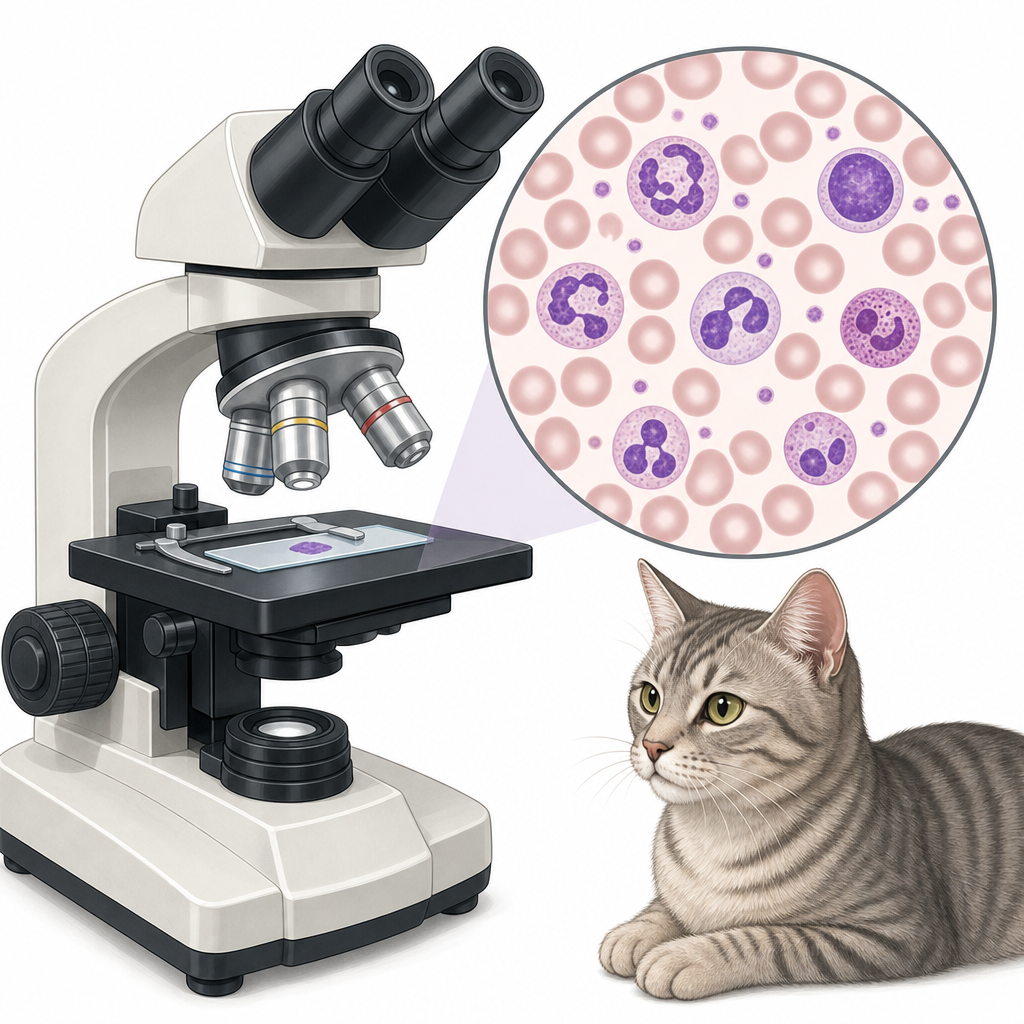
A complete blood count and microscopic evaluation of a blood smear are essential first steps in diagnosing leukemia.
Prognosis
The prognosis for leukemia varies dramatically depending on whether the disease is acute or chronic.
Acute Leukemia
The prognosis for acute leukemia (both myeloid and lymphoid) is generally poor to grave. Despite aggressive chemotherapy and supportive care, survival times are typically measured in weeks to a few months. The disease progresses so rapidly that the bone marrow often cannot recover quickly enough to produce vital healthy cells.
Chronic Leukemia
The prognosis for chronic lymphocytic leukemia (CLL) is often good to excellent. Many dogs and cats with CLL can be managed successfully with oral medications like chlorambucil and prednisolone for several years, maintaining an excellent quality of life.
Veterinary oncologists use specific markers to help predict survival times. For example, a leading internal medicine reference notes:
"Dogs with CD8-positive phenotype had longer survival times if the lymphocyte count was less than 30,000/µL (1100 days versus 131 days); among the dogs with B-cell phenotype, those with circulating small lymphocytes had a significantly longer survival than those with large lymphoid cells (median survival time not reached versus 129 days)..."
Prevention
Because the exact genetic mutations that trigger leukemia in dogs and cats are not fully understood, there is no guaranteed way to prevent the disease.
However, for cats, preventing Feline Leukemia Virus (FeLV) infection is the single most effective preventive measure. This can be achieved by keeping cats indoors to prevent exposure to infected outdoor cats, testing new cats before introducing them to the household, and vaccinating cats that are at risk of exposure.
For dogs, maintaining routine veterinary wellness exams and annual blood work is the best way to catch chronic leukemia in its early, asymptomatic stages, allowing for timely management.
When to call your vet
Leukemia can cause rapid declines in health, particularly in its acute form. You should contact your veterinarian immediately if you notice any of the following warning signs:
- Extreme lethargy or sudden weakness
- Very pale or white gums
- Unexplained bruising or pinpoint red spots on the gums or skin (petechiae)
- A persistent, unexplained fever
- Sudden collapse or difficulty breathing
- Rapid, unexplained weight loss or complete refusal to eat
For specific breeds
While leukemia can strike any dog or cat, certain canine breeds are suspected to have a higher risk of developing the disease. These include the Golden Retriever, German Shepherd Dog, and Boxer. If you own one of these breeds, it is especially important to stay current on annual veterinary exams and routine blood screenings, which can detect early cellular changes before physical symptoms become obvious.
Sources
- Small Animal Internal Medicine, 5th Edition, pp. 1209, 1210, 1216, 1217.
- Cowell and Tyler's Diagnostic Cytology and Hematology of the Dog and Cat, 5th Edition, p. 515.
My highlights & notes
Signs & symptoms
Breeds at higher risk
How it is diagnosed
- Bone marrow aspirateGold standard
- Complete blood count and peripheral blood smear
- Cytochemical staining
- Flow cytometry
Treatment approaches
Treatment must be prescribed by a licensed veterinarian based on your pet. Specific drug doses are intentionally not shown here.
Frequently asked questions
What is Leukemia?
Leukemia is a rare but serious cancer of the blood-forming cells in the bone marrow of dogs and cats. Understanding the difference between acute and chronic forms is crucial, as treatments and outlooks vary significantly from weeks to several years.
What are the symptoms of Leukemia?
Loss of appetite、Cytopenias、Fever、Enlarged liver、Lethargy、Enlarged spleen、Weight loss (getting thinner)、Swollen lymph nodes
How is Leukemia diagnosed?
Bone marrow aspirate、Complete blood count and peripheral blood smear、Cytochemical staining、Flow cytometry
How is Leukemia treated?
Treatment must be prescribed by a licensed veterinarian based on your pet. Specific drug doses are intentionally not shown here.
Sources
- Internal Medicine 5th · p. 1216
- Internal Medicine 5th · p. 1217
- Internal Medicine 5th · p. 1209
- Internal Medicine 5th · p. 1210
- Cowell and Tyler s Diagnostic Cytology and Hematology of the Dog and Cat, 5th Edition (VetBooks.ir) · p. 515
This article is for general education and is not a substitute for professional veterinary advice. If your pet is unwell, please consult a veterinarian.
Worried about your pet?
Peqaboo’s AI helps you track symptoms, understand lab reports, and know when to see a vet.
Get the Peqaboo app