

Bloat
Gastric dilatation-volvulus
Aussi appelé: Gastric Dilatation-Volvulus, GDV, Gastric Dilation, Gastric Dilation/Volvulus
En bref
Gastric dilatation-volvulus (GDV), commonly known as bloat, is a rapid, life-threatening emergency in dogs where the stomach fills with gas and twists. Immediate veterinary intervention is critical for survival.
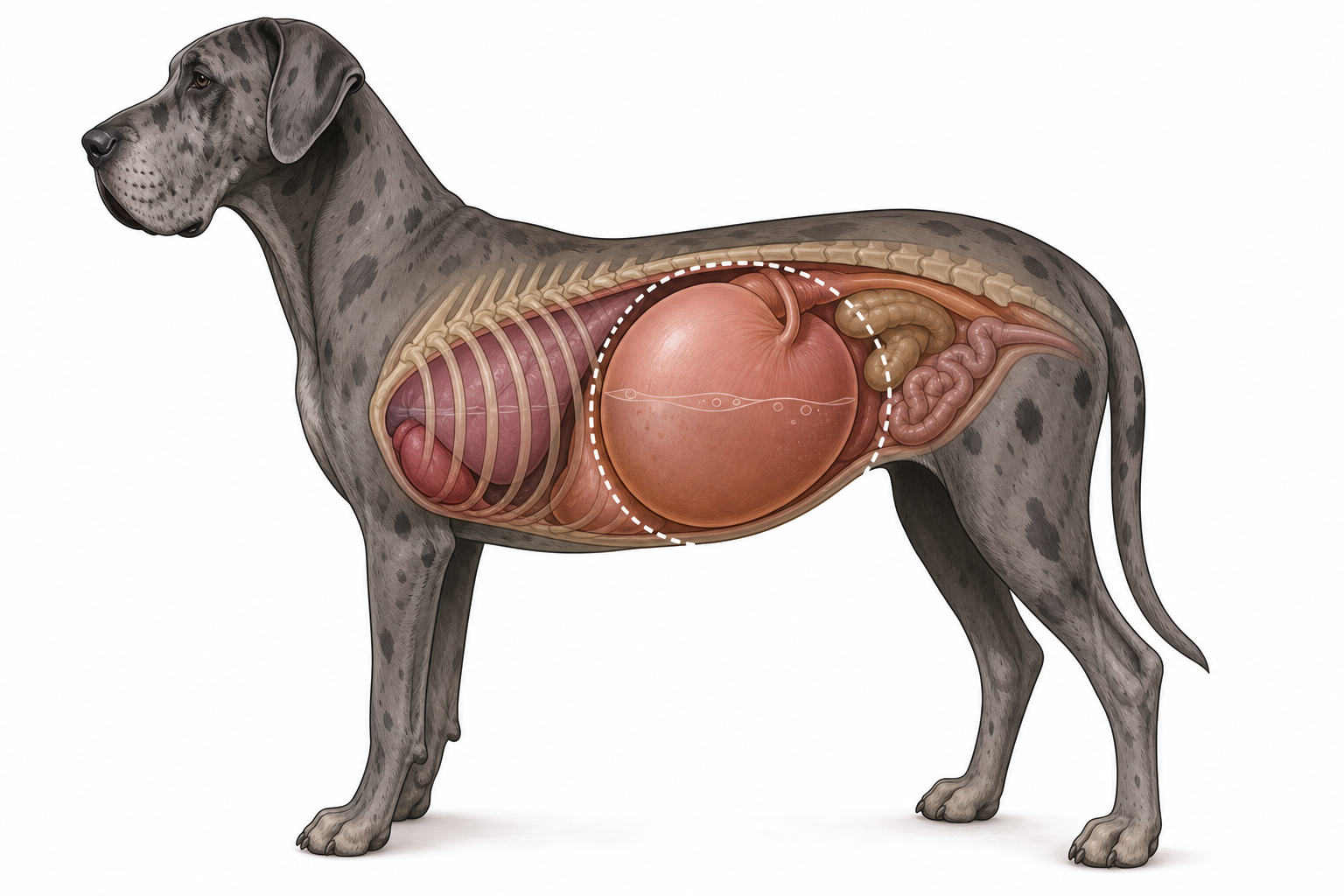
TL;DR. Le GDV est une urgence soudaine: l'estomac se remplit de gaz et se tord; chirurgie immédiate requise.
Deep-chested large-breed dogs are anatomically predisposed.
Qu'est-ce que c'est ?
Gastric dilatation-volvulus (GDV): the stomach fills with gas/fluid then twists, trapping contents, compressing major vessels, causing shock and gastric necrosis. True surgical emergency.
Causes et facteurs de risque
Idiopathic multifactorial. Deep-chested large/giant breeds. Risk: one large meal/day, rapid eating, exercise around meals, first-degree relative with GDV, age, stress.
Signes à surveiller
- Unproductive retching (cardinal)
- Distended, tight abdomen; restlessness; hypersalivation
- Tachycardia, pale gums, weak pulses
- Collapse (occasional)

Swollen tight abdomen with unproductive retching is classic.
Comment les vétérinaires diagnostiquent
Stabilize first. Right lateral abdominal radiograph (double bubble / reverse C). Lactate trends, CBC/chem, coagulation.
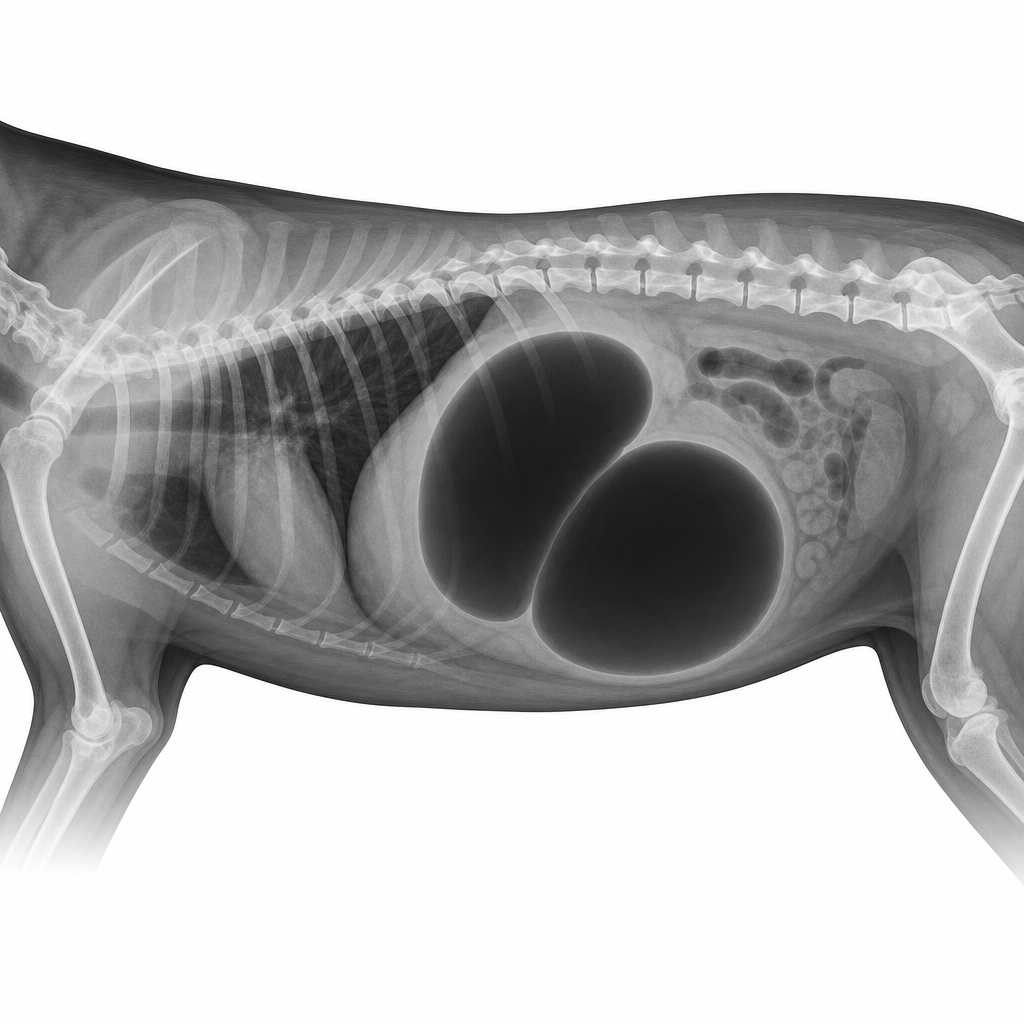
Radiographs distinguish simple dilatation from volvulus.
Options de traitement
IV fluids, antibiotics (e.g. Cefazolin), decompression (orogastric tube or trocarization), then surgery: untwist, assess viability, gastropexy. Post-op monitoring; Metoclopramide if needed.
Pronostic
About 85% survive with prompt surgery. Worse with necrosis, DIC, septic peritonitis, or severe debilitation.
Prévention
Prophylactic gastropexy in high-risk breeds; multiple small meals; limit exercise around feeding; reduce meal stress.
Quand appeler le vétérinaire
Absolute emergency. Go to emergency care immediately for unproductive retching or sudden abdominal distension. Call ahead.
Pour certaines races
Highest concern: Great Dane, Weimaraner, Gordon/Irish Setter, Standard Poodle, German Shepherd, St. Bernard. Discuss prophylactic gastropexy at spay/neuter.
Sources
- Small Animal Critical Care Medicine, 2nd Edition, pp. 720-722.
My highlights & notes
Signes et symptômes
Races à risque plus élevé
Comment c’est diagnostiqué
- Right lateral abdominal radiographRéférence
- Biochemical profile
- Coagulation panel
- Complete blood count
- Plasma lactate measurement
Approches de traitement
Le traitement doit être prescrit par un vétérinaire agréé selon votre animal. Les doses précises ne sont volontairement pas affichées.
Questions fréquentes
What is Bloat?
Gastric dilatation-volvulus (GDV), commonly known as bloat, is a rapid, life-threatening emergency in dogs where the stomach fills with gas and twists. Immediate veterinary intervention is critical for survival.
What are the symptoms of Bloat?
Unproductive retching、Bloated belly、Irregular heartbeat、Excessive drooling、Pale mucous membranes、Restlessness、Fast heart rate、Weak pulses
How is Bloat diagnosed?
Right lateral abdominal radiograph、Biochemical profile、Coagulation panel、Complete blood count、Plasma lactate measurement
How is Bloat treated?
Le traitement doit être prescrit par un vétérinaire agréé selon votre animal. Les doses précises ne sont volontairement pas affichées.
Sources
- Small Animal Critical Care Medicine, 2nd Edition (VetBooks.ir) · p. 721
- Small Animal Critical Care Medicine, 2nd Edition (VetBooks.ir) · p. 722
- Small Animal Critical Care Medicine, 2nd Edition (VetBooks.ir) · p. 720
- Internal Medicine 5th · p. 482
- Current Techniques in Small Animal Surgery, 5th Edition (VetBooks.ir) · p. 286
- Internal Medicine 5th · p. 482
Cet article est informatif et ne remplace pas un avis vétérinaire. Si votre animal est malade, consultez un vétérinaire.
Inquiet pour votre animal ?
L’IA Peqaboo aide à suivre les symptômes, comprendre les analyses et savoir quand consulter.
Télécharger l’app Peqaboo