

Hyperthyroidism
Thyrotoxicosis
Aussi appelé: Feline hyperthyroidism, Thyrotoxicosis
En bref
Hyperthyroidism is a common endocrine disorder in older pets, especially cats, characterized by an overactive thyroid gland. Learn about the symptoms, diagnostic tests, and treatment options.
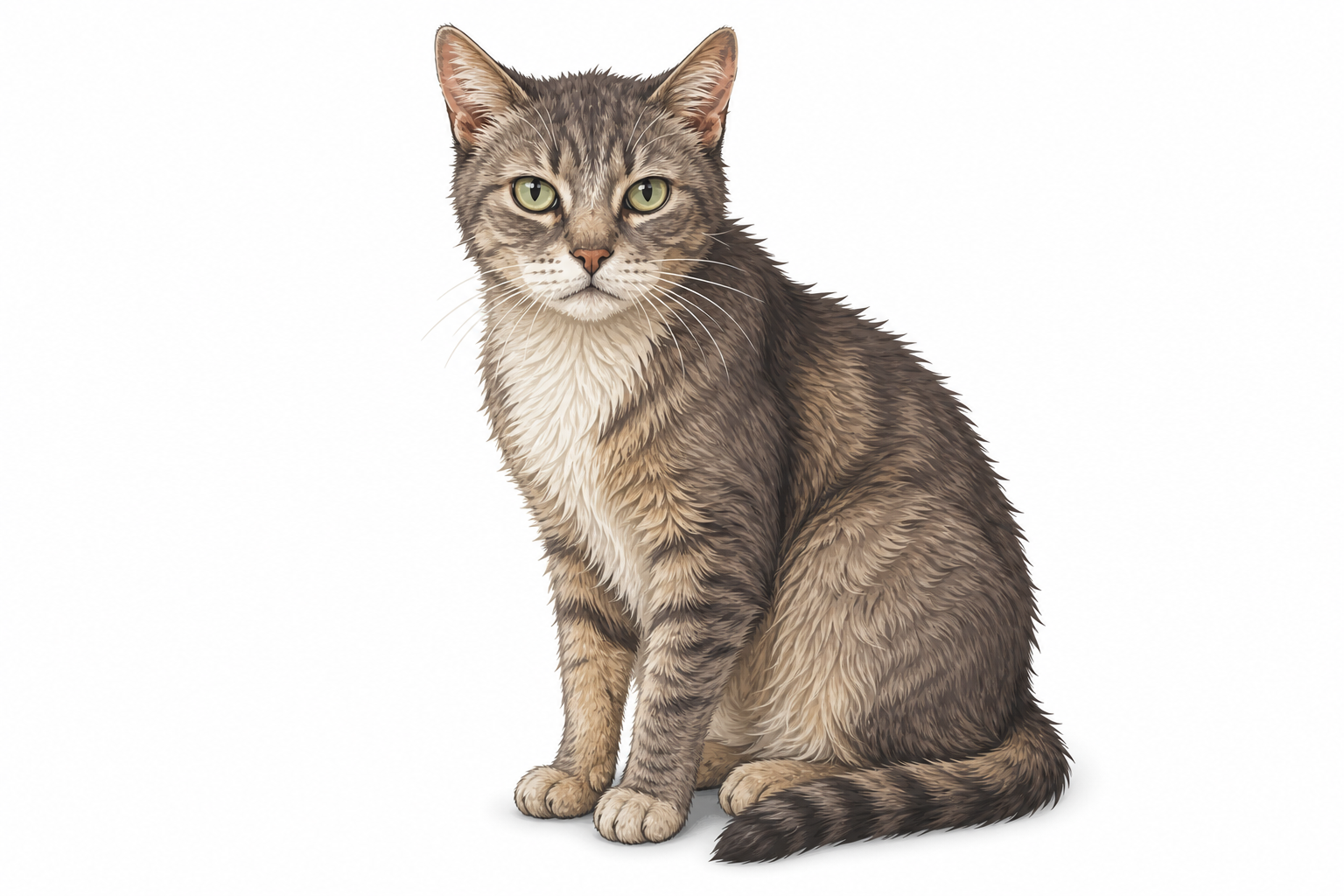
TL;DR. Trouble hormonal fréquent et traitable chez le chat âgé: amaigrissement malgré un appétit vorace.
Amaigrissement et pelage négligé sont typiques du chat senior.
Qu'est-ce que c'est ?
Excès d'hormones thyroïdiennes, surtout hyperplasie adénomateuse ou adénome. État hypermétabolique multi-organes.
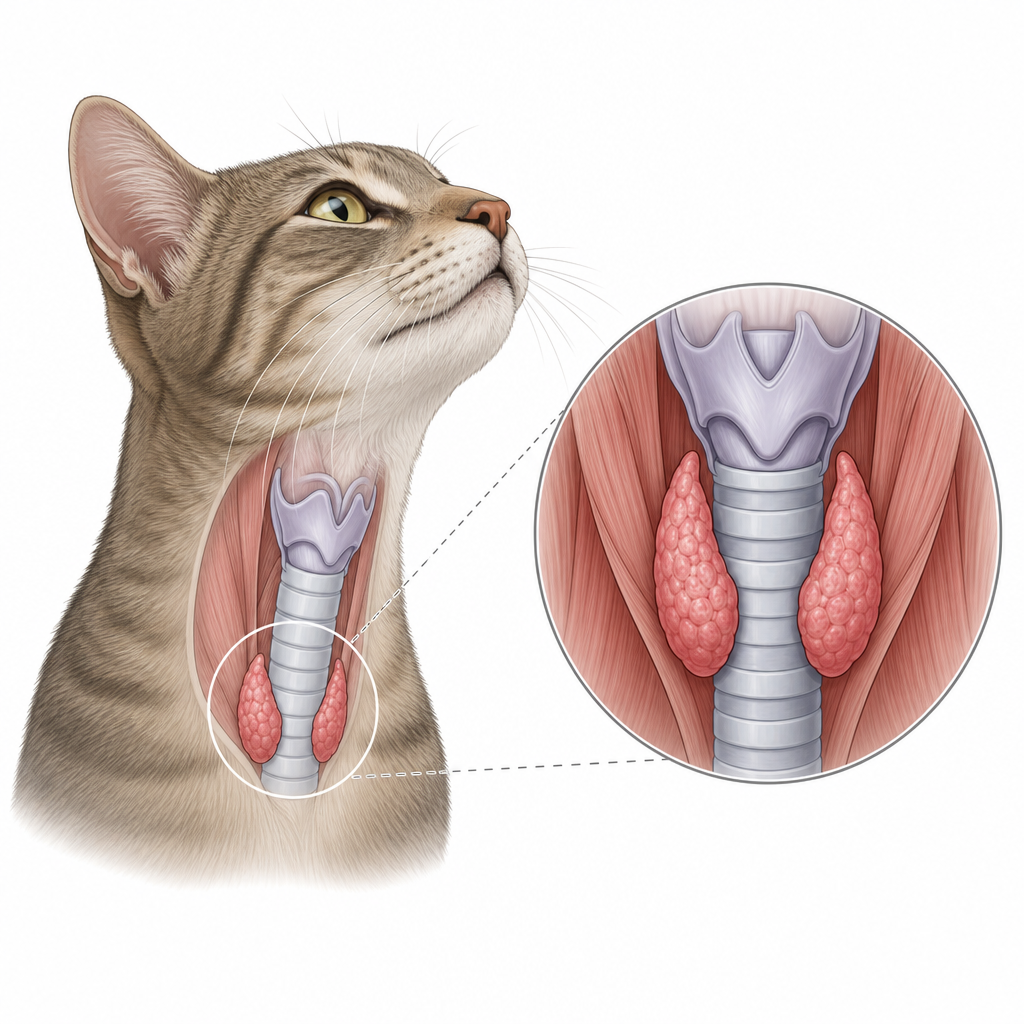
Les thyroïdes flanquent la trachée.
Causes et facteurs de risque
Multifactoriel (alimentation, environnement, génétique). Chats âgés; chiens plus rares (carcinome plus fréquent).
Signes
- Amaigrissement avec polyphagie (fréquent)
- Polydipsie/polyurie, pelage négligé, tachycardie, vomissements
- Masse thyroïdienne palpable possible
Diagnostic
Clinique, palpation cervicale, T4 sérique; fT4, scintigraphie ou échographie si besoin. Toujours évaluer les reins.
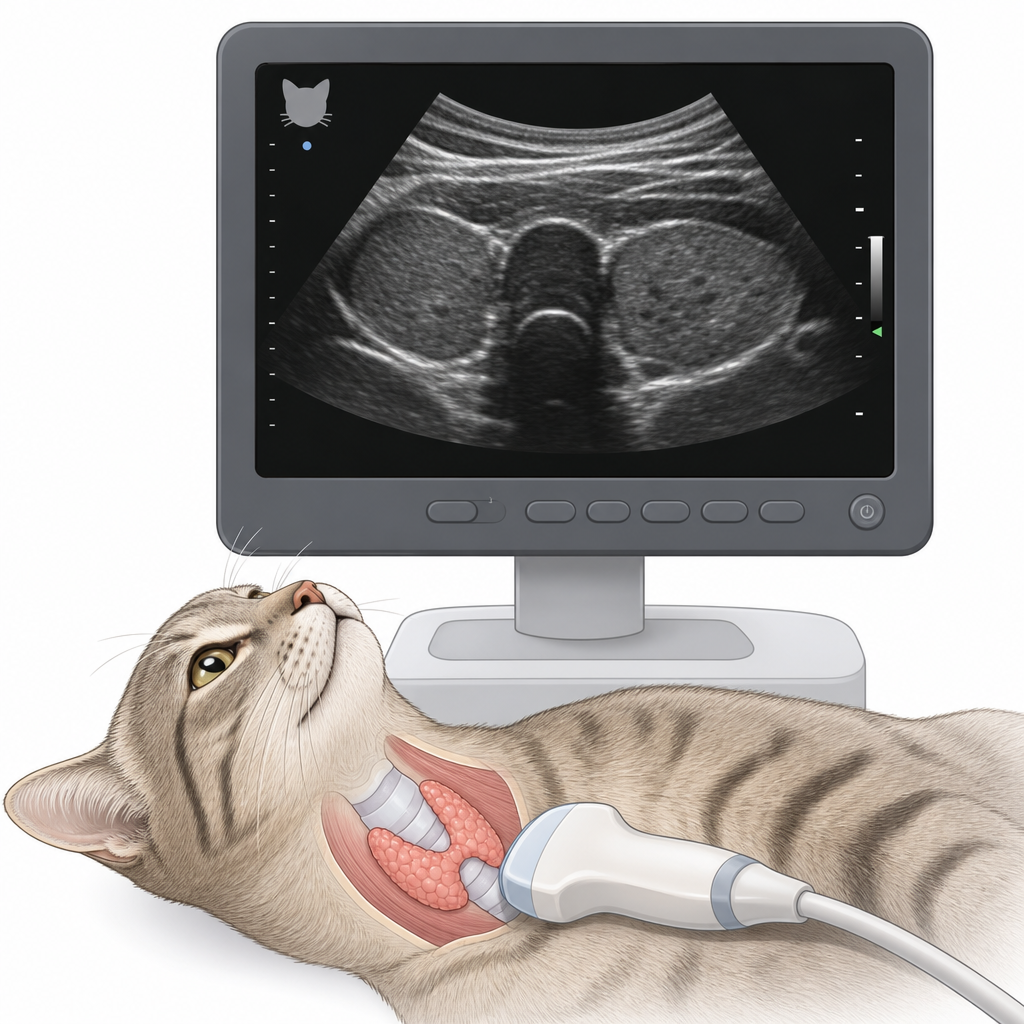
L'échographie cervicale évalue taille et structure.
Traitement
Methimazole ou Carbimazole; iode radioactif (curatif); régime thyroïdien; chirurgie selon cas. Surveiller tension et reins.
Pronostic
Excellent sous contrôle; une maladie rénale peut se démasquer après normalisation.
Prévention
Aucun moyen certain. Dépistage senior (T4) recommandé.
Quand appeler
Amaigrissement avec bon appétit, soif accrue. Urgence: cécité soudaine, dyspnée sévère, collapsus.
Sources
- Internal Medicine, 5th Edition, Pages 795, 797, 800, 805.
My highlights & notes
Signes et symptômes
Races à risque plus élevé
Comment c’est diagnostiqué
- Baseline Serum T4 Concentration
- Cervical Ultrasound
- Palpation of a thyroid nodule
- Radionuclide scan
Approches de traitement
Le traitement doit être prescrit par un vétérinaire agréé selon votre animal. Les doses précises ne sont volontairement pas affichées.
Questions fréquentes
What is Hyperthyroidism?
Hyperthyroidism is a common endocrine disorder in older pets, especially cats, characterized by an overactive thyroid gland. Learn about the symptoms, diagnostic tests, and treatment options.
What are the symptoms of Hyperthyroidism?
Palpable thyroid mass、Polydipsia、Increased appetite、Excessive urination、Fast heart rate、Unkempt haircoat、Vomiting (throwing up)、Weight loss (getting thinner)
How is Hyperthyroidism diagnosed?
Baseline Serum T4 Concentration、Cervical Ultrasound、Palpation of a thyroid nodule、Radionuclide scan
How is Hyperthyroidism treated?
Le traitement doit être prescrit par un vétérinaire agréé selon votre animal. Les doses précises ne sont volontairement pas affichées.
Sources
- Internal Medicine 5th · p. 797
- Internal Medicine 5th · p. 797
- Internal Medicine 5th · p. 795
- Internal Medicine 5th · p. 800
- Internal Medicine 5th · p. 805
Cet article est informatif et ne remplace pas un avis vétérinaire. Si votre animal est malade, consultez un vétérinaire.
Inquiet pour votre animal ?
L’IA Peqaboo aide à suivre les symptômes, comprendre les analyses et savoir quand consulter.
Télécharger l’app Peqaboo