

Pyelonephritis
Also known as: Acute pyelonephritis, Chronic pyelonephritis
In short
Pyelonephritis is a serious bacterial kidney infection in dogs and cats that typically travels up from the bladder. Prompt veterinary diagnosis and targeted antibiotic therapy are essential to prevent permanent kidney damage or life-threatening complications.
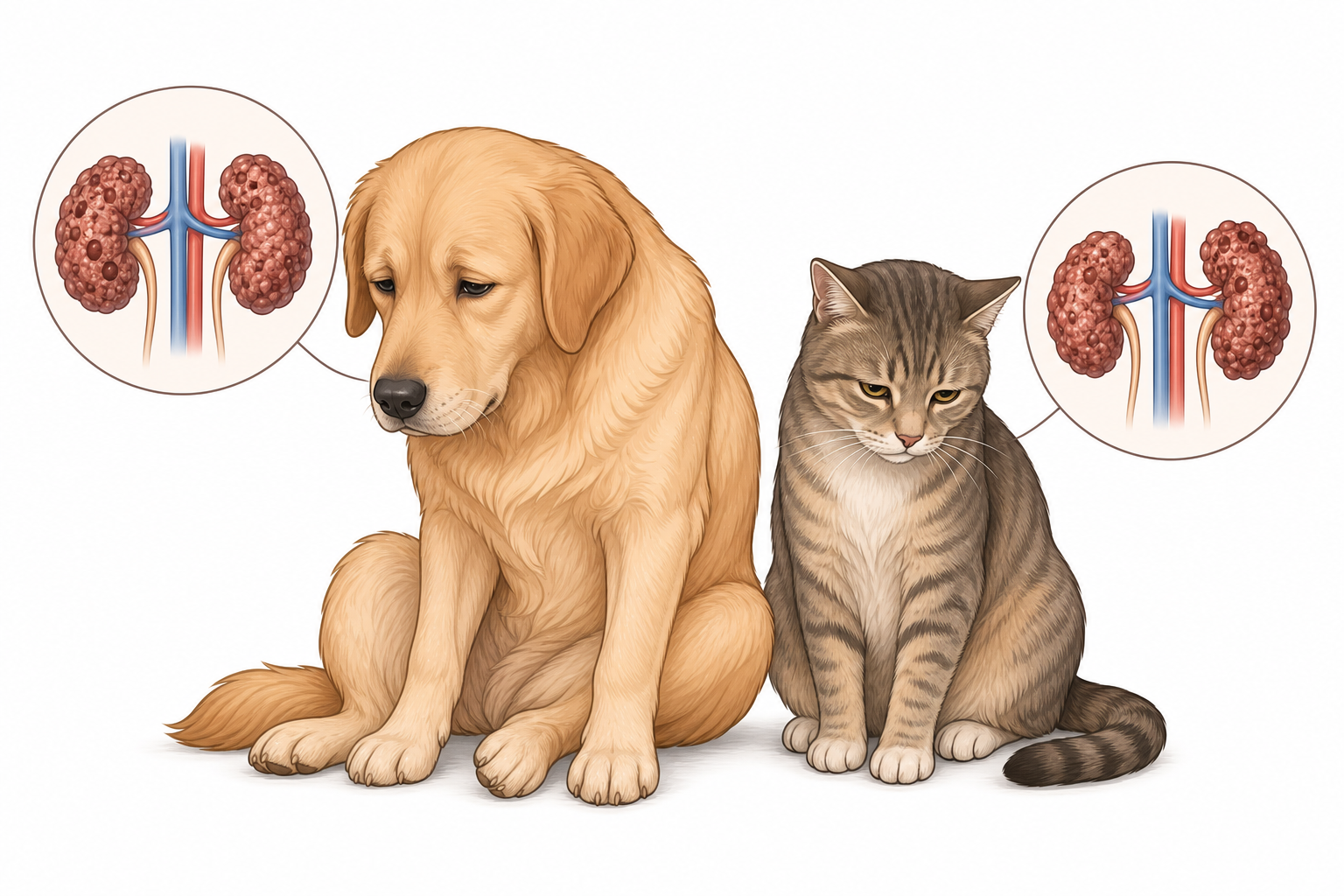
TL;DR. Pyelonephritis is a serious bacterial kidney infection in dogs and cats that typically travels up from the bladder, requiring prompt veterinary care and targeted antibiotics to prevent permanent kidney damage or life-threatening blood infections.
Pyelonephritis can affect both dogs and cats, often causing lethargy and systemic illness.
What is it?
Pyelonephritis is a bacterial infection of the upper urinary tract, specifically targeting the renal pelvis (the funnel-like part of the kidney where urine collects) and the renal parenchyma (the functional kidney tissue). Unlike a simple bladder infection, which is confined to the lower urinary tract, pyelonephritis directly threatens your pet's kidney function and overall systemic health.
The infection most commonly develops when bacteria from a lower urinary tract infection, such as a bladder infection, travel upward through the ureters into one or both kidneys. This is known as an ascending infection. Less frequently, bacteria can reach the kidneys through the bloodstream from an infection elsewhere in the body.
Veterinary internal medicine references describe the mechanism of this disease:
"Pyelonephritis usually results when bacteria ascend into the renal pelvis and parenchyma from the lower urinary tract; less commonly, hematogenous spread to the kidney occurs. Usually, a single organism is isolated from the urine. Pyelonephritis may be acute or chronic."
— Internal Medicine, p. 716
This condition can present as either acute or chronic. Acute pyelonephritis comes on suddenly and severely, often causing obvious signs of illness, fever, and pain. Chronic pyelonephritis is a slow-burning, long-term infection that may show few outward signs initially but can gradually destroy kidney tissue over time, leading to irreversible kidney failure.
Causes & risk factors
The primary cause of pyelonephritis is a bacterial invasion of the kidney tissue. In most cases, a single type of bacteria is responsible. The inner portion of the kidney, known as the medulla, is highly sensitive to bacterial infection due to its low oxygen levels and high salt concentration, which can hinder the body's natural immune defenses.
Several risk factors make dogs and cats more susceptible to developing this serious infection:
- Pre-existing lower urinary tract infections (UTIs): Untreated or recurrent bladder infections provide a constant source of bacteria that can migrate upward.
- Anatomical abnormalities: Structural defects in the urinary tract, such as ectopic ureters or conditions that allow urine to flow backward from the bladder to the kidneys (vesicoureteral reflux), bypass the body's natural physical barriers.
- Impaired urine concentration: Conditions that cause a low urine specific gravity (dilute urine) can reduce the natural antibacterial properties of concentrated urine.
- Systemic diseases: Diseases like diabetes mellitus, Cushing's disease (hyperadrenocorticism), or chronic kidney disease weaken the immune system and alter urinary tract environment, making infection more likely.
There are no documented breed predispositions for pyelonephritis in the clinical record; this condition can affect any dog or cat regardless of breed.
Signs to watch for
The clinical signs of pyelonephritis can vary significantly depending on whether the infection is acute or chronic. Acute cases typically present with sudden, severe symptoms, while chronic cases may be subtle and easily overlooked.
Common signs
- Increased thirst (polydipsia) and increased urination (polyuria): The infection damages the kidneys' ability to concentrate urine, leading to fluid loss and compensatory thirst.
- Fever and lethargy: A high body temperature and profound weakness are common as the body attempts to fight off the systemic infection.
- Dehydration: Due to increased fluid loss in the urine and potential vomiting.
- Painful kidneys and flank pain: Your pet may arch their back, resist being touched around their lower back or abdomen, or show signs of discomfort during physical examination.
- Decreased appetite and weight loss: A general feeling of illness and nausea often leads to a refusal to eat.
- Vomiting: Caused by the buildup of toxins in the bloodstream when kidney function is compromised.
- Blood in the urine (hematuria): Visible blood or microscopic blood cells in the urine.
- Renal enlargement: Your vet may feel abnormally large, swollen kidneys during a physical exam.
Occasional signs
- Diarrhea: Gastrointestinal upset can sometimes accompany the systemic inflammation.
- Gradual weight loss: More common in chronic cases where the infection quietly drains the pet's resources over weeks or months.
Rare signs
- Lack of urine production (anuria): This is a critical emergency indicating that the kidneys have shut down completely due to severe, acute damage.

Flank pain and a hunched posture are common clinical signs of acute kidney infection.
How vets diagnose it
Diagnosing pyelonephritis requires a systematic approach to differentiate it from a simple lower urinary tract infection and to assess the extent of kidney involvement.
Your vet will begin with a thorough physical examination, paying close attention to whether your pet's kidneys feel painful or enlarged. Following the exam, several diagnostic tests will be performed:
- Complete Blood Count (CBC) & Serum Biochemical Panel: The CBC helps identify active infection by looking for elevated white blood cell counts. The biochemical panel is crucial for evaluating kidney function, measuring waste products like blood urea nitrogen (BUN) and creatinine that build up when the kidneys are struggling.
- Urinalysis: This test evaluates the physical and chemical properties of the urine. Your vet will look for signs of active kidney inflammation, such as protein, blood, inflammatory cells (pyuria), bacteria, and granular casts (microscopic plugs of cellular debris that form in the kidney tubules and indicate active kidney damage).
- Quantitative Aerobic Bacterial Urine Culture (Gold Standard): This is the most critical diagnostic test. It confirms the presence of a bacterial infection, identifies the specific organism involved, and determines which antibiotics will be most effective at eliminating it.
- Abdominal Ultrasound: This imaging tool allows the vet to visualize the internal structure of the kidneys. A leading critical care textbook describes what your vet might look for:
"Renal enlargement often is identified in cases of acute pyelonephritis; poor corticomedullary definition, distortion of the renal collecting system, irregular renal shape, and reduced kidney size may be seen with chronic cases."
— Small Animal Critical Care Medicine, p. 580
- Pyelocentesis: In complex or non-responsive cases, your vet may use ultrasound guidance to insert a fine needle directly into the renal pelvis to collect a pure urine sample for culture.
- Intravenous Pyelography: This advanced contrast imaging study can help identify structural blockages or abnormalities in the flow of urine through the ureters.
Treatment options
Pyelonephritis is a complicated infection that requires aggressive, targeted antibiotic therapy. Unlike simple bladder infections, which may respond to short-term protocols, kidney infections require prolonged treatment to ensure the bacteria are completely eradicated from the deep tissues of the kidney.
As a point of comparison, a leading internal medicine reference notes that while simple lower urinary tract infections might be managed with short-term protocols:
"...in a recent study of dogs with simple UTIs, administration of enrofloxacin at 18-20 mg/kg PO q24h for 3 days or amoxicillin-clavulanic acid at 13.75-25 mg/kg PO q12h for 14 days had similar microbiologic cure rates..."
— Internal Medicine, p. 1336
Because pyelonephritis is a deep, complicated tissue infection, short-term protocols are inappropriate. Treatment typically lasts for 4 to 6 weeks, and medications must be selected based on their ability to penetrate kidney tissue effectively.
First-Line Therapy
- Fluoroquinolone Antibiotics (e.g., Orbifloxacin): This class of antibiotics is highly favored as a first-line treatment because of its exceptional ability to penetrate kidney tissue and achieve high concentrations in the urine, effectively killing the invading bacteria.
Second-Line Therapy
- Aminopenicillins (e.g., Ampicillin): Often used if culture results indicate the bacteria are highly sensitive to this class, or as part of a combination protocol.
- Tetracycline Antibiotics (e.g., Doxycycline): Another option that may be utilized based on specific bacterial culture and sensitivity results.
Supportive Care
In acute, severe cases, pets often require hospitalization for supportive care. This includes intravenous (IV) fluids to correct dehydration, support kidney blood flow, and flush out toxins. Anti-nausea medications, pain management, and nutritional support are also provided to keep your pet comfortable while the antibiotics take effect.
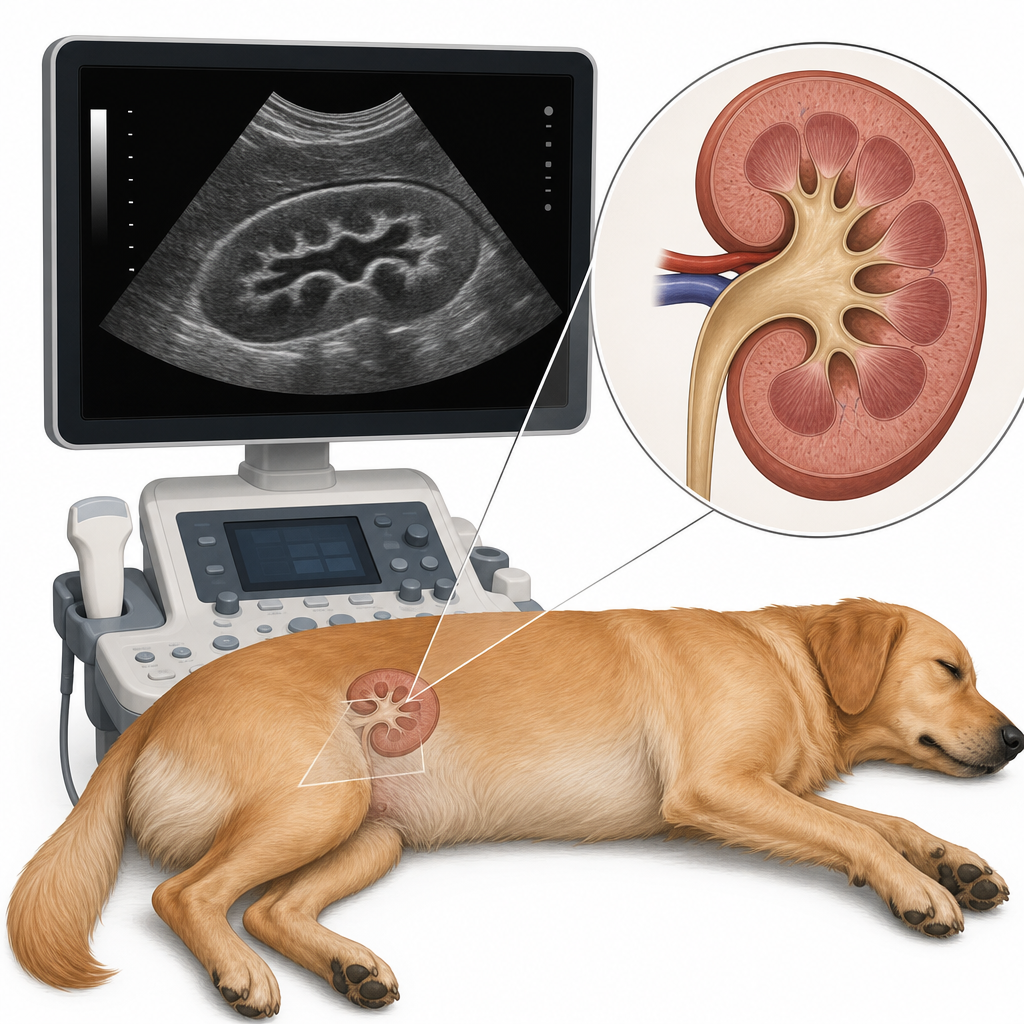
Abdominal ultrasound is a key diagnostic tool used to evaluate kidney size and structure.
Prognosis
Long-term prognosis data for pyelonephritis in dogs and cats is limited in veterinary literature. However, the outcome generally depends on how quickly the infection is diagnosed and how much permanent damage has occurred prior to starting treatment.
For pets with acute pyelonephritis that is diagnosed promptly and treated with an appropriate, full course of targeted antibiotics, the prognosis for recovery is generally favorable. Many of these pets regain normal kidney function.
If the infection is chronic or treatment is delayed, the prognosis becomes more guarded. Chronic infection leads to progressive scarring and shrinkage of the kidneys, which can result in permanent chronic kidney disease. Additionally, severe cases can lead to urosepsis, a life-threatening condition where the infection spreads from the urinary tract into the bloodstream. Fortunately, this complication is relatively rare:
"Urosepsis resulting from pyelonephritis has been reported uncommonly in the veterinary literature."
— Small Animal Critical Care Medicine, p. 580
Prevention
Because pyelonephritis typically starts as a lower urinary tract infection, the most effective way to prevent it is to manage bladder infections promptly and thoroughly.
- Do not ignore signs of urinary discomfort: If your pet is straining to urinate, urinating frequently in small amounts, or has blood in their urine, seek veterinary care immediately. Treating a simple UTI early prevents it from ascending to the kidneys.
- Encourage hydration: Ensure your pet always has access to clean, fresh water. Good hydration promotes regular urination, which naturally flushes bacteria out of the urinary tract.
- Routine monitoring: For pets with pre-existing conditions like diabetes or chronic kidney disease, regular urinalyses and urine cultures are recommended to catch subclinical infections before they damage the kidneys.
When to call your vet
Pyelonephritis can escalate rapidly into a life-threatening crisis. You should contact your veterinarian immediately if your pet shows any of the following red flags:
- Fever or severe lethargy
- Persistent vomiting or refusal to eat
- Signs of abdominal or lower back pain (arching the back, crying out when touched)
- Visible blood in the urine
- A sudden decrease in urine production, or if your pet stops producing urine entirely (anuria)
If your pet is already being treated for a urinary tract infection and their symptoms worsen or return after finishing medications, contact your vet for follow-up testing.
Sources
- Internal Medicine, 5th Edition, pages 714, 716, 1336.
- Small Animal Critical Care Medicine, 2nd Edition, page 580.
My highlights & notes
Signs & symptoms
How it is diagnosed
- Quantitative aerobic bacterial urine cultureGold standard
- Abdominal Ultrasound
- Complete Blood Count (CBC)
- Intravenous pyelography
- Pyelocentesis
- Serum biochemical panel
- Urinalysis
Treatment approaches
Treatment must be prescribed by a licensed veterinarian based on your pet. Specific drug doses are intentionally not shown here.
Frequently asked questions
What is Pyelonephritis?
Pyelonephritis is a serious bacterial kidney infection in dogs and cats that typically travels up from the bladder. Prompt veterinary diagnosis and targeted antibiotic therapy are essential to prevent permanent kidney damage or life-threatening complications.
What are the symptoms of Pyelonephritis?
Decreased appetite、Dehydration、Fever、Flank or dorsal abdominal pain、Blood in urine、Lethargy、Painful kidneys、Polydipsia
How is Pyelonephritis diagnosed?
Quantitative aerobic bacterial urine culture、Abdominal Ultrasound、Complete Blood Count (CBC)、Intravenous pyelography、Pyelocentesis、Serum biochemical panel
How is Pyelonephritis treated?
Treatment must be prescribed by a licensed veterinarian based on your pet. Specific drug doses are intentionally not shown here.
Sources
- Internal Medicine 5th · p. 716
- Small Animal Critical Care Medicine, 2nd Edition (VetBooks.ir) · p. 580
- Internal Medicine 5th · p. 714
- Small Animal Critical Care Medicine, 2nd Edition (VetBooks.ir) · p. 580
- Internal Medicine 5th · p. 1336
This article is for general education and is not a substitute for professional veterinary advice. If your pet is unwell, please consult a veterinarian.
Worried about your pet?
Peqaboo’s AI helps you track symptoms, understand lab reports, and know when to see a vet.
Get the Peqaboo app