

Megacolon
Also known as: Idiopathic megacolon, Acquired megacolon
In short
Megacolon is a serious condition in cats and dogs where the large intestine becomes severely stretched and loses its ability to contract, leading to chronic constipation and fecal impaction. Learn about the symptoms, diagnostic tests, medical therapies, and surgical options.
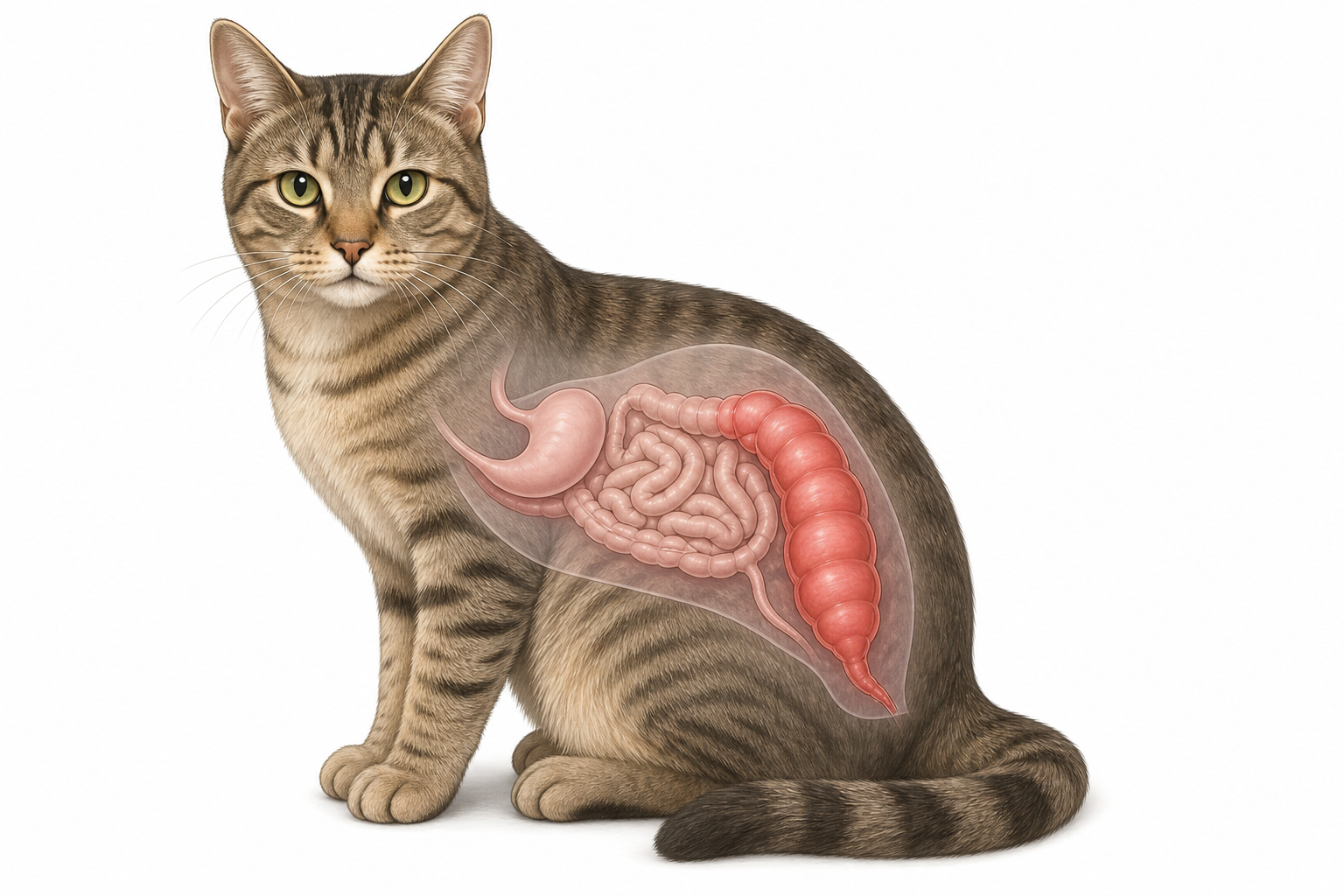
TL;DR. Megacolon is a severe, chronic stretching of the large intestine that prevents normal bowel movements, most commonly affecting cats and requiring medical management or surgical correction.
Megacolon involves the abnormal stretching and loss of muscle tone in the large intestine.
What is it?
Megacolon is a serious gastrointestinal condition characterized by the severe, abnormal dilation (stretching) of the large intestine (the colon). This stretching is typically associated with colonic hypomotility, meaning the muscles of the colon lose their ability to contract and push waste forward. When these muscles fail, fecal matter accumulates, dries out, and becomes impacted. This leads to chronic constipation or, in more severe cases, obstipation—a state of permanent constipation where the animal is completely unable to evacuate the dry, hardened stool on its own.
In healthy dogs and cats, the colon serves two primary functions: absorbing water and electrolytes from digested food, and using coordinated muscular contractions to move feces toward the rectum. When megacolon develops, this muscular coordination breaks down. The colon becomes a passive, stretched-out sac. As feces remain trapped inside, the colon continues to absorb water from the waste, making the stool increasingly dry, hard, and difficult to pass. Over time, the constant stretching damages the smooth muscle of the colonic wall, making recovery of normal function highly unlikely without medical or surgical intervention.
While megacolon can affect both dogs and cats, it is far more common in cats. In feline patients, the condition is most frequently classified as "idiopathic." This means that despite thorough testing, no clear underlying physical obstruction or metabolic cause can be found. Instead, the disease is believed to stem from a generalized, primary dysfunction of the colonic smooth muscle itself.
Causes & risk factors
Megacolon is categorized based on its underlying cause:
- Idiopathic Megacolon: This is the most common form in cats. The exact trigger remains unknown, but research suggests a neuromuscular defect within the smooth muscle of the colon wall that prevents normal contractions.
- Acquired Megacolon: This form occurs secondary to other mechanical, metabolic, or neurological problems. Common triggers include:
- Mechanical Obstructions: Pelvic fractures that healed poorly, narrowing the pelvic canal through which feces must pass; pelvic tumors; or foreign bodies.
- Neurological Disorders: Damage to the nerves that control the colon, spinal cord injuries, or deformities.
- Metabolic and Endocrine Issues: Severe dehydration, low potassium levels, or thyroid imbalances that slow down overall gut motility.
- Chronic Constipation: Any condition that causes long-term constipation can eventually stretch the colon to the point of permanent damage, leading to acquired megacolon.
While any cat or dog can develop megacolon, certain genetic factors exist. Specifically, the Manx cat breed is predisposed to the condition due to a genetic mutation that affects spinal cord development, often leading to abnormal nerve function in the hind end and colon.
Signs to watch for
Recognizing the signs of megacolon early can prevent severe complications. The symptoms range from mild straining to systemic illness.
- Constipation (Cardinal sign): Infrequent, difficult, or absent bowel movements.
- Obstipation (Common): Complete inability to pass feces; the animal is entirely blocked.
- Painful defecation (Common): Your pet may vocalize (meow or cry out) while trying to use the litter box or yard.
- Tenesmus and unproductive attempts (Common): Straining to defecate, often resulting in nothing passed, or only small drops of liquid or blood.
- Dry, hard feces (Common): Stool that is abnormally dry, small, and rock-like.
- Infrequent defecation (Common): Going several days without a bowel movement.
- Vomiting (Occasional): A critical sign that the blockage is causing systemic distress.
- Dehydration and Depression (Occasional): Lethargy, dullness, and a dry scruff due to fluid loss.
- Weight loss and Anorexia (Occasional): Loss of appetite and gradual muscle wasting.
- Abdominal pain (Occasional): Tense abdomen or crying out when picked up around the belly.
- Hematochezia (Occasional): Fresh blood in the stool or passed from the rectum.
- Mesenteric lymphadenopathy (Occasional): Swollen lymph nodes in the abdomen, which your vet may feel during an exam.
"Intestinal stasis can result in bacterial overgrowth, and the absorption of endotoxin and bacteria can lead to endotoxemia and septicemia. Clinical signs depend on the location and cause of the disorder but typically include vomiting, diarrhea, and weight loss. Abdominal pain and distention may"
— Small Animal Critical Care Medicine, p. 696
If your pet is vomiting, completely refusing food, or showing extreme lethargy alongside straining, this is a veterinary emergency. These signs suggest that bacteria or toxins from the stagnant stool are beginning to enter the bloodstream.

Straining to defecate (tenesmus) is one of the most common signs of megacolon in cats.
How vets diagnose it
Diagnosing megacolon requires a systematic approach to confirm the abnormal size of the colon and rule out treatable underlying causes.
Your vet will begin with a thorough physical examination, including abdominal palpation. In pets with megacolon, the vet can easily feel a massively distended, firm, sausage-like colon filling a large portion of the abdominal cavity. A digital rectal examination may also be performed under sedation to check for pelvic narrowing, strictures, or foreign objects that might be blocking the passage of stool.
To confirm the diagnosis, your vet will perform abdominal and pelvic radiographs (X-rays). These images allow the vet to measure the diameter of the colon and check for skeletal issues, such as old, misaligned pelvic fractures that could be compressing the colon.
"Diagnosis requires palpating a massively dilated colon (not one just filled to normal capacity) plus elimination of dietary, behavioral, metabolic, and anatomic causes. Abdominal radiographs should be performed."
— Internal Medicine, p. 523
Other diagnostic tools include:
- Serum Biochemistry Panel: To rule out metabolic causes of constipation, such as kidney disease, dehydration, or electrolyte imbalances.
- Ultrasound examination: To evaluate the layers of the colon wall and check for abdominal masses or enlarged lymph nodes.
- Colonoscopy: A specialized camera study of the inside of the colon, used if the vet suspects inflammatory bowel disease, strictures, or mucosal masses.
Treatment options
Treatment is tailored to the severity of the condition and whether it is an acute episode or a chronic, long-standing issue.
First-Line Medical Management
For pets presenting with a severe blockage (obstipation), the immediate priority is to safely remove the impacted feces. This is typically done under general anesthesia or deep sedation to prevent pain and injury to the delicate colon wall.
"Impacted feces must be removed. Multiple warm water retention and cleansing enemas over 2 to 4 days usually work. Future fecal impaction is prevented by adding fiber to"
— Internal Medicine, p. 523
Once the colon is cleared, long-term medical management is started to keep the colon empty and prevent future impactions. This usually involves a combination of two drug classes:
- Disaccharide Laxatives (e.g., Lactulose): These medications draw water into the colon, softening the stool so it can pass more easily.
- Gastrointestinal Prokinetic Agents (e.g., Cisapride): These stimulate the smooth muscle of the colon, helping to restore some level of contraction.
"I prefer to use cisapride and lactulose... concurrently to optimize the effect of keeping the colon evacuated. Some cats aggressively treated in this manner may never require surgical intervention. Other cats, however become less responsive to medical management over time and require surgery."
— Current Techniques in Small Animal Surgery, p. 307
Dietary adjustments are also crucial. Your vet may recommend adding specific types of fiber to the diet to bulk and soften the stool, or they may prescribe a highly digestible, low-residue diet to minimize the volume of waste produced.
Second-Line and Supportive Therapy
If there is a concern about bacterial overgrowth or if the pet is undergoing surgery, antibiotics such as Cefoxitin (a second-generation cephalosporin) may be prescribed to prevent systemic infections.
Surgical Treatment
When medical management fails, or if the colon is completely non-functional, surgery is the definitive treatment. The standard procedure is a subtotal colectomy, which involves removing the diseased, stretched portion of the colon and joining the remaining healthy sections.
While once considered a last-resort salvage procedure, subtotal colectomy is now a routine and highly successful surgery that significantly improves the quality of life for pets with end-stage megacolon.
Prognosis
The prognosis for pets with megacolon is fair to guarded when relying solely on medical management. Many pets do well initially, but over time, the colon may become increasingly unresponsive to laxatives and prokinetics, eventually requiring surgery.
For pets that undergo a subtotal colectomy, the prognosis for long-term recovery and quality of life is generally favorable. Owners should expect mild to moderate diarrhea or loose stools for several weeks to months after surgery as the remaining digestive tract adapts to the loss of the colon. Over time, most pets adjust well and go on to live comfortable, pain-free lives.
Prevention
Because idiopathic megacolon is a primary muscle dysfunction, it cannot be prevented. However, you can prevent the severe complications of acquired megacolon by:
- Ensuring your pet has constant access to fresh water (using pet fountains can encourage cats to drink more).
- Feeding a high-quality diet recommended by your vet.
- Monitoring your pet's litter box habits daily. If you notice your pet straining or failing to produce stool for more than 24 hours, seek veterinary advice immediately before the colon becomes permanently stretched.
When to call your vet
Contact your veterinarian if your pet has not passed stool for more than 48 hours, or if you notice mild straining.
Seek immediate emergency veterinary care if your pet displays any of the following red-flag signs:
- Vomiting or inability to keep food down
- Extreme lethargy, weakness, or collapse
- Continuous, unproductive straining accompanied by crying or vocalizing
- Passing blood or mucus from the rectum
- A severely swollen, painful, or hard abdomen
For specific breeds
If you own a Manx cat, be especially vigilant. Due to the genetic link between the Manx gene (which causes taillessness) and spinal cord malformations, these cats are at a higher risk for neurological megacolon. Regular veterinary check-ups starting in kittenhood are essential to monitor their pelvic and spinal development, ensuring any signs of constipation are managed before permanent colon damage occurs.
Sources
- Small Animal Critical Care Medicine, p. 696
- Internal Medicine, p. 523
- Current Techniques in Small Animal Surgery, p. 306-307
My highlights & notes
Signs & symptoms
Breeds at higher risk
How it is diagnosed
- Abdominal and pelvic radiographs
- Abdominal Palpation
- Colonoscopy
- Digital rectal examination
- Serum Biochemistry Panel
- Ultrasound examination
Treatment approaches
Treatment must be prescribed by a licensed veterinarian based on your pet. Specific drug doses are intentionally not shown here.
Frequently asked questions
What is Megacolon?
Megacolon is a serious condition in cats and dogs where the large intestine becomes severely stretched and loses its ability to contract, leading to chronic constipation and fecal impaction. Learn about the symptoms, diagnostic tests, medical therapies, and surgical options.
What are the symptoms of Megacolon?
Constipation、Straining to poop、dry, hard feces、infrequent defecation、obstipation、painful defecation、unproductive attempts to defecate、Loss of appetite
How is Megacolon diagnosed?
Abdominal and pelvic radiographs、Abdominal Palpation、Colonoscopy、Digital rectal examination、Serum Biochemistry Panel、Ultrasound examination
How is Megacolon treated?
Treatment must be prescribed by a licensed veterinarian based on your pet. Specific drug doses are intentionally not shown here.
Sources
- Small Animal Critical Care Medicine, 2nd Edition (VetBooks.ir) · p. 696
- Internal Medicine 5th · p. 523
- Current Techniques in Small Animal Surgery, 5th Edition (VetBooks.ir) · p. 307
- Current Techniques in Small Animal Surgery, 5th Edition (VetBooks.ir) · p. 306
This article is for general education and is not a substitute for professional veterinary advice. If your pet is unwell, please consult a veterinarian.
Worried about your pet?
Peqaboo’s AI helps you track symptoms, understand lab reports, and know when to see a vet.
Get the Peqaboo app