

Hyperaldosteronism
Primary hyperaldosteronism
Also known as: Primary hyperaldosteronism, Conn's syndrome
In short
Primary hyperaldosteronism, or Conn's syndrome, is an uncommon endocrine disorder in dogs and cats caused by an adrenal tumor that overproduces aldosterone. This leads to severe potassium depletion and high blood pressure, resulting in weakness and lethargy.
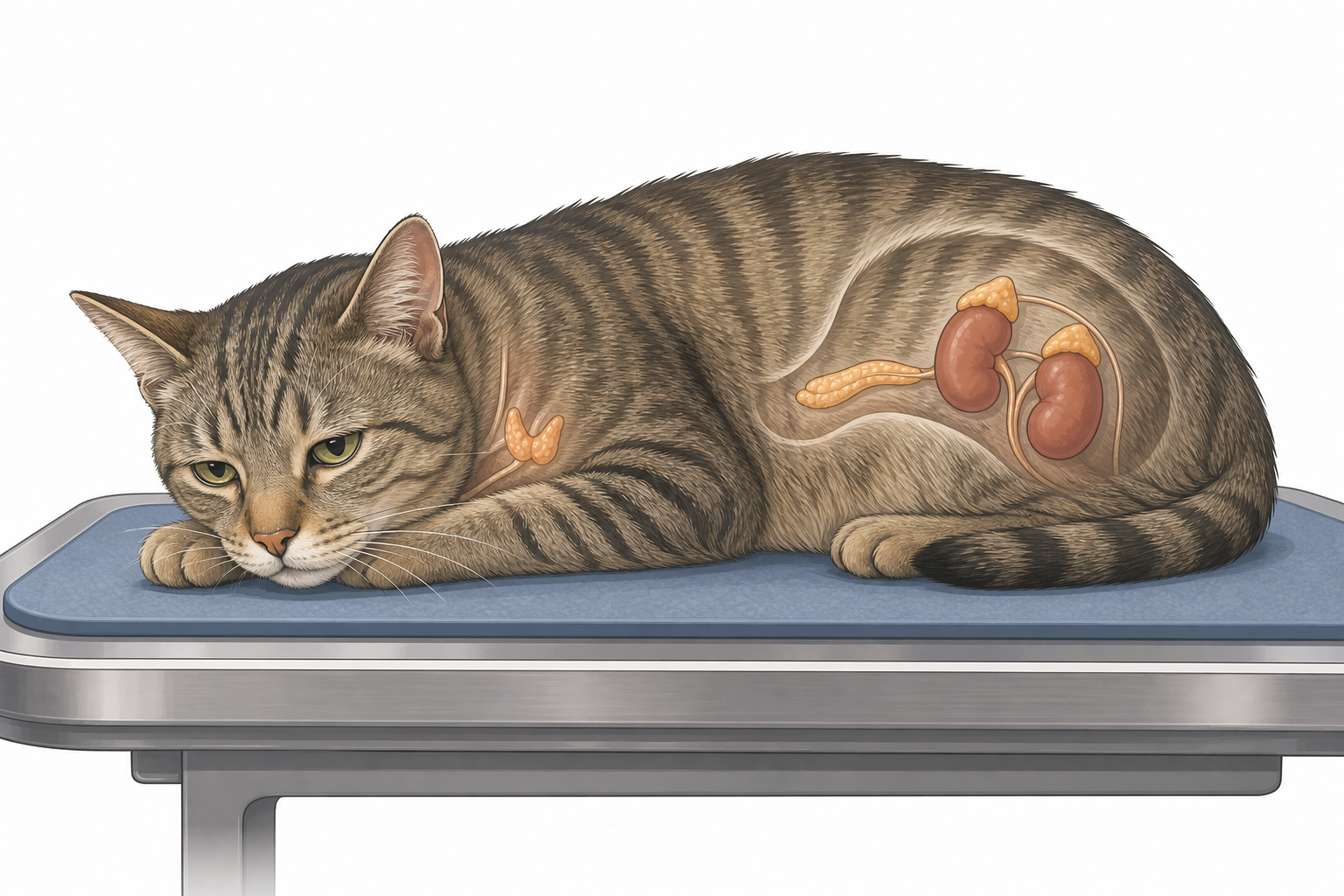
TL;DR. Primary hyperaldosteronism is an uncommon hormonal disorder in dogs and cats where an adrenal gland tumor overproduces aldosterone, causing dangerously low potassium levels and high blood pressure.
Primary hyperaldosteronism is an uncommon endocrine disorder that can cause weakness and lethargy in cats and dogs.
What is it?
Primary hyperaldosteronism, also known as Conn's syndrome, is an uncommon endocrine (hormonal) disorder that affects both dogs and cats. To understand this condition, it helps to look at the adrenal glands. These are two small, triangle-shaped glands located just in front of your pet's kidneys. Despite their small size, the adrenal glands are vital hormone factories. They produce several essential hormones, including cortisol, adrenaline, and a hormone called aldosterone.
Aldosterone plays a critical role in maintaining your pet's blood pressure and fluid balance. Under normal circumstances, aldosterone signals the kidneys to retain sodium and excrete potassium. This delicate balance ensures that the body holds onto the correct amount of water and maintains stable blood pressure. However, in primary hyperaldosteronism, this system breaks down. An abnormal growth in the adrenal gland begins secreting excessive amounts of aldosterone, completely independent of the body's actual needs.
This uncontrolled flood of aldosterone forces the kidneys to retain far too much sodium and flush out too much potassium. The resulting state of high sodium (hypernatremia) and low potassium (hypokalemia) has severe consequences. Sodium retention causes fluid retention, which leads to high blood pressure (systemic hypertension). Meanwhile, potassium depletion deprives the muscles and nerves of the essential electrolyte they need to contract and function properly. As a pet owner, understanding this mechanism is key to recognizing why this disease causes such profound weakness and systemic strain.
Causes & risk factors
Primary hyperaldosteronism is classified as a neoplastic disease, meaning it is caused by abnormal tissue growth or tumors. In almost all cases, the root cause is a tumor located within the outer layer (cortex) of one of the adrenal glands. These tumors can be benign (non-spreading adenomas) or malignant (invasive adenocarcinomas).
When an adrenal mass develops, it is not always immediately clear what type of tissue it contains. A leading veterinary internal medicine reference notes:
"The mass may signify normal tissue, granuloma, cyst, hemorrhage, or an inflammatory nodule. Adrenalectomy is the treatment of choice if the mass is malignant and has not spread, but adrenalectomy may not be indicated if the mass is benign, small, and hormonally inactive and is not invading surrounding structures. Unfortunately, it is not easy to determine whether an adrenal mass is neoplastic and..." — Internal Medicine 5th p.892
While any middle-aged to older dog or cat can develop primary hyperaldosteronism, certain genetic factors may play a role. In dogs, the Doberman Pinscher has shown a documented breed predisposition, though the overall occurrence of the disease remains uncommon across all breeds. There are no highly specific environmental triggers known to cause these adrenal tumors; they generally develop spontaneously as pets age.
Signs to watch for
Because aldosterone affects basic cellular function and blood pressure, the symptoms of primary hyperaldosteronism can be diverse and severe. The most common signs are directly linked to low potassium and high blood pressure.
- Hypokalemia (Cardinal): Low blood potassium is the hallmark of this disease. Potassium is vital for muscle contraction. When potassium levels drop dangerously low, muscles cannot function.
- Weakness (Common): Due to potassium depletion, pets will experience profound muscle weakness. In cats, this often manifests as "cervical ventroflexion," where the neck muscles are too weak to hold the head up, causing the chin to droop toward the chest. Dogs may struggle to stand, climb stairs, or jump.
- Lethargy (Common): Affected pets are often extremely sluggish, sleep excessively, and show little interest in their normal activities.
- Systemic hypertension (Common): High blood pressure is highly prevalent. According to the 2018 ACVIM Guidelines for the identification, evaluation, and management of systemic hypertension in dogs and cats, primary hyperaldosteronism is associated with hypertension in 50% to 100% of cases. This can lead to sudden blindness, dilated pupils, or bleeding within the eye.
- Hypernatremia (Common): High blood sodium levels, which contribute directly to fluid retention and high blood pressure.

Profound muscle weakness and lethargy are common signs of low potassium caused by excess aldosterone.
How vets diagnose it
Diagnosing primary hyperaldosteronism requires a systematic approach. Because the symptoms of weakness and lethargy are shared by many other diseases, your vet will need to perform several specific tests to isolate the adrenal glands as the source of the problem.
First, your vet will perform a serum biochemistry panel. This blood test evaluates your pet's internal organ function and electrolyte levels. In a pet with primary hyperaldosteronism, the biochemistry panel typically reveals a classic pattern of severe potassium depletion and elevated sodium. As noted in a leading veterinary internal medicine textbook:
"Excessive secretion of aldosterone causes sodium retention and potassium depletion, which manifest as increased serum sodium (>155 mEq/L) and decreased serum potassium (<3.0 mEq/L) concentrations. Hypokalemia causes lethargy and weakness, which are the most common clinical signs of primary hyperaldosteronism. Hypernatremia causes systemic hypertension. An adrenal mass should be identified o" — Internal Medicine 5th p.892
Next, because of the high risk of high blood pressure, your vet will perform a systemic blood pressure measurement. This is done similarly to human blood pressure testing, using an inflatable cuff placed around your pet’s limb or tail. Detecting and managing hypertension is critical to prevent permanent damage to the eyes, kidneys, and brain.
To locate the physical source of the hormone excess, your vet will recommend an abdominal ultrasound. This imaging technique allows the veterinarian to visualize the kidneys and the adjacent adrenal glands. The ultrasound is used to identify an adrenal mass, determine its size, and check whether it has invaded neighboring blood vessels like the vena cava.
Finally, to confirm the diagnosis, your vet will measure serum and urine aldosterone concentrations. Finding elevated levels of aldosterone in the blood or urine—especially when the pet's potassium levels are already very low—confirms that the adrenal gland is secreting the hormone inappropriately, as low potassium should normally signal the body to stop producing aldosterone.
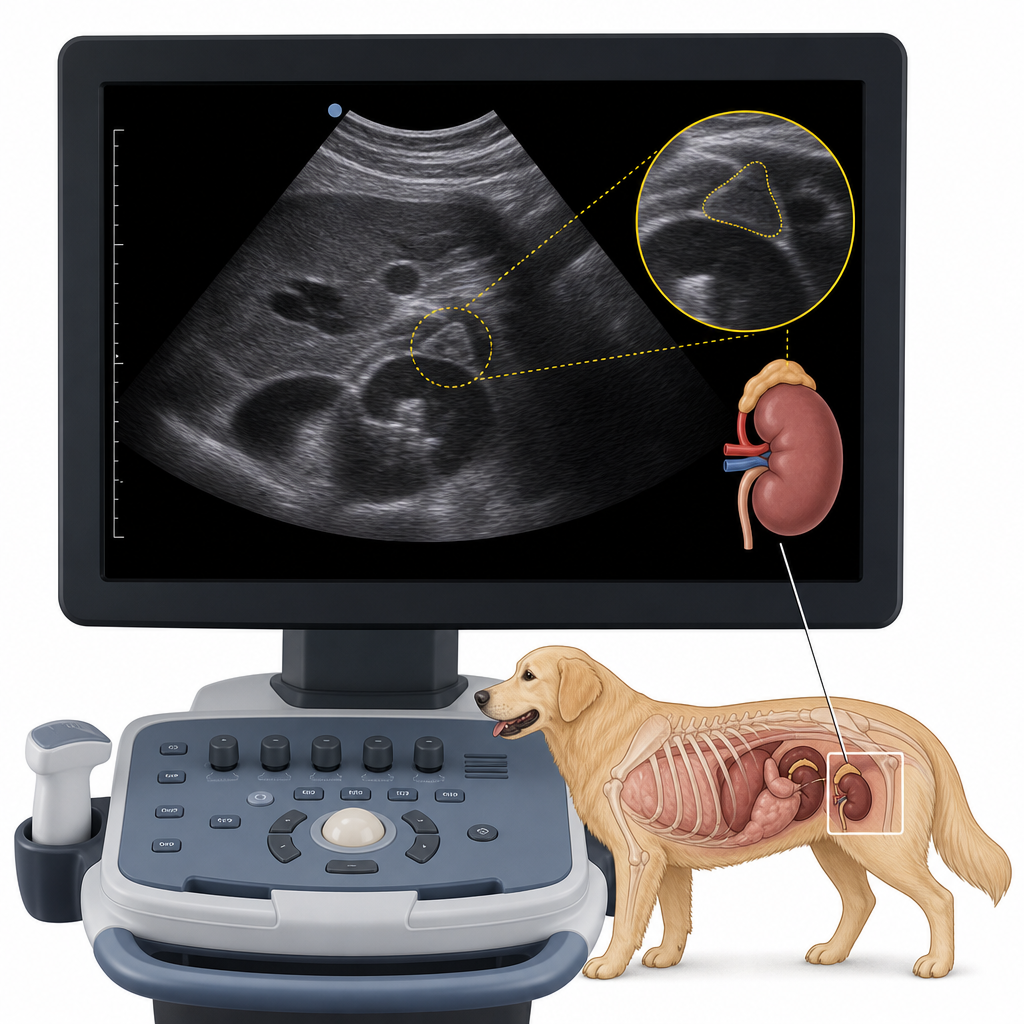
An abdominal ultrasound is a key diagnostic tool used to identify masses on the adrenal glands.
Treatment options
Treatment for primary hyperaldosteronism depends on whether the tumor has spread and the overall health of your pet.
Surgical Therapy
Surgery to remove the affected adrenal gland (adrenalectomy) is the primary treatment of choice for localized tumors. If the tumor is malignant but has not spread to other organs or invaded major blood vessels, surgical removal can offer the best chance at a long-term cure. However, adrenal surgery is highly complex and carries significant risks because the adrenal glands sit directly next to major blood vessels.
If the mass is small, benign, and not causing active hormonal symptoms, surgery may not be necessary. Your vet will weigh the risks of surgery against the potential benefits based on the specific characteristics of the adrenal mass.
Medical Management and Supportive Care
If surgery is not an option—either because the tumor has already spread, has invaded critical blood vessels, or because the pet has other health conditions that make anesthesia too risky—medical management is used to control the symptoms.
Because the structured veterinary record lists no specific drug treatments, medical therapy is tailored generically to address the two primary life-threatening complications of the disease: potassium depletion and high blood pressure. Your vet will focus on:
- Potassium supplementation: Administered orally or intravenously to raise blood potassium levels back into a safe range, which helps restore muscle strength and energy.
- Blood pressure medications: Used to reduce systemic hypertension and protect target organs like the eyes and kidneys from damage.
Prognosis
Long-term prognosis data in dogs and cats with primary hyperaldosteronism is limited in current veterinary literature. The outcome for an individual pet depends heavily on whether the underlying adrenal mass is benign or malignant, whether it has spread, and whether surgical removal is successful.
For pets with benign tumors that undergo successful surgical removal, the prognosis can be excellent, often resulting in a complete resolution of symptoms. For pets managed medically, the prognosis is more guarded and requires lifelong monitoring of blood pressure and electrolyte levels to ensure they remain stable. Your vet will work closely with you to establish a monitoring schedule tailored to your pet's needs.
Prevention
Because primary hyperaldosteronism is caused by spontaneous adrenal tumors, there are no known prevention methods. It cannot be avoided through diet, lifestyle changes, or vaccines.
However, early detection is your best tool. Including routine blood chemistry profiles and blood pressure checks in your pet's annual or bi-annual senior wellness exams can help catch electrolyte imbalances and hypertension before they cause severe, irreversible damage.
When to call your vet
Primary hyperaldosteronism can lead to acute, life-threatening crises. You should contact your veterinarian immediately if you notice any of the following warning signs:
- Profound, sudden muscle weakness (such as your cat being unable to lift its head, or your dog being unable to stand).
- Sudden onset of blindness, dilated pupils that do not shrink in bright light, or blood visible inside the eye (signs of severe high blood pressure).
- Extreme lethargy, depression, or collapse.
If your pet exhibits sudden collapse, severe weakness, or sudden vision loss, this is an emergency. Contact your veterinarian or nearest emergency animal hospital immediately.
For specific breeds
While primary hyperaldosteronism is an uncommon disease overall, owners of Doberman Pinschers should be particularly vigilant. Because this breed has a documented predisposition to developing the condition, regular senior wellness screening—including routine blood chemistry panels to check potassium levels and blood pressure measurements—is highly recommended starting around seven years of age.
Sources
- Internal Medicine, 5th Edition, page 892.
- 2018 ACVIM Guidelines for the identification, evaluation, and management of systemic hypertension in dogs and cats.
My highlights & notes
Signs & symptoms
Breeds at higher risk
How it is diagnosed
- Abdominal Ultrasound
- Serum and urine aldosterone concentrations
- Serum Biochemistry
- Systemic blood pressure measurement
Frequently asked questions
What is Hyperaldosteronism?
Primary hyperaldosteronism, or Conn's syndrome, is an uncommon endocrine disorder in dogs and cats caused by an adrenal tumor that overproduces aldosterone. This leads to severe potassium depletion and high blood pressure, resulting in weakness and lethargy.
What are the symptoms of Hyperaldosteronism?
Hypokalemia、Hypernatremia、Lethargy、Systemic hypertension、Weakness (low energy, no strength)
How is Hyperaldosteronism diagnosed?
Abdominal Ultrasound、Serum and urine aldosterone concentrations、Serum Biochemistry、Systemic blood pressure measurement
Sources
- Internal Medicine 5th · p. 892
- 2018 ACVIM Guidelines for the identification, evaluation, and management of systemic hypertension in dogs and cats
- Internal Medicine 5th · p. 892
This article is for general education and is not a substitute for professional veterinary advice. If your pet is unwell, please consult a veterinarian.
Worried about your pet?
Peqaboo’s AI helps you track symptoms, understand lab reports, and know when to see a vet.
Get the Peqaboo app