

Shell Rot
Ulcerative shell disease
Also known as: Ulcerative shell disease, Septicemic cutaneous ulcerative disease, SCUD, Shell necrosis
In short
Shell rot, or ulcerative shell disease, is a common infectious degradation of a turtle's shell caused by bacteria or fungi. Often triggered by poor water quality, trauma, or improper husbandry, it requires prompt veterinary care to prevent deep tissue infection or life-threatening systemic illness.
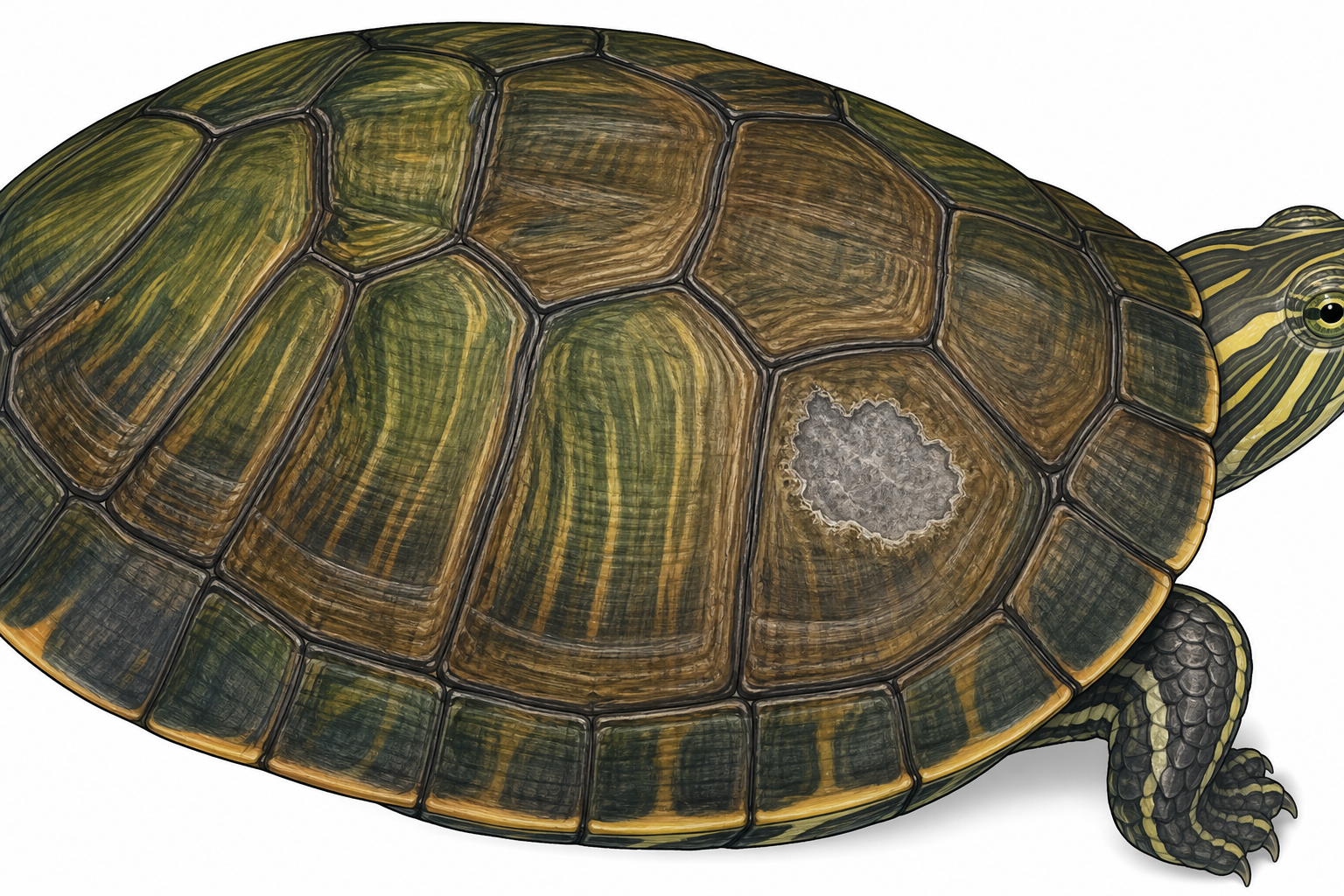
TL;DR. Shell rot is a common bacterial or fungal infection of a turtle's shell that, if caught early, can be successfully treated with veterinary debridement, topical medications, and husbandry corrections.
Early detection of shell erosion is critical to preventing deep tissue infection.
What is it?
To understand shell rot, it is first necessary to understand that a turtle's shell is not an inert piece of armor. It is a living, dynamic structure. The shell is composed of two main parts: the carapace (the curved top shell) and the plastron (the flat bottom shell). Underneath the outer layer of keratinized plates—known as scutes—lies living bone, which is fused to the turtle's ribcage and spine. This bone is highly vascularized, meaning it contains blood vessels and nerves.
Shell rot, scientifically known as ulcerative shell disease, is an infectious degradation of these shell layers. It occurs when pathogens, typically bacteria or fungi, penetrate the protective outer scutes and begin digesting the underlying tissue. If left untreated, the infection can eat through the keratin and invade the bone, a condition known as osteomyelitis.
In severe cases, the infection can enter the turtle's bloodstream, leading to a life-threatening systemic condition called Septicemic Cutaneous Ulcerative Disease (SCUD). Because the shell is so closely integrated with the turtle's internal skeletal and circulatory systems, what begins as a superficial blemish can quickly escalate into a critical systemic emergency. Owners must treat any sign of shell degradation as a serious medical concern.
Causes & risk factors
Shell rot is rarely a primary disease. Instead, it is almost always secondary to environmental stressors, poor husbandry, or physical trauma. Healthy, well-maintained turtles have robust immune systems and intact shells that naturally resist pathogens. However, several factors can compromise this natural defense system:
- Physical Trauma: Scratches from sharp tank decorations, bites from tankmates, or accidental drops can create micro-fractures or scrapes in the scutes. These openings serve as entry points for opportunistic environmental bacteria and fungi.
- Poor Water Quality: Aquatic turtles produce a significant amount of waste. Without robust filtration and regular water changes, harmful bacteria and fungi multiply rapidly in the enclosure, constantly exposing the shell to high pathogen loads.
- Inadequate Basking and UVB: Turtles must be able to exit the water completely to dry their shells. A proper basking area must have both a heat source and high-quality UVB lighting. The heat dries the shell, preventing fungal growth, while the UVB light is critical for vitamin D3 synthesis and calcium metabolism, which keeps the shell bone strong. If a turtle cannot dry off completely, its shell softens, making it highly susceptible to infection.
- Nutritional Deficiencies: A diet lacking in essential vitamins and minerals, particularly calcium and vitamin A, weakens the structural integrity of the scutes and compromises the immune system.
There are no specific breed or species predispositions recorded for shell rot; it can affect any species of aquatic, semi-aquatic, or terrestrial turtle and tortoise when environmental conditions are suboptimal.
Signs to watch for
Identifying shell rot early is the key to an excellent prognosis. You should inspect your turtle's carapace and plastron weekly during routine handling. Watch for the following clinical signs:
- Shell pitting or erosion (Cardinal sign): Small divots, craters, or irregular wear on the surface of the scutes.
- Soft spots on the shell (Common sign): Areas of the shell that yield or feel spongy when gently pressed.
- Discoloration of scutes (Common sign): White, grey, yellow, or reddish-brown patches on the shell that do not wash off.
- Foul odor from the shell (Common sign): A distinct, unpleasant smell of decay or rot emanating from the lesions.
- Purulent discharge from lesions (Occasional sign): Pus or fluid oozing from the pits or under loose scutes.
- Anorexia (Occasional sign): A sudden loss of appetite or refusal to eat.
- Lethargy (Occasional sign): Decreased activity, reluctance to swim, or spending excessive time hauled out on the basking platform without moving.

Pitting and discoloration on the plastron (bottom shell) are common signs of active shell rot.
How vets diagnose it
Your vet will begin with a thorough physical examination, palpating the entire shell to assess the depth and extent of the soft spots or erosions. They will also evaluate your turtle's overall body condition and hydration status. Because shell rot can be caused by a wide variety of bacterial or fungal species, specific diagnostic tests are required to target the treatment effectively.
- Bacterial and Fungal Culture and Sensitivity (Gold Standard): Your vet will scrape a small sample of debris or fluid from the deep margin of the lesion and send it to a laboratory. This test identifies the exact species of bacteria or fungi causing the infection and determines which specific antimicrobial drugs will successfully eliminate it. This prevents wasting time on ineffective treatments.
- Shell Radiographs (X-rays): X-rays are crucial for assessing whether the infection has penetrated beneath the keratin scutes into the underlying bone. If the radiograph reveals bone loss or deep structural changes, the treatment plan must be adjusted to address osteomyelitis.
- Cytology and Gram Staining: By taking a swab of the lesion and staining it for microscopic evaluation in the clinic, your vet can quickly determine if they are dealing with Gram-positive bacteria, Gram-negative bacteria, or fungal hyphae. This allows them to start an appropriate broad-spectrum therapy while waiting for the culture results.
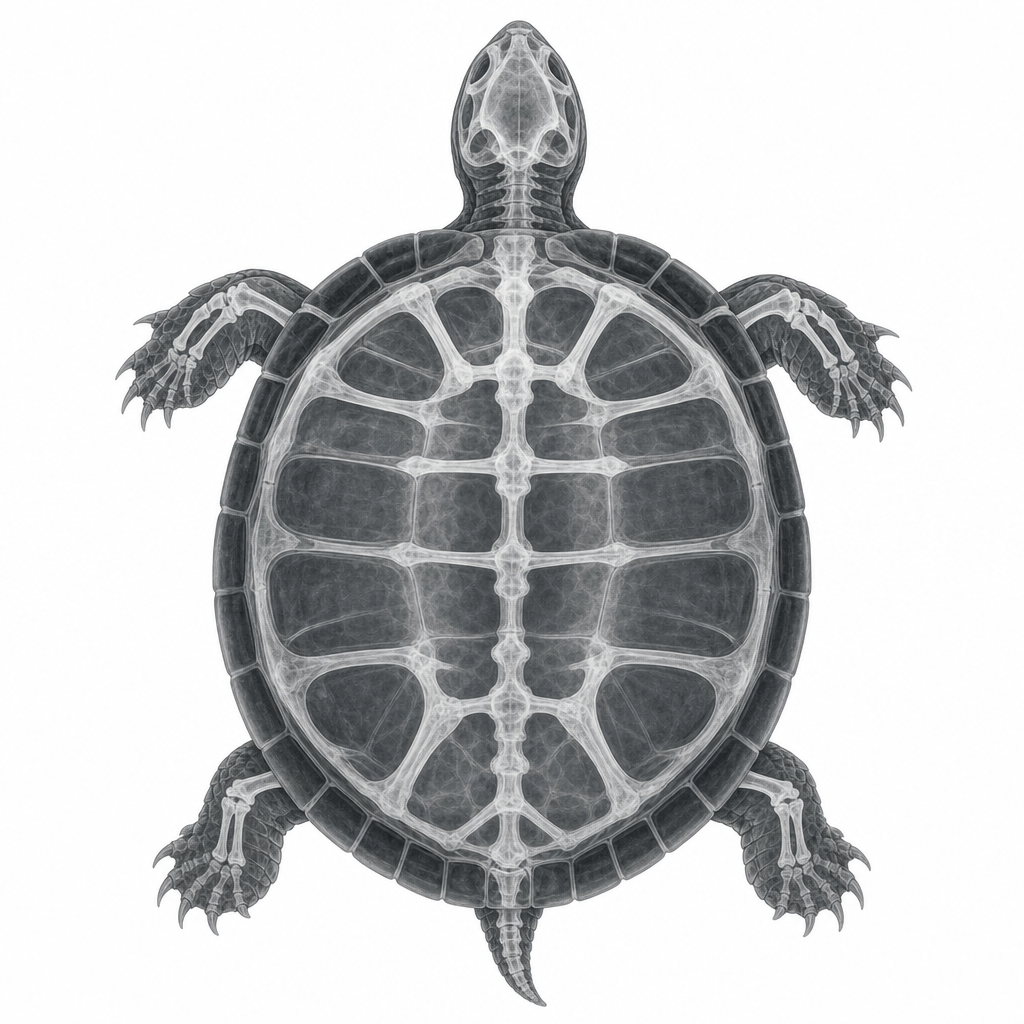
Radiographs allow veterinarians to determine if the infection has penetrated the underlying bone.
Treatment options
Treating shell rot requires a multi-step approach that addresses both the local infection and the underlying environmental causes.
Local Debridement
Before any medication can be applied, your vet must perform debridement. This process involves carefully scraping away the dead, infected, and necrotic tissue from the shell lesions until healthy, bleeding tissue is reached. This is often performed under sedation or local anesthesia, as the living bone beneath the scutes is sensitive. Debridement removes the physical barrier of dead tissue, allowing topical medications to contact the active infection directly.
First-Line Topical Therapy
For superficial infections without bone involvement, topical therapy is highly effective.
- Silver Sulfadiazine: This is a highly effective topical antimicrobial and antibacterial cream. It is applied directly to the debrided lesions. To ensure the medication works, the turtle must undergo "dry-docking." This means keeping the aquatic turtle out of the water in a warm, dry enclosure for several hours after application to allow the cream to absorb completely without being washed away.
Second-Line Systemic Therapy
If the infection has penetrated the bone or if the turtle shows signs of systemic illness (such as lethargy or anorexia), systemic antibiotics are required.
- Ceftazidime: A third-generation cephalosporin antibiotic. It is highly effective against many Gram-negative bacteria commonly found in aquatic environments. It is typically administered via injection, as oral medications are poorly absorbed in sick reptiles.
- Enrofloxacin: A fluoroquinolone antibiotic used to treat severe, resistant bacterial infections. Like ceftazidime, this is usually administered via injection under veterinary supervision.
Prognosis
The prognosis for shell rot is excellent if the disease is detected early, when the infection is still localized to the outer keratin layers. With thorough veterinary debridement, consistent topical therapy, and immediate correction of husbandry errors, most turtles make a full recovery.
However, the prognosis becomes guarded if the infection has progressed to osteomyelitis (bone infection) or systemic septicemia. These advanced cases require aggressive, long-term systemic antibiotic therapy, supportive care (such as fluid therapy and nutritional support), and potentially surgical management of the shell.
Owners should note that shell healing is an incredibly slow process in reptiles. Because of their slow metabolic rate, it can take several months to a year for new keratin to grow over and close the debrided craters, even after the active infection has been completely resolved.
Prevention
Shell rot is highly preventable through proper husbandry and environmental management.
- Maintain Pristine Water Quality: Use a high-quality canister filter rated for double your tank's volume. Perform weekly partial water changes and regularly test the water for ammonia, nitrites, and nitrates.
- Provide a Proper Basking Area: Ensure your turtle has a basking platform that allows its entire body, including the plastron, to dry out completely. The basking area must feature a heat lamp (maintaining a species-appropriate temperature gradient) and a high-output UVB bulb. Replace UVB bulbs every 6 to 12 months, as their UVB output decays even if the light remains visible.
- Eliminate Environmental Hazards: Remove sharp rocks, rough plastic decorations, or tight crevices where your turtle could scratch its shell or become trapped.
- Feed a Balanced Diet: Provide a high-quality commercial turtle pellet supplemented with appropriate leafy greens and calcium supplements to maintain shell strength.
- Quarantine New Additions: Always quarantine new turtles for at least 90 days before introducing them to an established enclosure to prevent the spread of infectious pathogens.
When to call your vet
If you notice any discoloration, pitting, or unusual spots on your turtle's shell, schedule a veterinary appointment. While mild shell rot is not an immediate emergency, it will steadily progress without intervention.
You must seek emergency veterinary care immediately if your turtle exhibits any of the following signs:
- Extreme lethargy or unresponsive behavior
- Complete refusal to eat for multiple days
- Foul-smelling, purulent discharge (pus) oozing from the shell
- Soft spots on the shell that yield easily to gentle finger pressure, indicating deep bone involvement
- Reddish streaks or flushing on the skin or plastron, which are classic signs of systemic septicemia (blood poisoning)
Sources
Because specific textbook citations for this condition are limited in the provided record, the clinical guidelines outlined here are derived from standard veterinary herpetological protocols and established clinical practices for reptile infectious diseases.
My highlights & notes
Signs & symptoms
How it is diagnosed
- Bacterial and fungal culture and sensitivityGold standard
- Cytology and Gram staining
- Shell radiographs
Treatment approaches
Treatment must be prescribed by a licensed veterinarian based on your pet. Specific drug doses are intentionally not shown here.
Frequently asked questions
What is Shell Rot?
Shell rot, or ulcerative shell disease, is a common infectious degradation of a turtle's shell caused by bacteria or fungi. Often triggered by poor water quality, trauma, or improper husbandry, it requires prompt veterinary care to prevent deep tissue infection or life-threatening systemic illness.
What are the symptoms of Shell Rot?
Shell pitting or erosion、Discoloration of scutes、Foul odor from the shell、Soft spots on the shell、Loss of appetite、Lethargy、Purulent discharge from lesions
How is Shell Rot diagnosed?
Bacterial and fungal culture and sensitivity、Cytology and Gram staining、Shell radiographs
How is Shell Rot treated?
Treatment must be prescribed by a licensed veterinarian based on your pet. Specific drug doses are intentionally not shown here.
This article is for general education and is not a substitute for professional veterinary advice. If your pet is unwell, please consult a veterinarian.
Worried about your pet?
Peqaboo’s AI helps you track symptoms, understand lab reports, and know when to see a vet.
Get the Peqaboo app