

Hyperuricosuria
In short
Hyperuricosuria is an inherited metabolic disorder in dogs that causes excessive uric acid to accumulate in the urine, predisposing them to painful bladder and kidney stones. Learn about the symptoms, genetic causes, diagnosis, and lifelong management strategies.
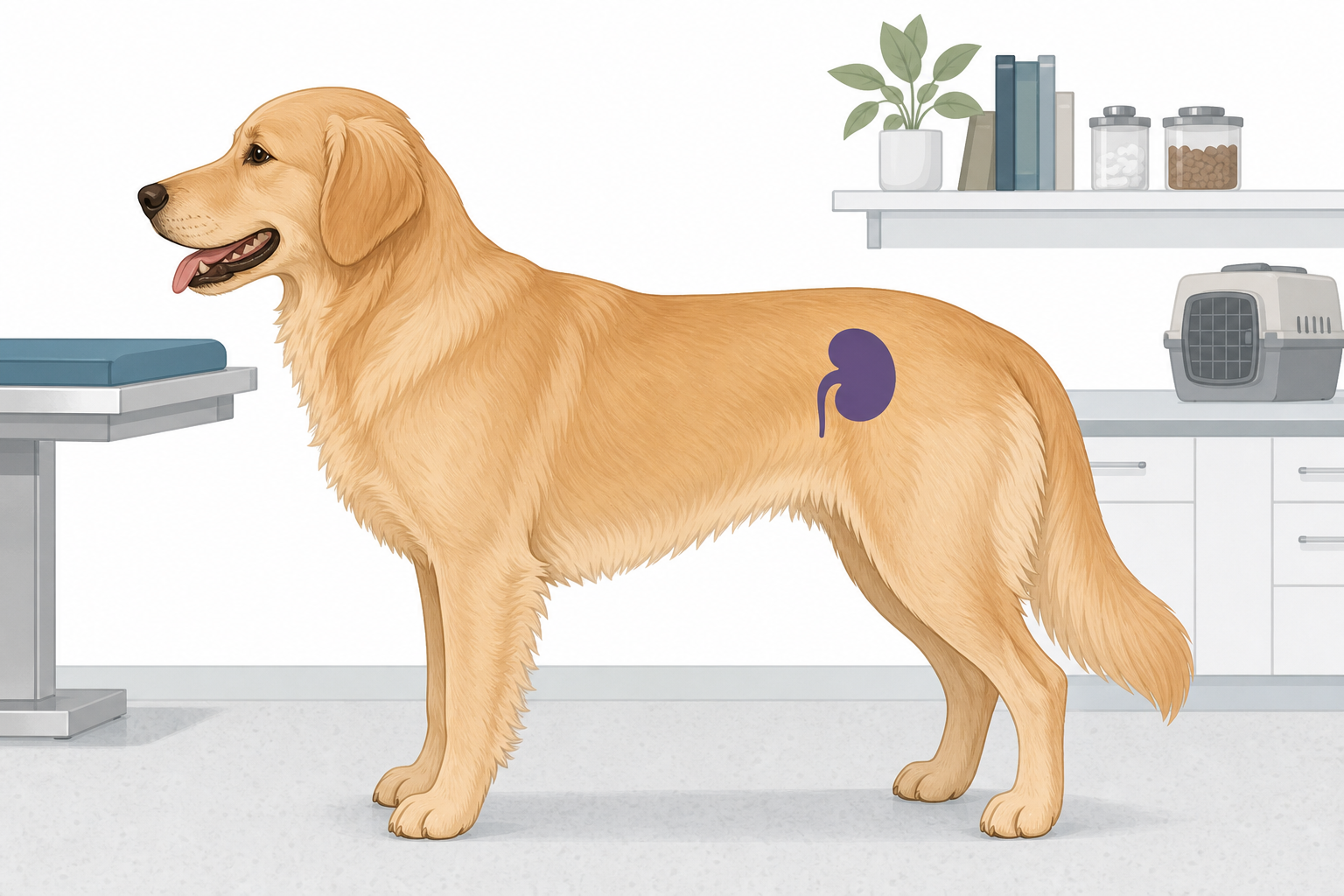
TL;DR. Hyperuricosuria is an inherited metabolic disorder in dogs that causes excessive uric acid to build up in the urine, significantly increasing the risk of painful and potentially life-threatening bladder or kidney stones.
Dalmatians are highly predisposed to hyperuricosuria due to a historical genetic link.
What is it?
To understand hyperuricosuria, it is helpful to look at how a dog's body processes metabolic waste. When dogs digest food, their bodies break down natural compounds called purines, which are found in many proteins. In most dogs, this breakdown process converts purines into uric acid, which is then further converted by a liver enzyme called uricase into a highly soluble substance called allantoin. Allantoin dissolves easily in water and is safely excreted in the urine without causing issues.
However, dogs with hyperuricosuria have a genetic defect that disrupts this pathway. Due to a mutation in a specific transport protein known as SLC2A9, uric acid cannot be efficiently transported into liver cells to be converted into allantoin. Additionally, the kidneys cannot reabsorb the uric acid that passes through them. As a result, massive amounts of uric acid are dumped directly into the dog's urine.
Because uric acid is not highly soluble, it easily bonds with ammonium in the urine to form ammonium biurate crystals. Over time, these microscopic crystals can clump together to form solid stones, known as uroliths, anywhere within the urinary tract. These stones can cause severe pain, inflammation, bleeding, and, most dangerously, complete urinary blockages.
Causes & risk factors
Hyperuricosuria is a strictly hereditary condition. It is caused by a mutation in the SLC2A9 gene, which encodes a membrane transporter protein responsible for moving uric acid. This mutation is inherited in an autosomal recessive pattern. This means that a dog must inherit two copies of the mutated gene—one from each parent—to develop the condition. Dogs that inherit only one copy of the mutated gene are considered "carriers"; they do not show clinical signs of the disease or excrete excess uric acid, but they can pass the mutation on to their offspring.
While any dog carrying two copies of the mutation will excrete high levels of uric acid, not every affected dog will develop clinical bladder or kidney stones. The formation of stones depends on several secondary risk factors, including urine concentration, urine pH, diet, and gender.
Gender plays a critical role in the clinical severity of the disease. As noted in a leading veterinary textbook on cytology:
"Some canine breeds (e. g. , Dalmatian, English Bulldog, Black Russian Terrier, Weimaraner, and others) have an autosomal recessive trait that causes hyperuricosuria, which is a risk factor for urate urolithiasis. 10 Males are more likely than females to develop urate urolithiasis, whic"
This gender disparity is due to canine anatomy. Male dogs have a long, narrow urethra that must pass through a rigid bone in the penis (the os penis). Even very small stones can easily become lodged in this narrow passage. Female dogs have a shorter, wider, and more distensible urethra, allowing them to pass small stones more easily, though they are still susceptible to bladder irritation and chronic urinary tract infections.
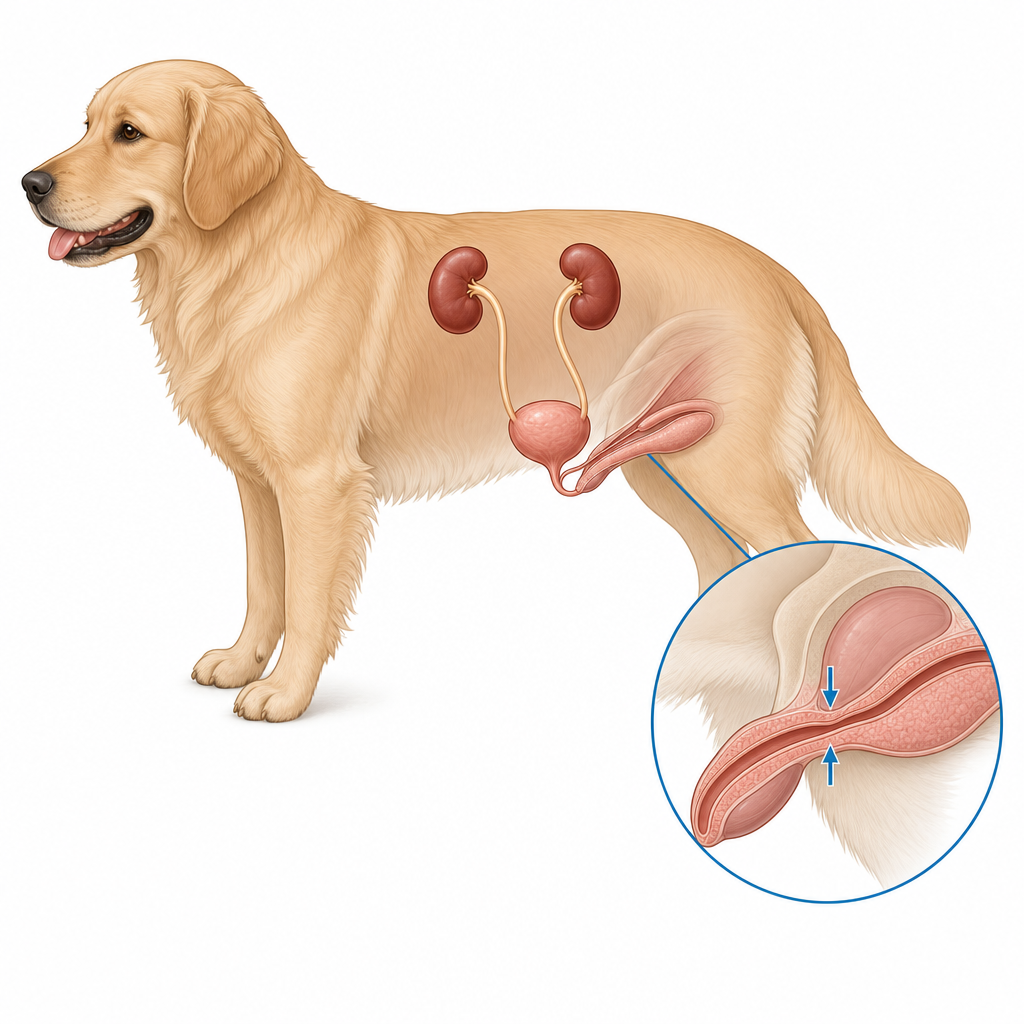
The narrow urethra of male dogs makes them highly susceptible to life-threatening obstructions from urate stones.
Signs to watch for
Many dogs with hyperuricosuria remain asymptomatic for years, with the only sign being microscopic crystals in their urine. However, if crystals begin to coalesce into stones, clinical signs will emerge. Owners must closely monitor predisposed breeds for the following signs:
- Ammonium biurate crystalluria (Common): The presence of microscopic, brown, spherical crystals with irregular protrusions (often described as "thorny apples") in the urine. This is typically detected during a routine urinalysis and does not cause visible symptoms on its own, but it serves as a critical warning sign that stones may form.
- Urate urolithiasis (Occasional): The formation of actual stones within the bladder, kidneys, or urethra. This leads to several noticeable symptoms:
- Hematuria (Blood in the urine): The urine may appear pink, red, or tea-colored due to the stones rubbing against and irritating the delicate lining of the bladder and urethra.
- Dysuria or Stranguria (Straining to urinate): Your dog may adopt a urinating posture for extended periods, whimpering or showing signs of discomfort while trying to pass urine.
- Pollakiuria (Frequent urination): The dog may ask to go outside constantly, passing only a few drops of urine each time because the bladder feels perpetually full or irritated.
- Urinary accidents: Previously house-trained dogs may suddenly begin urinating indoors due to an inability to control the sudden, intense urges caused by bladder inflammation.
- Urinary Obstruction (EMERGENCY): If a stone becomes lodged in the urethra, it can completely block the flow of urine. This is a life-threatening emergency. Signs include:
- Repeated, forceful straining with absolutely no urine produced.
- Frequent licking of the genital area.
- Severe abdominal pain (the dog may stand with a hunched back or cry when touched).
- Lethargy, weakness, vomiting, and loss of appetite (caused by the buildup of toxic waste products in the bloodstream).

Straining to urinate is a key clinical sign of urinary stones in predisposed breeds.
How vets diagnose it
If your dog belongs to a predisposed breed or is showing signs of urinary distress, your veterinarian will perform a systematic diagnostic workup.
- DNA testing for SLC2A9 mutation [GOLD]: This is the definitive, gold-standard test for hyperuricosuria. It requires a simple, non-invasive cheek swab or a small blood sample. The test determines whether your dog is clear (has two normal genes), a carrier (has one mutated gene), or affected (has two mutated genes). This test is highly recommended for all breeding dogs of predisposed breeds and can be performed at any age.
- Urinalysis with sediment examination: Your vet will collect a fresh urine sample to examine under a microscope. They will look for the characteristic "thorny apple" ammonium biurate crystals. It is crucial that the urine is analyzed fresh, as cooling can cause crystals to precipitate artificially, leading to a false-positive reading. The vet will also check the urine pH (urate stones thrive in acidic urine) and look for signs of secondary bacterial infections or blood.
- Abdominal ultrasonography: Unlike some other types of bladder stones (such as struvite or calcium oxalate), pure urate stones are radiolucent. This means they do not absorb X-rays well and are often completely invisible on standard radiographs. Abdominal ultrasound is the preferred imaging modality because it uses sound waves to easily detect stones of almost any composition within the bladder, kidneys, or urethra, appearing as bright white structures that cast distinct shadows.
- 24-hour urine uric acid excretion: In advanced clinical or research settings, your vet may recommend collecting all urine produced by your dog over a 24-hour period to measure the exact quantity of uric acid excreted. This helps quantify the severity of the metabolic defect and monitor the effectiveness of treatment.
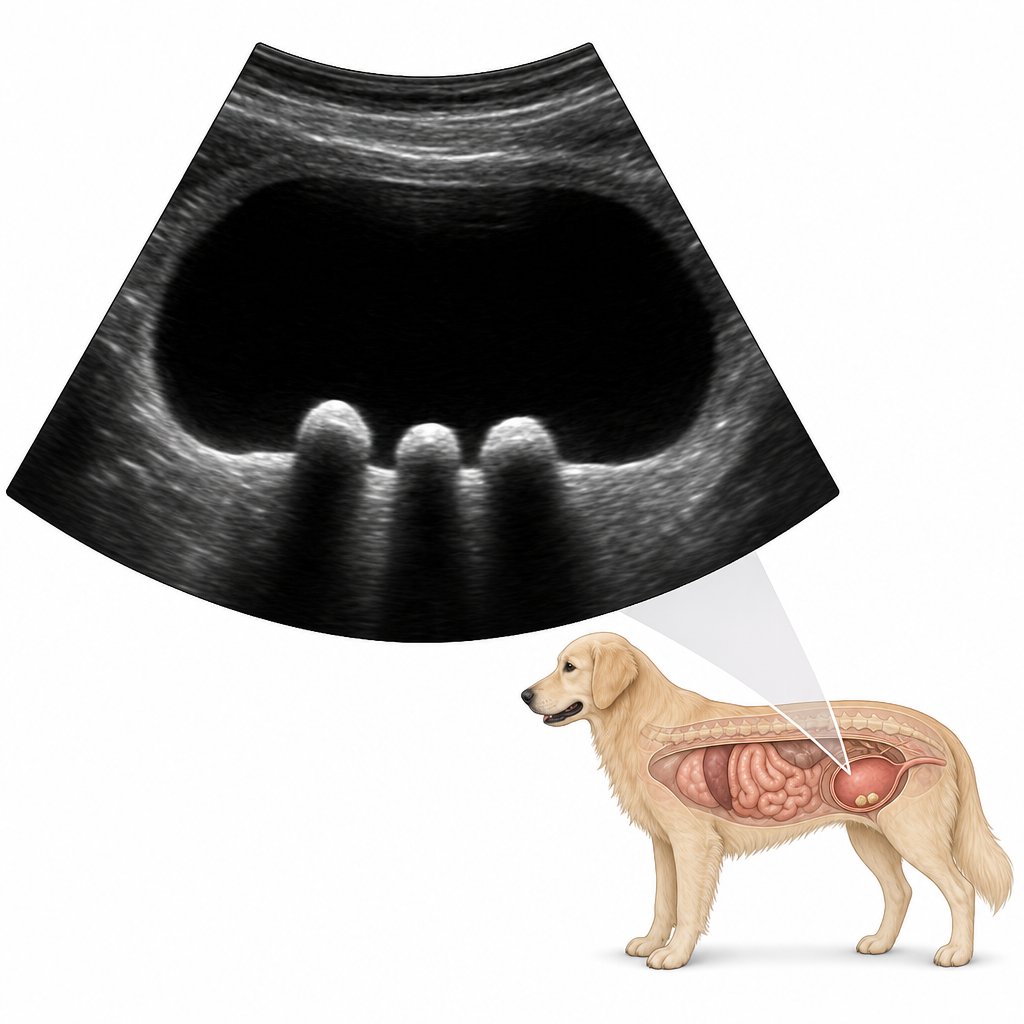
Ultrasound is the preferred imaging method to detect radiolucent urate stones.
Treatment options
Managing hyperuricosuria requires a multi-faceted approach aimed at reducing the concentration of uric acid in the urine, increasing urine solubility, and, if necessary, dissolving existing stones.
-
Dietary Management (First-Line Therapy): The cornerstone of managing hyperuricosuria is a strict, lifelong diet low in purines. Traditional dog foods high in organ meats (such as liver or kidney), game meats, and certain fish must be strictly avoided. Instead, vets prescribe specialized veterinary diets formulated with alternative protein sources (like egg, dairy, or soy) that contain very low levels of purines. Additionally, maximizing water intake is vital. Your vet will recommend feeding wet food, adding warm water to kibble, or using pet fountains to encourage drinking. Dilute urine lowers the concentration of uric acid, making crystal formation much less likely.
-
Potassium citrate (Urinary Alkalinizer) [Second-Line Therapy]: Ammonium urate crystals are highly sensitive to urine pH. They form readily in acidic urine but dissolve much more easily in alkaline environments. As noted in a leading veterinary internal medicine reference:
"Ammonium urate is more soluble in alkaline urine, and these diets described should produce a urine pH higher than 7. 0. Potassium citrate can be added to help alkalinize the urine in patients with recurrent urate uroliths if the desired urinary pH is not achieved with dietary therapy alone. As with any animal that forms uroliths, the diet should be high in moisture. If dietary strategies are not s"
The goal of dietary therapy is to maintain a urine pH above 7.0. If diet alone does not achieve this, your vet may prescribe potassium citrate, an oral supplement that safely alkalinizes the urine.
-
Allopurinol (Xanthine Oxidase Inhibitor) [Second-Line Therapy]: For dogs with recurrent stones or those undergoing medical dissolution of existing stones, your vet may prescribe allopurinol. This medication works by blocking the enzyme xanthine oxidase, which is responsible for converting purines into uric acid. By halting this pathway, the amount of uric acid in the urine drops significantly. However, allopurinol must be used with extreme caution. If a dog on allopurinol is not fed a strict low-purine diet, the precursor molecule (xanthine) will build up in the urine, leading to the formation of xanthine stones, which cannot be dissolved medically and require surgery.
-
Surgical and Minimally Invasive Interventions: If a dog has a urinary blockage or if stones are too large to dissolve medically, physical removal is required. This can range from emergency catheterization to push the stone back into the bladder, to surgical removal via a cystotomy, or advanced minimally invasive techniques like laser lithotripsy (using lasers to shatter the stones) or voiding urohydropropulsion (flushing small stones out under sedation).
Prognosis
The long-term prognosis for dogs with hyperuricosuria is generally good, provided owners commit to lifelong dietary and medical management. While the genetic defect itself cannot be cured, the clinical consequences (stone formation and urinary blockages) are highly preventable.
However, owners must remain vigilant. Recurrence of urate stones is very common if preventative measures are relaxed. Even a brief return to standard, high-purine dog food or a drop in water consumption can trigger rapid crystal precipitation and stone formation. Regular veterinary checkups, including routine urinalysis and ultrasound monitoring, are essential to catch crystal formation early before they become dangerous stones.
Prevention
Because hyperuricosuria is an inherited genetic disease, it cannot be prevented through lifestyle changes if a dog already carries two copies of the mutated gene. However, the disease can be entirely prevented in future generations through responsible breeding practices.
DNA screening is the most powerful tool available. Breeders should test all parent dogs before mating. Because the condition is autosomal recessive, carriers (dogs with one copy of the mutation) do not suffer from the disease themselves and can be safely bred to clear dogs (dogs with no copies of the mutation), as this pairing will never produce affected puppies. Breeding two carriers, or breeding an affected dog to a carrier, should be strictly avoided to prevent passing the active disease to future litters.
For dogs already diagnosed with hyperuricosuria who have not yet developed stones, proactive prevention is highly effective. Starting a low-purine diet early and ensuring excellent hydration can prevent crystals from ever forming, allowing the dog to live a normal, stone-free life.
When to call your vet
If your dog has been diagnosed with hyperuricosuria, you must monitor their bathroom habits daily. You should contact your veterinarian if you notice any changes in their urination, such as increased frequency, minor straining, or a pinkish tint to the urine.
You must seek emergency veterinary care immediately if your dog is straining to urinate and producing no urine, appears to be in severe pain, is vomiting, or becomes extremely lethargic. A complete urinary blockage is a life-threatening emergency that can cause acute kidney failure, bladder rupture, and death within 24 to 48 hours.
For specific breeds
The genetic mutation causing hyperuricosuria is highly prevalent in several specific breeds, and understanding these breed-specific nuances can help owners better manage their dog's health.
-
Dalmatians: The Dalmatian is the classic poster breed for hyperuricosuria. As noted in a leading veterinary internal medicine reference:
"All Dalmatians excrete relatively high amounts of uric acid (400-600 mg of uric acid/day as compared with 10-60 mg/ day in non–Dalmatian dogs); however, not all Dalmatians form urate uroliths. Genetic studies have reported that the mode of inheritance is not X-linked, and the prevalence of FIG 46-10 Purine metabolism in animals. Most dogs excrete the soluble product, allantoin, in the urine. Becau"
Due to historical breeding practices that linked the desirable spotted coat pattern with the SLC2A9 mutation, virtually 100% of purebred Dalmatians are homozygous for the mutation and excrete high levels of uric acid. To combat this, dedicated geneticists and breeders initiated the "LUA (Low Uric Acid) Dalmatian" project, backcrossing Dalmatians with English Pointers to reintroduce the normal SLC2A9 gene. Today, LUA Dalmatians are increasingly available and do not suffer from hyperuricosuria.
-
English Bulldogs: This breed has a high prevalence of the SLC2A9 mutation. Because English Bulldogs are already prone to other anatomical and urinary issues, hyperuricosuria can complicate their health significantly. Male Bulldogs are at a particularly high risk for urethral obstruction.
-
Black Russian Terriers: This large, robust breed has a well-documented genetic predisposition to hyperuricosuria. Because of their size, managing their diet and ensuring adequate water intake can require more coordination, but it remains highly effective.
-
Weimaraners: Weimaraners carry the autosomal recessive mutation at a moderate frequency. Genetic screening is highly recommended for Weimaraners before breeding to prevent passing the trait to offspring.
-
Schnauzers: While less common than in Dalmatians or Bulldogs, Schnauzers have shown a predisposition to hyperuricosuria. Because Schnauzers are also highly prone to other types of urinary stones (such as calcium oxalate and struvite), a definitive diagnosis via DNA testing and stone analysis is crucial to ensure the correct treatment plan is implemented, as diets for different stone types can vary significantly.
Sources
- Small Animal Internal Medicine, 5th Edition, pages 728-729.
- Cowell and Tyler's Diagnostic Cytology and Hematology of the Dog and Cat, 5th Edition, page 416.
My highlights & notes
Signs & symptoms
Breeds at higher risk
How it is diagnosed
- DNA testing for SLC2A9 mutationGold standard
- 24-hour urine uric acid excretion
- Abdominal Ultrasonography
- Urinalysis with sediment examination
Treatment approaches
Treatment must be prescribed by a licensed veterinarian based on your pet. Specific drug doses are intentionally not shown here.
Frequently asked questions
What is Hyperuricosuria?
Hyperuricosuria is an inherited metabolic disorder in dogs that causes excessive uric acid to accumulate in the urine, predisposing them to painful bladder and kidney stones. Learn about the symptoms, genetic causes, diagnosis, and lifelong management strategies.
What are the symptoms of Hyperuricosuria?
Ammonium biurate crystalluria、Urate urolithiasis
How is Hyperuricosuria diagnosed?
DNA testing for SLC2A9 mutation、24-hour urine uric acid excretion、Abdominal Ultrasonography、Urinalysis with sediment examination
How is Hyperuricosuria treated?
Treatment must be prescribed by a licensed veterinarian based on your pet. Specific drug doses are intentionally not shown here.
Sources
- Internal Medicine 5th · p. 728
- Cowell and Tyler s Diagnostic Cytology and Hematology of the Dog and Cat, 5th Edition (VetBooks.ir) · p. 416
- Internal Medicine 5th · p. 729
This article is for general education and is not a substitute for professional veterinary advice. If your pet is unwell, please consult a veterinarian.
Worried about your pet?
Peqaboo’s AI helps you track symptoms, understand lab reports, and know when to see a vet.
Get the Peqaboo app