

Hyperuricosuria
Kurz gesagt
Hyperuricosuria is an inherited metabolic disorder in dogs that causes excessive uric acid to accumulate in the urine, predisposing them to painful bladder and kidney stones. Learn about the symptoms, genetic causes, diagnosis, and lifelong management strategies.
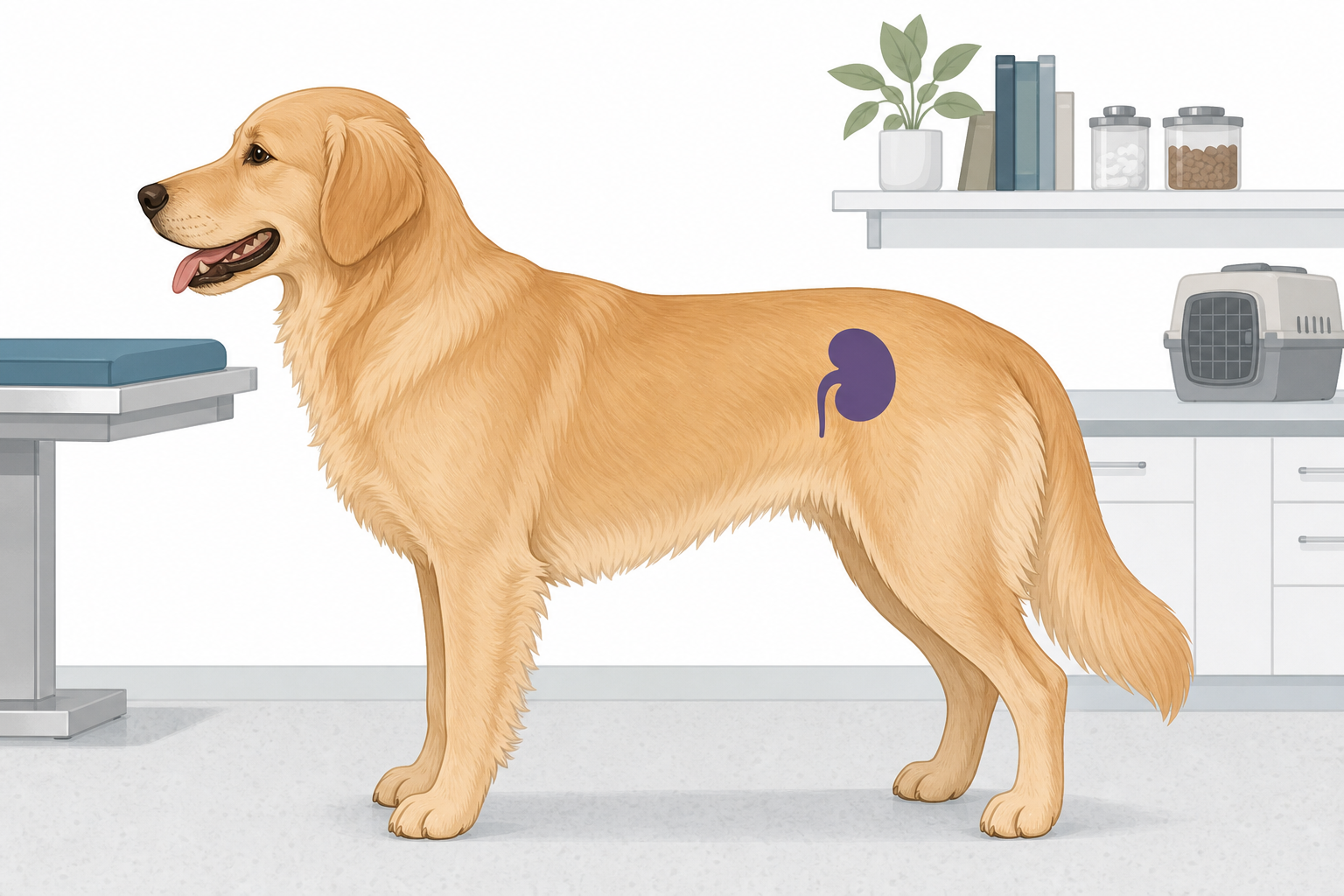
TL;DR. Erbliche Stoffwechselstörung mit überschüssiger Harnsäure im Urin und erhöhtem Risiko für Blasen- oder Nierensteine.
Dalmatians are highly predisposed to hyperuricosuria due to a historical genetic link.
Was ist das?
Hyperuricosuria (HUU) is an inherited defect of uric acid handling (SLC2A9). Uric acid is poorly converted to soluble allantoin and poorly reabsorbed in the kidney, so high urinary uric acid forms ammonium biurate crystals and urate stones that can obstruct the urinary tract.
Ursachen und Risikofaktoren
Autosomal recessive SLC2A9 mutation: two copies required for the metabolic phenotype. Stone risk rises with concentrated acidic urine, diet, and male anatomy (long narrow urethra / os penis). Predisposed breeds include Dalmatian, English Bulldog, Black Russian Terrier, Weimaraner, and others.
Anzeichen
- Ammonium biurate crystalluria ("thorny apple" crystals on sediment)
- Urate urolithiasis: hematuria, dysuria/stranguria, pollakiuria, indoor accidents
- Urinary obstruction (emergency): unproductive straining, genital licking, abdominal pain, vomiting, collapse

Straining to urinate is a key clinical sign of urinary stones in predisposed breeds.
Diagnose
DNA test for SLC2A9 (clear / carrier / affected). Fresh urinalysis for biurate crystals and pH. Abdominal ultrasound preferred because pure urate stones are often radiolucent on plain radiographs. Optional 24-hour urinary uric acid quantification.
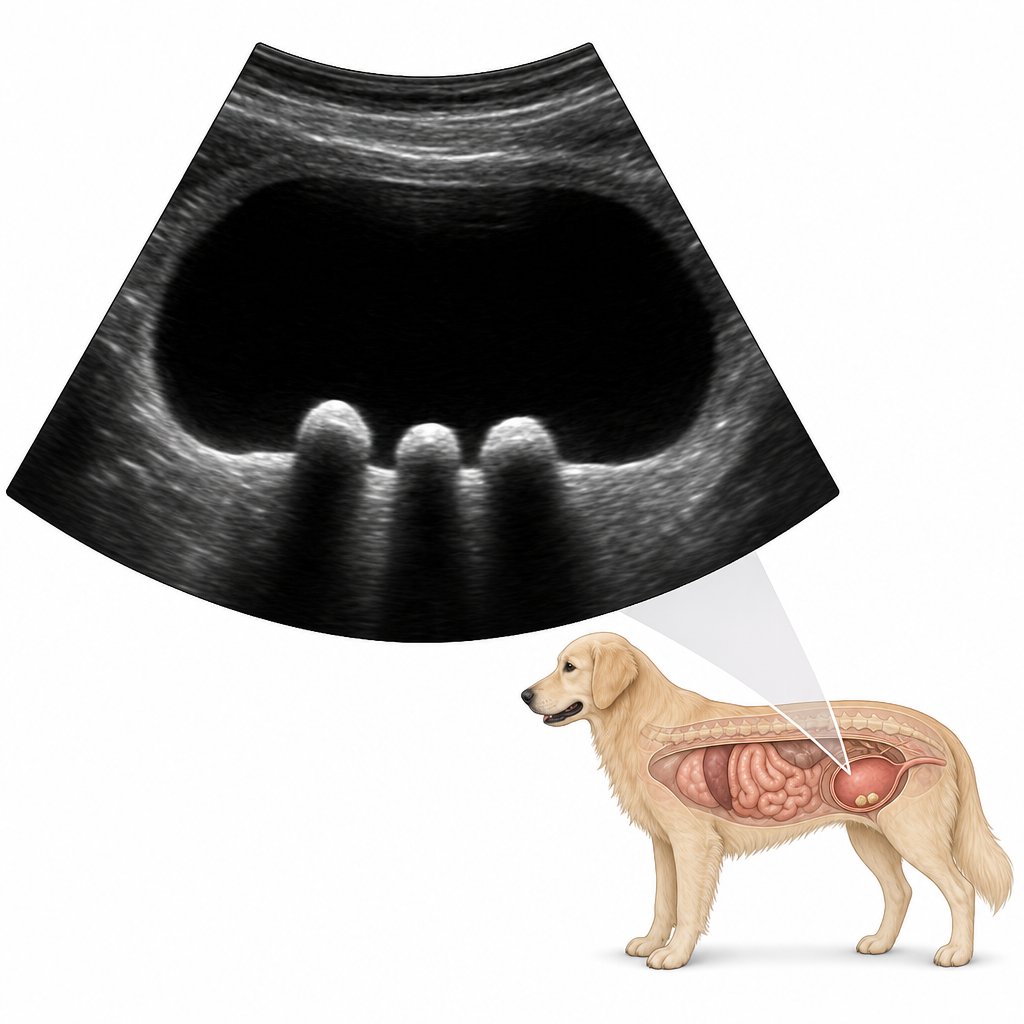
Ultrasound is the preferred imaging method to detect radiolucent urate stones.
Behandlung
Lifelong low-purine, high-moisture diet; promote water intake. Target alkaline urine (often pH >7). Potassium citrate if diet alone fails. Allopurinol only with strict low-purine feeding (risk of xanthine stones). Surgery, lithotripsy, or urohydropropulsion for obstruction or non-dissolvable stones.
Prognose
Good with lifelong diet and monitoring. Stones commonly recur if purine intake rises or hydration falls.
Vorbeugung
DNA screening of breeding stock; avoid carrier x carrier / affected pairings. Early low-purine diet and hydration in affected dogs can prevent clinical stones.
Wann den Tierarzt rufen
Emergency: straining with no urine, severe pain, vomiting, marked lethargy. Complete blockage can cause kidney failure, bladder rupture, and death within 24-48 hours.
Bei bestimmten Rassen
Nearly all purebred Dalmatians historically excreted high uric acid; LUA (low uric acid) lines reintroduce normal SLC2A9. English Bulldogs and Black Russian Terriers also high risk, especially males for obstruction.
Quellen
- Small Animal Internal Medicine, 5th Edition, pages 728-729.
- Cowell and Tyler's Diagnostic Cytology and Hematology of the Dog and Cat, 5th Edition, page 416.
My highlights & notes
Anzeichen & Symptome
Rassen mit höherem Risiko
Diagnose
- DNA testing for SLC2A9 mutationGoldstandard
- 24-hour urine uric acid excretion
- Abdominal Ultrasonography
- Urinalysis with sediment examination
Behandlungsansätze
Behandlungen müssen von einem approbierten Tierarzt verordnet werden. Konkrete Dosierungen werden absichtlich nicht angezeigt.
Häufige Fragen
What is Hyperuricosuria?
Hyperuricosuria is an inherited metabolic disorder in dogs that causes excessive uric acid to accumulate in the urine, predisposing them to painful bladder and kidney stones. Learn about the symptoms, genetic causes, diagnosis, and lifelong management strategies.
What are the symptoms of Hyperuricosuria?
Ammonium biurate crystalluria、Urate urolithiasis
How is Hyperuricosuria diagnosed?
DNA testing for SLC2A9 mutation、24-hour urine uric acid excretion、Abdominal Ultrasonography、Urinalysis with sediment examination
How is Hyperuricosuria treated?
Behandlungen müssen von einem approbierten Tierarzt verordnet werden. Konkrete Dosierungen werden absichtlich nicht angezeigt.
Quellen
- Internal Medicine 5th · p. 728
- Cowell and Tyler s Diagnostic Cytology and Hematology of the Dog and Cat, 5th Edition (VetBooks.ir) · p. 416
- Internal Medicine 5th · p. 729
Dieser Artikel dient der allgemeinen Information und ersetzt keinen tierärztlichen Rat. Bei Krankheit bitte einen Tierarzt aufsuchen.
Sorgen um Ihr Tier?
Peqaboos KI hilft Symptome zu tracken, Laborberichte zu verstehen und zu wissen, wann der Tierarzt nötig ist.
Peqaboo-App laden