

Feather Destructive Behavior
Also known as: Feather Picking, Feather Chewing, Self-Mutilation, Feather Plucking
In short
Feather destructive behavior is a challenging avian condition where birds damage their own plumage or skin due to medical or psychological issues, requiring a comprehensive veterinary workup.
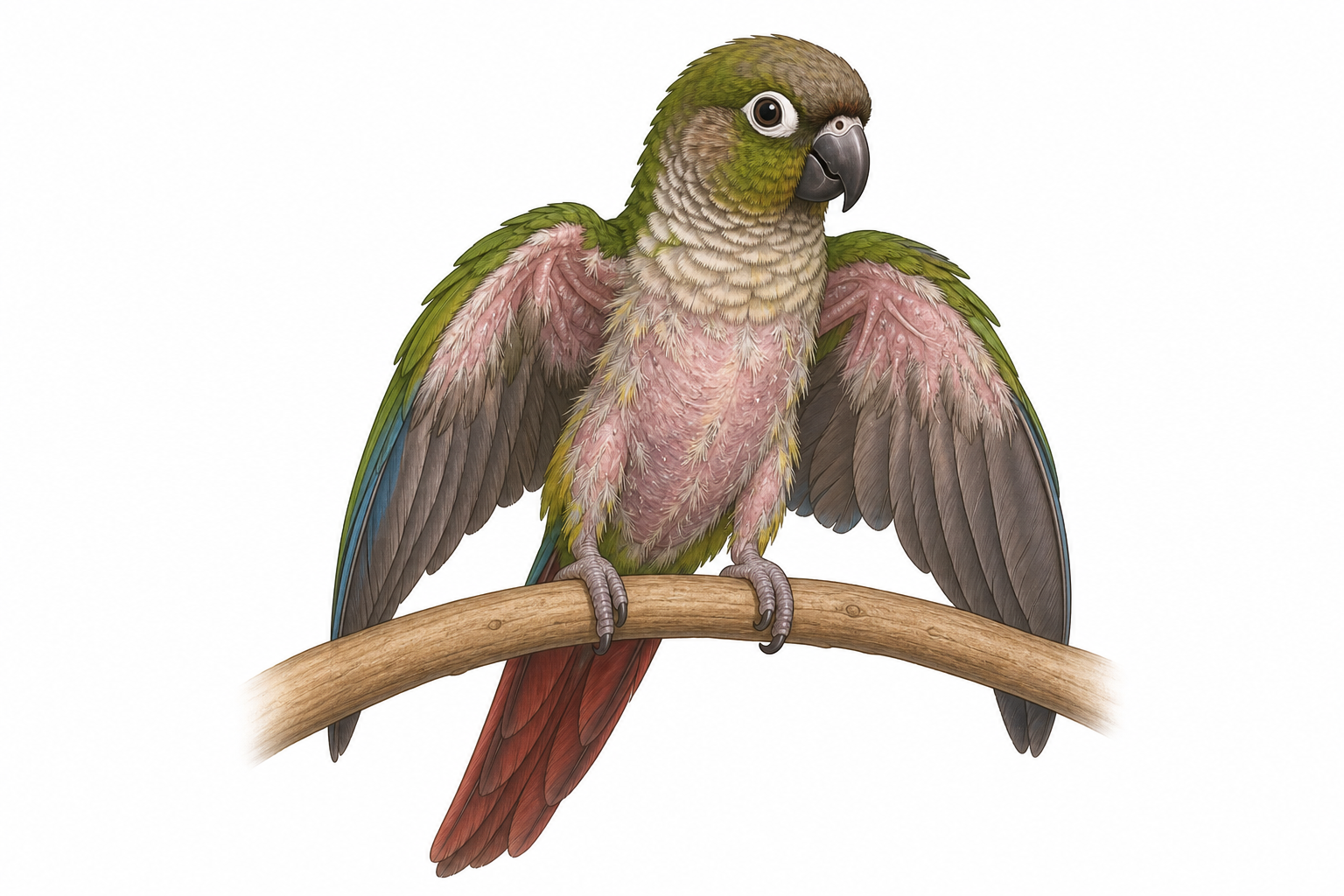
TL;DR. Feather destructive behavior is a complex condition where companion birds chew, pluck, or damage their own feathers due to underlying medical or psychological distress, requiring a thorough veterinary investigation.
Feather loss on the body with completely normal head feathers is a classic sign of self-inflicted feather destructive behavior.
What is it?
Feather destructive behavior (FDB)—often referred to as feather picking, feather chewing, or feather plucking—is one of the most frustrating and complex conditions encountered in avian medicine. It is not a single disease, but rather a symptom of an underlying physical or psychological issue. When a bird suffers from FDB, it systematically damages its own plumage by chewing the feathers down to the quill, plucking them out entirely, or, in severe cases, mutilating its own skin.
To understand this behavior, it helps to understand normal avian grooming. Preening is a vital, daily activity for birds. They use their beaks to clean their feathers, align the microscopic barbs that keep the feathers zipped together, and spread waterproofing oils. However, when preening crosses the line into destruction, it becomes a self-reinforcing habit. Highly intelligent and social species, such as African greys, cockatoos, and Macaws, are particularly prone to this condition when their complex environmental and emotional needs are not met.
For owners, witnessing a beloved bird destroy its beautiful plumage can be deeply distressing. Beyond the cosmetic damage, feather destruction compromises a bird's ability to regulate its body temperature and can lead to severe skin infections. In the most critical cases, the behavior escalates to self-mutilation, where the bird chews into its own flesh, creating life-threatening wounds and hemorrhages. Because companion birds are highly sensitive, addressing this condition requires a compassionate, systematic approach guided by your veterinarian.
Causes & risk factors
The causes of feather destructive behavior are broadly categorized into medical (organic) and behavioral (non-organic) factors. Determining the exact trigger is often a process of elimination, as many birds suffer from a combination of both.
Medical triggers can include systemic illnesses, localized pain, skin infections, or toxicities. For instance, a bird experiencing internal discomfort—such as joint pain or abdominal inflammation—may intensely chew at the feathers directly overlying the painful area. Parasitic infections, such as protozoal infestations, can cause intense itching (pruritus), driving the bird to pluck. Environmental toxins, particularly heavy metals like lead and zinc, can damage the nervous system and trigger obsessive feather chewing. Additionally, viral infections that directly affect feather development can cause structural abnormalities that prompt the bird to groom destructively.
Behavioral triggers are equally common and highly diverse. In the wild, birds live in complex, dynamic environments with constant opportunities for foraging, social interaction, and flight. In captivity, a lack of mental stimulation, chronic boredom, or social isolation can lead to profound frustration. Birds may turn to their own feathers as a coping mechanism or a form of self-soothing. Stress is a major catalyst; sudden changes in the household, a nervous owner, or a traumatic event can initiate a picking episode. A leading veterinary internal medicine reference notes:
"A traumatic event can cause a bird to become "nervous" and pick; anecdotal examples abound, such as witnessing an attack by a hawk outside the window at a bird feeder, the owner leaving for vacation, a change in the color of the cage, a nervous owner, the death of a mate or owner, and so forth. Some birds improve in a new home with a new owner for unknown reasons."
Signs to watch for
Recognizing the early signs of feather destructive behavior is crucial for preventing it from becoming an ingrained habit. The pattern and location of the feather damage provide vital clues for your veterinarian.
- Intact head feathers (Cardinal sign): Because a bird can only reach its body with its beak, the feathers on top of and around the head will remain perfectly normal and undamaged. If feather loss is present on the head, the cause is likely a cage mate picking at the bird, or a primary medical condition causing feather loss, rather than self-inflicted damage.
- Chewing areas under the wing (Common): Birds frequently target the soft, hidden feathers under their wings, which can be an early sign of discomfort or anxiety.
- Chewing around the legs (Common): Plucking or chewing the feathers on the thighs and around the legs is a frequent presentation.
- Chewing breast feathers (Common): The chest and breast are highly accessible areas, making them prime targets for destructive grooming.
- Picking of feathers over the ventral coelomic cavity (Occasional): Picking specifically over the abdomen can sometimes point to internal pain or localized inflammation in the organs below.
- Unilateral pattern of picking (Occasional): Picking that is concentrated on only one side of the body may indicate a localized source of pain, such as a joint injury or one-sided air sac infection.
- Self-mutilation (Occasional / Red Flag): This occurs when the bird progresses from damaging feathers to chewing, tearing, or biting its own skin and muscles. This is a severe, life-threatening emergency.

Chewed feather shafts and exposed skin indicate active feather destructive behavior rather than natural molting.
How vets diagnose it
Because feather destructive behavior can stem from dozens of different medical and environmental issues, your vet will perform a comprehensive diagnostic workup. There is no single test for feather picking; instead, the vet must systematically rule out medical causes before concluding the behavior is purely psychological.
The diagnostic process begins with a detailed history of your bird's diet, daily routine, cage environment, and exposure to potential toxins. Your vet will then perform a thorough physical examination, paying close attention to the pattern of feather loss and the health of the underlying skin. To rule out infectious, metabolic, or toxic causes, your vet will recommend several key diagnostic tests:
- Complete blood count (CBC) profile: This blood test evaluates red and white blood cells, helping your vet identify systemic infections, chronic inflammation, or anemia.
- Radiographs (X-rays): Imaging allows the vet to evaluate internal organs, look for signs of respiratory infections, check for swallowed foreign objects (such as metal toy parts), and assess bone health or arthritis that might cause localized pain.
- Psittacine Beak and Feather Test: This specialized DNA test screens for Psittacine Beak and Feather Disease (PBFD), a highly contagious and serious viral infection that causes abnormal feather growth and loss.
- Fecal float and Fecal ELISA test for Giardia spp.: Microscopic examination of the stool and specialized antigen tests are used to check for intestinal parasites. Giardia is a protozoan parasite known to cause intense skin itching and allergic-like reactions in companion birds, particularly cockatiels, leading to severe plucking.
- Feather follicle biopsy and culture: If the skin appears inflamed or infected, your vet may take a small tissue sample from an active feather follicle. This helps identify deep bacterial or fungal infections that require targeted antimicrobial therapy.
- Blood lead and serum zinc tests: Birds are natural explorers and often chew on household items. These tests measure the levels of heavy metals in the blood, as sub-clinical lead or zinc poisoning can cause neurological irritation and chronic feather chewing.
Treatment options
Treating feather destructive behavior requires a multi-faceted approach. If an underlying medical condition is identified—such as a bacterial skin infection, heavy metal toxicity, or parasitic infestation—your vet will treat that primary disease first. However, if the behavior has a behavioral component or has become a chronic habit, a combination of environmental modification and medical therapy may be necessary.
Environmental and Behavioral Therapy
Improving your bird's environment is the cornerstone of managing behavioral picking. This includes increasing mental stimulation through foraging toys, which mimic the natural search for food and keep the beak busy. Ensuring your bird gets 10 to 12 hours of uninterrupted, dark sleep each night is vital for reducing stress. Regular misting or bathing encourages normal preening behavior and helps soothe dry, itchy skin.
Pharmacological Therapy
When environmental changes are not enough, or when anxiety and itching are severe, your vet may prescribe medications to help break the cycle. These are typically used as temporary aids alongside behavioral therapy. Because companion bird medicine often relies on clinical trials and drug dosages extrapolated from mammalian medicine, your veterinarian will carefully monitor your bird for side effects.
- Tricyclic Antidepressants (TCAs): These medications help manage moderate-to-severe anxiety and can also reduce the physical sensation of itching.
- Doxepin: This medication has strong antihistamine and anti-anxiety properties. As noted in a leading veterinary drug reference, it is utilized "For treatment of anxiety, pruritus caused feather pl..." to help calm the bird and reduce the urge to chew.
- Clomipramine: Another tricyclic antidepressant, clomipramine is often prescribed to address obsessive-compulsive behaviors, separation anxiety, or severe stereotypic behaviors that contribute to feather damage.
Prognosis
The prognosis for birds with feather destructive behavior is highly variable and depends heavily on identifying and resolving the underlying cause. If the condition is caught early and is linked to a treatable medical issue (such as a parasite or localized infection), the prognosis for full feather regrowth is excellent.
However, if the behavior is purely behavioral and has been ongoing for months or years, it can become a deeply ingrained habit. Even after the initial stressor is removed, the bird may continue to pick out of habit or boredom. In these chronic cases, complete feather regrowth may not be possible because repeated plucking can permanently damage the feather follicles. The goal of treatment then shifts from cosmetic perfection to maintaining a good quality of life and preventing self-mutilation.
Self-mutilation carries a guarded-to-poor prognosis if left untreated. It is a serious, life-threatening manifestation of the disorder that requires immediate, aggressive medical and behavioral intervention to prevent fatal blood loss or systemic infection.
Prevention
Preventing feather destructive behavior starts with providing an environment that meets both the physical and psychological needs of companion birds.
- Environmental Enrichment: Provide a rotating selection of toys, branches of varying textures, and foraging opportunities to keep your bird mentally active.
- Consistent Routine: Maintain a stable daily schedule for feeding, social interaction, and sleep. Ensure your bird receives 10 to 12 hours of quiet, dark sleep every night.
- Proper Nutrition: Feed a high-quality, formulated pellet diet supplemented with fresh vegetables and limited fruits, as nutritional deficiencies can lead to poor skin and feather health.
- Regular Veterinary Care: Schedule annual wellness exams with an avian veterinarian. Early detection of low-grade medical issues can prevent them from escalating into chronic picking behaviors.
- Avoid Environmental Toxins: Keep your bird away from household hazards like aerosol sprays, non-stick cookware fumes, tobacco smoke, and toys containing lead or zinc.
When to call your vet
You should contact your veterinarian if you notice any unexplained feather loss, chewed feather shafts, or sudden changes in your bird's grooming habits. Early intervention is key to preventing the behavior from becoming a permanent habit.
Seek immediate emergency veterinary care if you observe any signs of self-mutilation, including bleeding, open wounds, scabs, or tissue damage on your bird's body. Birds have a very low blood volume compared to mammals, and even minor bleeding from a chewed feather follicle or skin wound can quickly become life-threatening.
Sources
- Small Animal Dermatology: A Color Atlas and Therapeutic Guide, pp. 548-549.
- Plumb's Veterinary Drug Handbook, pp. 847, 1277.
My highlights & notes
Signs & symptoms
How it is diagnosed
- Complete blood count (CBC) profile
- Feather follicle biopsy and culture
- Fecal enzyme-linked immunosorbent assay (ELISA) test for Giardia spp.
- Fecal float
- Psittacine Beak and Feather Test
- blood lead test
- Radiographs
- serum zinc test
Treatment approaches
Treatment must be prescribed by a licensed veterinarian based on your pet. Specific drug doses are intentionally not shown here.
Frequently asked questions
What is Feather Destructive Behavior?
Feather destructive behavior is a challenging avian condition where birds damage their own plumage or skin due to medical or psychological issues, requiring a comprehensive veterinary workup.
What are the symptoms of Feather Destructive Behavior?
Intact head feathers、Chewing areas under the wing、Chewing around the legs、Chewing breast feathers、Picking of feathers over the ventral coelomic cavity、Self-mutilation、Unilateral pattern of picking
How is Feather Destructive Behavior diagnosed?
Complete blood count (CBC) profile、Feather follicle biopsy and culture、Fecal enzyme-linked immunosorbent assay (ELISA) test for Giardia spp.、Fecal float、Psittacine Beak and Feather Test、blood lead test
How is Feather Destructive Behavior treated?
Treatment must be prescribed by a licensed veterinarian based on your pet. Specific drug doses are intentionally not shown here.
Sources
- 皮膚病 教科書點子書 Small-Animal-Dermatology-A-Color-Atlas-and-Therapeutic-Guide · p. 548
- 皮膚病 教科書點子書 Small-Animal-Dermatology-A-Color-Atlas-and-Therapeutic-Guide · p. 549
- Plumb · p. 1277
- Plumb · p. 847
This article is for general education and is not a substitute for professional veterinary advice. If your pet is unwell, please consult a veterinarian.
Worried about your pet?
Peqaboo’s AI helps you track symptoms, understand lab reports, and know when to see a vet.
Get the Peqaboo app