

Feather Destructive Behavior
Còn gọi là: Feather Picking, Feather Chewing, Self-Mutilation, Feather Plucking
Tóm tắt
Feather destructive behavior is a challenging avian condition where birds damage their own plumage or skin due to medical or psychological issues, requiring a comprehensive veterinary workup.
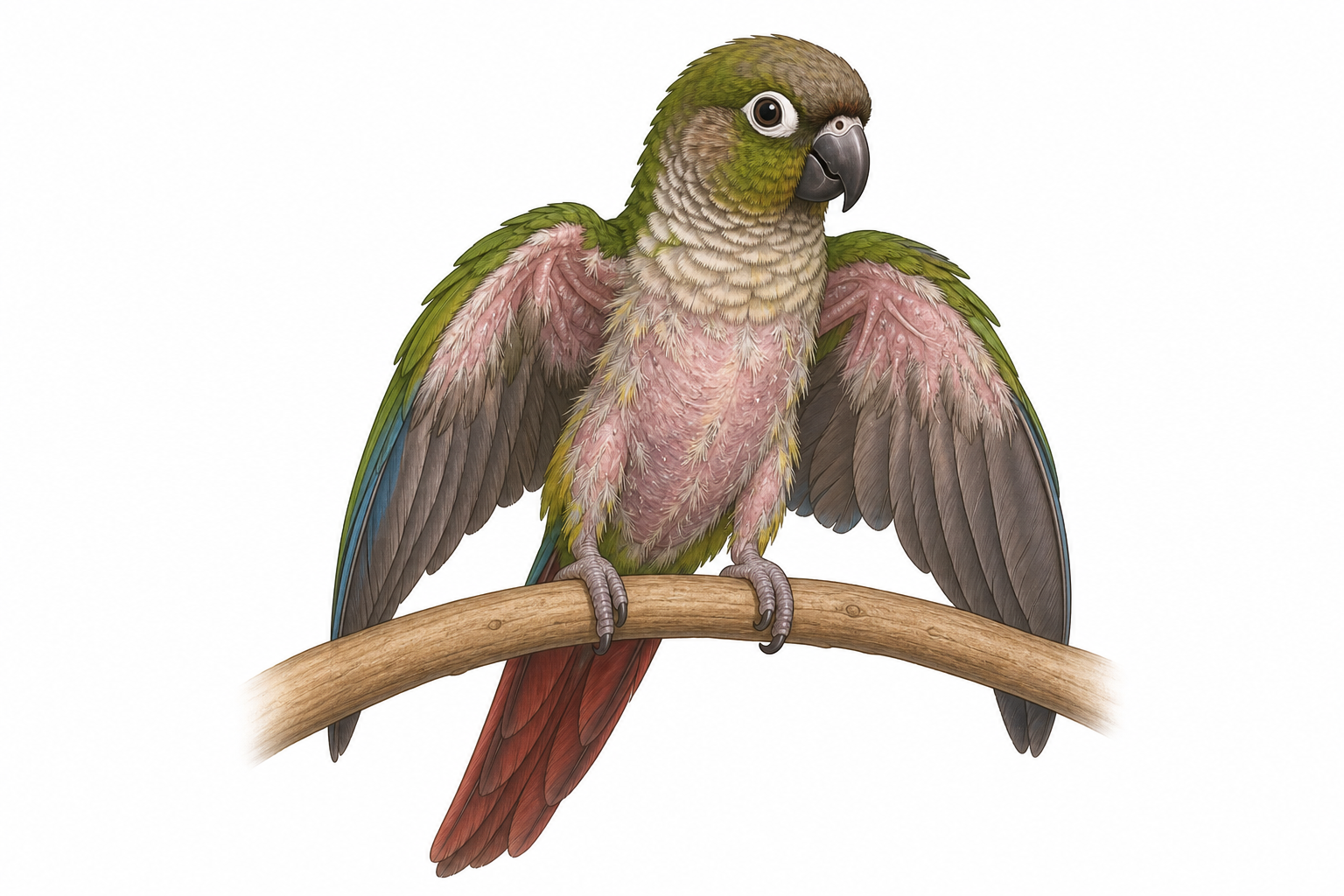
TL;DR. Chim nhai, nhổ hoặc làm hỏng lông của chính mình do nguyên nhân y khoa hoặc stress; cần đánh giá thú y có hệ thống.
Mất lông thân với đầu còn nguyên là kiểu kinh điển.
Là gì?
Feather destructive behavior is a sign of medical or psychological distress, not a single disease. Normal preening escalates to chewing shafts, plucking, or skin self-mutilation. Intelligent social species (African greys, cockatoos, macaws) are at higher risk when enrichment is poor.
Nguyên nhân và yếu tố nguy cơ
Medical: local pain, skin infection, parasites, heavy metals (lead, zinc), viruses affecting feather growth. Behavioral: boredom, isolation, stress (moves, loss of mate, noise, predator seen at a window). Often mixed.
Dấu hiệu
- Intact head feathers (cardinal)
- Chewing under wing, thighs, or breast (common)
- Unilateral pattern (occasional; may suggest local pain)
- Skin self-mutilation (emergency)

Trục lông bị nhai và da lộ: phá hủy chủ động, không phải thay lông bình thường.
Chẩn đoán
History (diet, cage, toxins), pattern exam. CBC, radiographs, PBFD test, fecal/Giardia, follicle biopsy if needed, blood lead and zinc. Rule out medical causes before labeling pure behavior.
Điều trị
Treat medical cause first. Enrichment: foraging, rotating toys, bathing/misting, 10-12 h dark sleep. If needed, doxepin or clomipramine under supervision with environment change.
Tiên lượng
Excellent if medical cause resolves early. Guarded in chronic habit; follicles may be permanently damaged. Untreated self-mutilation: guarded to poor.
Phòng ngừa
Ongoing enrichment, stable routine, quality formulated diet, annual avian exams, avoid aerosols, PTFE fumes, and heavy-metal toys.
Khi nào gọi thú y
Any new feather loss or chewing. Emergency: bleeding, open wounds, or self-mutilation.
Nguồn
- Small Animal Dermatology: A Color Atlas and Therapeutic Guide, pp. 548-549.
- Plumb's Veterinary Drug Handbook, pp. 847, 1277.
My highlights & notes
Dấu hiệu & triệu chứng
Cách chẩn đoán
- Complete blood count (CBC) profile
- Feather follicle biopsy and culture
- Fecal enzyme-linked immunosorbent assay (ELISA) test for Giardia spp.
- Fecal float
- Psittacine Beak and Feather Test
- blood lead test
- Radiographs
- serum zinc test
Hướng điều trị
Điều trị phải do bác sĩ thú y có giấy phép kê đơn. Liều cụ thể cố ý không hiển thị.
Câu hỏi thường gặp
What is Feather Destructive Behavior?
Feather destructive behavior is a challenging avian condition where birds damage their own plumage or skin due to medical or psychological issues, requiring a comprehensive veterinary workup.
What are the symptoms of Feather Destructive Behavior?
Intact head feathers、Chewing areas under the wing、Chewing around the legs、Chewing breast feathers、Picking of feathers over the ventral coelomic cavity、Self-mutilation、Unilateral pattern of picking
How is Feather Destructive Behavior diagnosed?
Complete blood count (CBC) profile、Feather follicle biopsy and culture、Fecal enzyme-linked immunosorbent assay (ELISA) test for Giardia spp.、Fecal float、Psittacine Beak and Feather Test、blood lead test
How is Feather Destructive Behavior treated?
Điều trị phải do bác sĩ thú y có giấy phép kê đơn. Liều cụ thể cố ý không hiển thị.
Nguồn
- 皮膚病 教科書點子書 Small-Animal-Dermatology-A-Color-Atlas-and-Therapeutic-Guide · p. 548
- 皮膚病 教科書點子書 Small-Animal-Dermatology-A-Color-Atlas-and-Therapeutic-Guide · p. 549
- Plumb · p. 1277
- Plumb · p. 847
Bài viết mang tính giáo dục chung, không thay thế tư vấn thú y. Nếu thú cưng ốm, hãy gặp bác sĩ thú y.
Lo lắng cho thú cưng?
AI của Peqaboo giúp theo dõi triệu chứng, hiểu kết quả xét nghiệm và biết khi nào cần gặp bác sĩ thú y.
Tải app Peqaboo