

Feather Destructive Behavior
Más néven: Feather Picking, Feather Chewing, Self-Mutilation, Feather Plucking
Röviden
Feather destructive behavior is a challenging avian condition where birds damage their own plumage or skin due to medical or psychological issues, requiring a comprehensive veterinary workup.
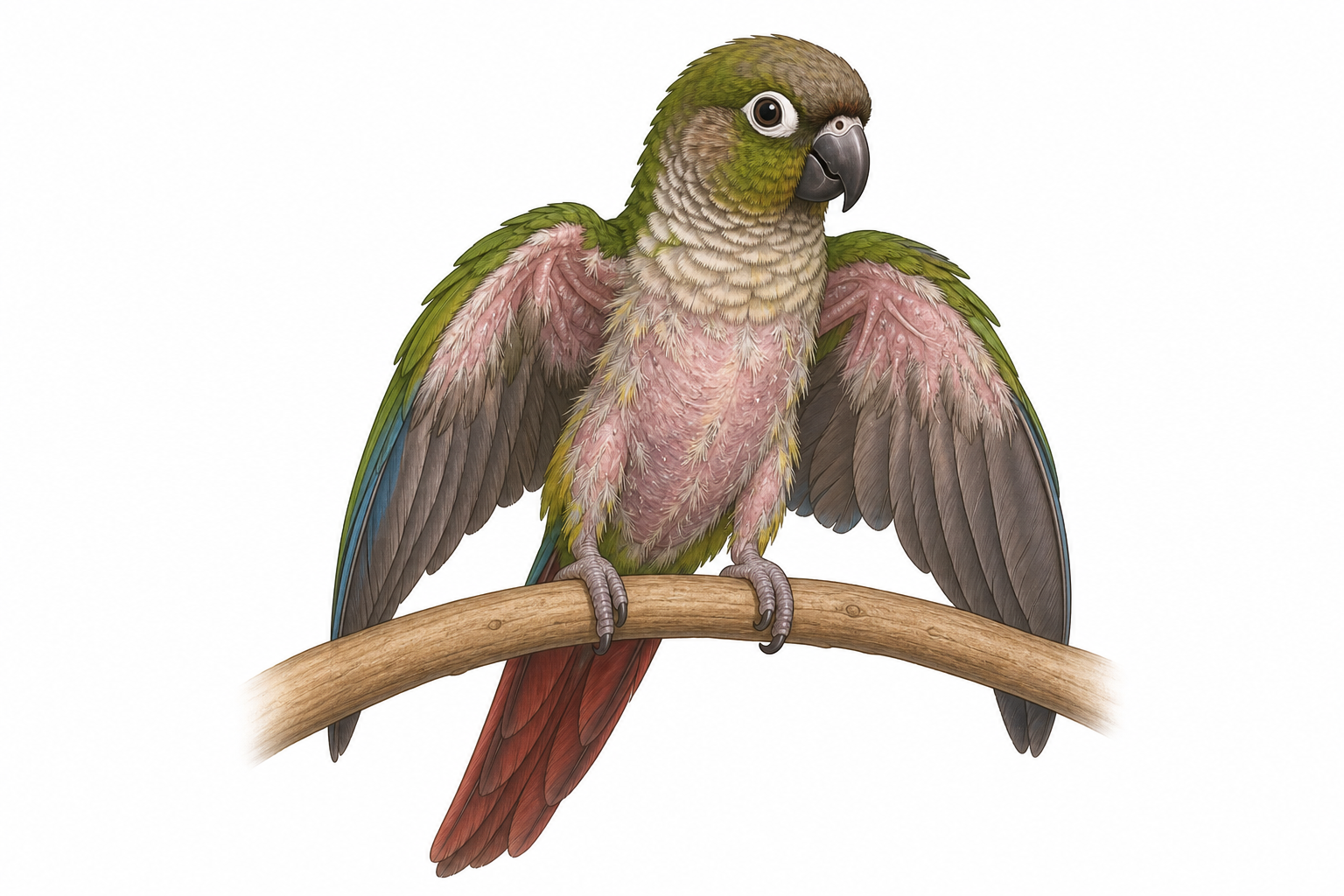
TL;DR. A madár orvosi vagy stressz okokból rágja, tépdesi vagy roncsolja saját tollait; rendszerszerű állatorvosi kivizsgálás kell.
A test tollhiánya ép fejjel a klasszikus minta.
Mi ez?
Feather destructive behavior is a sign of medical or psychological distress, not a single disease. Normal preening escalates to chewing shafts, plucking, or skin self-mutilation. Intelligent social species (African greys, cockatoos, macaws) are at higher risk when enrichment is poor.
Okok és kockázati tényezők
Medical: local pain, skin infection, parasites, heavy metals (lead, zinc), viruses affecting feather growth. Behavioral: boredom, isolation, stress (moves, loss of mate, noise, predator seen at a window). Often mixed.
Jelek
- Intact head feathers (cardinal)
- Chewing under wing, thighs, or breast (common)
- Unilateral pattern (occasional; may suggest local pain)
- Skin self-mutilation (emergency)

Rágott szárak és csupasz bőr: aktív roncsolás, nem normál vedlés.
Diagnosztika
History (diet, cage, toxins), pattern exam. CBC, radiographs, PBFD test, fecal/Giardia, follicle biopsy if needed, blood lead and zinc. Rule out medical causes before labeling pure behavior.
Kezelés
Treat medical cause first. Enrichment: foraging, rotating toys, bathing/misting, 10-12 h dark sleep. If needed, doxepin or clomipramine under supervision with environment change.
Prognózis
Excellent if medical cause resolves early. Guarded in chronic habit; follicles may be permanently damaged. Untreated self-mutilation: guarded to poor.
Megelőzés
Ongoing enrichment, stable routine, quality formulated diet, annual avian exams, avoid aerosols, PTFE fumes, and heavy-metal toys.
Mikor hívjon állatorvost
Any new feather loss or chewing. Emergency: bleeding, open wounds, or self-mutilation.
Források
- Small Animal Dermatology: A Color Atlas and Therapeutic Guide, pp. 548-549.
- Plumb's Veterinary Drug Handbook, pp. 847, 1277.
My highlights & notes
Jelek és tünetek
Hogyan diagnosztizálják
- Complete blood count (CBC) profile
- Feather follicle biopsy and culture
- Fecal enzyme-linked immunosorbent assay (ELISA) test for Giardia spp.
- Fecal float
- Psittacine Beak and Feather Test
- blood lead test
- Radiographs
- serum zinc test
Kezelési megközelítések
A kezelést engedéllyel rendelkező állatorvosnak kell felírnia. A konkrét adagokat szándékosan nem mutatjuk.
Gyakori kérdések
What is Feather Destructive Behavior?
Feather destructive behavior is a challenging avian condition where birds damage their own plumage or skin due to medical or psychological issues, requiring a comprehensive veterinary workup.
What are the symptoms of Feather Destructive Behavior?
Intact head feathers、Chewing areas under the wing、Chewing around the legs、Chewing breast feathers、Picking of feathers over the ventral coelomic cavity、Self-mutilation、Unilateral pattern of picking
How is Feather Destructive Behavior diagnosed?
Complete blood count (CBC) profile、Feather follicle biopsy and culture、Fecal enzyme-linked immunosorbent assay (ELISA) test for Giardia spp.、Fecal float、Psittacine Beak and Feather Test、blood lead test
How is Feather Destructive Behavior treated?
A kezelést engedéllyel rendelkező állatorvosnak kell felírnia. A konkrét adagokat szándékosan nem mutatjuk.
Források
- 皮膚病 教科書點子書 Small-Animal-Dermatology-A-Color-Atlas-and-Therapeutic-Guide · p. 548
- 皮膚病 教科書點子書 Small-Animal-Dermatology-A-Color-Atlas-and-Therapeutic-Guide · p. 549
- Plumb · p. 1277
- Plumb · p. 847
Ez a cikk általános tájékoztatás, nem helyettesíti az állatorvosi tanácsot. Ha a kedvenc beteg, forduljon állatorvoshoz.
Aggódik a kedvence miatt?
A Peqaboo AI segít a tünetek követésében, a laboreredmények megértésében és abban, mikor kell állatorvoshoz menni.
Peqaboo app letöltése