

Feather Destructive Behavior
Også kendt som: Feather Picking, Feather Chewing, Self-Mutilation, Feather Plucking
Kort sagt
Feather destructive behavior is a challenging avian condition where birds damage their own plumage or skin due to medical or psychological issues, requiring a comprehensive veterinary workup.
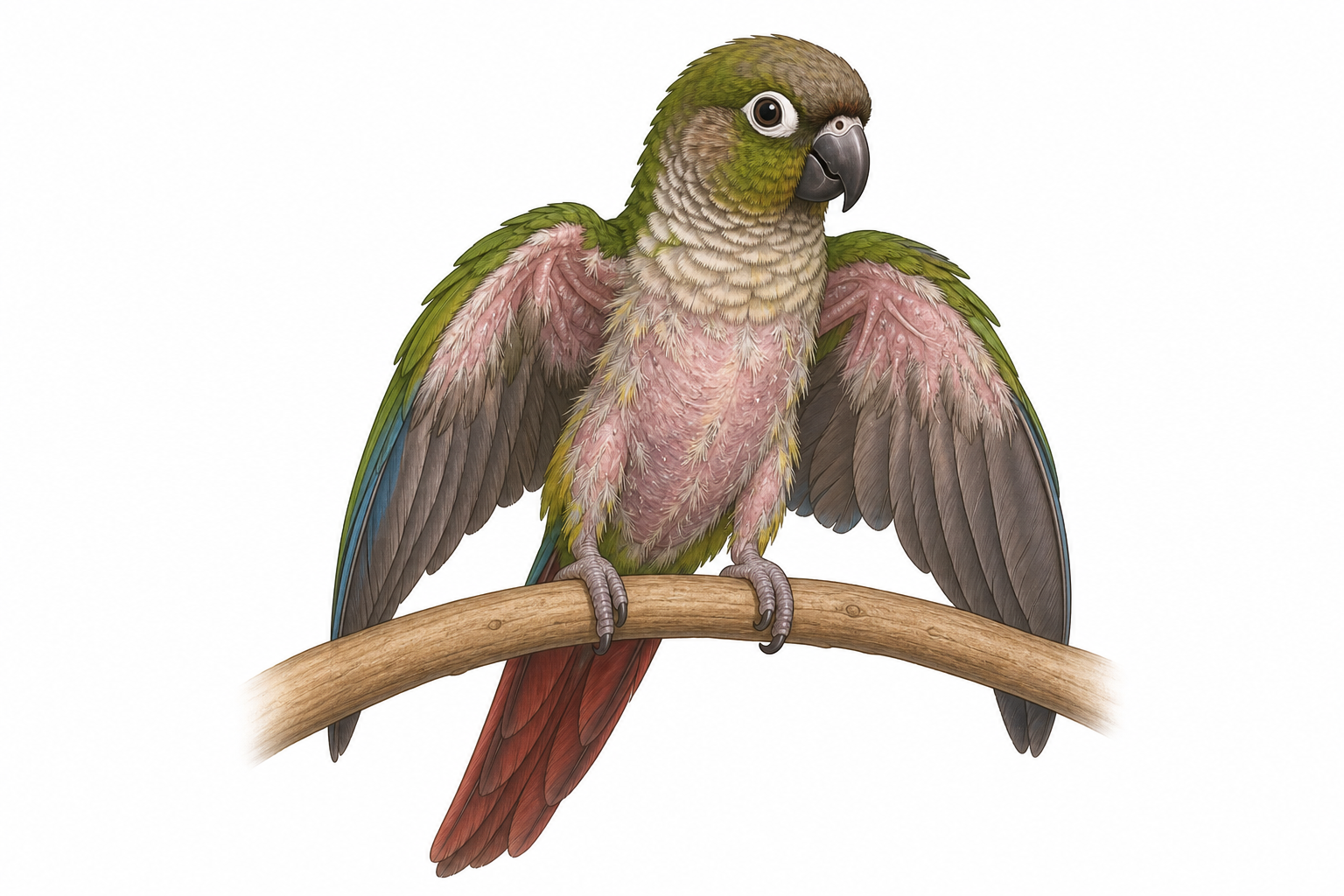
TL;DR. Fuglen tygger, plukker eller beskadiger egne fjer af medicinske eller stressrelaterede årsager; systematisk dyrlægeudredning kræves.
Fjertab på kroppen med intakt hoved er det klassiske mønster.
Hvad er det?
Feather destructive behavior is a sign of medical or psychological distress, not a single disease. Normal preening escalates to chewing shafts, plucking, or skin self-mutilation. Intelligent social species (African greys, cockatoos, macaws) are at higher risk when enrichment is poor.
Årsager og risikofaktorer
Medical: local pain, skin infection, parasites, heavy metals (lead, zinc), viruses affecting feather growth. Behavioral: boredom, isolation, stress (moves, loss of mate, noise, predator seen at a window). Often mixed.
Tegn
- Intact head feathers (cardinal)
- Chewing under wing, thighs, or breast (common)
- Unilateral pattern (occasional; may suggest local pain)
- Skin self-mutilation (emergency)

Tyggede skafter og blottet hud: aktiv ødelæggelse, ikke normal fældning.
Diagnostik
History (diet, cage, toxins), pattern exam. CBC, radiographs, PBFD test, fecal/Giardia, follicle biopsy if needed, blood lead and zinc. Rule out medical causes before labeling pure behavior.
Behandling
Treat medical cause first. Enrichment: foraging, rotating toys, bathing/misting, 10-12 h dark sleep. If needed, doxepin or clomipramine under supervision with environment change.
Prognose
Excellent if medical cause resolves early. Guarded in chronic habit; follicles may be permanently damaged. Untreated self-mutilation: guarded to poor.
Forebyggelse
Ongoing enrichment, stable routine, quality formulated diet, annual avian exams, avoid aerosols, PTFE fumes, and heavy-metal toys.
Hvornår ringe til dyrlægen
Any new feather loss or chewing. Emergency: bleeding, open wounds, or self-mutilation.
Kilder
- Small Animal Dermatology: A Color Atlas and Therapeutic Guide, pp. 548-549.
- Plumb's Veterinary Drug Handbook, pp. 847, 1277.
My highlights & notes
Tegn og symptomer
Hvordan det diagnosticeres
- Complete blood count (CBC) profile
- Feather follicle biopsy and culture
- Fecal enzyme-linked immunosorbent assay (ELISA) test for Giardia spp.
- Fecal float
- Psittacine Beak and Feather Test
- blood lead test
- Radiographs
- serum zinc test
Behandlingsmetoder
Behandling skal ordineres af en autoriseret dyrlæge. Specifikke doser vises bevidst ikke.
Ofte stillede spørgsmål
What is Feather Destructive Behavior?
Feather destructive behavior is a challenging avian condition where birds damage their own plumage or skin due to medical or psychological issues, requiring a comprehensive veterinary workup.
What are the symptoms of Feather Destructive Behavior?
Intact head feathers、Chewing areas under the wing、Chewing around the legs、Chewing breast feathers、Picking of feathers over the ventral coelomic cavity、Self-mutilation、Unilateral pattern of picking
How is Feather Destructive Behavior diagnosed?
Complete blood count (CBC) profile、Feather follicle biopsy and culture、Fecal enzyme-linked immunosorbent assay (ELISA) test for Giardia spp.、Fecal float、Psittacine Beak and Feather Test、blood lead test
How is Feather Destructive Behavior treated?
Behandling skal ordineres af en autoriseret dyrlæge. Specifikke doser vises bevidst ikke.
Kilder
- 皮膚病 教科書點子書 Small-Animal-Dermatology-A-Color-Atlas-and-Therapeutic-Guide · p. 548
- 皮膚病 教科書點子書 Small-Animal-Dermatology-A-Color-Atlas-and-Therapeutic-Guide · p. 549
- Plumb · p. 1277
- Plumb · p. 847
Artiklen er generel oplysning og erstatter ikke dyrlægeråd. Hvis dyret er sygt, kontakt en dyrlæge.
Bekymret for dit dyr?
Peqaboos AI hjælper dig med at følge symptomer, forstå labsvar og vide, hvornår du skal se dyrlægen.
Hent Peqaboo-appen