

Cognitive Dysfunction Syndrome
Canine/Feline Cognitive Dysfunction Syndrome
Also known as: Canine Cognitive Dysfunction, Feline Cognitive Dysfunction, CCD, FCD, dog dementia, cat dementia, cognitive dysfunction syndrome of senior pets
In short
Cognitive Dysfunction Syndrome (CDS) is a progressive, age-related brain disorder in senior dogs and cats that causes memory loss, confusion, and behavioral changes. While irreversible, early veterinary intervention, environmental support, and targeted therapies can significantly slow its progression and preserve your pet's quality of life.
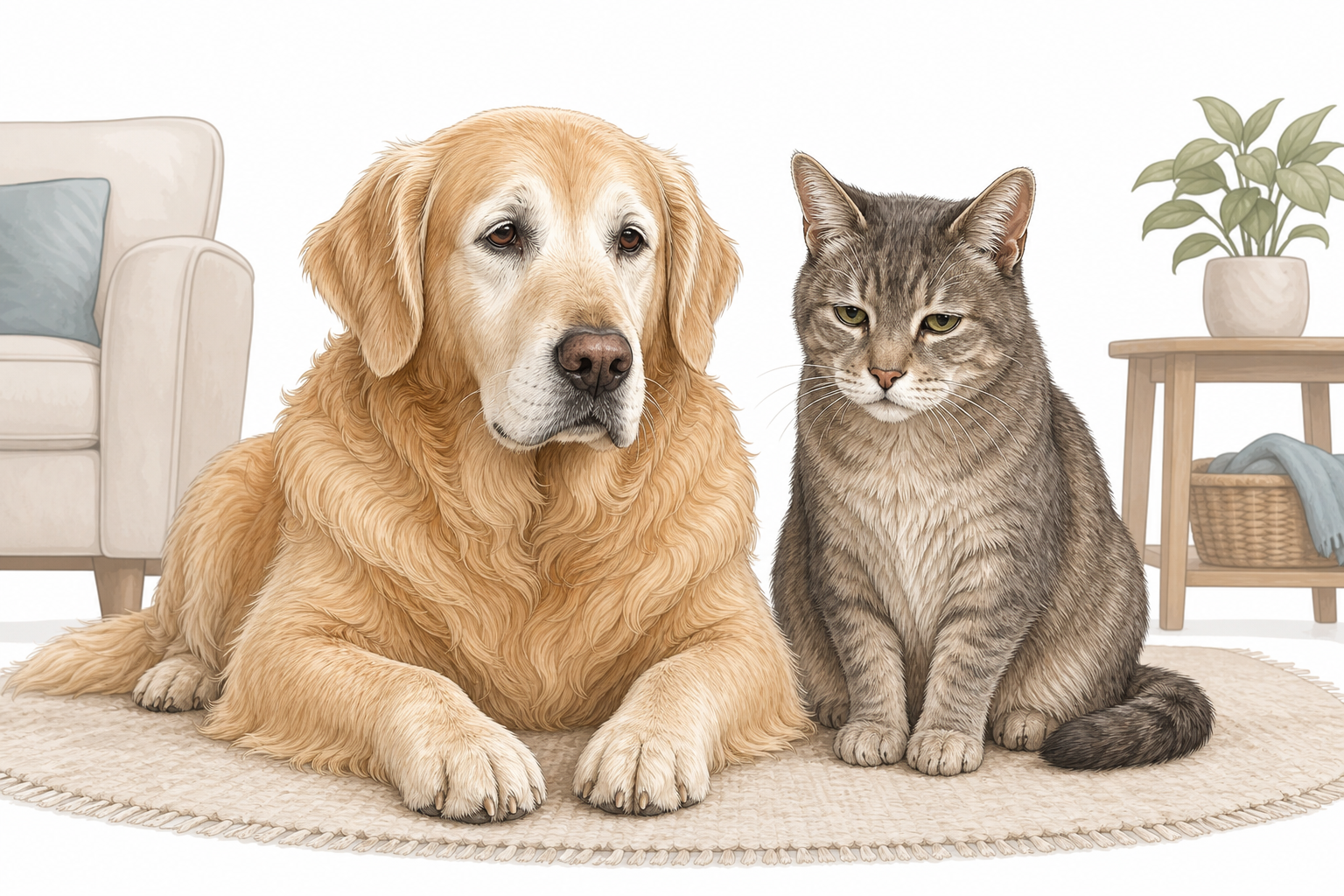
TL;DR. Cognitive Dysfunction Syndrome is a progressive, age-related brain disorder in senior dogs and cats that causes confusion, altered sleep patterns, and behavioral changes, but can be managed to preserve quality of life.
Cognitive Dysfunction Syndrome can affect both senior dogs and senior cats as they age.
What is it?
Cognitive Dysfunction Syndrome (CDS) is a progressive, degenerative brain disorder that affects senior dogs and cats. Often referred to as "dog dementia" or "cat dementia," this condition is characterized by a gradual decline in cognitive abilities, memory, and learned behaviors. It is not simply a normal part of the aging process, but rather a pathological disease of the central nervous system.
At the cellular level, CDS shares striking similarities with human Alzheimer's disease. As pets age, their brains can experience a buildup of a toxic protein fragment called beta-amyloid. This protein accumulates outside the nerve cells, forming dense structures known as senile plaques. These plaques disrupt the vital communication pathways between neurons. Additionally, the brain undergoes microvascular changes, which are tiny compromises in blood flow that starve brain tissue of oxygen and essential nutrients. Over time, this is compounded by free radical damage—oxidative stress that damages cell membranes and accelerates the death of brain cells, leading to physical shrinkage (atrophy) of the cerebral cortex.
For pet owners, understanding CDS is vital because the early signs are frequently dismissed as normal aging. By recognizing the underlying pathology, you can work with your veterinarian to intervene early. While the disease cannot be cured, early medical and environmental management can significantly slow the deterioration of brain tissue and help your pet maintain a comfortable, connected relationship with your family.
Causes & risk factors
The primary risk factor for Cognitive Dysfunction Syndrome is advanced age. The disease is classified as degenerative, meaning it is the result of gradual wear, tear, and cellular breakdown over time. As dogs and cats live longer due to advancements in veterinary medicine, the prevalence of CDS has risen significantly.
There are currently no documented breed predispositions for Cognitive Dysfunction Syndrome in either dogs or cats. Any senior dog or cat, regardless of breed, size, or genetic background, can develop the condition. The onset of clinical signs typically becomes noticeable in dogs around 9 to 11 years of age, and in cats around 11 to 12 years of age, with the risk increasing exponentially as they continue to age.
Signs to watch for
The signs of CDS can be subtle at first and gradually worsen over months or years. Veterinarians often use the acronym "DISHA" to categorize and identify these behavioral changes.
- Sleep-wake cycle disturbances (Cardinal): Your pet may sleep heavily during the day but become restless, pace, whine, or meow loudly at night. This reversal of the normal sleep cycle is one of the most common and disruptive signs of the disease.
- Disorientation (Cardinal): Your pet may get trapped behind doors, stare blankly at walls or into empty space, fail to recognize familiar people or places, or struggle to navigate around familiar obstacles.
- Altered social interactions (Common): You may notice your pet becoming unusually clingy, demanding constant attention, or conversely, becoming withdrawn, irritable, and disinterested in family interactions.
- Vocalization (Common): This is especially common in senior cats, who may emit loud, mournful meows or howls, particularly in the middle of the night without any obvious trigger.
- House-soiling (Common): A previously perfectly house-trained dog may begin urinating or defecating indoors, often right in front of their owners. A cat may stop using the litter box, choosing instead to soil random areas of the home.
- Pacing or aimless wandering (Common): Pets may walk in repetitive circles, wander aimlessly from room to room, or appear unable to settle down.
- Anxiety or restlessness (Common): Increased sensitivity to noises, fear of being left alone, or general agitation during times of transition.
While CDS is a slow-moving, progressive disease, certain acute signs require immediate emergency evaluation. If your pet experiences a sudden loss of vision, a severe head tilt, an inability to stand, or seizures, these are not typical of gradual cognitive decline and represent a veterinary emergency.

Disorientation, such as staring blankly at walls, is a cardinal sign of cognitive decline.
How vets diagnose it
There is no single, definitive test that can diagnose Cognitive Dysfunction Syndrome in a living pet. Instead, your veterinarian will arrive at a diagnosis primarily through a "diagnosis of exclusion." This means your vet must systematically rule out all other medical conditions that could cause similar behavioral changes in a senior animal.
To begin, your vet will perform a comprehensive physical and neurological examination. They will recommend a diagnostic screening panel, which typically includes:
- Complete Blood Count (CBC) and Chemistry Profile: To evaluate organ function and rule out conditions like chronic kidney disease or liver disease, which can cause toxins to build up in the blood and mimic confusion.
- Urinalysis: To rule out painful urinary tract infections (UTIs) that frequently cause sudden house-soiling or restlessness.
- Thyroid Panel: To check for hypothyroidism in dogs (which causes lethargy and dullness) or hyperthyroidism in cats (which causes extreme restlessness and loud vocalization).
- Blood Pressure Measurement: To rule out systemic hypertension (high blood pressure), which can cause retinal damage, sudden blindness, and microvascular bleeding in the brain.
Alongside these medical tests, your vet will ask you to complete a cognitive rating scale, such as the DISHA questionnaire. This tool helps quantify your pet's behavioral changes and establishes a baseline to monitor the progression of the disease.
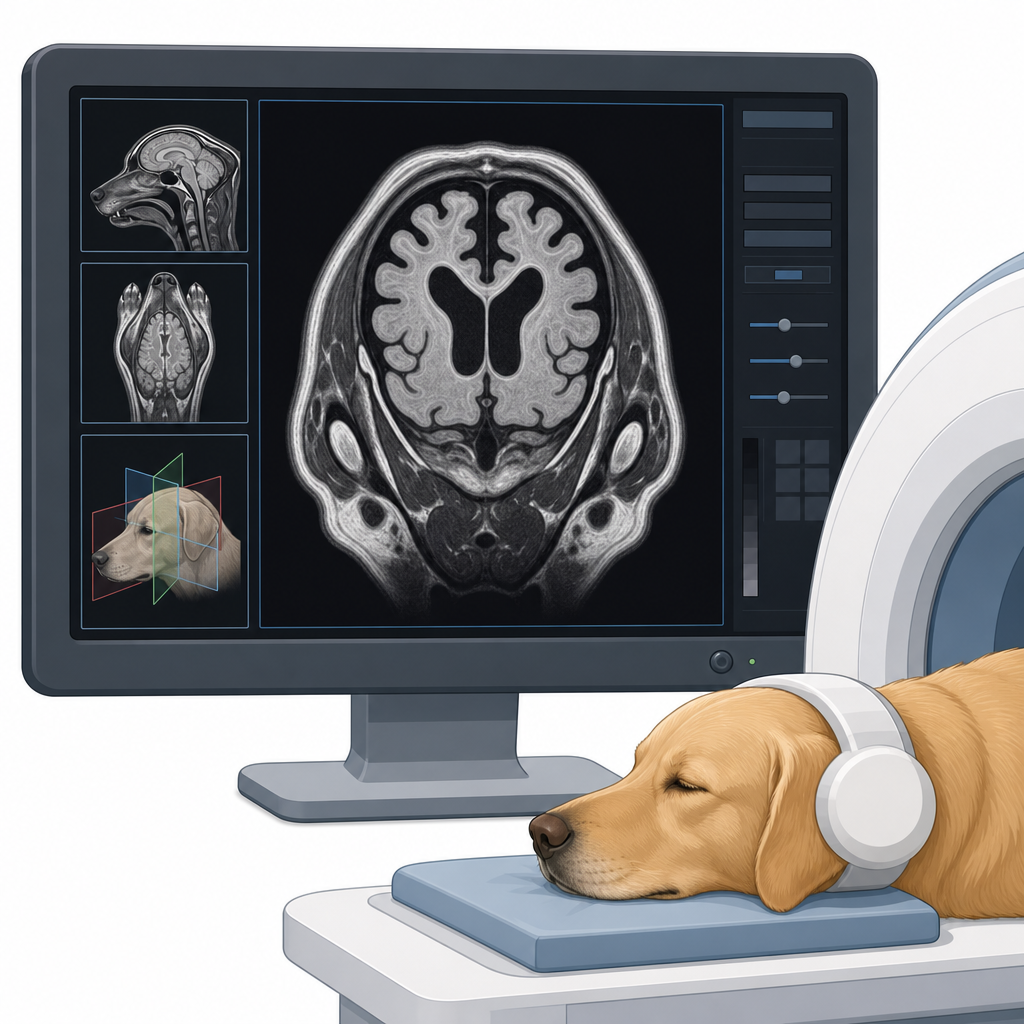
Advanced imaging like an MRI can reveal brain changes, though diagnosis is typically based on ruling out other medical conditions.
In advanced clinical or academic settings, a brain MRI (Magnetic Resonance Imaging) can be performed. While an MRI can show physical changes like brain atrophy or rule out brain tumors and strokes, it is rarely performed solely for a CDS diagnosis due to cost and the need for general anesthesia in senior pets. The absolute gold standard for diagnosing CDS is post-mortem histopathology—examining the brain tissue under a microscope after the pet has passed away to confirm the presence of beta-amyloid plaques and cellular degeneration.
Treatment options
While Cognitive Dysfunction Syndrome cannot be cured, a multi-modal treatment plan can help manage clinical signs, improve cognitive function, and slow the progression of the disease.
First-Line Medical Therapy
Your veterinarian may prescribe Selegiline, which belongs to a class of drugs known as Monoamine Oxidase B (MAO-B) inhibitors. This medication works by prolonging the activity of dopamine and other vital neurotransmitters in the brain. By enhancing these chemical messengers, Selegiline helps improve cognitive function, alertness, and memory, while also helping to reduce the production of damaging free radicals in brain tissue.
Nutritional Support and Supplements
Targeted nutritional therapy is highly beneficial for aging brain cells. Your vet may recommend S-adenosylmethionine (SAMe). Though traditionally used as a hepatoprotectant to support liver health, SAMe is also a powerful antioxidant that helps protect brain cells from oxidative stress and supports cellular membrane fluidity. Additionally, diets or supplements rich in medium-chain triglycerides (MCTs), omega-3 fatty acids, and antioxidants (such as vitamins E and C) can provide the aging brain with alternative energy sources and combat ongoing cellular damage.
Environmental Enrichment
Keeping your pet's brain active is just as important as medical therapy. Introduce gentle mental stimulation, such as food puzzle toys, short and slow walks in new environments, and basic reward-based training. At the same time, keep their home environment highly stable. Avoid rearranging furniture, keep their food and water bowls in the exact same locations, and maintain a strict daily routine to reduce anxiety and confusion.
Prognosis
The long-term prognosis for pets with Cognitive Dysfunction Syndrome is progressive and irreversible. Because the disease involves the physical degeneration of brain tissue, clinical signs will gradually worsen over time.
However, the short- to medium-term prognosis for maintaining a high quality of life is often quite good, especially with early intervention. Many dogs and cats respond well to a combination of medication, dietary changes, and environmental support. These therapies can successfully manage clinical signs for months or even years, allowing you and your pet to share peaceful, meaningful time together. Your veterinarian will work with you to perform regular quality-of-life assessments as the disease progresses.
Prevention
Because Cognitive Dysfunction Syndrome is a degenerative process linked to aging, there is no guaranteed way to prevent it entirely. However, proactive lifestyle choices can support lifelong brain health and potentially delay the onset of cognitive decline.
Providing your pet with consistent mental stimulation throughout their life—such as learning new tricks, playing with interactive toys, and experiencing varied environments—helps build "cognitive reserve" in the brain. Feeding a high-quality, balanced diet rich in natural antioxidants and essential fatty acids from a young age can also help mitigate ongoing oxidative damage to brain cells. Finally, scheduling bi-annual veterinary exams once your pet reaches their senior years (around age 7) allows for early detection and intervention at the very first sign of cognitive change.
When to call your vet
You should schedule a consultation with your veterinarian if you notice any changes in your senior pet's behavior, sleep patterns, or house-training habits. Early detection is key to managing CDS effectively.
Contact your veterinarian immediately or seek emergency veterinary care if your pet experiences any of the following acute signs:
- Sudden, complete blindness or bumping into walls
- Seizures or sudden tremors
- An inability to stand up or walk in a straight line
- A severe, persistent head tilt
- Sudden, extreme agitation or signs of severe physical pain
These acute signs can indicate a sudden neurological event, such as a stroke, brain tumor, or severe metabolic crisis, and require immediate medical attention.
Sources
- AAHA Senior Care Guidelines for Dogs and Cats, American Animal Hospital Association.
- Standard clinical guidelines for canine and feline cognitive dysfunction, established by veterinary neurology and behavior specialists.
My highlights & notes
Signs & symptoms
How it is diagnosed
- Post-mortem histopathology of brain tissueGold standard
- Brain MRI
- Cognitive rating scales (e.g., DISHA questionnaire)
- Diagnosis of exclusion (CBC, Chemistry, Urinalysis, Thyroid panel, Blood pressure)
Treatment approaches
Treatment must be prescribed by a licensed veterinarian based on your pet. Specific drug doses are intentionally not shown here.
Frequently asked questions
What is Cognitive Dysfunction Syndrome?
Cognitive Dysfunction Syndrome (CDS) is a progressive, age-related brain disorder in senior dogs and cats that causes memory loss, confusion, and behavioral changes. While irreversible, early veterinary intervention, environmental support, and targeted therapies can significantly slow its progression and preserve your pet's quality of life.
What are the symptoms of Cognitive Dysfunction Syndrome?
Disorientation、Sleep-wake cycle disturbances、Altered social interactions、Anxiety or restlessness、House-soiling、Pacing or aimless wandering、Vocalization
How is Cognitive Dysfunction Syndrome diagnosed?
Post-mortem histopathology of brain tissue、Brain MRI、Cognitive rating scales (e.g., DISHA questionnaire)、Diagnosis of exclusion (CBC, Chemistry, Urinalysis, Thyroid panel, Blood pressure)
How is Cognitive Dysfunction Syndrome treated?
Treatment must be prescribed by a licensed veterinarian based on your pet. Specific drug doses are intentionally not shown here.
This article is for general education and is not a substitute for professional veterinary advice. If your pet is unwell, please consult a veterinarian.
Worried about your pet?
Peqaboo’s AI helps you track symptoms, understand lab reports, and know when to see a vet.
Get the Peqaboo app