

My Dog Is Limping: Common Causes and When It's an Emergency
A sudden limp can mean anything from a splinter in the paw to a torn ligament or fracture. This guide helps you triage at home, spot red flags that need a same-day vet visit, and understand the common causes behind front- and hind-leg lameness in adult and senior dogs.

Quick answer

My Dog Is Limping: Common Causes and When It's an Emergency
Most mild limps come from a soft-tissue strain, a paw injury, or an overgrown nail, and often ease within 24–48 hours of rest. But a limp with severe pain, a dangling or misshapen leg, swelling, or an inability to bear any weight is an emergency , see a vet the same day. When in doubt, rest the dog and call your vet.
- Species
- dog
- Category
- health
- Risk level
- medium
- Content focus
- practical owner decisions + mechanism
- When to escalate
- same-day if pain, not eating, breathing issues, or rapid decline
Decide in 60 seconds
| Situation | Do now |
|---|---|
| Mild / stable at home | Follow steps in this guide and monitor for 12–24 hours |
| Not eating, hiding, or clear pain | Same-day vet (species-savvy if exotic) |
| Breathing hard, collapse, continuous distress | Emergency vet now |
| You are unsure after reading | Call a clinic with your notes rather than waiting days |
First, look at the whole picture
Before you focus on the leg, watch how your dog moves. Is the limp sudden (suggesting injury) or has it crept in over weeks (suggesting arthritis or a chronic issue)? Is it worse after rest and better with movement, or worse after exercise? Note which leg, whether your dog can put weight on it, and any whimpering, licking, or reluctance to jump. These clues genuinely help your vet.
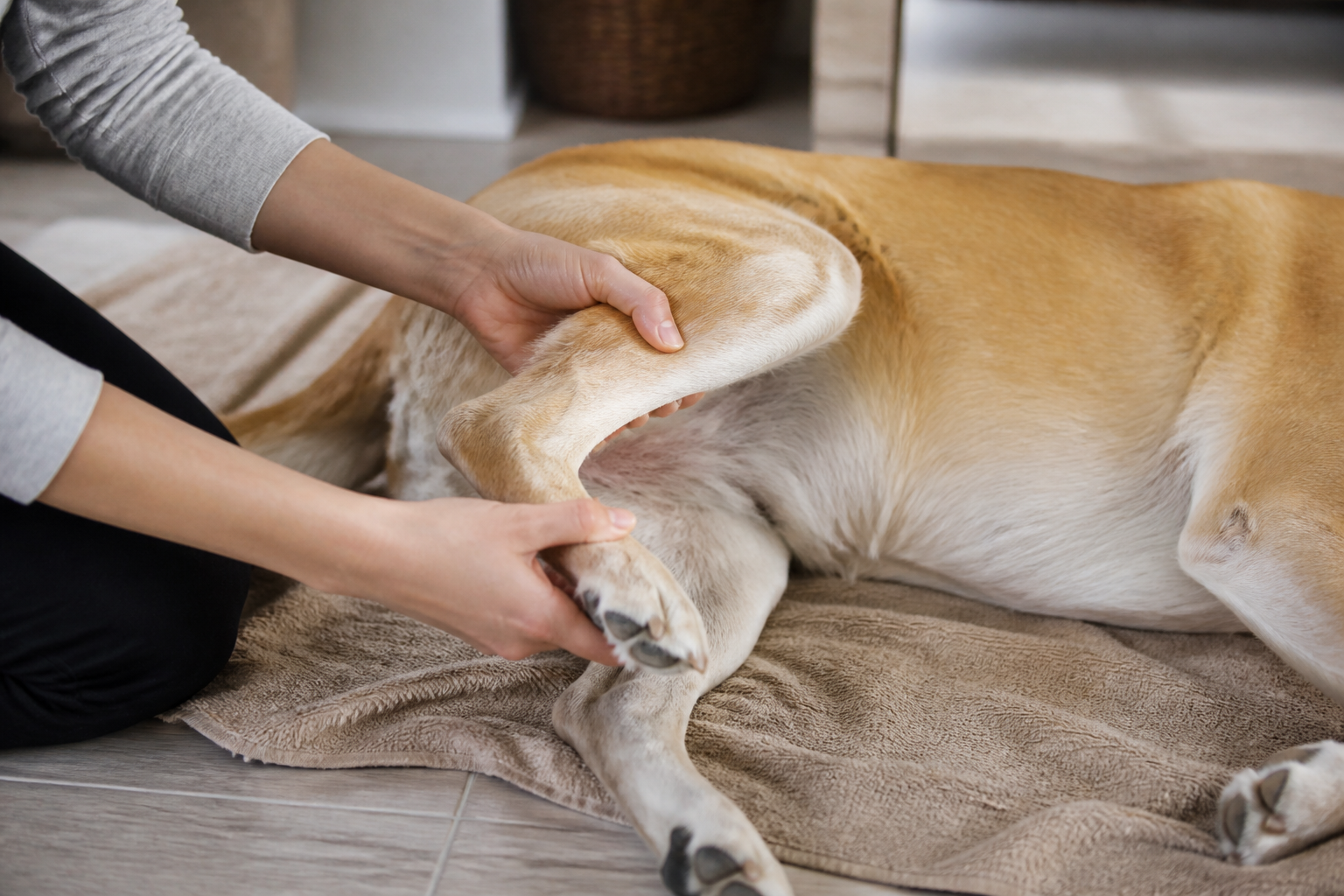
Gently flex each joint one at a time and watch for flinching, pulling away, or a yelp.
Common causes in the paw and lower leg
The paw is the single most common source of a sudden limp, and the easiest to check yourself. Look for a torn or overgrown nail, a cracked pad, a splinter or grass seed lodged in the webbing, a cut, or a bee sting. In hot weather, pavement burns are a real cause. A gentle inspection with good light often finds the culprit in seconds.

Many sudden limps start in the paw , check pads, nails, and the webbing between toes first.
Common causes higher up the leg
Further up, strains and sprains from over-exercise are frequent, especially after a big play session. In larger and middle-aged dogs, a torn cranial cruciate ligament (CCL) in the knee is one of the most common orthopaedic injuries , the dog often suddenly can't bear weight on a hind leg. Senior dogs frequently limp from osteoarthritis, which is stiff and worse in cold, damp weather. Less commonly, limping can signal an infection, an immune joint problem, or, in older large-breed dogs, bone cancer.
What you can safely do at home
For a mild limp with no red flags, strict rest is the single most effective step: short lead-only toilet breaks, no jumping, no stairs, no running for 2–3 days. A cool compress can help a fresh, swollen strain in the first day. Keep your dog at a lean weight, as every extra kilo loads the joints. Never give human painkillers such as ibuprofen or paracetamol , they can be fatal to dogs. Only ever use pain relief prescribed by your vet.
When rest isn't enough
If a mild limp hasn't clearly improved after 48 hours of rest, book a vet visit. Your vet may examine the joints, take X-rays, and check for ligament damage. Many causes , cruciate tears, some fractures, and advanced arthritis , need proper treatment to prevent long-term damage, and early care usually means a better outcome.
Living context by region
This guide is written for multi-region English readers (US/UK/AU/NZ/CA/EU and more). Where climate, products, or vet access differ, prefer local veterinary advice and local product labels. Use metric first; keep °F/lb in mind for North American homes.
When to call your vet
-
Signs are getting worse over hours, not better
-
Pain, persistent vomiting/diarrhea, or neurological signs
-
You needed force or guesswork to keep going at home
Common mistakes
-
Waiting because the animal 'still looks okay' while prey species hide pain
-
Changing five variables at once so you cannot tell what helped
-
Copying drug doses from social media
-
Skipping species-appropriate husbandry while buying more gadgets
FAQ
Should I walk my dog if he's limping?
Can I give my dog my own painkillers?
Why does my old dog limp more in the morning?
The limp comes and goes , is that less serious?
My highlights & notes
This article is for general education and is not a substitute for professional veterinary advice. If your pet is unwell, please consult a veterinarian.
Worried about your pet?
Peqaboo’s AI helps you track symptoms, understand lab reports, and know when to see a vet.
Get the Peqaboo app