

How to Sprout Seeds for Your Bird: A Fresh, Living Food Upgrade
Dry seed is a dead food; a sprouted seed is a living one, packed with more usable protein and vitamins. Sprouting is cheap and easy, but hygiene is everything. Here is a safe, step-by-step method plus the mould warning signs every owner must know.

Quick answer

How to Sprout Seeds for Your Bird: A Fresh, Living Food Upgrade
Sprouting turns a dry seed into a living, growing food that is higher in usable protein, enzymes and vitamins than the same seed dry. It is a genuinely excellent fresh food for most birds, from budgies to large parrots. The catch is hygiene: warm, moist conditions grow mould and bacteria just as happily as they grow sprouts. Rinse thoroughly at least twice a day, use only fresh water, and throw out any batch that smells off.
- A sprouted seed converts stored fat into growing protein and vitamins, making it more nutritious than dry seed.
- Sprouts are a fresh food, not a complete diet , they add to a good pellet-and-vegetable base.
- The whole process takes 1-4 days depending on the seed and your room temperature.
- Hygiene failures, not the seeds themselves, are what make sprouting risky.
- Species
- bird
- Category
- nutrition
- Risk level
- medium
- Content focus
- practical owner decisions + mechanism
- When to escalate
- same-day if pain, not eating, breathing issues, or rapid decline
Decide in 60 seconds
| Situation | Do now |
|---|---|
| Mild / stable at home | Follow steps in this guide and monitor for 12–24 hours |
| Not eating, hiding, or clear pain | Same-day vet (species-savvy if exotic) |
| Breathing hard, collapse, continuous distress | Emergency vet now |
| You are unsure after reading | Call a clinic with your notes rather than waiting days |
Why bother sprouting
A dry seed is dormant. The moment it germinates, it starts converting its stored fat into the proteins, enzymes and vitamins a young plant needs to grow , which is exactly the nutrition profile that benefits your bird. For seed-loving species that resist vegetables, sprouts are also a brilliant bridge food: they look and feel like seed but behave nutritionally much more like a fresh vegetable.
They are cheap, too. A small jar of mixed sprouting seed makes many servings, and you can sprout the same mixes you already trust.

What you need
You need a clean glass jar with a mesh or sprouting lid (or a fine sieve), good-quality seed sold for sprouting or eating , never treated garden seed , and clean drinking water. That is it. Avoid anything sold as garden or agricultural seed, which may be coated with fungicide.
Rinse and drain thoroughly at least twice a day , clean water is what keeps sprouts safe.
Step by step
- Measure a small amount. Sprouts expand, so a tablespoon or two of dry seed is plenty for one small bird.
- Rinse, then soak. Rinse the seed, then soak it in cool water for 4-8 hours (overnight is fine).
- Drain fully. Pour off all the soaking water through the mesh. Standing water is what breeds problems.
- Rinse and drain twice daily. Two or three times a day, run fresh water through, swirl, and drain completely. Leave the jar tilted mouth-down so it keeps draining.
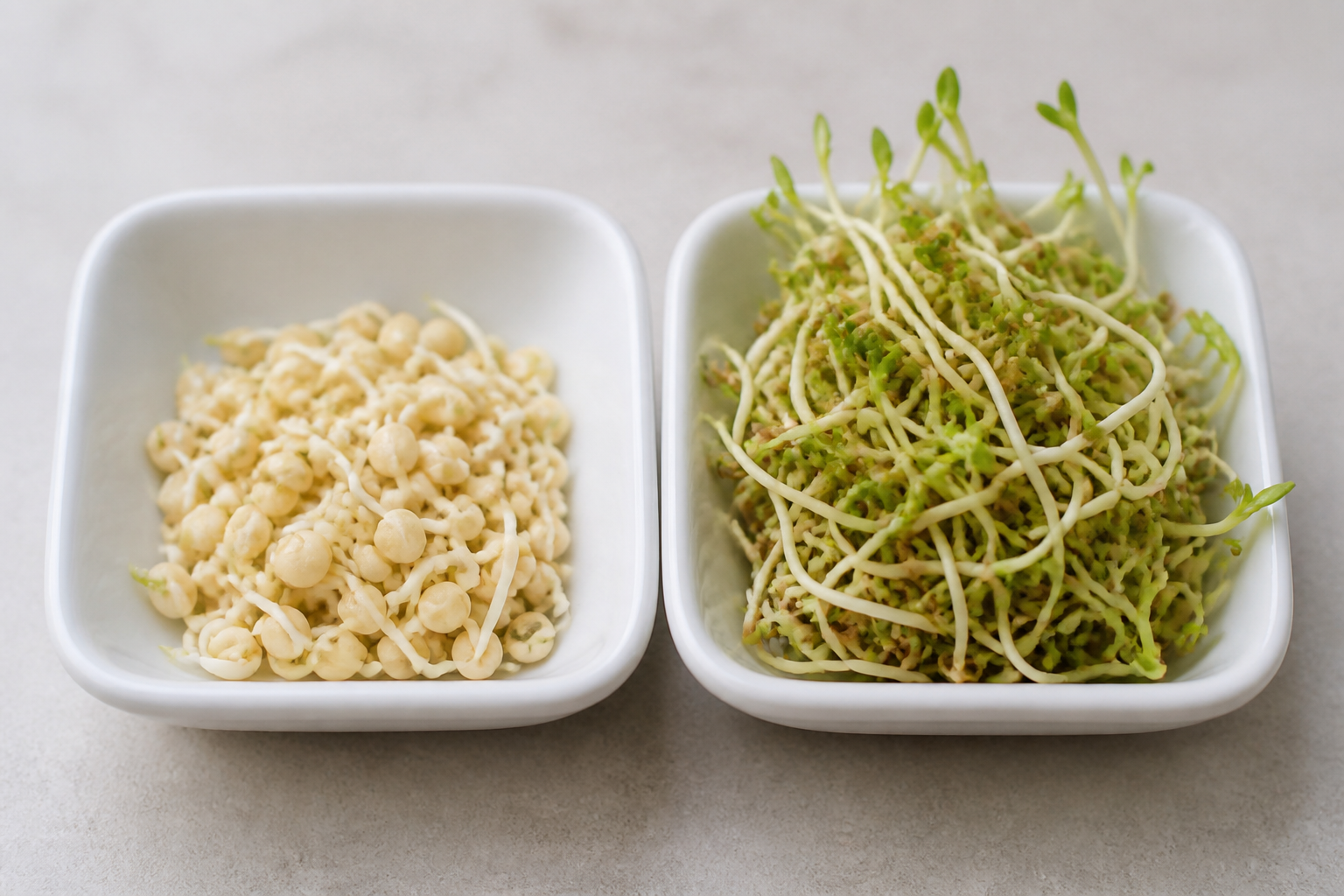
- Harvest early. As soon as you see a tiny white tail , usually 1-2 days , they are ready. Longer is not better.
- Final rinse and chill. Give a last rinse, drain, and keep in the fridge. Use within 1-2 days.
Serving them safely
Offer sprouts in a clean dish and remove them after a few hours, especially in warm weather, because sitting in a cage at room temperature is when they spoil. Start with a small amount to let your bird's gut adjust, and mix sprouts into foods it already accepts. Rinse under cool water just before serving.
Aim for a short white tail (left). Long green shoots (right) mean you have waited too long.
Common mistakes
The biggest mistake is under-rinsing , leaving seed damp and stagnant between rinses. The second is growing them too long: overgrown green sprouts are harder to keep clean and no more nutritious for the effort. Warm kitchens speed everything up, including spoilage, so in hot, humid weather rinse more often and harvest sooner.
Living context by region
This guide is written for multi-region English readers (US/UK/AU/NZ/CA/EU and more). Where climate, products, or vet access differ, prefer local veterinary advice and local product labels. Use metric first; keep °F/lb in mind for North American homes.
When to call your vet
-
Signs are getting worse over hours, not better
-
Pain, persistent vomiting/diarrhea, or neurological signs
-
You needed force or guesswork to keep going at home
Common mistakes
-
Waiting because the animal 'still looks okay' while prey species hide pain
-
Changing five variables at once so you cannot tell what helped
-
Copying drug doses from social media
-
Skipping species-appropriate husbandry while buying more gadgets
FAQ
Which seeds sprout best for birds?
How much should I feed?
Can I sprout in bulk and store it?
My sprouts smell slightly sour , are they still okay?
My highlights & notes
This article is for general education and is not a substitute for professional veterinary advice. If your pet is unwell, please consult a veterinarian.
Worried about your pet?
Peqaboo’s AI helps you track symptoms, understand lab reports, and know when to see a vet.
Get the Peqaboo app