

Ammonia, Nitrite, Nitrate: Reading Your Water Test Kit
Your test kit is the only way to see the invisible chemistry that keeps fish alive. This guide explains what ammonia, nitrite, and nitrate each mean, the target numbers to aim for, how to read the colours accurately, and exactly what to do when a reading comes back wrong.

Quick answer

Ammonia, Nitrite, Nitrate: Reading Your Water Test Kit
In a healthy, cycled tank ammonia and nitrite should both read 0 ppm, and nitrate should sit below about 20-40 ppm. Ammonia and nitrite are acutely toxic; nitrate is the far milder end-product you dilute with water changes. Test weekly, and any time fish look unwell.
- Ammonia (NH3/NH4): target 0 ppm , toxic even at low levels.
- Nitrite (NO2): target 0 ppm , also acutely toxic.
- Nitrate (NO3): keep below 20-40 ppm via water changes.
- Liquid reagent kits are far more accurate than paper test strips.
- A reading of anything above 0 for ammonia or nitrite is an action item, not a curiosity.
- Species
- fish
- Category
- environment
- Risk level
- medium
- Content focus
- practical owner decisions + mechanism
- When to escalate
- same-day if pain, not eating, breathing issues, or rapid decline
Decide in 60 seconds
| Situation | Do now |
|---|---|
| Mild / stable at home | Follow steps in this guide and monitor for 12–24 hours |
| Not eating, hiding, or clear pain | Same-day vet (species-savvy if exotic) |
| Breathing hard, collapse, continuous distress | Emergency vet now |
| You are unsure after reading | Call a clinic with your notes rather than waiting days |
What each number actually means
Fish constantly excrete ammonia through their gills and waste. In a cycled tank, one group of bacteria converts ammonia into nitrite, and a second group converts nitrite into far less harmful nitrate. This is the nitrogen cycle. When you test, you are checking that this bacterial chain is keeping up with the amount of waste your fish produce.
Ammonia and nitrite are the dangerous readings. Both damage gills and blood at low concentrations and can kill within a day at high ones. Nitrate is the comparatively safe end-product, but it still needs to be kept down because chronically high nitrate stresses fish and fuels algae.
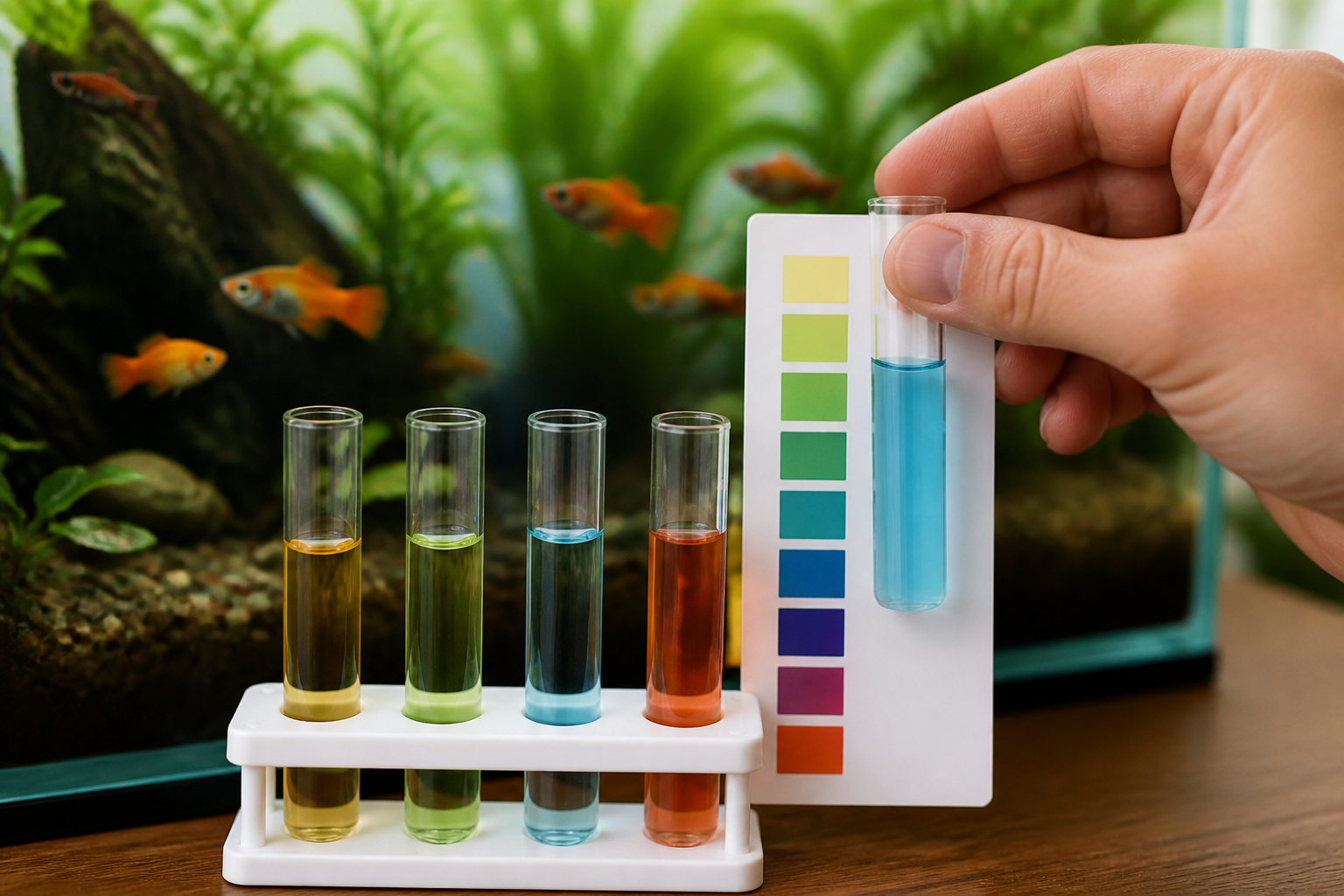
How to read the kit accurately
Use a liquid reagent kit rather than strips where you can , strips drift badly with humidity, which matters in damp subtropical flats.
Read results against a white background in natural light for the truest colour match.
Hold the tube against the white section of the colour card in natural daylight, not under warm indoor bulbs that skew the colour. Read at the recommended time; some tests, especially nitrate, keep developing and will read falsely high if you wait too long. Shake nitrate reagent bottles hard, as the manufacturer instructs, or you will get low false readings.
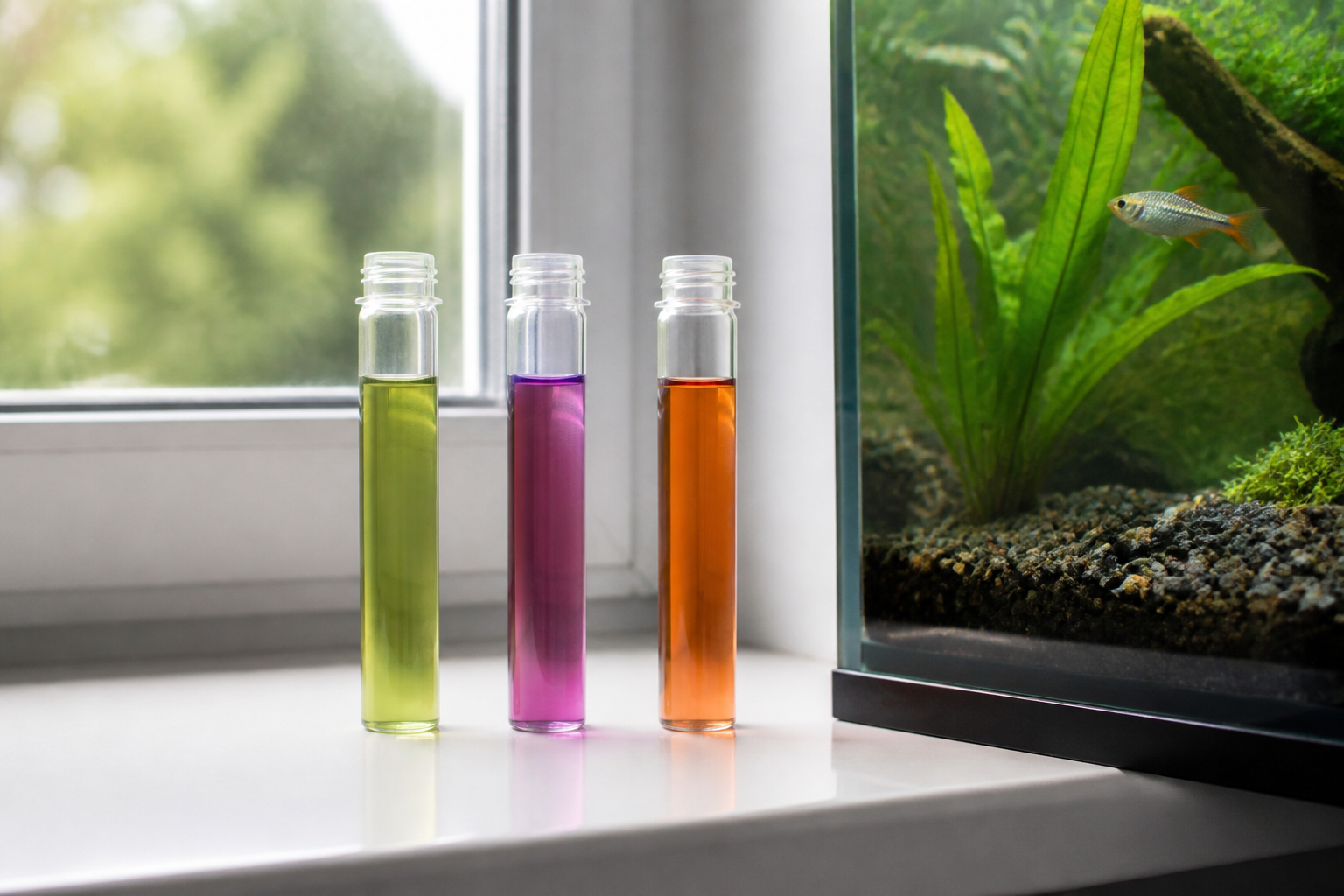
Ammonia and nitrite should read zero in a healthy, cycled tank; only nitrate rises over time.
Target ranges at a glance
Aim for ammonia 0, nitrite 0, and nitrate under 20-40 ppm. During a new tank's cycle you will see ammonia rise then fall, nitrite rise then fall, and finally nitrate appear , that sequence is how you know the tank is maturing.
Living context by region
This guide is written for multi-region English readers (US/UK/AU/NZ/CA/EU and more). Where climate, products, or vet access differ, prefer local veterinary advice and local product labels. Use metric first; keep °F/lb in mind for North American homes.
When to call your vet
-
Signs are getting worse over hours, not better
-
Pain, persistent vomiting/diarrhea, or neurological signs
-
You needed force or guesswork to keep going at home
Common mistakes
-
Waiting because the animal 'still looks okay' while prey species hide pain
-
Changing five variables at once so you cannot tell what helped
-
Copying drug doses from social media
-
Skipping species-appropriate husbandry while buying more gadgets
FAQ
How often should I test?
Are test strips good enough?
Why is my ammonia never zero with a new tank?
Do reagent kits expire?
My highlights & notes
This article is for general education and is not a substitute for professional veterinary advice. If your pet is unwell, please consult a veterinarian.
Worried about your pet?
Peqaboo’s AI helps you track symptoms, understand lab reports, and know when to see a vet.
Get the Peqaboo app