

Acclimating New Fish: Float, Drip, and Why It Matters
New fish arrive stressed and in water that may differ sharply from your tank. Acclimating them slowly prevents shock and saves lives. This guide explains the float and drip methods step by step, why not to pour in bag water, and the quarantine habit that protects your whole tank.

Quick answer

Acclimating New Fish: Float, Drip, and Why It Matters
Never just tip a new fish straight into your tank. The bag water can differ in temperature, pH and other chemistry, and a sudden change causes dangerous shock. Instead, equalise temperature by floating the bag, then slowly mix your tank water in over 15 to 60 minutes, and finally net the fish in, leaving the old water behind.
- Species
- fish
- Category
- health
- Risk level
- medium
- Content focus
- practical owner decisions + mechanism
- When to escalate
- same-day if pain, not eating, breathing issues, or rapid decline
Decide in 60 seconds
| Situation | Do now |
|---|---|
| Mild / stable at home | Follow steps in this guide and monitor for 12–24 hours |
| Not eating, hiding, or clear pain | Same-day vet (species-savvy if exotic) |
| Breathing hard, collapse, continuous distress | Emergency vet now |
| You are unsure after reading | Call a clinic with your notes rather than waiting days |
Why acclimation matters
A fish in a shop or shipping bag has been in stable water that may be quite different from yours. Temperature, pH, hardness and salinity can all vary. Dumped straight in, the fish faces an instant swing that stresses its body and can be fatal, sometimes hours or days later. Slow acclimation lets its system adjust gradually, which is why patience here pays off in survival.
The float method (simple)
The float method suits hardy community fish. Turn off bright tank lights to reduce stress. Float the unopened bag on the tank surface for about 15 minutes so the temperatures equalise. Then open the bag, roll the top down so it floats, and add a small amount of tank water every few minutes for the next 15 to 20 minutes to blend the chemistry. Finally, net the fish out and release it, discarding the bag water.
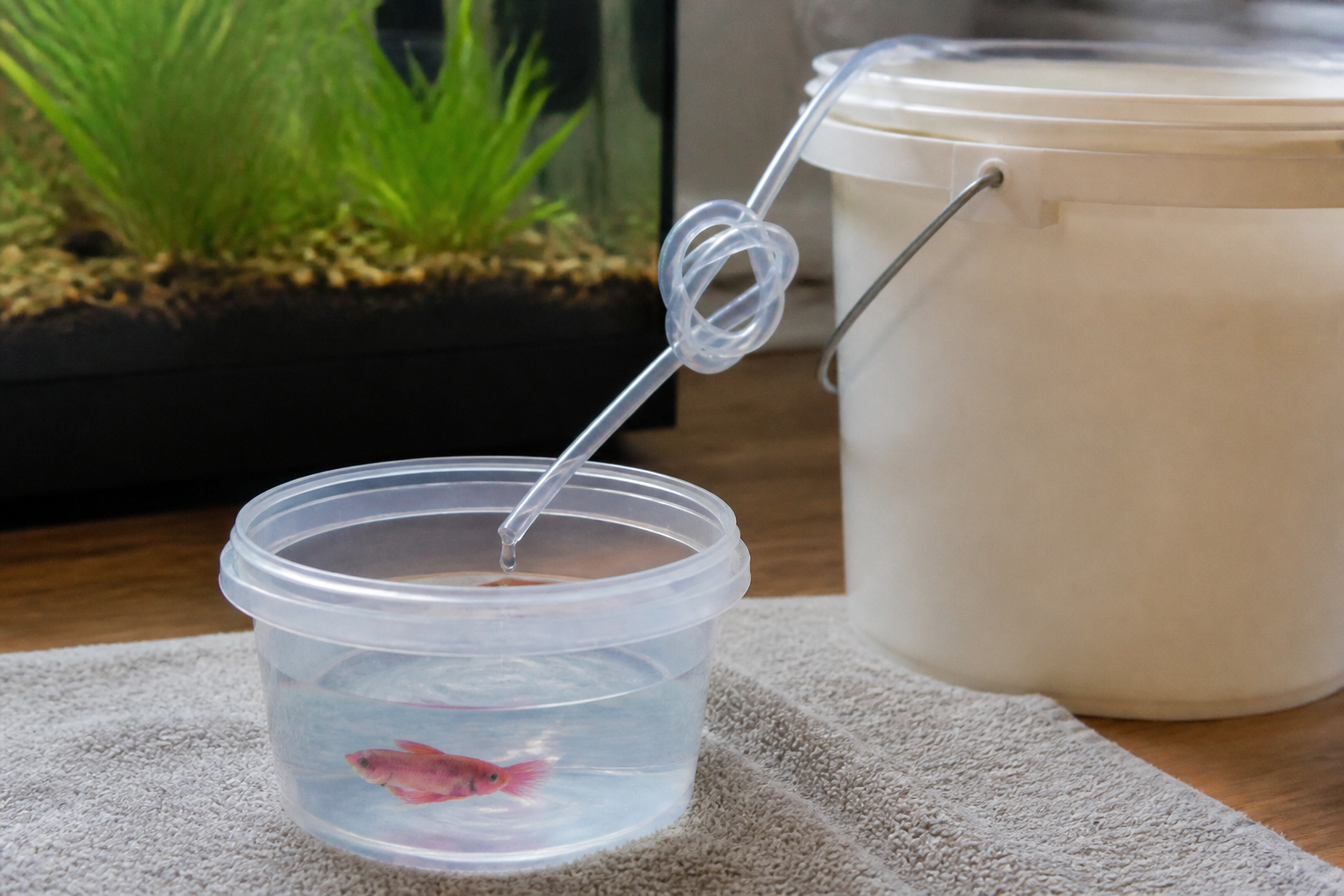
A slow drip lets the new fish adjust gradually to your water's chemistry.
The drip method (gentler)
The drip method is best for sensitive fish, invertebrates like shrimp, and long-shipped arrivals. Place the fish and its water in a clean container below tank level. Run airline tubing from the tank, start a siphon, and tie a loose knot or use a valve to slow the flow to a few drips per second. Let it drip until the water volume has roughly doubled or tripled over 30 to 60 minutes, discarding excess as needed.
Release without transferring water
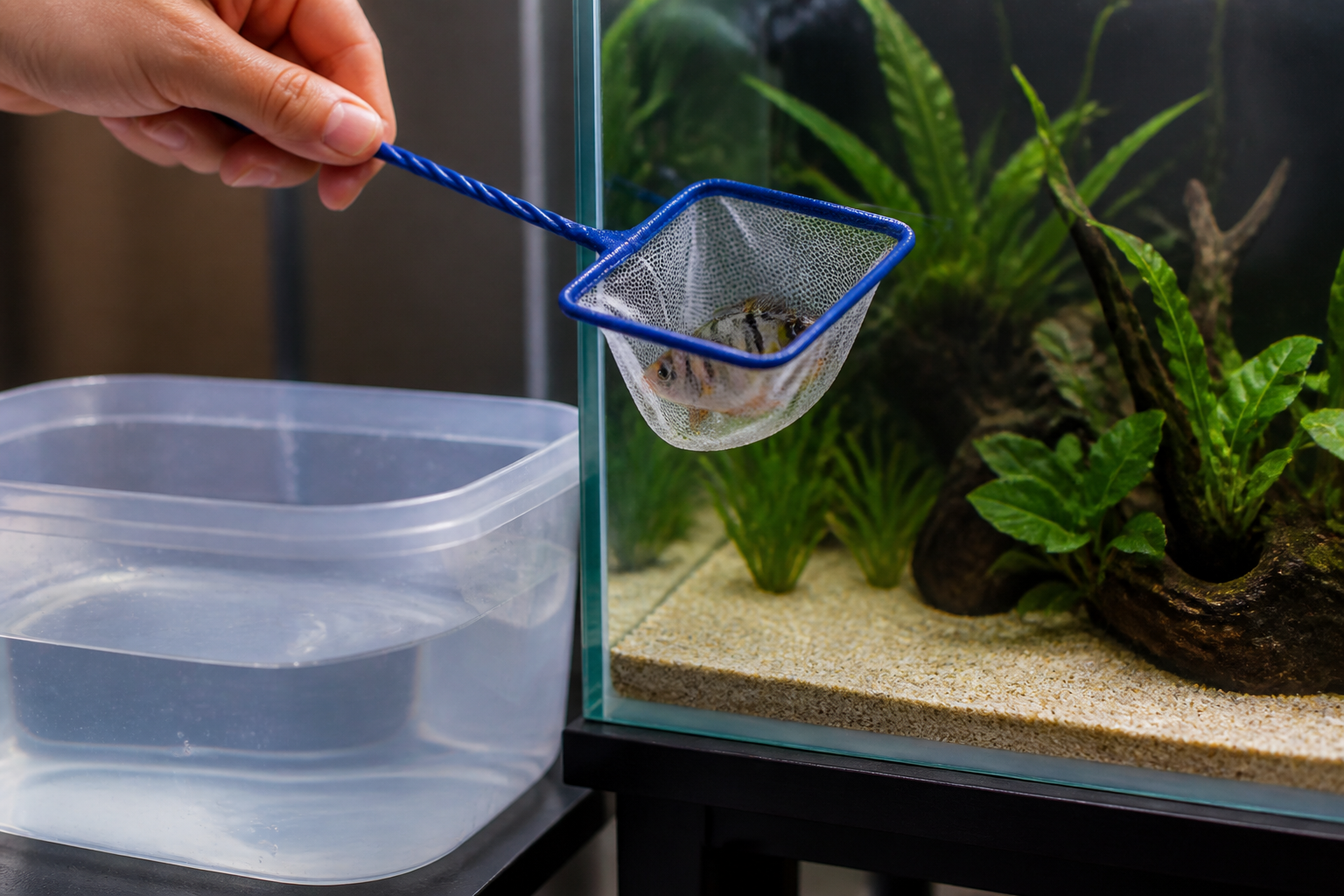
Net the fish into the tank rather than pouring in the old bag water.
Once temperature and chemistry are matched, net the fish gently and place it in the tank, leaving the container water behind. Do not pour the old water in, as it can carry disease, parasites and diluted medications from the shop system. Dim the lights for the first few hours and avoid feeding immediately. Give the new fish quiet time to find hiding spots and settle before tankmates take much interest.
Living context by region
This guide is written for multi-region English readers (US/UK/AU/NZ/CA/EU and more). Where climate, products, or vet access differ, prefer local veterinary advice and local product labels. Use metric first; keep °F/lb in mind for North American homes.
When to call your vet
-
Signs are getting worse over hours, not better
-
Pain, persistent vomiting/diarrhea, or neurological signs
-
You needed force or guesswork to keep going at home
Common mistakes
-
Waiting because the animal 'still looks okay' while prey species hide pain
-
Changing five variables at once so you cannot tell what helped
-
Copying drug doses from social media
-
Skipping species-appropriate husbandry while buying more gadgets
FAQ
How long should acclimation take?
Can I just match the temperature and skip the rest?
Why can't I add the bag water to my tank?
Do I need to feed the new fish right away?
My highlights & notes
This article is for general education and is not a substitute for professional veterinary advice. If your pet is unwell, please consult a veterinarian.
Worried about your pet?
Peqaboo’s AI helps you track symptoms, understand lab reports, and know when to see a vet.
Get the Peqaboo app