

Ichthyophthiriasis
Ichthyophthirius multifiliis
Also known as: Ich, White spot disease
In short
Ichthyophthiriasis, commonly known as Ich or White Spot Disease, is a highly contagious freshwater fish parasite causing salt-like spots, respiratory distress, and skin damage. Early diagnosis is key to a successful recovery.
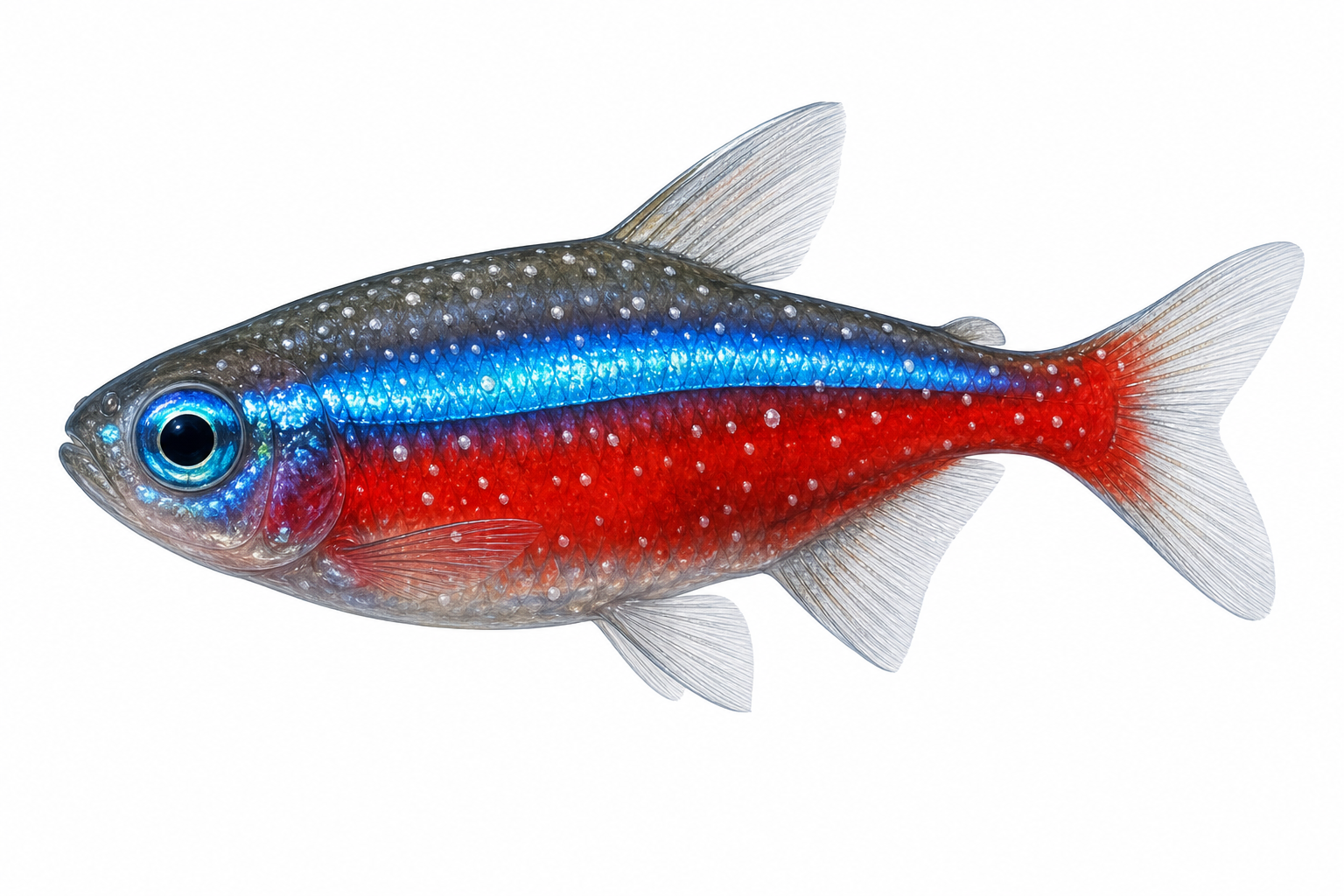
TL;DR. Ichthyophthiriasis (Ich) is a highly contagious freshwater fish parasite that causes white, salt-like spots on the skin and gills, requiring prompt treatment to prevent severe respiratory distress and death.
The classic 'salt-like' white spots on a freshwater fish indicating an active Ichthyophthiriasis infection.
What is it?
Ichthyophthiriasis, universally known to aquarists as "Ich" or "White Spot Disease," is one of the most common and devastating infectious diseases affecting freshwater fish. The disease is caused by Ichthyophthirius multifiliis, a large, ciliated protozoan parasite. Because of its highly contagious nature and rapid life cycle, an undetected infection can quickly compromise an entire aquarium or pond population.
To understand why Ich is so dangerous, one must understand how the parasite interacts with the fish's body. The parasite penetrates the outer layers of the fish's skin, fins, and gills. Once settled beneath the mucus layer, it feeds on the surrounding tissue and cells. This burrowing action damages the delicate epithelial tissues, disrupting the fish's ability to regulate its internal salt and water balance—a process known as osmoregulation. Furthermore, when the parasite infects the gills, it physically blocks oxygen exchange, leading to severe respiratory distress.
For pet owners, understanding the parasite's life cycle is critical for successful treatment. The cycle consists of three distinct phases:
- The Trophont Phase: This is the feeding stage where the parasite lives on the fish, protected beneath the mucus layer. In this stage, the parasite is highly resistant to most water-borne medications.
- The Tomont Phase: Once mature, the trophont leaves the fish, drops to the bottom of the tank, and secretes a sticky cyst. Inside this cyst, it divides rapidly into hundreds of new infectious units.
- The Theront Phase: The cyst ruptures, releasing free-swimming, infectious theronts into the water. These theronts must find a fish host within a short window to survive. This is the only stage of the parasite's life cycle that is highly vulnerable to chemical treatments.
Causes & risk factors
The primary cause of an Ich outbreak is the introduction of the Ichthyophthirius multifiliis parasite into a naive aquatic system. This typically occurs when new fish, live plants, or contaminated equipment (such as nets or gravel) are introduced to an established aquarium without proper quarantine protocols.
While the parasite is the physical cause, environmental stressors act as major catalysts for severe outbreaks. Healthy fish with robust immune systems can sometimes suppress mild parasitic loads. However, when a fish experiences stress, its immune response is compromised, allowing the parasite to multiply unchecked. Common triggers include:
- Sudden fluctuations in water temperature
- Poor water quality, including elevated ammonia, nitrite, or nitrate levels
- Improper pH levels or rapid pH shifts
- Overcrowding and territorial aggression among tankmates
There are no specific breed or species predispositions recorded for Ichthyophthiriasis; virtually all freshwater fish species are susceptible to infection. However, scaleless fish (such as certain catfish and loaches) often suffer more severe tissue damage because they lack the protective barrier of physical scales.
Signs to watch for
Recognizing the signs of Ich early is critical to saving your fish. Because the parasite affects both the skin and the respiratory system, symptoms manifest behaviorally and physically.
- White spots on skin and fins (Cardinal): The classic presentation is the appearance of tiny, raised, white nodules that look like grains of salt sprinkled across the fish's body, fins, and tail.
- Flashing or rubbing against substrate (Common): Affected fish will swim erratically and scrape their bodies against gravel, rocks, or decorations. This behavior, known as "flashing," is an attempt to relieve the intense irritation caused by the burrowing parasites.
- Rapid gill movement or dyspnea (Common): If the parasites have invaded the gills, the fish will breathe rapidly. You may observe their gill covers (opercula) flaring rapidly, or the fish may hover near filter outputs or gasp at the water's surface.
- Lethargy (Common): Infected fish often become sluggish, resting on the bottom of the tank or hiding in corners with clamped fins.
- Anorexia (Occasional): As the disease progresses and the fish becomes increasingly stressed and weak, they may lose interest in food.

A fish 'flashing' or rubbing against decor to relieve irritation from burrowing parasites.
How vets diagnose it
While the visual presence of white spots is highly suggestive of Ich, a definitive diagnosis is necessary to rule out other pathogens, such as fungal infections or other protozoan parasites like Oodinium (velvet disease).
Your veterinarian will begin with a thorough evaluation of the aquarium's history, water parameters, and clinical signs. To confirm the diagnosis, the gold standard test is wet mount microscopy of a skin scrape or gill biopsy.
To perform a skin scrape, your vet will gently slide a coverslip or spatula along the fish's body to collect a small sample of the protective mucus layer. For a gill biopsy, a tiny fragment of gill tissue is carefully harvested. These samples are placed on a glass slide with a drop of tank water and examined immediately under a microscope.
Under magnification, the vet will look for the characteristic Ichthyophthirius multifiliis trophont. It is easily identified by its large size, its slow, rolling motion driven by tiny hair-like cilia, and its distinctive, horseshoe-shaped macronucleus. Confirming the parasite microscopically ensures that the correct treatment protocol is initiated without wasting valuable time.
Treatment options
Treating Ich successfully requires addressing the entire aquatic ecosystem, not just the individual sick fish. Because the parasites residing under the fish's skin are protected from medications, treatments must be sustained long enough to target the free-swimming theront stage as they emerge.
First-Line Therapy: Osmotic and Environmental Management
- Sodium Chloride (Salt): Sodium chloride serves as a vital fluid therapy and electrolyte replenisher. When the parasite damages the fish's skin, it disrupts their osmotic balance, causing freshwater to flood their tissues. Adding veterinary-grade salt to the water helps restore this balance, reducing physiological stress. Furthermore, salt is toxic to the free-swimming theront stage of the parasite.
- Temperature Elevation: Raising the water temperature gradually (typically to 82°F–86°F, depending on the temperature tolerance of the specific fish species) accelerates the parasite's life cycle. This forces the dormant tomonts to hatch faster, shortening the overall treatment window and exposing the vulnerable theronts to medications more quickly.
Second-Line Therapy: Systemic Support
- Codeine: In advanced cases where fish suffer from severe tissue damage, extreme physiological stress, or respiratory distress, your veterinarian may prescribe systemic analgesics such as codeine. Operating as an opiate agonist, analgesic, and antitussive, codeine can help manage pain and reduce the hyperventilatory response associated with severe gill damage. This medication must be dosed and administered strictly under direct veterinary guidance.
Additionally, vets may recommend specific water-borne parasiticides, such as formalin or malachite green, though these must be used with extreme caution as they can be toxic to certain sensitive fish species and beneficial biological filters.
Prognosis
The prognosis for fish with Ichthyophthiriasis is excellent if diagnosed and treated early in the parasite's life cycle. When environmental stressors are corrected and appropriate therapy is applied promptly, most fish make a full recovery without long-term complications.
However, the prognosis becomes poor if severe gill damage or secondary bacterial septicemia has occurred before intervention. Once the gill tissue is extensively scarred or destroyed, the fish can no longer oxygenate its blood properly. Additionally, the open wounds left by exiting parasites serve as entry points for opportunistic bacteria, which can enter the bloodstream and cause rapid, fatal systemic infections.
Prevention
Preventing Ich is far easier and less stressful than treating an active outbreak. Because the parasite must be introduced to a system to cause disease, strict biosecurity is your best defense:
- Quarantine Protocol: Quarantine all new fish, invertebrates, and live plants in a separate, dedicated isolation tank for a minimum of 2 to 4 weeks before introducing them to your main display tank. This allows time for any latent infections to manifest and be treated safely.
- Water Quality Maintenance: Perform regular water changes, vacuum the substrate to remove organic waste, and monitor ammonia, nitrite, and nitrate levels consistently. A clean, stable environment minimizes stress and keeps the fish's immune system strong.
- Equipment Sanitation: Dedicate nets, siphons, and buckets to specific tanks, or thoroughly disinfect and dry equipment between uses to prevent cross-contamination.
When to call your vet
If you suspect your fish have Ich, do not adopt a "wait and see" approach. Because of the parasite's rapid reproduction, a few spots can turn into a system-wide crisis within days.
Contact a veterinarian who specializes in aquatic medicine if you notice flashing behavior, clamped fins, or the characteristic white spots on any fish.
You must seek emergency veterinary assistance immediately if your fish are gasping at the water surface, showing extremely rapid gill movements, or exhibiting red, bloody streaks on their skin or fins, which indicate a life-threatening secondary bacterial infection.
Sources
Clinical guidance is based on standard veterinary aquatic medicine protocols. No direct textbook excerpts were provided for this record.
My highlights & notes
Signs & symptoms
How it is diagnosed
- Skin scrape and wet mount microscopyGold standard
- Wet mount microscopy of skin scrape or gill biopsyGold standard
- Gill biopsy wet mount
Treatment approaches
Treatment must be prescribed by a licensed veterinarian based on your pet. Specific drug doses are intentionally not shown here.
Frequently asked questions
What is Ichthyophthiriasis?
Ichthyophthiriasis, commonly known as Ich or White Spot Disease, is a highly contagious freshwater fish parasite causing salt-like spots, respiratory distress, and skin damage. Early diagnosis is key to a successful recovery.
What are the symptoms of Ichthyophthiriasis?
White spots on skin and fins、Flashing or rubbing against substrate、Flashing or rubbing against tank decor、Lethargy、Rapid gill movement or dyspnea、Rapid gill movements or dyspnea、Loss of appetite
How is Ichthyophthiriasis diagnosed?
Skin scrape and wet mount microscopy、Wet mount microscopy of skin scrape or gill biopsy、Gill biopsy wet mount
How is Ichthyophthiriasis treated?
Treatment must be prescribed by a licensed veterinarian based on your pet. Specific drug doses are intentionally not shown here.
This article is for general education and is not a substitute for professional veterinary advice. If your pet is unwell, please consult a veterinarian.
Worried about your pet?
Peqaboo’s AI helps you track symptoms, understand lab reports, and know when to see a vet.
Get the Peqaboo app