

Columnaris
Flavobacterium columnare infection
Also known as: Saddleback disease, Cotton wool disease, Mouth fungus, Mouth rot, Flavobacterium columnare infection
In short
Columnaris is a highly contagious bacterial disease affecting freshwater fish, characterized by saddleback lesions, cotton-like mouth growths, and gill damage. Because acute strains can cause rapid mortality, prompt veterinary diagnosis and targeted antimicrobial therapy are essential to save your aquarium or pond population.
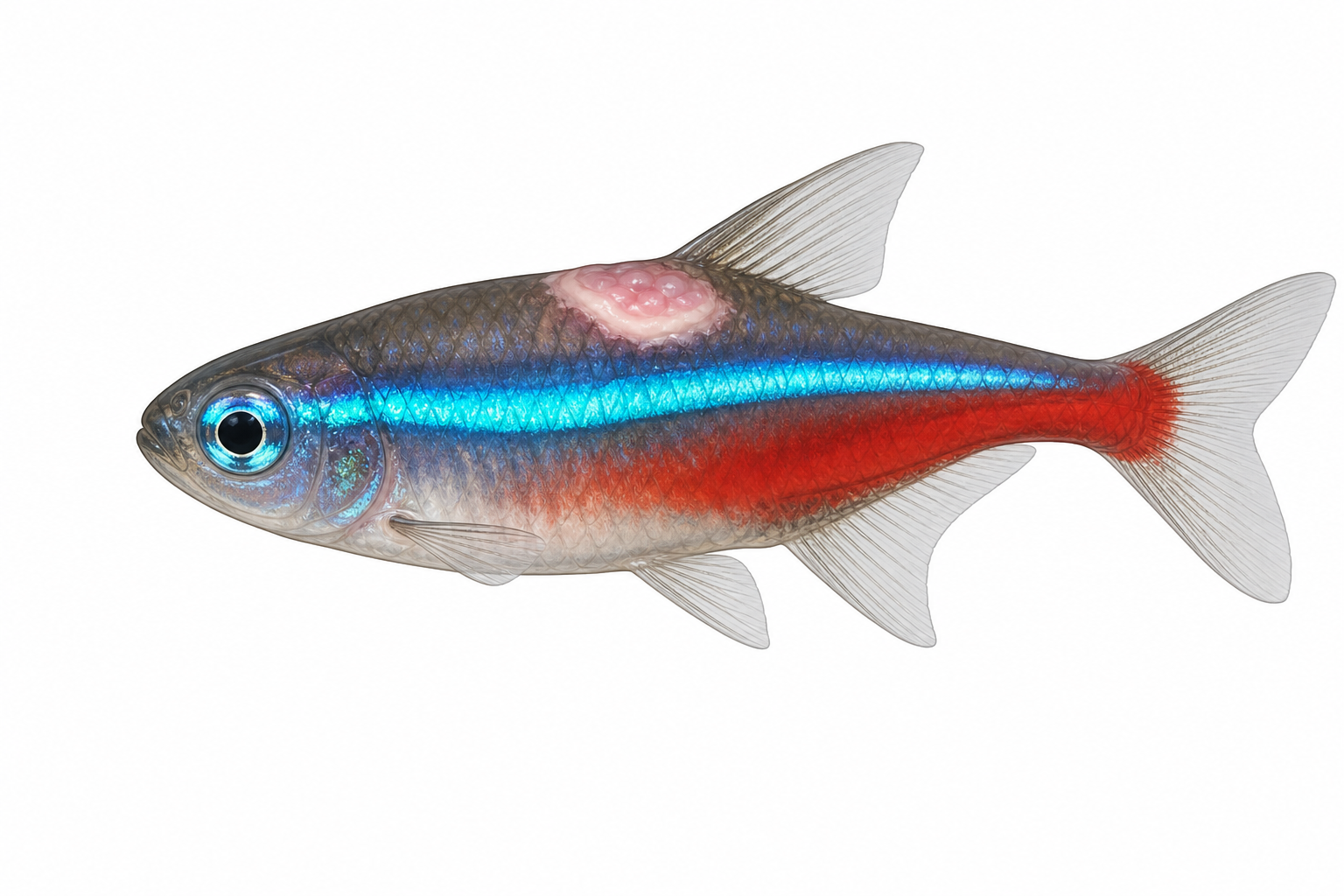
TL;DR. Columnaris is a highly contagious, rapidly progressing bacterial infection in freshwater fish that causes characteristic "saddleback" skin lesions and cotton-like growths, requiring urgent veterinary intervention.
The characteristic 'saddleback' lesion is a classic sign of Columnaris infection.
What is it?
Columnaris is a common and highly contagious bacterial disease that affects freshwater fish species worldwide. It is caused by the bacterium Flavobacterium columnare. Despite its historical and misleading common names—such as "mouth fungus" or "cotton wool disease"—this condition is strictly bacterial, not fungal. This distinction is critical because standard fungal treatments are completely ineffective against Flavobacterium columnare, and delaying proper antibacterial therapy can result in the loss of an entire fish population.
The disease primarily targets the integumentary (skin and fins) and respiratory (gills) systems of the fish. Once the bacteria colonize the host, they produce destructive extracellular enzymes, including chondroitinases and proteases. These enzymes actively break down the fish's tissues, leading to rapid tissue death (necrosis), skin ulceration, and respiratory failure.
For fish owners, columnaris represents a significant veterinary concern. The bacteria are opportunistic pathogens that are often already present in aquatic environments. Under stressful conditions or when water quality degrades, the bacteria can rapidly transition from a dormant state to an aggressive, highly infectious state. Because certain strains of this pathogen are incredibly virulent, understanding the signs and securing a rapid diagnosis can mean the difference between a successful recovery and a total tank loss.
Causes & risk factors
The primary cause of this disease is the Gram-negative, rod-shaped bacterium Flavobacterium columnare. While the bacteria can survive in water and on organic debris, they require a host or specific environmental triggers to cause clinical disease.
Several environmental factors and stressors can trigger an outbreak:
- Elevated Water Temperatures: Flavobacterium columnare thrives in warmer water. Outbreaks are significantly more common and much more severe when water temperatures rise above 15°C to 20°C (59°F to 68°F). High temperatures also increase the virulence of the bacteria while simultaneously reducing the dissolved oxygen levels in the water, stressing the fish.
- Poor Water Quality: High levels of ammonia, nitrites, or nitrates irritate the fish's skin and gills, compromising their natural protective mucus barrier and allowing the bacteria to gain a foothold.
- Physical Trauma: Rough handling, fighting among tankmates, or sharp aquarium decorations can cause minor skin abrasions. These physical breaks in the skin serve as direct entry points for the bacteria.
- Overcrowding: High stocking densities facilitate the rapid spread of the bacteria from fish to fish through direct contact or shed pathogens in the water column.
- Chronic Stress: Any factor that induces chronic stress—such as improper pH, sudden temperature fluctuations, or inadequate nutrition—suppresses the fish's immune system, making them highly susceptible to infection.
There are no documented breed or species predispositions; columnaris can affect virtually any freshwater fish, including bettas, guppies, catfish, goldfish, koi, and various cichlid species.
Signs to watch for
Columnaris can present in acute, subacute, or chronic forms. Depending on the virulence of the bacterial strain, the signs may progress over several weeks or cause sudden death within hours.
Watch closely for the following clinical signs:
- Saddleback lesion (Cardinal): This is the classic, defining sign of columnaris. It begins as a pale or discolored patch of skin, typically starting near the dorsal fin and spreading down the sides of the fish, resembling a saddle. As the lesion progresses, the skin may ulcerate, turn yellowish-gray, or begin to slough off.
- Cotton-like mouth growths (Common): Fluffy, white, yellowish, or grayish tufts of tissue develop around the mouth. This symptom is frequently mistaken for a fungal infection, but it is actually a dense accumulation of bacterial columns and necrotic tissue.
- Fin erosion (Common): The edges of the fins become ragged, frayed, and dark. The tissue between the fin rays degrades, leading to severe fin rot and eventually exposing the bony rays.
- Gill necrosis (Common): The delicate gill filaments turn brown, dark gray, or pale as the tissue dies. This severely impairs the fish's ability to extract oxygen from the water.
- Lethargy (Common): Affected fish will become sluggish, rest on the bottom of the tank, or isolate themselves from tankmates.
- Anorexia (Common): A complete loss of appetite or refusal to eat is common as the disease progresses and the fish becomes systemically ill.

Cotton-like growths around the mouth are often mistaken for fungus but are actually caused by Columnaris bacteria.
How vets diagnose it
Diagnosing columnaris requires distinguishing it from fungal infections and other bacterial pathogens. Your veterinarian will begin with a thorough physical examination of the fish and a comprehensive review of your water quality parameters.
- Wet Mount Microscopy: Your vet will perform a gentle scrape of the affected skin, fins, or gills to collect a mucus sample. They will place this sample on a slide with a drop of tank water and examine it under a light microscope. Under magnification, Flavobacterium columnare exhibits a highly characteristic "gliding" motility. The bacteria typically aggregate into long, thin, rod-shaped structures that clump together to form columns or "haystack-like" mounds. Seeing these structures confirms a presumptive diagnosis of columnaris.
- Bacterial Culture [GOLD STANDARD]: To definitively identify the pathogen, your vet will perform a bacterial culture. They will swab the lesion and inoculate selective growth media (such as Shieh medium or Ordal's medium). This test allows the laboratory to isolate Flavobacterium columnare and perform sensitivity testing to determine which antibiotics will be most effective against the specific strain affecting your fish.
- Polymerase Chain Reaction (PCR): In some clinical or research settings, PCR testing is utilized. This molecular test detects the specific DNA of Flavobacterium columnare, providing a highly rapid and precise identification of the pathogen, even in the early stages of infection.

Under a microscope, Flavobacterium columnare bacteria typically cluster into column-like structures.
Treatment options
Treating columnaris requires a prompt, multi-faceted approach. Because the bacteria can spread rapidly through the water and infect other fish, treatment is often administered to the entire aquarium or pond, or affected individuals are moved to a dedicated quarantine tank.
First-Line Therapies
- Oxytetracycline: This is a broad-spectrum tetracycline antibiotic. Your veterinarian may prescribe specific formulations, such as medicated feed or water-soluble powders, to treat systemic or localized infections. Oxytetracycline works by inhibiting bacterial protein synthesis, stopping the reproduction of the bacteria.
- Nitrofurantoin: This broad-spectrum antimicrobial is sometimes utilized in specific veterinary protocols. It is highly effective at targeting susceptible bacterial strains in aquatic environments, particularly when applied as a bath treatment under veterinary guidance.
Second-Line Therapies
- Potassium citrate: In advanced or systemic cases, your veterinarian may incorporate supportive agents like potassium citrate. This compound can assist in managing systemic pH or metabolic balance in treated fish, serving as a supportive therapy alongside primary antimicrobials.
Supportive Environmental Care
In addition to medical treatments, environmental modifications are critical to successful therapy:
- Lower the Water Temperature: If safe for your specific fish species, gradually lowering the water temperature to the lower end of their preferred range can significantly slow down the replication rate and virulence of Flavobacterium columnare.
- Optimize Water Quality: Perform regular, partial water changes to reduce the organic load and bacterial density in the water. Ensure that ammonia and nitrite levels remain at absolute zero.
- Salt Baths: Under veterinary direction, adding non-iodized aquarium salt (sodium chloride) to the water can help restore the fish's osmoregulatory balance and reduce physiological stress.
Prognosis
The prognosis for fish diagnosed with columnaris is guarded to fair. Survival and recovery are highly dependent on several critical factors:
- Virulence of the Strain: Highly virulent, acute strains of Flavobacterium columnare can cause extensive tissue damage and high mortality rates within 24 to 48 hours of the first visible sign. In these cases, even prompt treatment may have a guarded prognosis. Chronic, less virulent strains progress much more slowly and carry a much fairer prognosis if caught early.
- Water Temperature: Lower water temperatures improve the prognosis by slowing bacterial activity and giving the fish's immune system time to respond.
- Timing of Intervention: Initiating treatment at the very first sign of a saddleback lesion or mouth growth drastically improves the likelihood of a full recovery. Once severe gill necrosis or systemic infection occurs, the prognosis becomes poor.
Prevention
Preventing columnaris relies on minimizing stress and maintaining a clean, stable aquatic environment:
- Quarantine Protocol: Always quarantine new fish, invertebrates, and live plants in a separate tank for at least 2 to 4 weeks before introducing them to your main display tank. Monitor them closely for any signs of disease.
- Water Quality Maintenance: Establish a strict maintenance schedule. Test your water parameters weekly for ammonia, nitrite, nitrate, and pH. Perform regular water changes and vacuum the substrate to remove excess organic waste.
- Avoid Overcrowding: Ensure your aquarium is adequately sized for the species and number of fish you keep. Overcrowding increases stress and facilitates rapid disease transmission.
- Minimize Stress: Avoid sudden changes in water temperature or chemistry. Provide plenty of hiding places to reduce aggression among tankmates, and handle fish as gently and infrequently as possible.
When to call your vet
Contact an aquatic veterinarian immediately if you observe any signs of a saddleback lesion, cotton-like growths around the mouth, or eroding fins in your fish.
Gasping at the water surface, rapid breathing, extreme lethargy, or sudden, unexplained deaths in your aquarium are red-flag emergencies. These signs indicate severe gill damage or an acute, highly virulent bacterial strain that requires immediate veterinary intervention to prevent a catastrophic loss of your entire aquatic population.
Sources
- Guidance for this infectious aquatic disease is derived from standard veterinary aquatic medicine protocols and established fish health management guidelines.
My highlights & notes
Signs & symptoms
How it is diagnosed
- Bacterial culture on selective mediaGold standard
- Polymerase Chain Reaction (PCR)
- Wet mount microscopy of skin or gill scrapes
Treatment approaches
Treatment must be prescribed by a licensed veterinarian based on your pet. Specific drug doses are intentionally not shown here.
Frequently asked questions
What is Columnaris?
Columnaris is a highly contagious bacterial disease affecting freshwater fish, characterized by saddleback lesions, cotton-like mouth growths, and gill damage. Because acute strains can cause rapid mortality, prompt veterinary diagnosis and targeted antimicrobial therapy are essential to save your aquarium or pond population.
What are the symptoms of Columnaris?
Saddleback lesion、Loss of appetite、Cotton-like mouth growths、Fin erosion、Gill necrosis、Lethargy
How is Columnaris diagnosed?
Bacterial culture on selective media、Polymerase Chain Reaction (PCR)、Wet mount microscopy of skin or gill scrapes
How is Columnaris treated?
Treatment must be prescribed by a licensed veterinarian based on your pet. Specific drug doses are intentionally not shown here.
This article is for general education and is not a substitute for professional veterinary advice. If your pet is unwell, please consult a veterinarian.
Worried about your pet?
Peqaboo’s AI helps you track symptoms, understand lab reports, and know when to see a vet.
Get the Peqaboo app