

When to Replace UVB Bulbs: The Schedule That Prevents MBD
UVB bulbs keep producing visible light long after their UVB output has faded, and a spent bulb quietly leads to metabolic bone disease. This checklist explains when to replace UVB bulbs, how to track their age, and how to confirm output with a meter.

Quick answer

When to Replace UVB Bulbs: The Schedule That Prevents MBD
Replace most UVB bulbs on a schedule, not when they stop glowing. As a general rule, replace T5 tubes about every 12 months and T8 tubes and compact UVB lamps about every 6 to 12 months, following the manufacturer's stated lifespan. The light stays on long after useful UVB has faded, so track the install date and, ideally, verify output with a UV meter.
- Species
- reptile
- Category
- environment
- Risk level
- medium
- Content focus
- practical owner decisions + mechanism
- When to escalate
- same-day if pain, not eating, breathing issues, or rapid decline
Decide in 60 seconds
| Situation | Do now |
|---|---|
| Mild / stable at home | Follow steps in this guide and monitor for 12–24 hours |
| Not eating, hiding, or clear pain | Same-day vet (species-savvy if exotic) |
| Breathing hard, collapse, continuous distress | Emergency vet now |
| You are unsure after reading | Call a clinic with your notes rather than waiting days |
Why a spent UVB bulb is dangerous
Most diurnal reptiles need UVB to make vitamin D3 and absorb calcium. Without it, they slide into metabolic bone disease (MBD): soft bones, deformities, tremors, weakness and, untreated, death. The cruel part is that a UVB bulb keeps emitting normal visible light long after its UVB output has dropped too low to keep an animal healthy, so the enclosure looks fine while the reptile slowly declines.
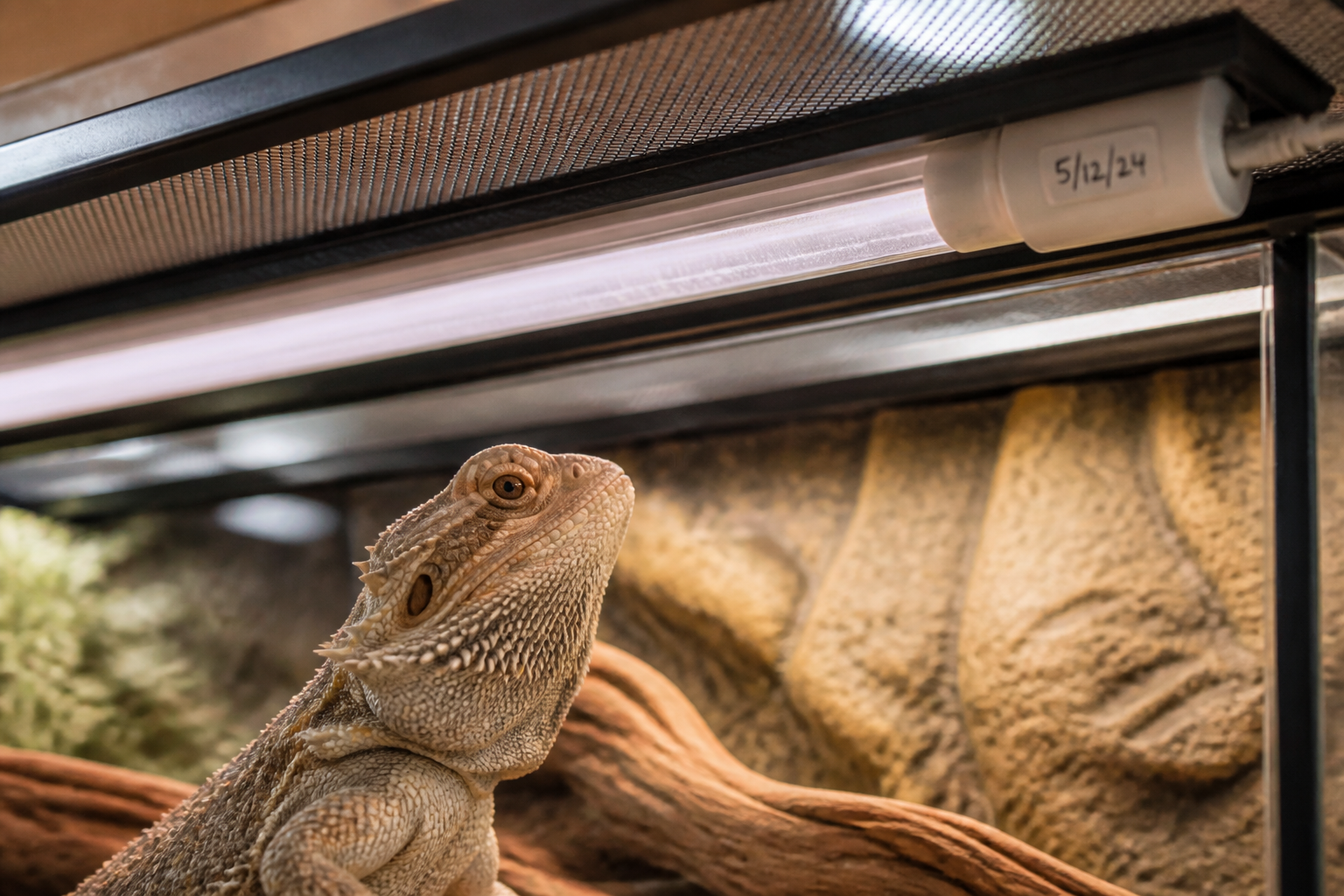
Label each UVB bulb with its install date so replacement is never left to memory.
A simple replacement schedule
Follow the lifespan printed on the packaging, and when in doubt replace sooner rather than later.
These are general figures. Always defer to the specific manufacturer's guidance for your exact model, as quality bulbs from reputable brands often last longer than cheap ones.
Track the age of every bulb
The most common failure is simply forgetting when a bulb went in. Build a habit so it never depends on memory.
Verify output with a meter
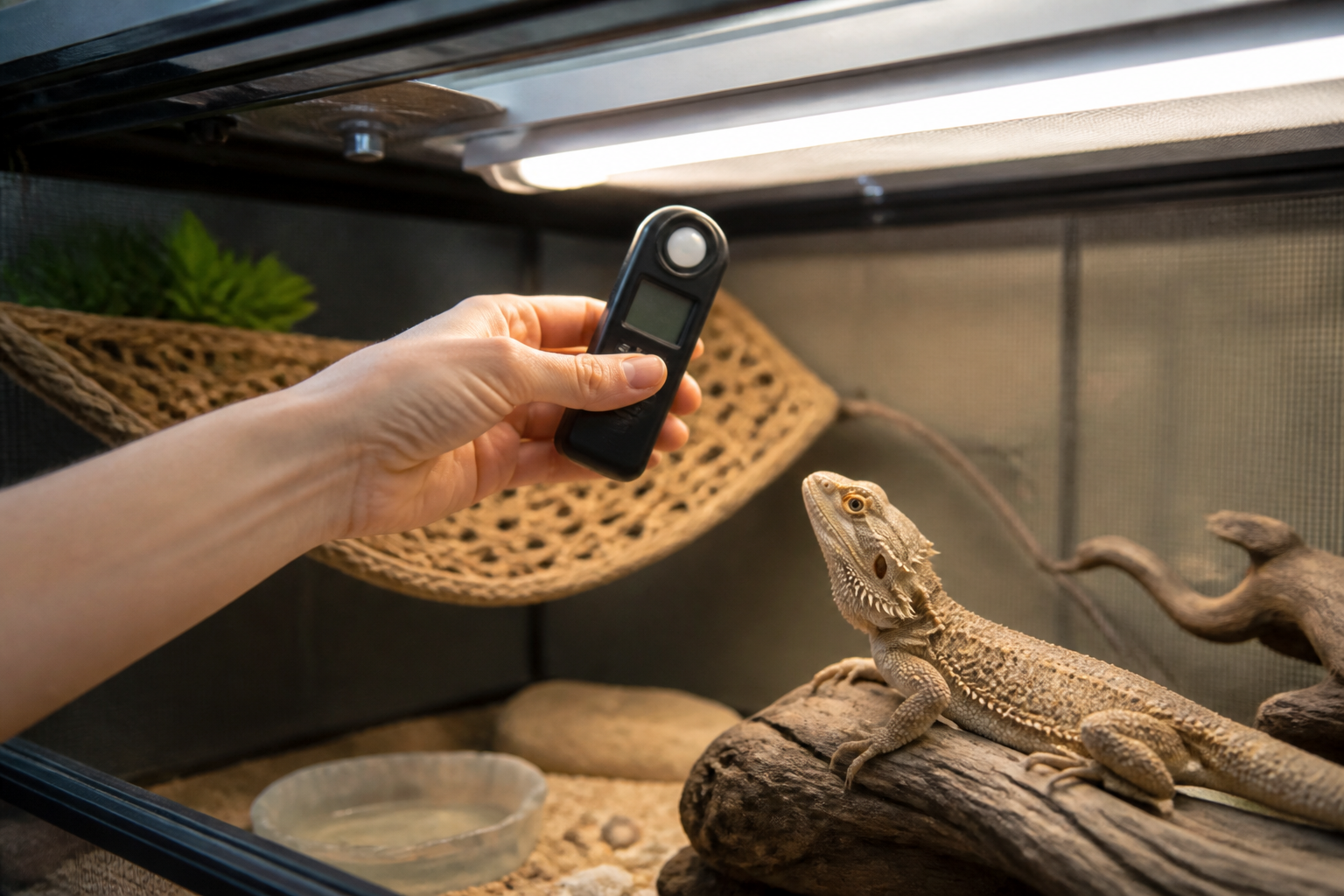
A schedule is a safety net, but a UV index meter (such as a Solarmeter) tells you what the bulb is actually producing at basking height. This is the gold standard, especially for keepers of species with high UVB needs.
A UV index meter is the only way to know a bulb's real output, since UVB fades invisibly.
Living context by region
This guide is written for multi-region English readers (US/UK/AU/NZ/CA/EU and more). Where climate, products, or vet access differ, prefer local veterinary advice and local product labels. Use metric first; keep °F/lb in mind for North American homes.
When to call your vet
-
Signs are getting worse over hours, not better
-
Pain, persistent vomiting/diarrhea, or neurological signs
-
You needed force or guesswork to keep going at home
Common mistakes
-
Waiting because the animal 'still looks okay' while prey species hide pain
-
Changing five variables at once so you cannot tell what helped
-
Copying drug doses from social media
-
Skipping species-appropriate husbandry while buying more gadgets
FAQ
My UVB bulb still lights up. Do I really need to replace it?
How can I tell if UVB has faded without a meter?
Does a UVB bulb behind glass or mesh work?
Is more UVB always better?
My highlights & notes
This article is for general education and is not a substitute for professional veterinary advice. If your pet is unwell, please consult a veterinarian.
Worried about your pet?
Peqaboo’s AI helps you track symptoms, understand lab reports, and know when to see a vet.
Get the Peqaboo app