

Tortoise Soaking and Hydration: Keeping Shells and Kidneys Healthy
Regular warm soaks help tortoises drink, pass waste, and stay hydrated, protecting kidneys and preventing shell problems. This guide covers correct water depth and temperature, how often to soak by age, and the warning signs of dehydration that mean a reptile vet visit.

Quick answer

Tortoise Soaking and Hydration: Keeping Shells and Kidneys Healthy
Soaking is one of the simplest, most effective ways to keep a tortoise hydrated. Place your tortoise in shallow, lukewarm water for 15-30 minutes a few times a week. The water should reach the point where the shell meets the legs, never above the chin. Most tortoises will drink and pass waste during the soak.
- Species
- tortoise, reptile
- Category
- grooming
- Risk level
- low
- Content focus
- practical owner decisions + mechanism
- When to escalate
- same-day if pain, not eating, breathing issues, or rapid decline
Decide in 60 seconds
| Situation | Do now |
|---|---|
| Mild / stable at home | Follow steps in this guide and monitor for 12–24 hours |
| Not eating, hiding, or clear pain | Same-day vet (species-savvy if exotic) |
| Breathing hard, collapse, continuous distress | Emergency vet now |
| You are unsure after reading | Call a clinic with your notes rather than waiting days |
Why hydration matters so much
Tortoises evolved to extract water efficiently, but captive diets and dry indoor air still leave many chronically under-hydrated. Good hydration supports kidney function, keeps urates soft and easy to pass, and helps prevent painful bladder stones and gout. A well-hydrated tortoise also digests fibre better and grows a smoother, healthier shell.
How to soak, step by step
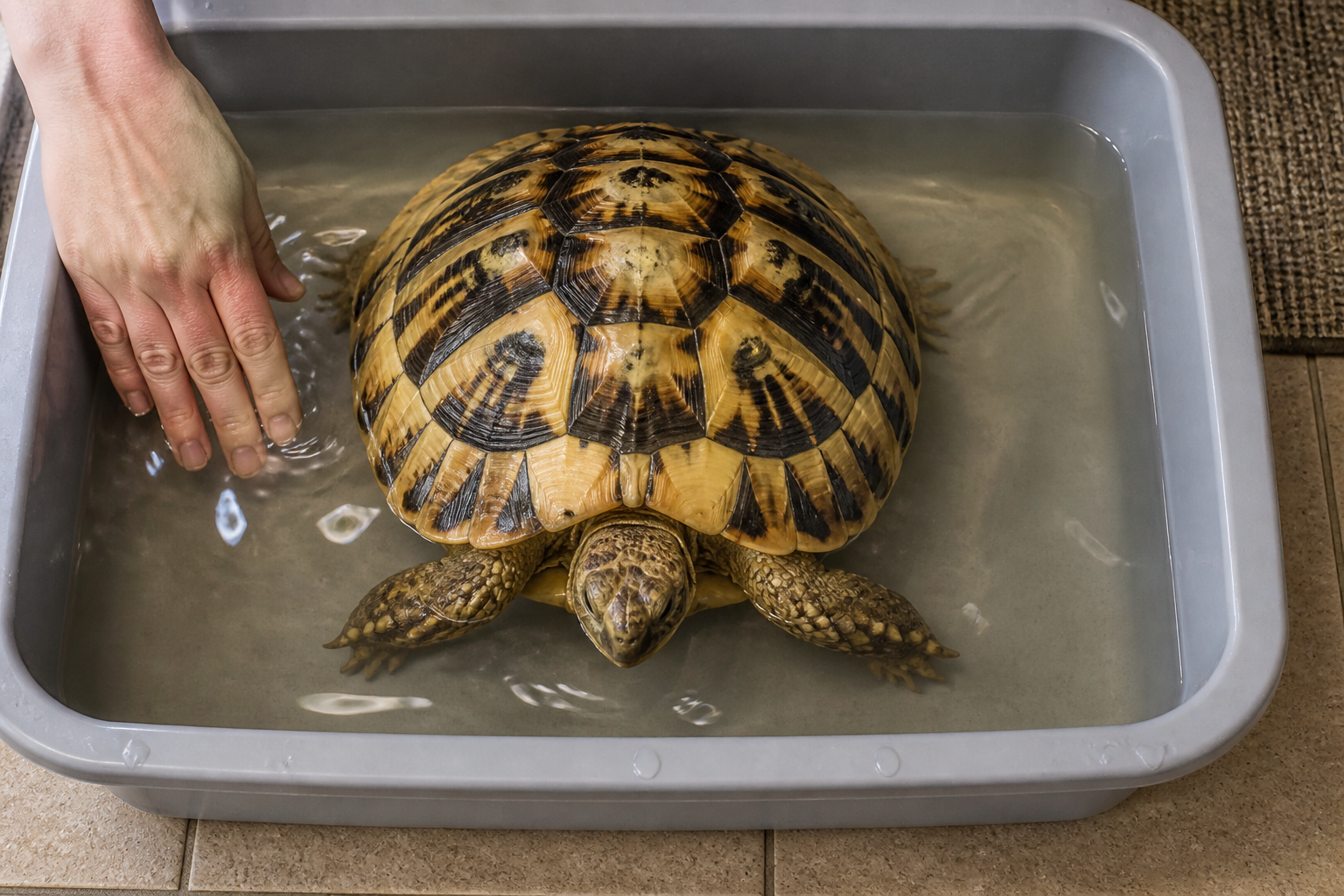
Use a smooth tub or basin with low sides your tortoise can see over. Fill it with lukewarm water to the correct depth and test the temperature on the inside of your wrist. Lower the tortoise in gently and let it settle. Many will start drinking within a minute, dipping the nose and gulping. Some walk around; some sit still. Keep the room warm and free of draughts, since a wet tortoise loses heat fast.
Correct water depth: level with the join between plastron and shell, never above the chin.
After the soak, let excess water drip off and return the tortoise to a warm basking area so it can dry and reheat. Tip out and clean the tub each time, because tortoises often defecate in the water.
How often, by age and species
Hatchlings and young tortoises have high surface-area-to-volume ratios and dehydrate quickly, so daily or every-other-day soaks suit them well. Healthy adults of Mediterranean or temperate species usually do fine with two to three soaks a week. Arid-species adults still need routine soaks because a dry vivarium does not mean a dry animal. Increase frequency during warm spells, after a period off food, or any time droppings look dry and chalky.
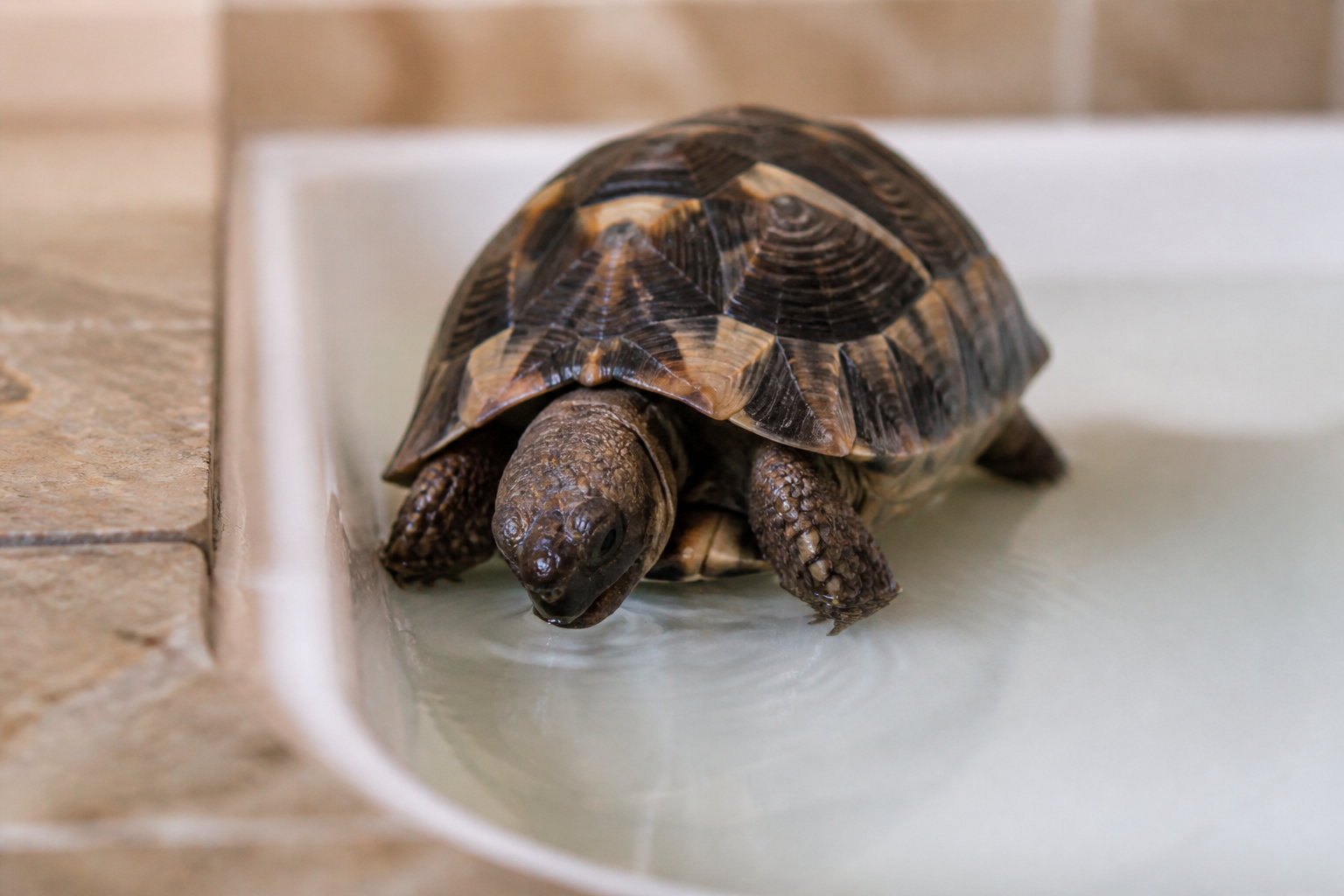
Many tortoises drink and pass waste during a soak, which is exactly what you want.
Signs your tortoise is dehydrated
Deep, sunken eyes, thick stringy saliva, dry flaky skin, very white pasty urates, and reduced appetite all point to dehydration. Lethargy and infrequent urination are red flags. Chronic dehydration is a major driver of kidney disease and gout in captive reptiles, and these problems are far easier to prevent than to treat.
Living context by region
This guide is written for multi-region English readers (US/UK/AU/NZ/CA/EU and more). Where climate, products, or vet access differ, prefer local veterinary advice and local product labels. Use metric first; keep °F/lb in mind for North American homes.
When to call your vet
-
Signs are getting worse over hours, not better
-
Pain, persistent vomiting/diarrhea, or neurological signs
-
You needed force or guesswork to keep going at home
Common mistakes
-
Waiting because the animal 'still looks okay' while prey species hide pain
-
Changing five variables at once so you cannot tell what helped
-
Copying drug doses from social media
-
Skipping species-appropriate husbandry while buying more gadgets
FAQ
How deep should the water be?
Can I use tap water?
My tortoise poops in the bath every time, is that bad?
Do I still need a water dish in the enclosure?
My highlights & notes
This article is for general education and is not a substitute for professional veterinary advice. If your pet is unwell, please consult a veterinarian.
Worried about your pet?
Peqaboo’s AI helps you track symptoms, understand lab reports, and know when to see a vet.
Get the Peqaboo app