

Why Does My Dog Dig? Stopping Yard Destruction at the Source
Dogs dig for clear reasons: boredom, instinct, cooling off, hunting critters or escape. Punishment rarely helps because it ignores the cause. This guide helps you identify why your dog digs, meet that underlying need, and redirect the behaviour to a spot where digging is allowed.

Quick answer

Why Does My Dog Dig? Stopping Yard Destruction at the Source
Digging is a natural canine behaviour, not spite. Your dog is either bored, following a strong instinct, trying to cool down, chasing prey scents, or attempting to escape. The fix is to identify the specific reason, meet that need through exercise and enrichment, and give an acceptable place to dig, rather than punishing after the fact.
- Species
- dog
- Category
- behavior
- Risk level
- low
- Content focus
- practical owner decisions + mechanism
- When to escalate
- same-day if pain, not eating, breathing issues, or rapid decline
Decide in 60 seconds
| Situation | Do now |
|---|---|
| Mild / stable at home | Follow steps in this guide and monitor for 12–24 hours |
| Not eating, hiding, or clear pain | Same-day vet (species-savvy if exotic) |
| Breathing hard, collapse, continuous distress | Emergency vet now |
| You are unsure after reading | Call a clinic with your notes rather than waiting days |
Work out why your dog is digging
Before you can stop it, diagnose it. Where and when your dog digs is the biggest clue. Holes along the fence line often mean escape or boredom. Shallow pits in cool, shaded soil on hot days point to cooling. Focused digging at one spot may mean prey, moles or insects. Frantic digging when left alone can signal under-stimulation or distress.
Boredom and energy: the most common cause
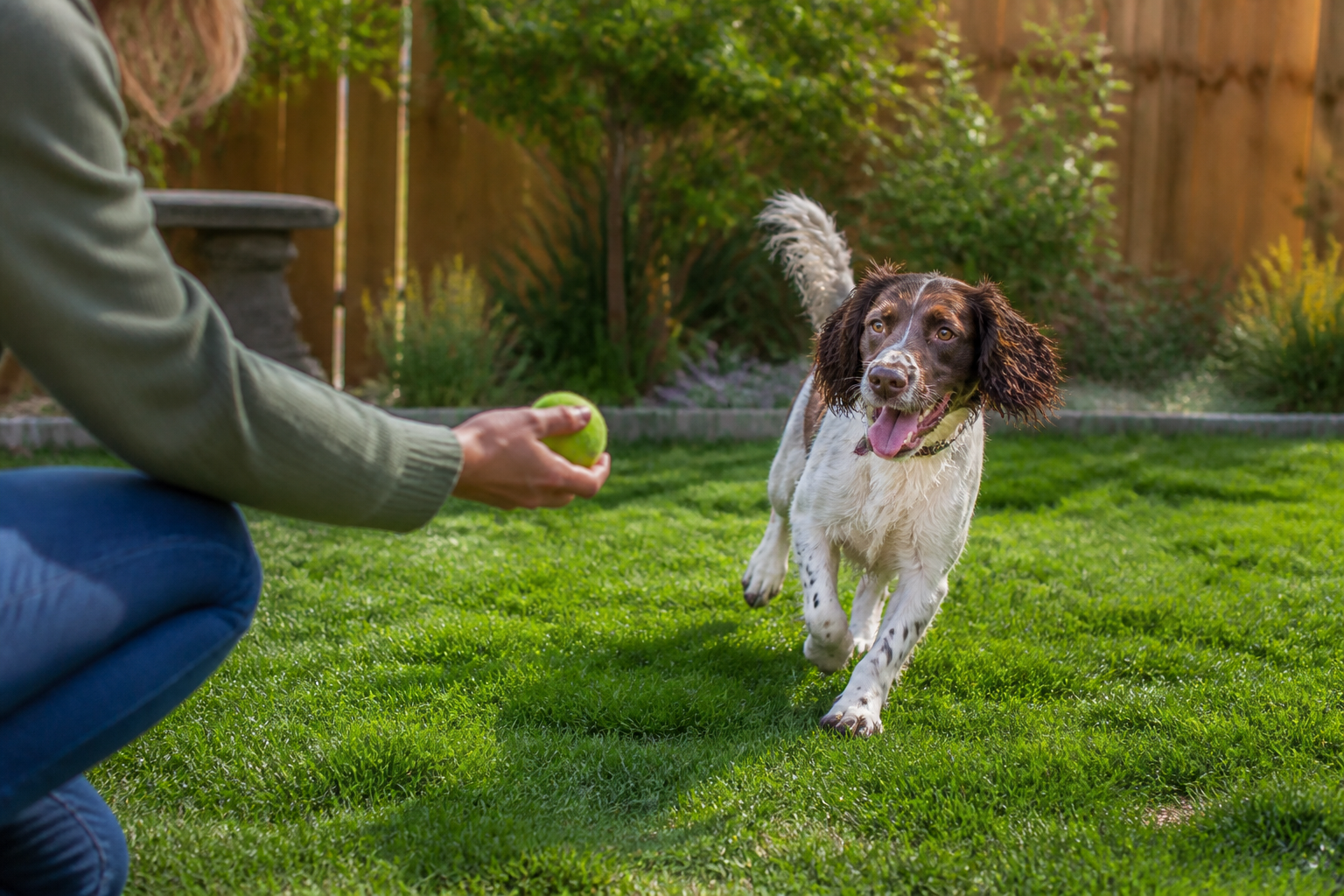
Under-exercised, under-stimulated dogs dig to entertain themselves. Increase daily physical exercise and add mental work: sniffing walks, food puzzles, training games and chew items. A dog whose body and brain are satisfied has little reason to excavate your garden.
A well-exercised, mentally tired dog digs far less out of boredom.
Build a legal dig zone
You will not erase the instinct, so channel it. Set up a sandbox or a sectioned-off patch of loose soil and make it the best digging spot in the world. Bury toys and treats there and praise digging in that zone. If your dog starts digging elsewhere, calmly lead them to the pit and reward digging there instead.

A dedicated dig pit with buried toys gives the digging instinct a legal outlet.
Address cooling and escape needs
On hot, humid days dogs dig into cool earth to lower their body temperature. Provide shade, a raised cooling bed, fresh water and, where suitable, a shallow paddling pool so they do not need to dig for relief. For escape diggers along the fence, remove the motivation (neuter status, boredom, a dog next door) and secure the boundary.
Supervise and redirect, don't punish
Catching your dog mid-dig and shouting teaches them to dig only when you are absent. Instead, supervise garden time at first, interrupt gently, and lead them to an approved activity or the dig pit. Reward the choices you want. Prevention plus a satisfying alternative beats punishment every time.
Living context by region
This guide is written for multi-region English readers (US/UK/AU/NZ/CA/EU and more). Where climate, products, or vet access differ, prefer local veterinary advice and local product labels. Use metric first; keep °F/lb in mind for North American homes.
When to call your vet
-
Signs are getting worse over hours, not better
-
Pain, persistent vomiting/diarrhea, or neurological signs
-
You needed force or guesswork to keep going at home
Common mistakes
-
Waiting because the animal 'still looks okay' while prey species hide pain
-
Changing five variables at once so you cannot tell what helped
-
Copying drug doses from social media
-
Skipping species-appropriate husbandry while buying more gadgets
FAQ
Will my dog grow out of digging?
Is it cruel to stop my dog digging entirely?
Why does my dog dig at the sofa or carpet indoors?
Does filling holes with the dog's poop stop digging?
My highlights & notes
This article is for general education and is not a substitute for professional veterinary advice. If your pet is unwell, please consult a veterinarian.
Worried about your pet?
Peqaboo’s AI helps you track symptoms, understand lab reports, and know when to see a vet.
Get the Peqaboo app