

What Rabbit Sounds Mean: Purrs, Grunts, and Screams
Rabbits are quiet, but they are not silent. From soft tooth-purring to angry grunts to a terrifying scream, each sound carries a clear message. Learn to read your rabbit's small vocabulary so you know when it is happy, annoyed, or in real danger.

Quick answer

What Rabbit Sounds Mean: Purrs, Grunts, and Screams
Rabbits communicate mostly through body language, but a handful of sounds matter. Soft tooth-purring and gentle honks are happy; grunting, growling, and thumping are warnings; loud tooth-grinding, whimpering, or a full scream mean pain or terror and need immediate attention.
- Species
- rabbit
- Category
- behavior
- Risk level
- low
- Content focus
- practical owner decisions + mechanism
- When to escalate
- same-day if pain, not eating, breathing issues, or rapid decline
Decide in 60 seconds
| Situation | Do now |
|---|---|
| Mild / stable at home | Follow steps in this guide and monitor for 12–24 hours |
| Not eating, hiding, or clear pain | Same-day vet (species-savvy if exotic) |
| Breathing hard, collapse, continuous distress | Emergency vet now |
| You are unsure after reading | Call a clinic with your notes rather than waiting days |
Happy and content sounds
A relaxed rabbit is almost silent, but two gentle sounds are good news.
- Tooth-purring: A soft, rapid chattering of the front teeth, felt more than heard, usually while you stroke its head. This is the rabbit equivalent of a cat's purr and signals deep contentment. Do not confuse it with loud, slow tooth-grinding, which is very different.
- Honking / oinking: Soft grunt-like honks, often while circling your feet, usually mean excitement or a courtship-style "I like you." In un-neutered rabbits it can be hormonal.
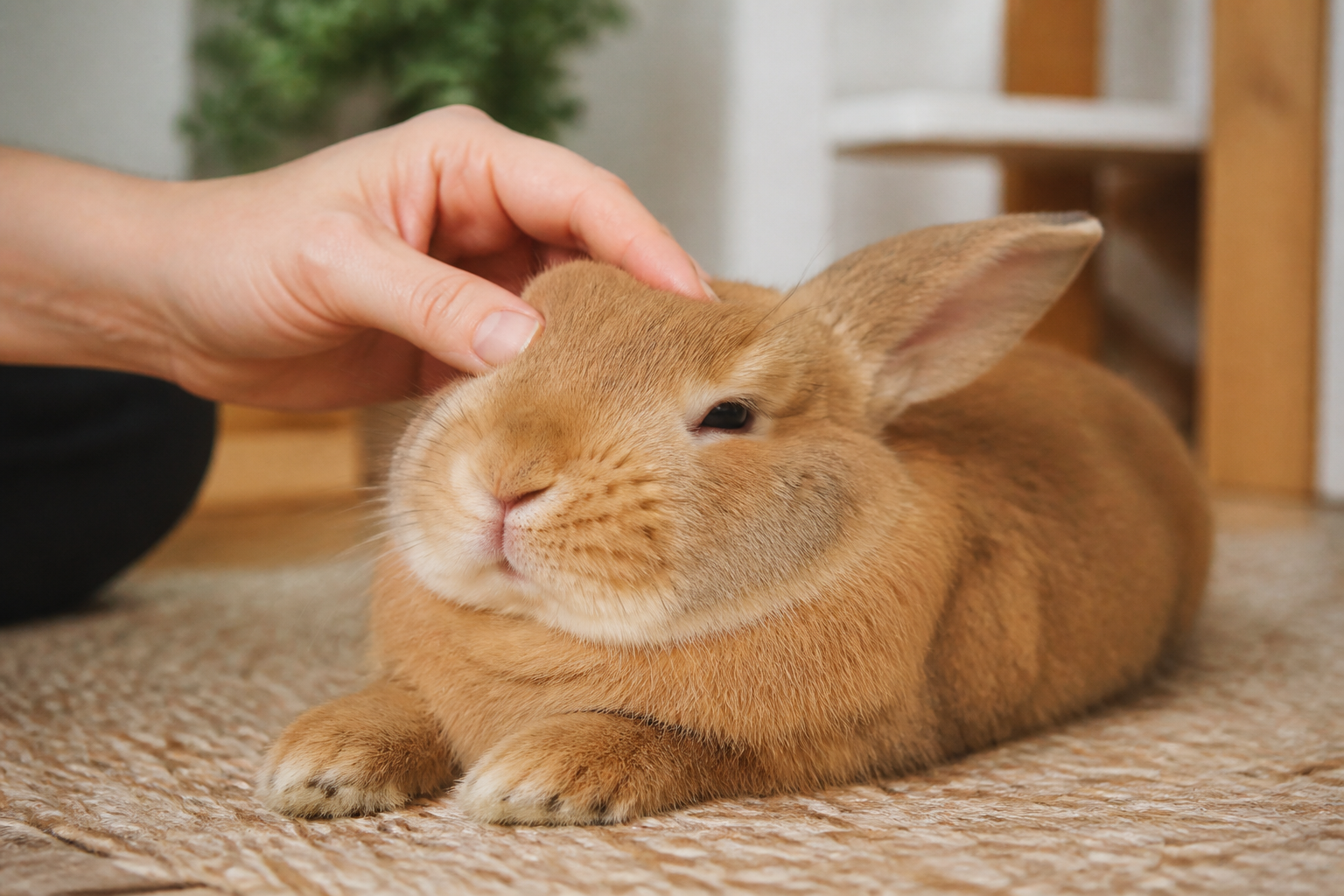
Soft tooth-purring during gentle strokes means deep contentment.
Warning and annoyed sounds
Rabbits will tell you when they are unhappy, and it pays to listen before a nip follows.
- Grunting / growling: A short, sharp grunt means "back off" , often near food, a favourite corner, or when you reach into their space. It is territorial, not personal.
- Thumping: A hard stamp of the hind foot is an alarm signal. Your rabbit has heard, seen, or smelled something it distrusts. Repeated thumping means it is genuinely on edge.
- Hissing: Less common, but a clear "stay away," usually between rabbits sorting out territory.
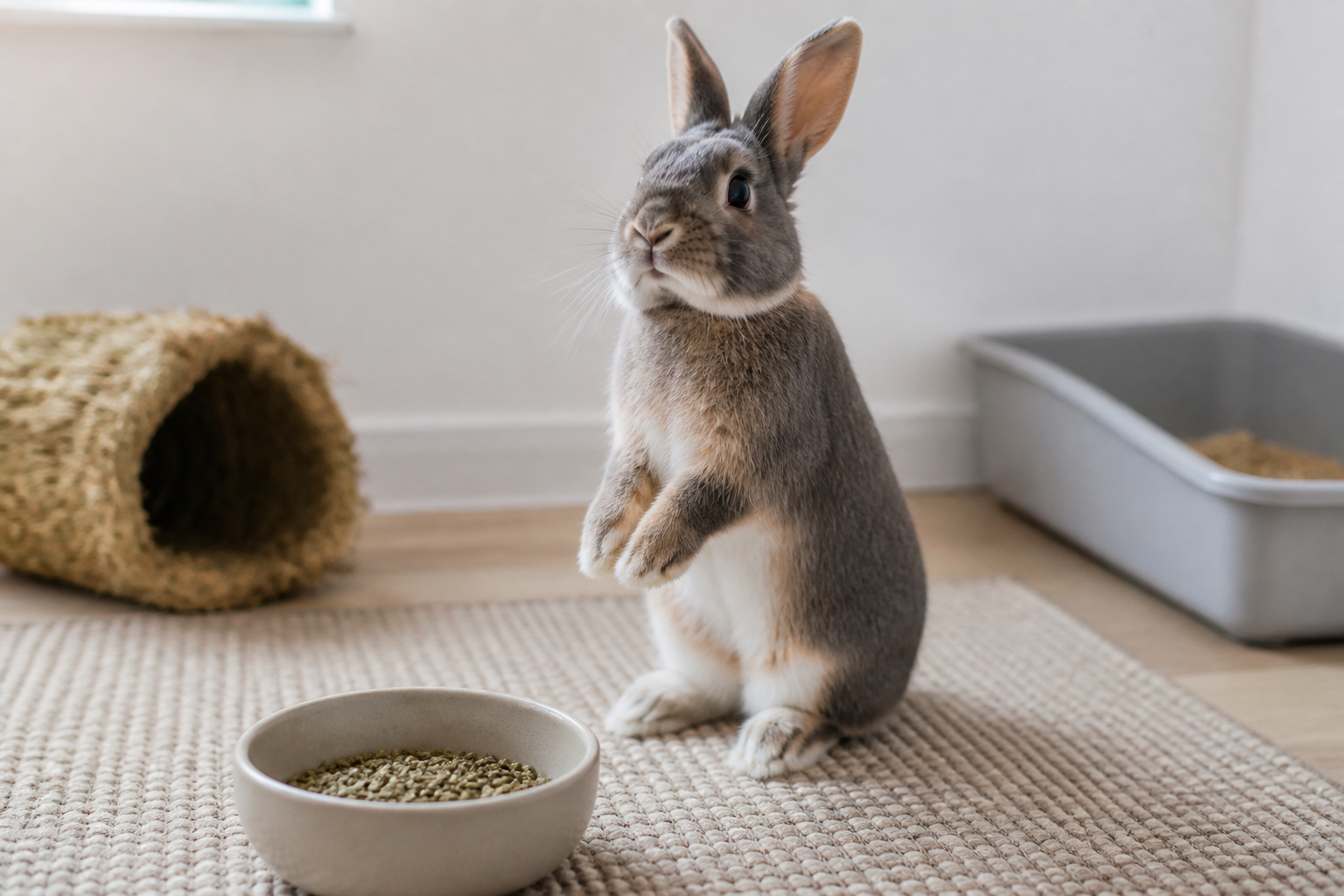
Grunting with a tense, forward posture is a warning, not a greeting.
Sounds that mean trouble
Some sounds are a medical red flag and should never be ignored.
A rabbit scream is a sound most owners never hear, and it is chilling , a high, human-like cry. It almost always means the rabbit believes it is about to die: caught by a predator, in sudden severe pain, or gripped by acute fear. Treat it as an emergency and check your rabbit immediately.
Reading sound plus body language together
No sound means much on its own. A grunt with a relaxed body is mild; a grunt with ears back, tail up, and a lunge is a real warning. Tooth noise with a loose, sprawled body is a purr; tooth noise with a hunched, still, squinting rabbit is pain. Always read the whole rabbit , posture, ears, eyes, and appetite , not just the noise.
Living context by region
This guide is written for multi-region English readers (US/UK/AU/NZ/CA/EU and more). Where climate, products, or vet access differ, prefer local veterinary advice and local product labels. Use metric first; keep °F/lb in mind for North American homes.
When to call your vet
-
Signs are getting worse over hours, not better
-
Pain, persistent vomiting/diarrhea, or neurological signs
-
You needed force or guesswork to keep going at home
Common mistakes
-
Waiting because the animal 'still looks okay' while prey species hide pain
-
Changing five variables at once so you cannot tell what helped
-
Copying drug doses from social media
-
Skipping species-appropriate husbandry while buying more gadgets
FAQ
Do rabbits purr like cats?
Is grunting a sign my rabbit hates me?
What does thumping mean?
Should I ever worry about a quiet rabbit?
My highlights & notes
This article is for general education and is not a substitute for professional veterinary advice. If your pet is unwell, please consult a veterinarian.
Worried about your pet?
Peqaboo’s AI helps you track symptoms, understand lab reports, and know when to see a vet.
Get the Peqaboo app