

Territorial Marking: Poop Piles, Spraying, and Chinning Explained
Poop piles in corners, urine sprayed up a wall, and chin-rubbing on every table leg are all territorial marking, not bad manners. This guide explains what each behaviour means, why it happens, and the practical steps that bring it under control.

Quick answer

Territorial Marking: Poop Piles, Spraying, and Chinning Explained
Scattered droppings, urine spraying, and chinning are three ways rabbits mark territory with scent. They are normal, especially in un-neutered adults and after any change to the home. Neutering, consistent litter-training, and reducing territorial stress usually cut marking down dramatically.
- Species
- rabbit
- Category
- behavior
- Risk level
- low
- Content focus
- practical owner decisions + mechanism
- When to escalate
- same-day if pain, not eating, breathing issues, or rapid decline
Decide in 60 seconds
| Situation | Do now |
|---|---|
| Mild / stable at home | Follow steps in this guide and monitor for 12–24 hours |
| Not eating, hiding, or clear pain | Same-day vet (species-savvy if exotic) |
| Breathing hard, collapse, continuous distress | Emergency vet now |
| You are unsure after reading | Call a clinic with your notes rather than waiting days |
The three marking behaviours
Rabbits live in a world of smell, and they claim space by leaving scent. Three signals do most of the work:
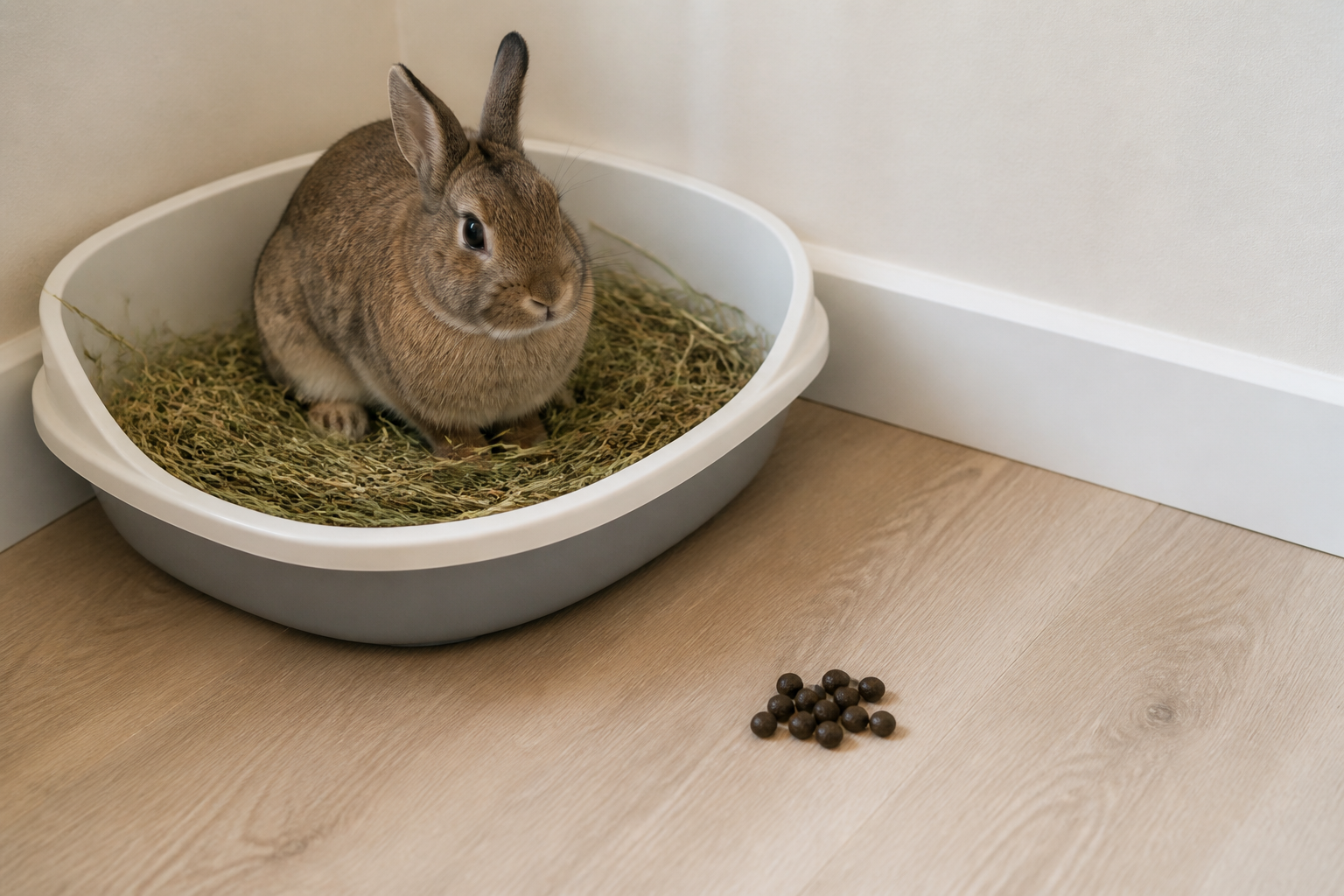
- Poop piles / scattering: Droppings left in specific spots , doorways, new items, the edge of their range , say "this is mine." This is different from a tidy litter-tray habit.
- Spraying: A rabbit twists and flicks urine sideways, often onto a vertical surface or even onto another rabbit or person. This is deliberate marking, not a litter-training failure.
- Chinning: Rabbits have scent glands under the chin. Rubbing the chin along furniture, skirting, and toys deposits an odour we cannot smell. It is the calmest, most harmless form of marking.
Why it suddenly increases
Marking spikes at sexual maturity (around 4 to 6 months) and whenever a rabbit feels its territory is uncertain. Common triggers: a new rabbit next door, rearranged furniture, a house move, a new baby or pet, or even your clothes smelling of another animal. The rabbit is not misbehaving , it is re-labelling a world that suddenly smells wrong.
Scattered droppings mark territory; a litter tray channels the habit into one spot.
Neutering: the biggest single change
For spraying and heavy scattering, neutering (spaying females, castrating males) is the most effective step. Removing the hormone drivers usually reduces or stops spraying within weeks to a couple of months. It also makes litter-training stick, because the rabbit no longer feels a hormonal need to broadcast its scent everywhere.

Working with the litter tray
Use the rabbit's own instinct to your advantage. Rabbits like to toilet where they already eat hay, so place a hay rack over or beside a corner litter tray. If your rabbit scatters droppings in one favourite corner, put a tray there rather than fighting it. Scoop daily but leave a tiny amount of scent at first so the tray reads as "the toilet."
Chinning is invisible to us but leaves a clear scent marker for the rabbit.
Living with chinning
Chinning needs no fixing. It is a confident, contented rabbit signing its territory. If anything, a rabbit that chins your hand or your furniture is including you in its world. Let it be , it is the one marking behaviour with no mess.
Living context by region
This guide is written for multi-region English readers (US/UK/AU/NZ/CA/EU and more). Where climate, products, or vet access differ, prefer local veterinary advice and local product labels. Use metric first; keep °F/lb in mind for North American homes.
When to call your vet
-
Signs are getting worse over hours, not better
-
Pain, persistent vomiting/diarrhea, or neurological signs
-
You needed force or guesswork to keep going at home
Common mistakes
-
Waiting because the animal 'still looks okay' while prey species hide pain
-
Changing five variables at once so you cannot tell what helped
-
Copying drug doses from social media
-
Skipping species-appropriate husbandry while buying more gadgets
FAQ
Is territorial marking a sign of a happy or unhappy rabbit?
Will neutering completely stop marking?
Why does my rabbit poop right after I clean?
Can two rabbits ever stop marking each other's space?
My highlights & notes
This article is for general education and is not a substitute for professional veterinary advice. If your pet is unwell, please consult a veterinarian.
Worried about your pet?
Peqaboo’s AI helps you track symptoms, understand lab reports, and know when to see a vet.
Get the Peqaboo app