

How Spaying Calms Hormonal Behaviour in Female Rabbits
Un-spayed female rabbits often become territorial, moody, and prone to false pregnancies once they mature. Spaying removes the hormone drivers behind lunging, growling, and cage-guarding, and it dramatically lowers the risk of uterine cancer. Here is what really changes, and when.

Quick answer

How Spaying Calms Hormonal Behaviour in Female Rabbits
Spaying removes the ovaries and uterus, so the hormones that drive territorial and mating behaviour drop away. Most female rabbits become calmer, less aggressive, and easier to litter-train within a few weeks to a couple of months. It also prevents uterine cancer, which is very common in older un-spayed does.
- Species
- rabbit
- Category
- behavior
- Risk level
- low
- Content focus
- practical owner decisions + mechanism
- When to escalate
- same-day if pain, not eating, breathing issues, or rapid decline
Decide in 60 seconds
| Situation | Do now |
|---|---|
| Mild / stable at home | Follow steps in this guide and monitor for 12–24 hours |
| Not eating, hiding, or clear pain | Same-day vet (species-savvy if exotic) |
| Breathing hard, collapse, continuous distress | Emergency vet now |
| You are unsure after reading | Call a clinic with your notes rather than waiting days |
Why un-spayed does get "difficult"
Female rabbits (does) usually reach sexual maturity around 4 to 6 months. Once hormones switch on, a previously sweet rabbit can start lunging at your hand, grunting, boxing, circling your feet, and guarding her space. This is not her being "naughty" , it is a hormonal drive to defend territory and prepare for breeding. Because rabbits do not have a set heat cycle and can be ready to breed much of the year, that pressure can be almost constant.
What actually changes after spaying
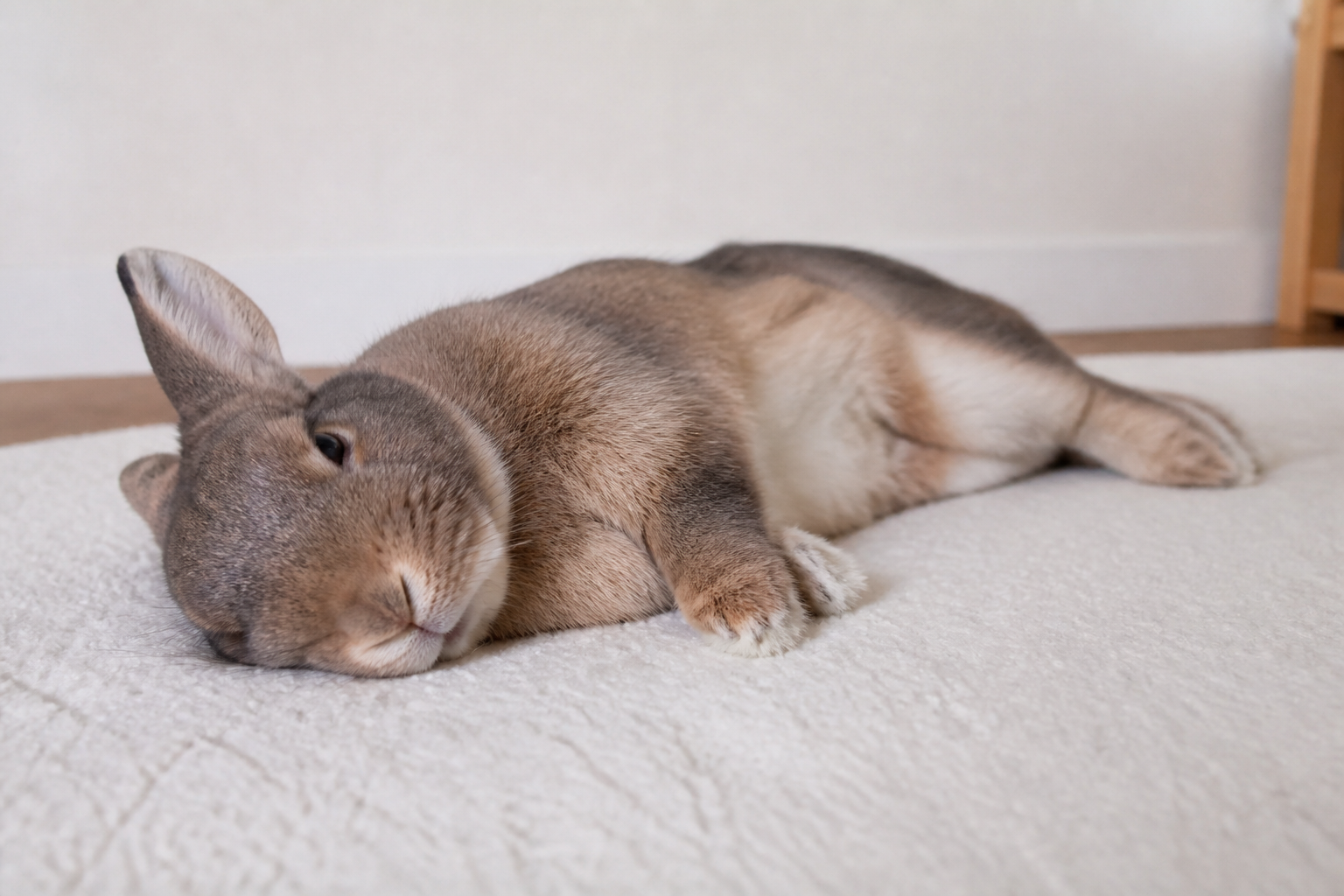
Once the ovaries are gone, the surges that trigger territorial and nesting behaviour fade. Owners commonly notice less lunging and grunting, fewer aggressive charges at the hand, and an end to false pregnancies (nest-building, fur-pulling, guarding a "litter" that never existed). Litter-training also becomes far more reliable because the urge to scatter droppings and spray urine drops sharply.
After hormones settle, many females relax noticeably and flop more often.
What does not change is who she fundamentally is. A naturally shy rabbit stays a little reserved; a bold, curious one stays bold. Spaying simply strips away the hormonal noise on top.
The health reason that matters most
Behaviour is the reason many people book the surgery, but the bigger prize is health. Uterine adenocarcinoma is strikingly common in un-spayed does as they get older, and it can spread before you see any outward sign. Spaying before or during early adulthood removes that risk almost entirely. It also prevents uterine infections and reduces mammary problems.
Timing and recovery
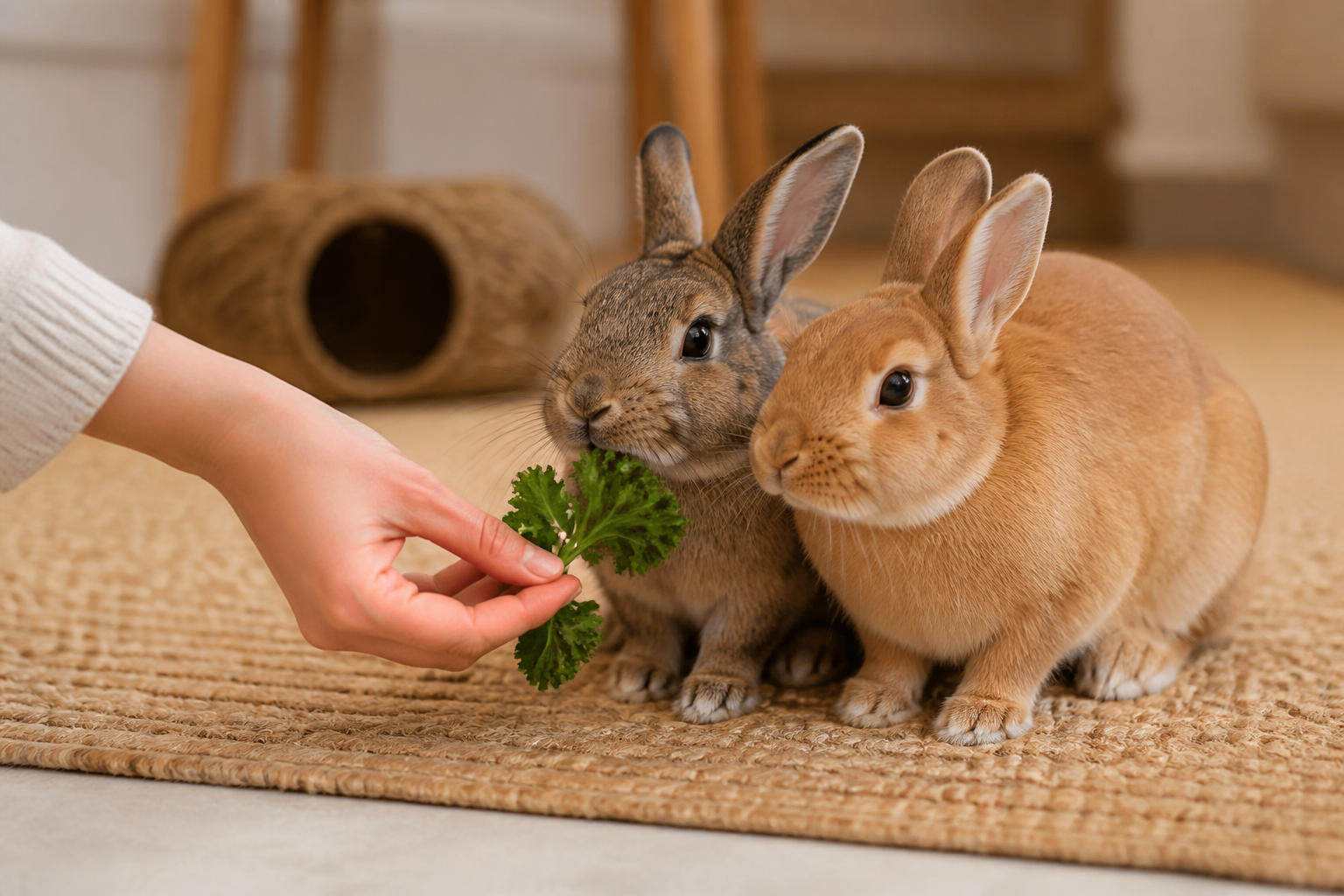
Many vets spay does from around 5 to 6 months, once they are big enough to handle anaesthesia well. Recovery is usually quick: most rabbits are eating and moving within a day. The key is that she keeps eating right after surgery , a rabbit gut must never stop. Offer her favourite greens and unlimited hay, keep her warm and quiet, and follow your vet's pain-relief plan exactly.
Calmer hormones make bonding and gentle handling far easier.
Bonding and the calmer months ahead
If you plan to keep two rabbits together, spaying is almost essential. Two intact rabbits will fight or breed; a spayed female bonds far more peacefully. Give hormones time to settle , often 4 to 8 weeks after surgery , before attempting introductions, so you are working with the calmer rabbit rather than the hormonal one.
Living context by region
This guide is written for multi-region English readers (US/UK/AU/NZ/CA/EU and more). Where climate, products, or vet access differ, prefer local veterinary advice and local product labels. Use metric first; keep °F/lb in mind for North American homes.
When to call your vet
-
Signs are getting worse over hours, not better
-
Pain, persistent vomiting/diarrhea, or neurological signs
-
You needed force or guesswork to keep going at home
Common mistakes
-
Waiting because the animal 'still looks okay' while prey species hide pain
-
Changing five variables at once so you cannot tell what helped
-
Copying drug doses from social media
-
Skipping species-appropriate husbandry while buying more gadgets
FAQ
Will spaying change my rabbit's personality?
How soon will she calm down?
Is spaying really necessary if she lives alone?
Can an older un-spayed rabbit still be spayed?
My highlights & notes
This article is for general education and is not a substitute for professional veterinary advice. If your pet is unwell, please consult a veterinarian.
Worried about your pet?
Peqaboo’s AI helps you track symptoms, understand lab reports, and know when to see a vet.
Get the Peqaboo app