

Fresh Herbs Rabbits Can Eat (and Which to Limit)
Fresh herbs are a fragrant, low-sugar way to add variety to a rabbit's greens. This checklist sorts common kitchen and garden herbs into safe everyday choices and ones to limit, explains portion sizes, and flags a few herbs and myths worth being careful about.

Quick answer

Fresh Herbs Rabbits Can Eat (and Which to Limit)
Most soft culinary herbs are excellent daily greens for rabbits: basil, coriander, parsley, dill, mint, oregano, thyme, sage, and lemon balm are all safe and popular. Feed them washed, as part of your rabbit's daily leafy-green portion alongside unlimited hay. A few herbs are best limited, and a handful should be avoided, so variety and moderation are the rule.
- Species
- rabbit
- Category
- nutrition
- Risk level
- low
- Content focus
- practical owner decisions + mechanism
- When to escalate
- same-day if pain, not eating, breathing issues, or rapid decline
Decide in 60 seconds
| Situation | Do now |
|---|---|
| Mild / stable at home | Follow steps in this guide and monitor for 12–24 hours |
| Not eating, hiding, or clear pain | Same-day vet (species-savvy if exotic) |
| Breathing hard, collapse, continuous distress | Emergency vet now |
| You are unsure after reading | Call a clinic with your notes rather than waiting days |
Where herbs fit in the diet
Herbs count as leafy greens, not as treats, which makes them one of the healthiest ways to add flavour and variety to a rabbit's salad. They are aromatic, low in sugar, and most rabbits love them, so they are useful for tempting a fussy eater or hiding the taste of nothing in particular. As with all greens, herbs sit on top of unlimited hay and do not replace it. Rotate several herbs rather than feeding a large amount of any single one.

Safe everyday herbs
These are suitable for regular daily rotation in normal salad-sized portions: basil, coriander, parsley, dill, mint, oregano, marjoram, thyme, sage, rosemary, lemon balm, and fennel leaf. Parsley is nutritious but slightly higher in calcium, so make it one of several herbs rather than the only one. Coriander and basil are often favourites and make good choices for encouraging a reluctant eater.
Most soft kitchen herbs are safe daily greens; rotate a few types so no single herb dominates the diet.
Herbs to limit or use with care
Some herbs are safe in small amounts but worth moderating. Parsley and dill are higher in calcium, so rotate rather than feed daily in large quantities. Mint is fine as a green but is traditionally associated with reducing milk supply, so avoid feeding large amounts to a nursing doe. Very strong or medicinal herbs eaten in bulk are best avoided; a few leaves of a common culinary herb are fine, but do not offer concentrated herbal preparations, oils, or supplements.
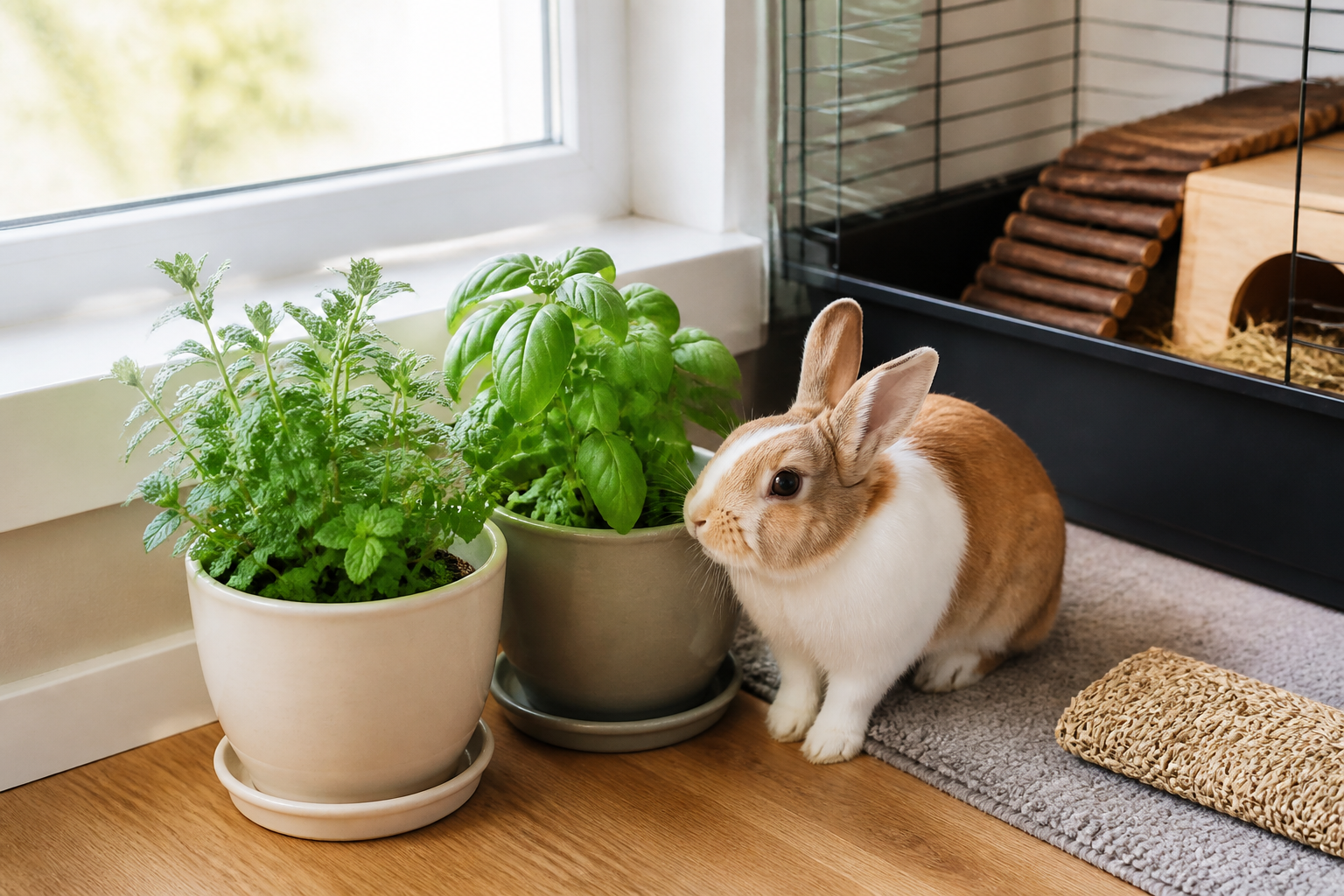
Herbs and plants to avoid
Not everything green and fragrant is safe. Avoid chives, garlic, and other allium-family herbs entirely, as the onion family is toxic to rabbits. Skip concentrated or essential-oil forms of any herb. Be cautious with unfamiliar wild or ornamental plants sold as herbs , if you cannot positively identify a plant as rabbit-safe, do not feed it. When in doubt, stick to the common culinary herbs on the safe list.
Growing your own herbs gives a pesticide-free, fresh supply , just wash before feeding all the same.
Living context by region
This guide is written for multi-region English readers (US/UK/AU/NZ/CA/EU and more). Where climate, products, or vet access differ, prefer local veterinary advice and local product labels. Use metric first; keep °F/lb in mind for North American homes.
When to call your vet
-
Signs are getting worse over hours, not better
-
Pain, persistent vomiting/diarrhea, or neurological signs
-
You needed force or guesswork to keep going at home
Common mistakes
-
Waiting because the animal 'still looks okay' while prey species hide pain
-
Changing five variables at once so you cannot tell what helped
-
Copying drug doses from social media
-
Skipping species-appropriate husbandry while buying more gadgets
FAQ
Can rabbits eat parsley every day?
Are any culinary herbs poisonous to rabbits?
Can herbs replace vegetables in the diet?
Is mint safe for rabbits?
My highlights & notes
This article is for general education and is not a substitute for professional veterinary advice. If your pet is unwell, please consult a veterinarian.
Worried about your pet?
Peqaboo’s AI helps you track symptoms, understand lab reports, and know when to see a vet.
Get the Peqaboo app