

Safe Bedding and Substrates: Which Woods and Litters to Avoid
The wrong bedding can quietly harm a rabbit's liver and airways or cause a fatal gut blockage. This article compares safe substrates like paper and aspen against dangerous ones like cedar, pine, and clumping litter, and explains the difference between bedding and hay.

Quick answer

Safe Bedding and Substrates: Which Woods and Litters to Avoid
Safe rabbit substrates are paper-based litter, kiln-dried aspen, compressed wood-stove pellets, straw, and fleece liners. Avoid cedar and pine shavings (their aromatic oils harm the liver and airways), clumping or clay cat litter (a deadly blockage risk if eaten), and dusty sawdust. Bedding is for resting, hay is the food, keep them separate in your mind.
- Cedar and untreated pine release phenols that can damage a rabbit's liver and irritate airways.
- Clumping and clay cat litters can swell inside the gut and cause a fatal blockage.
- Kiln-drying pine removes most of the harmful oils, but paper and aspen are simpler safe bets.
- Very dusty substrates worsen the respiratory problems rabbits are already prone to.
- Bedding is not food, hay must be provided separately and constantly.
- Species
- rabbit
- Category
- environment
- Risk level
- medium
- Content focus
- practical owner decisions + mechanism
- When to escalate
- same-day if pain, not eating, breathing issues, or rapid decline
Decide in 60 seconds
| Situation | Do now |
|---|---|
| Mild / stable at home | Follow steps in this guide and monitor for 12–24 hours |
| Not eating, hiding, or clear pain | Same-day vet (species-savvy if exotic) |
| Breathing hard, collapse, continuous distress | Emergency vet now |
| You are unsure after reading | Call a clinic with your notes rather than waiting days |
Safe substrates to choose
Paper-based litters and pelleted paper bedding are absorbent, low-dust, and safe if nibbled, making them the easiest default. Kiln-dried aspen is a good wood option without the harmful oils of aromatic softwoods. Compressed wood-stove pellets are cheap and very absorbent. For resting areas, washable fleece liners and clean straw give soft, warm comfort. Any of these suits a humid Hong Kong or Taiwan flat, just prioritise good airflow so bedding dries and does not grow mould.
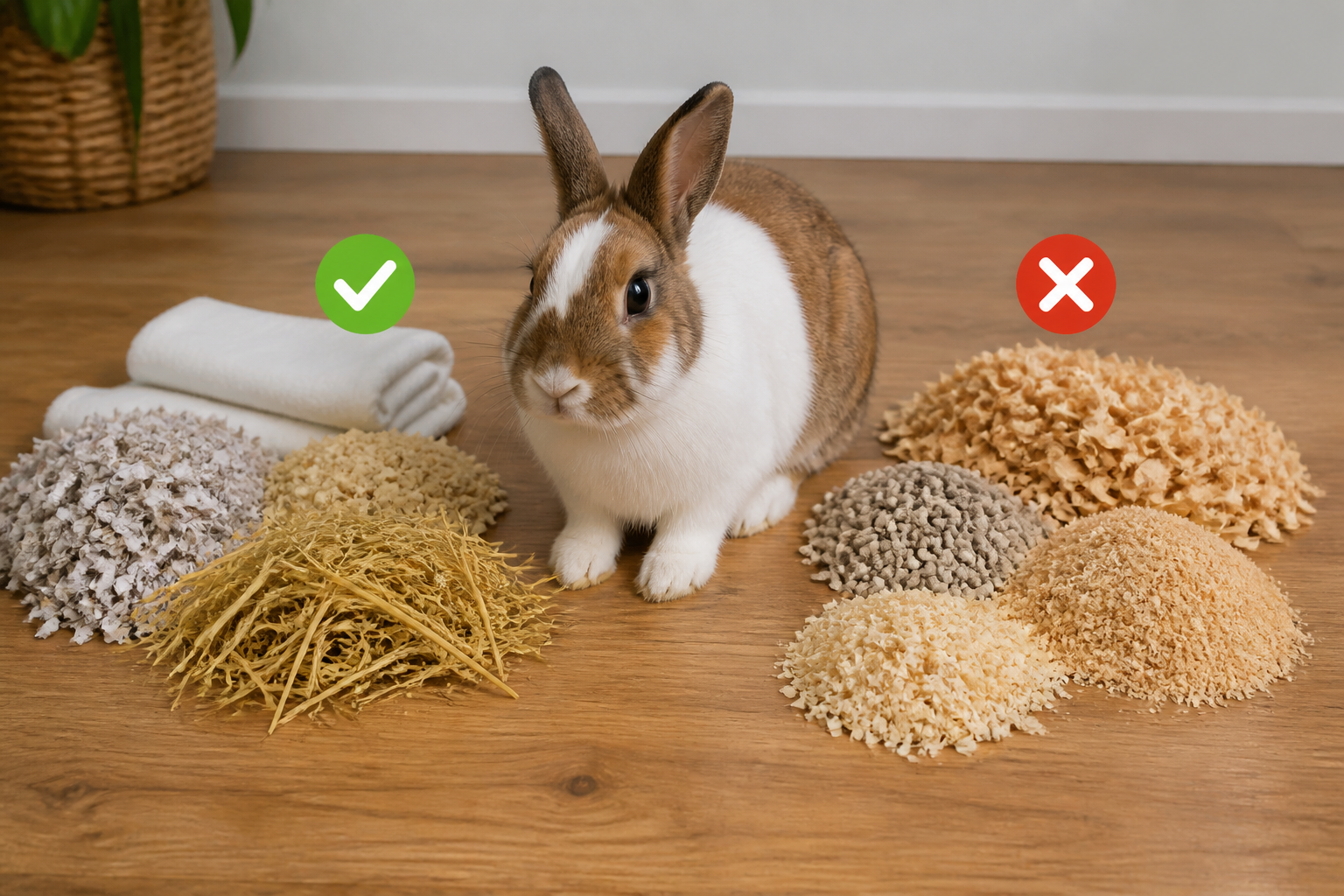
When in doubt, paper and kiln-dried aspen are the safest defaults.
Substrates to avoid, and why
The biggest offenders are cedar and untreated pine shavings. Their pleasant smell comes from aromatic oils (phenols) that, breathed in daily, can stress the liver and inflame the airways. Clumping and clay cat litters are the other major hazard, a rabbit that nibbles them can suffer a swelling gut blockage that is often fatal. Fine sawdust is simply too dusty for a species prone to respiratory disease. Softwood cat litters marketed for cats are not automatically rabbit-safe, always check.
Bedding versus hay, a key distinction
Many new owners confuse the two. Hay (timothy, orchard, meadow) is food and must be available at all times, it is not a floor covering to be soiled and ignored. Bedding or substrate is the absorbent or soft material a rabbit rests and toilets on. Using wood shavings as a bed is fine only if the type is safe, and it never replaces a constant supply of clean eating hay.
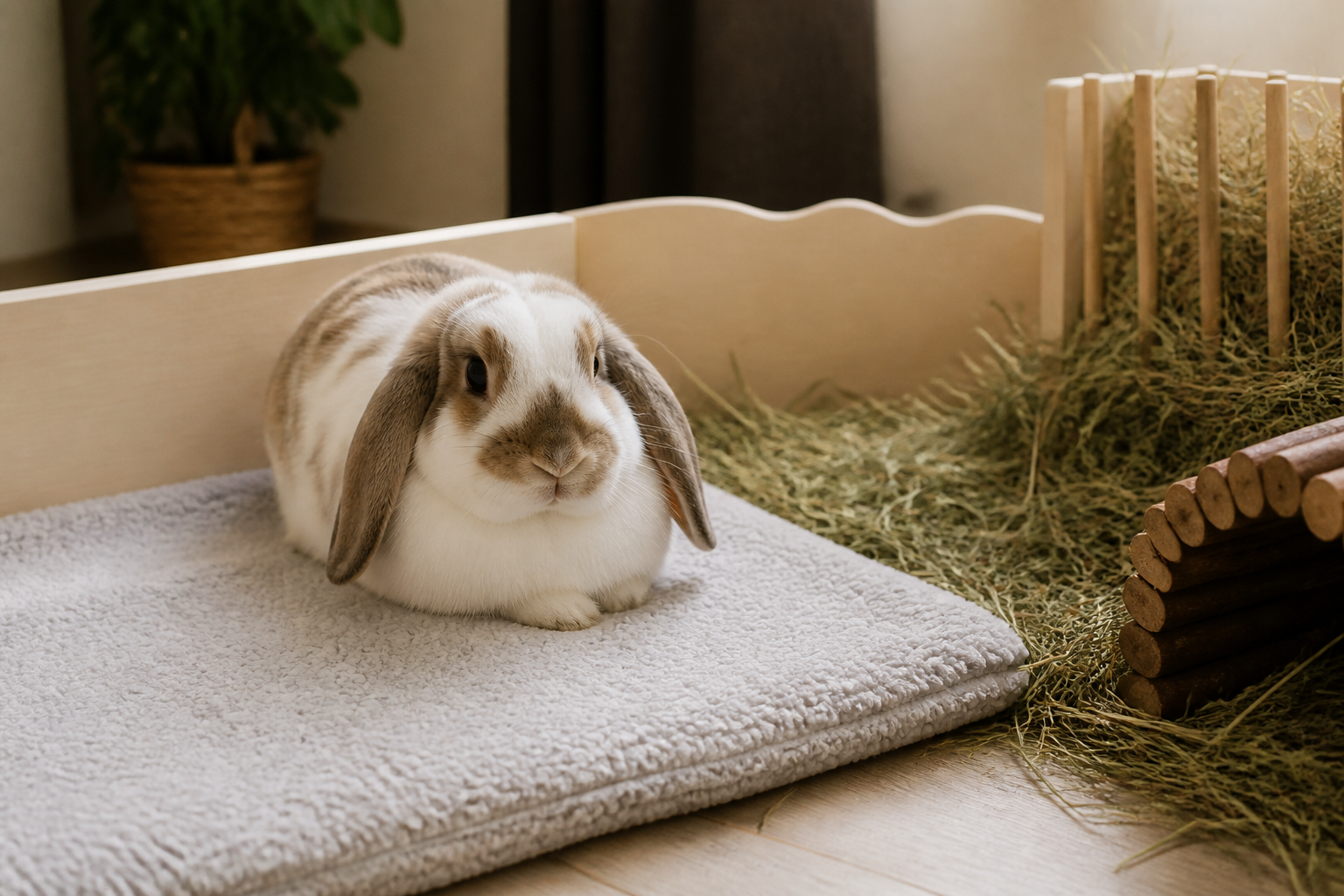
Bedding is for resting, hay is for eating, do not rely on wood shavings as a bed.
Humidity, dust, and airflow
In a humid subtropical climate, damp bedding is a real risk, it grows mould and can trigger flystrike in warm weather. Choose absorbent substrates, change them promptly, and keep the enclosure ventilated. If you or your rabbit notices dust, sneezing, watery eyes, a crusty nose, switch to a lower-dust paper option and improve airflow.
Living context by region
This guide is written for multi-region English readers (US/UK/AU/NZ/CA/EU and more). Where climate, products, or vet access differ, prefer local veterinary advice and local product labels. Use metric first; keep °F/lb in mind for North American homes.
When to call your vet
-
Signs are getting worse over hours, not better
-
Pain, persistent vomiting/diarrhea, or neurological signs
-
You needed force or guesswork to keep going at home
Common mistakes
-
Waiting because the animal 'still looks okay' while prey species hide pain
-
Changing five variables at once so you cannot tell what helped
-
Copying drug doses from social media
-
Skipping species-appropriate husbandry while buying more gadgets
FAQ
Are pine pellets safe?
Can I use straw as bedding?
Is newspaper okay?
What about scented or crystal litters?
My highlights & notes
This article is for general education and is not a substitute for professional veterinary advice. If your pet is unwell, please consult a veterinarian.
Worried about your pet?
Peqaboo’s AI helps you track symptoms, understand lab reports, and know when to see a vet.
Get the Peqaboo app